News
Euro news and guides: page 2
Central bank decisions, economic data, gold and oil, and plain-English guides to how currency trading works. Every article links to its primary sources.
More articles
US business activity hits a five-year high in September as UK growth slows and prices rise
S&P Global's flash composite PMI jumped to 58.4 in the US and 53.1 in the eurozone, while the UK's fell to 51.7 on softer new business and rising input costs.
Flash PMIs on 23 September: release times, and what the US, eurozone and UK showed in August
Update: the September flash PMIs are out — the US hit a 62-month high at 58.4, the eurozone rose to 53.1 and the UK slowed to 51.7. This preview has the release times and August's baseline.
Week ahead, 21–25 September 2026: flash PMIs, the SNB, Norges Bank, the Riksbank and Australian jobs
Update: the week's releases are out, from the flash PMIs to the SNB, Norges Bank and Riksbank decisions, Australian jobs and Canadian retail sales, and US PCE inflation and GDP followed on 30 September.
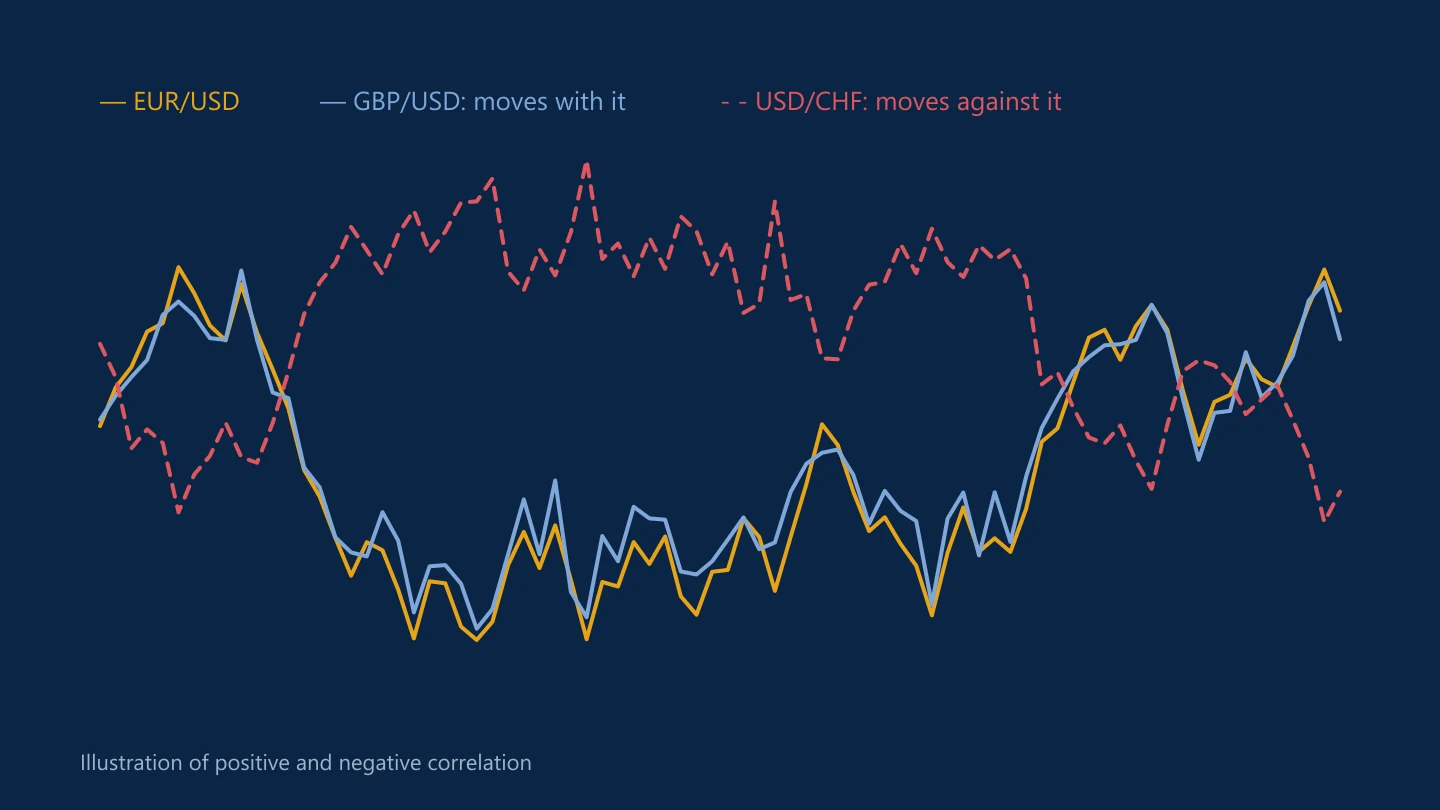
How to trade correlated pairs without doubling your risk
Two trades on correlated pairs are often one trade twice the size. Here is how to measure the correlation, group your exposure, and keep several positions from becoming one bet.
What the ECB's September hike means for the euro
The ECB raised its deposit rate to 2.50% in September as euro-area growth picked up. Here is what the hike says about the bank's path, and what it means for the euro against the dollar and the pound.
What is forward guidance? How central banks steer expectations
Central banks tell markets what they are likely to do next, so the future is priced before it happens. Here is what forward guidance is, how it works, and why the guidance sometimes fails.
Why trade crosses? The case for dropping the dollar
Crosses like EUR/GBP and EUR/JPY remove the dollar and trade two economies directly. Here is what changes without the dollar, and when the crosses are the cleaner trade.
Euro area labour costs rise 3.1% as construction labour costs jump 3.9%
Hourly labour costs increased 3.1% in the euro area and 3.2% in the EU in the second quarter, Eurostat said, with wages and non-wage costs both contributing.
Euro area industrial production dips 0.1% in July as consumer goods output falls
Output fell 0.1% in the euro area and 0.3% in the EU from June, Eurostat said on 16 September, with energy and capital goods rising but non-durable consumer goods down 1.6%.
Eurozone inflation confirmed at 3.2% in August, a touch below the flash estimate
Eurostat's final figures, published 17 September, put euro area (eurozone) HICP inflation at 3.2%, below the 3.3% flash estimate, with services and energy the biggest contributors.
What moves EUR/USD? The five drivers that matter most
EUR/USD is the market's default pair, and five forces decide its direction — with US rate expectations leading the list. Here is each driver, how they interact, and which one is in charge on any given day.
How inflation moves currency pairs: the CPI transmission
Inflation is the input central banks watch most closely, which makes CPI the release that moves currencies most. Here is the transmission chain — from print to policy to price — and why the details beat the headline.
How to trade EUR/JPY: risk appetite in one pair
EUR/JPY bundles the euro's policy story with the yen's haven status into the market's favourite sentiment cross. Here is what drives it and how to trade it.
How to trade EUR/GBP: the cross that isolates Europe
EUR/GBP removes the dollar and trades the euro against sterling on their own merits — two central banks, two inflation stories, one pair. Here is how it works and how to trade it.
How to trade the London open: session strategies and risks
The London open brings the day's real volume, and the first hours set the ranges the rest of the day trades. Here is how the open behaves, which pairs wake up, and how to trade it with a plan.
How to trade central bank decisions: the rate-day playbook
Rate decisions move currencies through the vote, the statement and the press conference — not just the rate itself. Here is how to read all four parts and trade the day with the risk controlled.
How to trade EUR/USD: the complete beginner's guide
EUR/USD is the most traded currency pair in the world, with the tightest spreads and the deepest liquidity. Here is what moves it, when it moves, and how to build a trading plan around it.
How to trade the news: a step-by-step strategy guide
News moves currency pairs faster than anything else in the market. Here is how to trade news releases with a plan, not a prayer — including the releases that matter, the risks around the release minute, and three strategies that respect both.
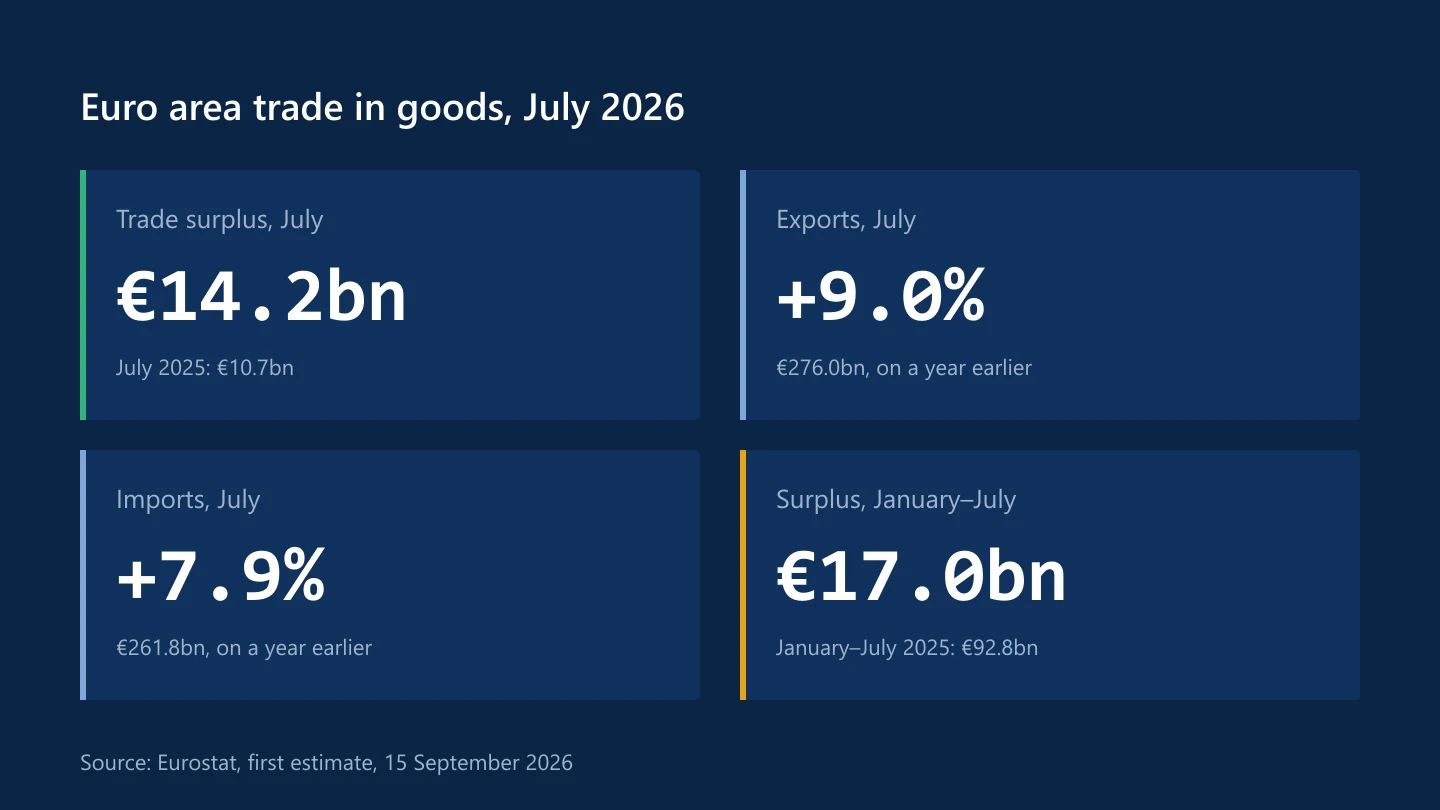
Euro area trade surplus widens to €14.2 billion in July as exports rise 9%
Eurostat's first estimate shows the surplus for January to July at €17.0 billion, down from €92.8 billion a year earlier, as imports outpaced exports. The EU's deficit with China reached €36.5 billion in July.
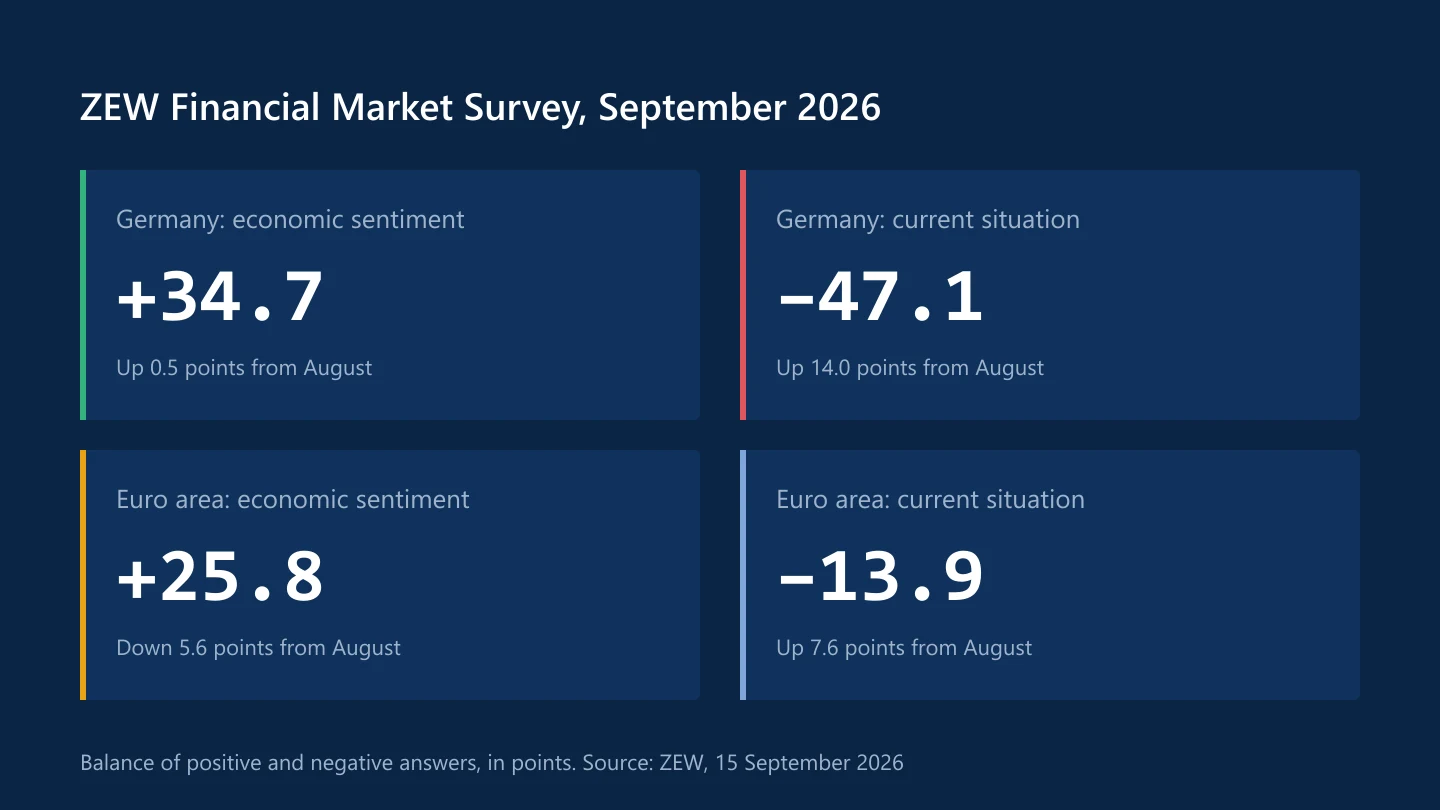
ZEW sentiment edges up to +34.7 as experts judge Germany's current situation 14 points less negative
Germany's ZEW Indicator of Economic Sentiment rose 0.5 points in September, while expectations for the euro area fell 5.6 points to +25.8. ZEW's president named high energy prices as the main risk.
Euro area GDP grows 0.6% in the second quarter, lifted by trade
Eurostat's 7 September estimate shows euro area GDP up 0.6% in Q2 2026 after no growth in Q1, with net exports adding 0.9 percentage points and employment up 0.1%.
ECB raises rates by a quarter point as energy prices keep inflation high
The European Central Bank lifted its deposit rate to 2.50% on 10 September and now expects inflation to average 2.1% in 2028, still just above its target.
Euro area inflation climbs to 3.3% in August on energy prices
Eurostat's flash estimate showed energy prices 14.3% higher than a year earlier, while services inflation eased to 3.0%.
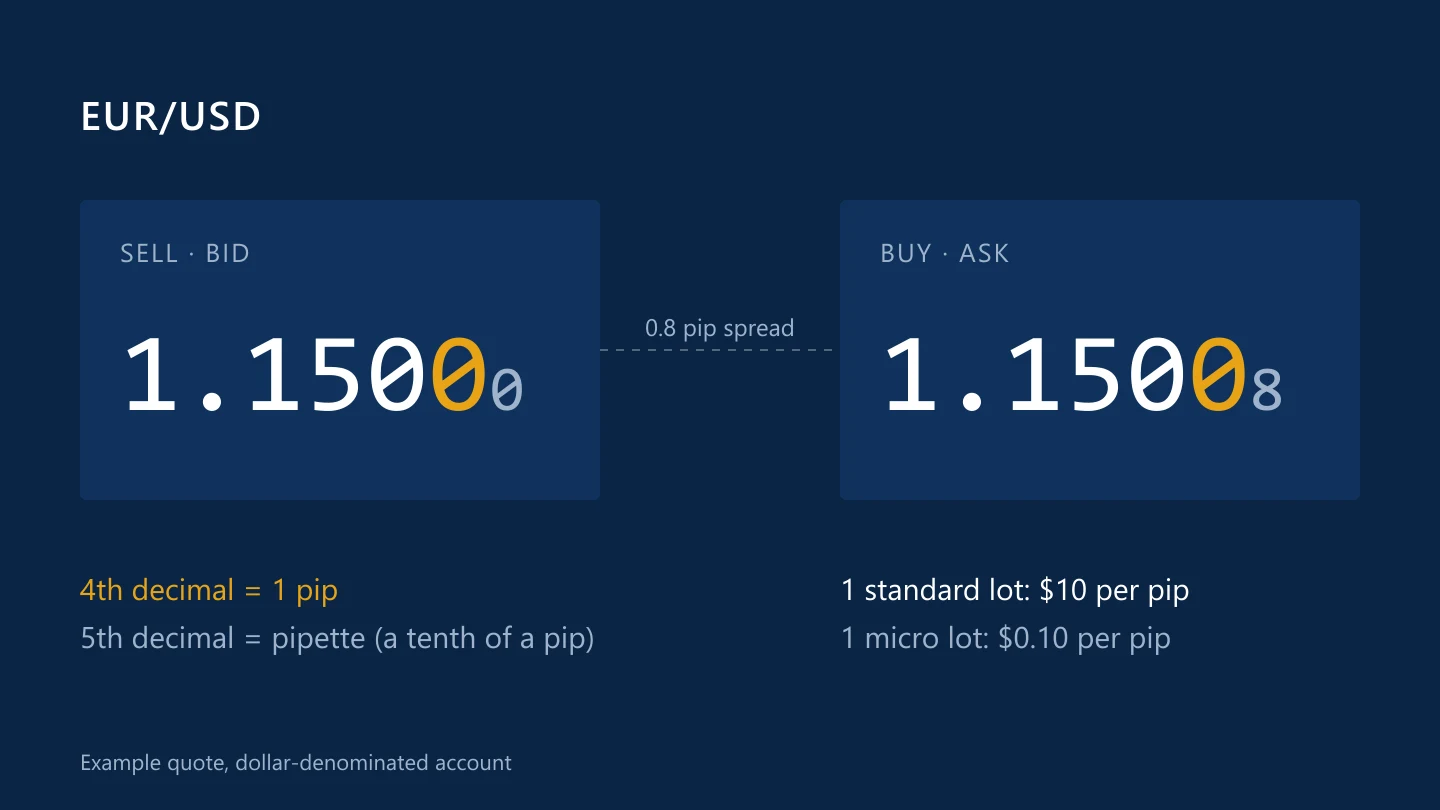
What is a pip? How to calculate pip value, with examples
A pip is the smallest standard price step in a currency pair. Here is how pips, pipettes and pip values work on EUR/USD, USD/JPY, crosses and gold.
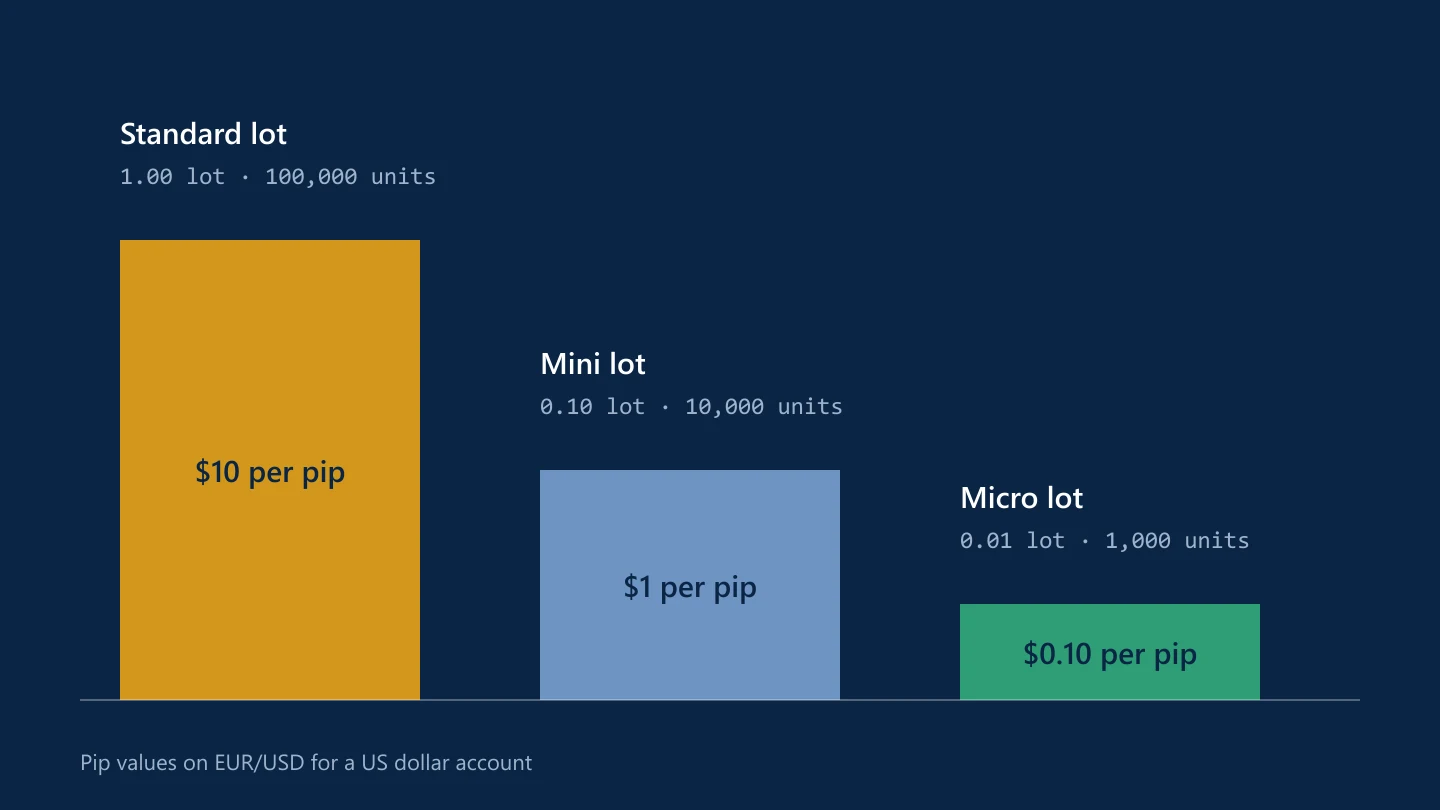
Lot sizes explained: standard, mini and micro lots
A lot sets how many units of currency you buy or sell. Getting it wrong is the fastest way to turn a small price move into a large loss.
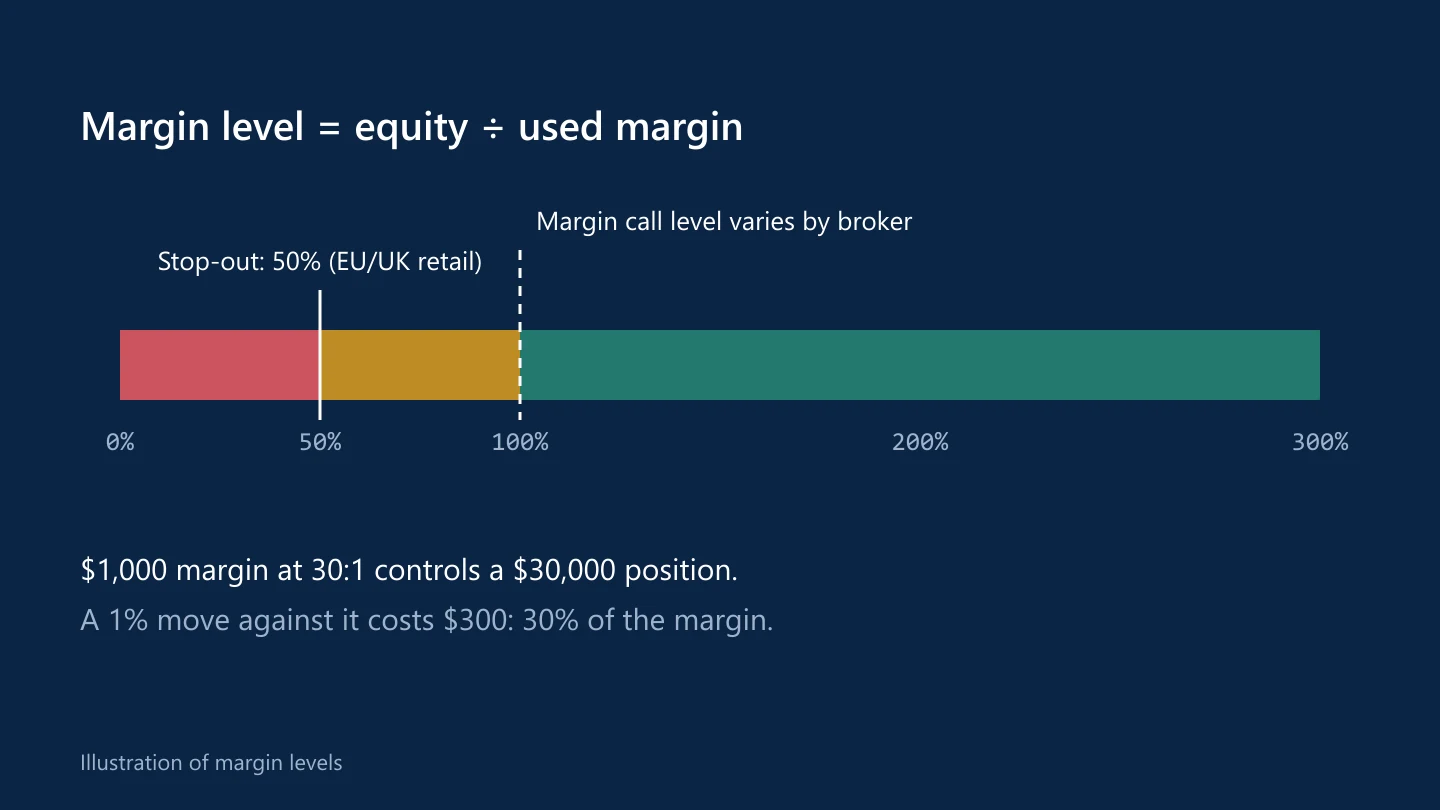
Leverage and margin explained: margin calls, stop-outs and how losses grow
Leverage lets you control a large position with a small deposit. It magnifies losses exactly as much as gains, and it is behind most blown trading accounts.
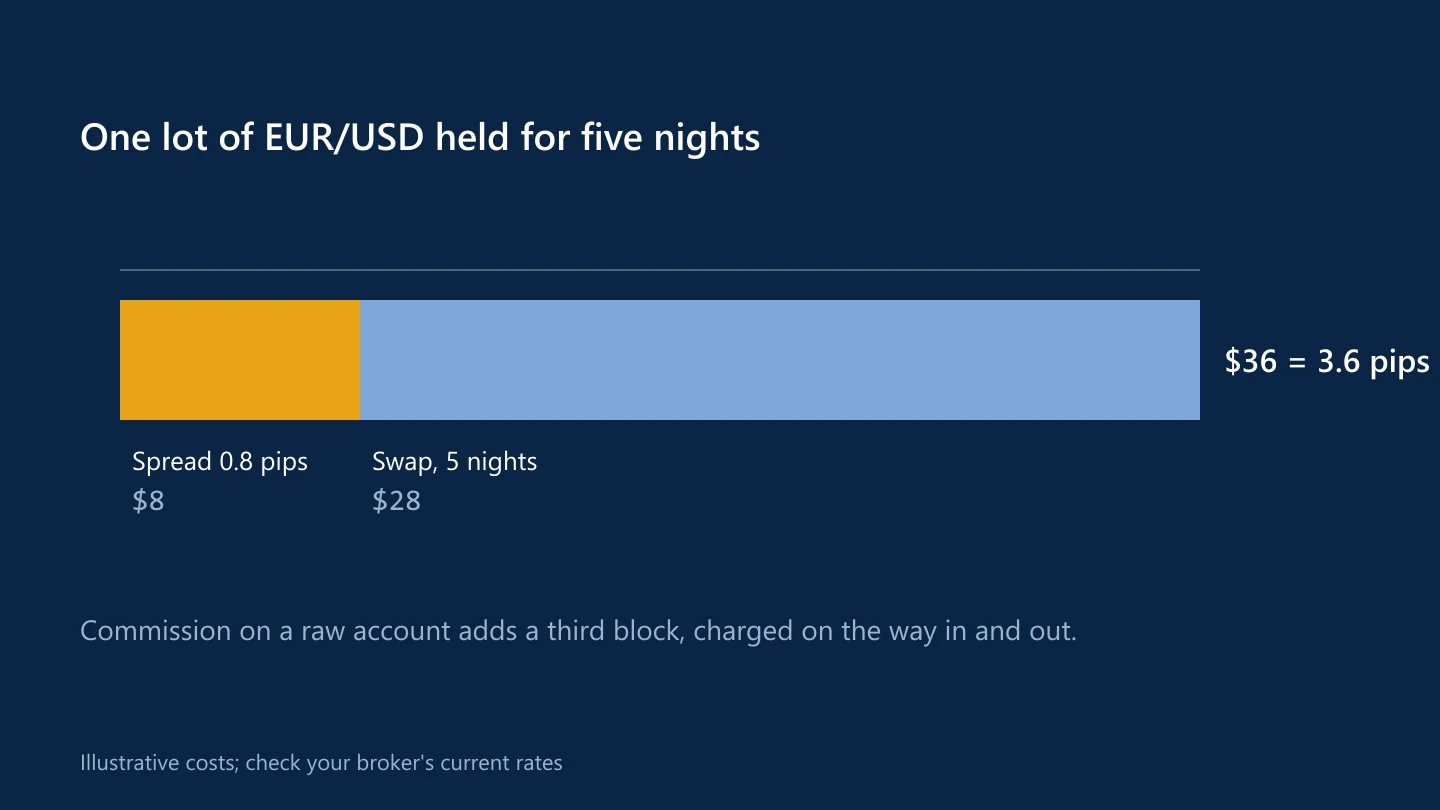
The real cost of a forex trade: spread, commission and swap
Every trade has costs, and they are easy to underestimate. Here is how to add up the spread, commission and overnight swap on a position.
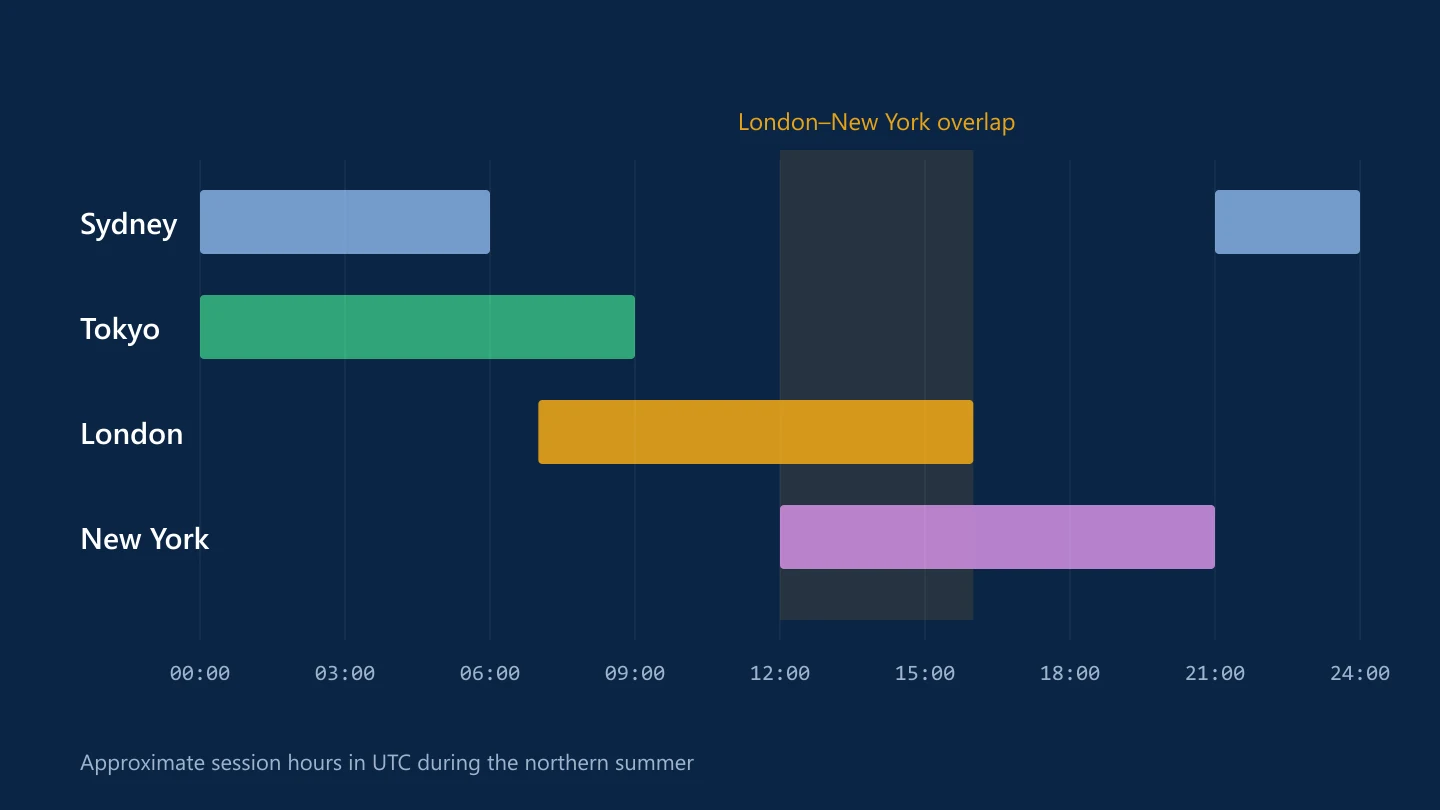
Forex market hours: the Sydney, Tokyo, London and New York sessions
Currencies trade around the clock on weekdays, but not with the same liquidity. Session times in UTC, the overlaps that matter and the daylight-saving trap.
How to read an economic calendar: actual, forecast, previous and impact
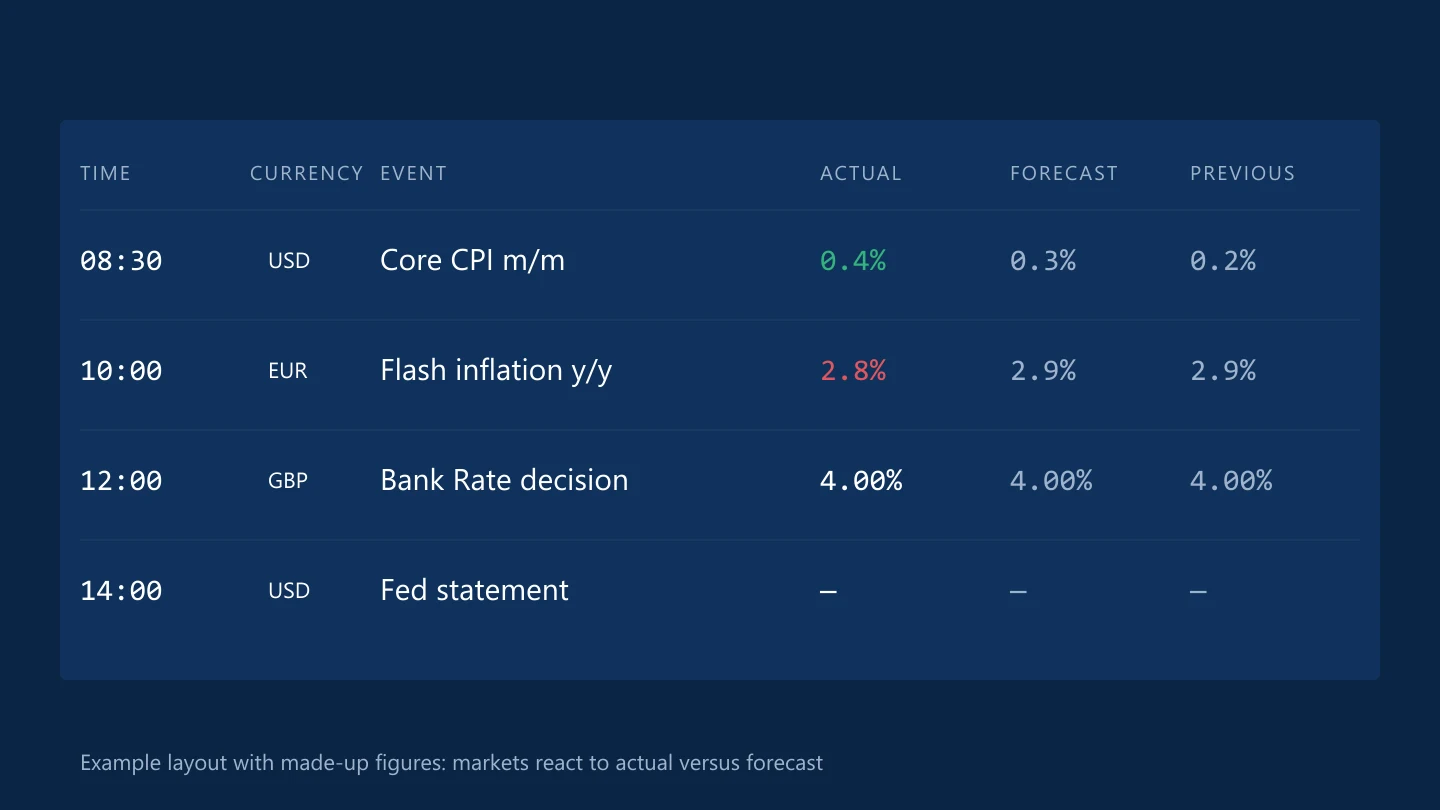
The economic calendar tells you when markets are likely to move. Here is what each column means and how traders use it to plan the week.
CPI explained: headline and core inflation for forex traders
The consumer price index is the inflation figure markets watch most closely. What it measures, why core CPI matters and how it links to interest rates.
How interest rate decisions move currencies
Central bank decisions are the biggest scheduled events in forex. Why rates matter, why a hike can weaken a currency, and what to read beyond the decision.
Position sizing: how to risk a fixed percentage per trade
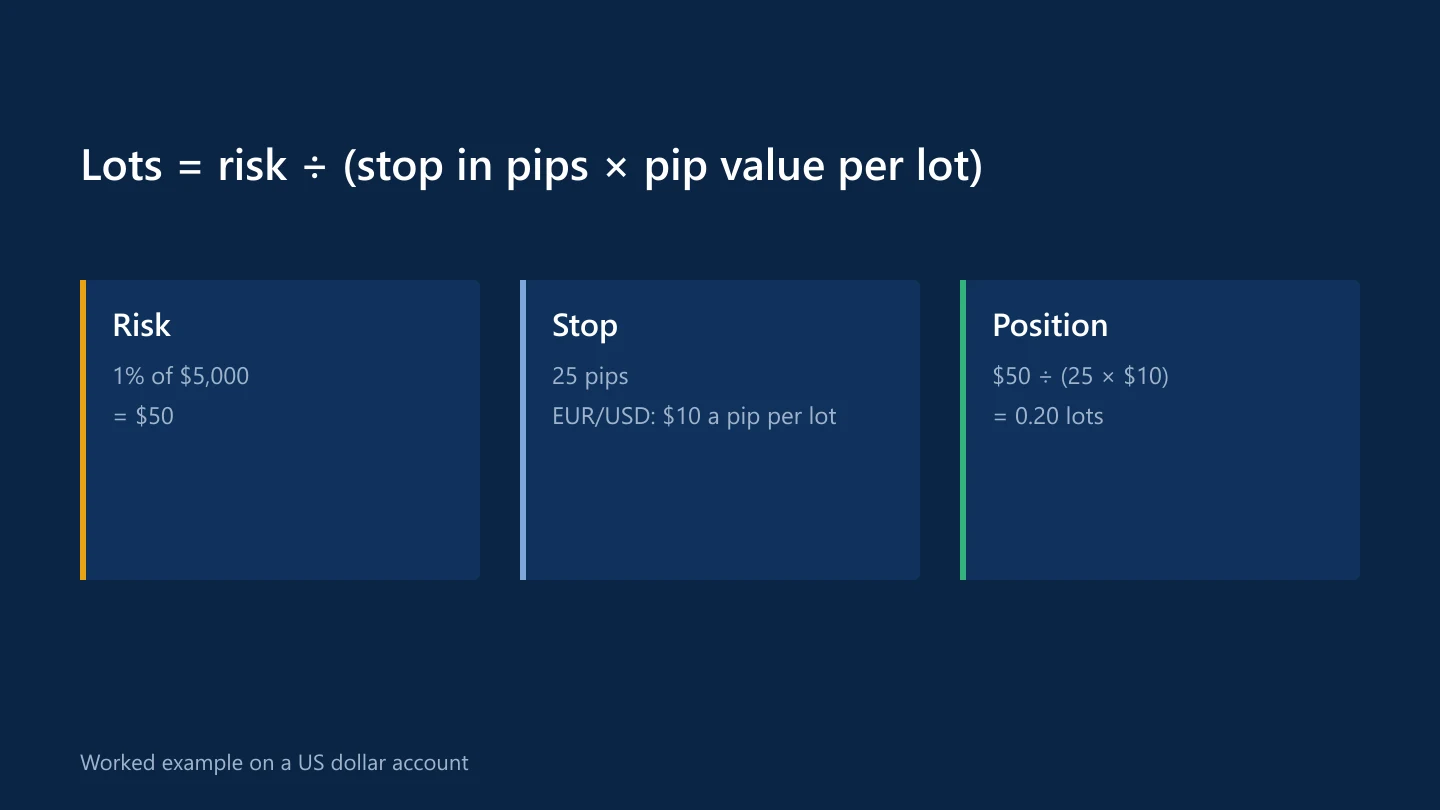
How much you trade matters more than where you enter. A step-by-step method for sizing positions from your stop-loss and the amount you are willing to lose.
Bid, ask and slippage: why your order fills at a different price
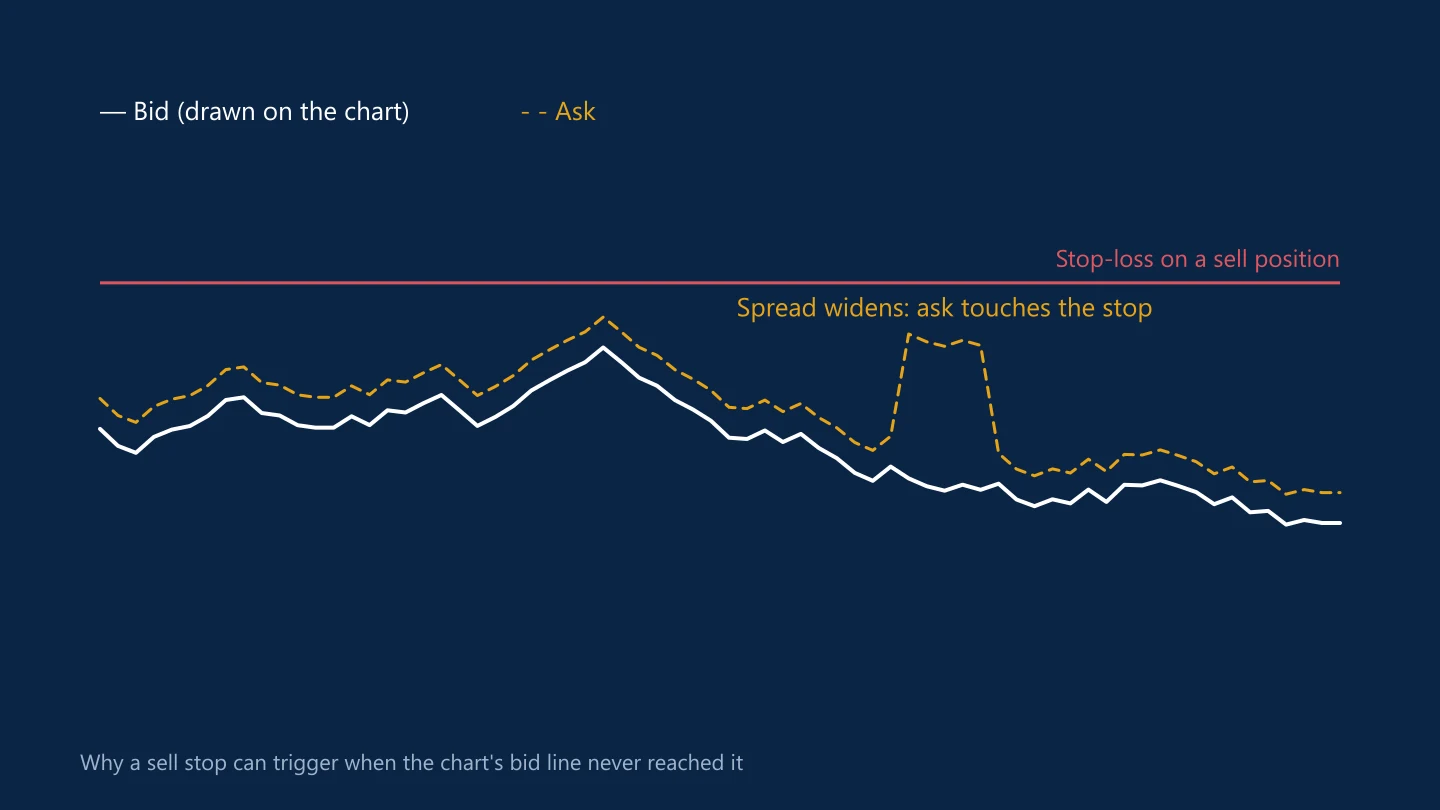
Why buy trades open at one price and close at another, why a stop can trigger when the chart never touched it, and how slippage happens.
Market, limit and stop orders: which order type to use
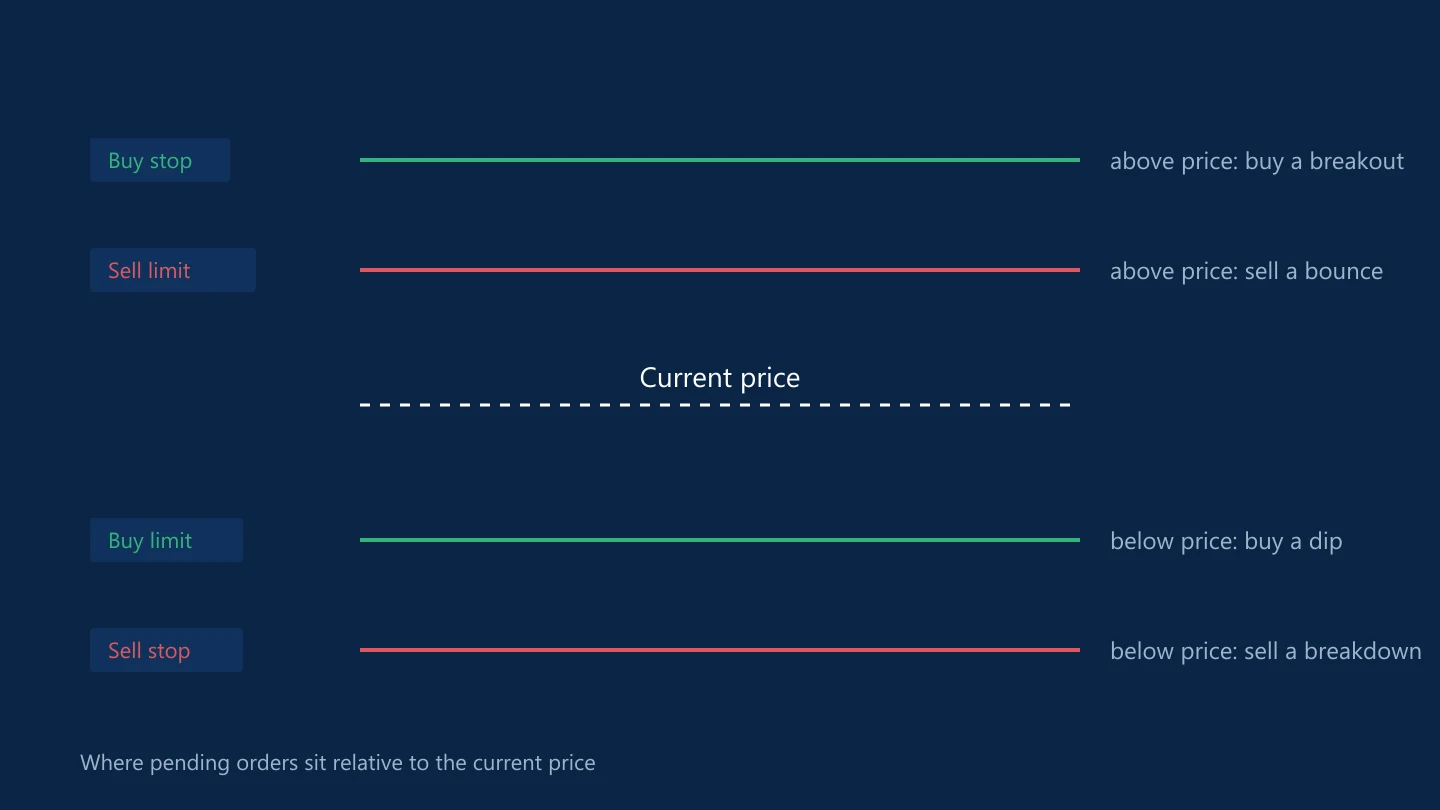
The order types on a trading platform decide when and at what price you enter or exit. What each one does, and the mistakes that cost traders money.
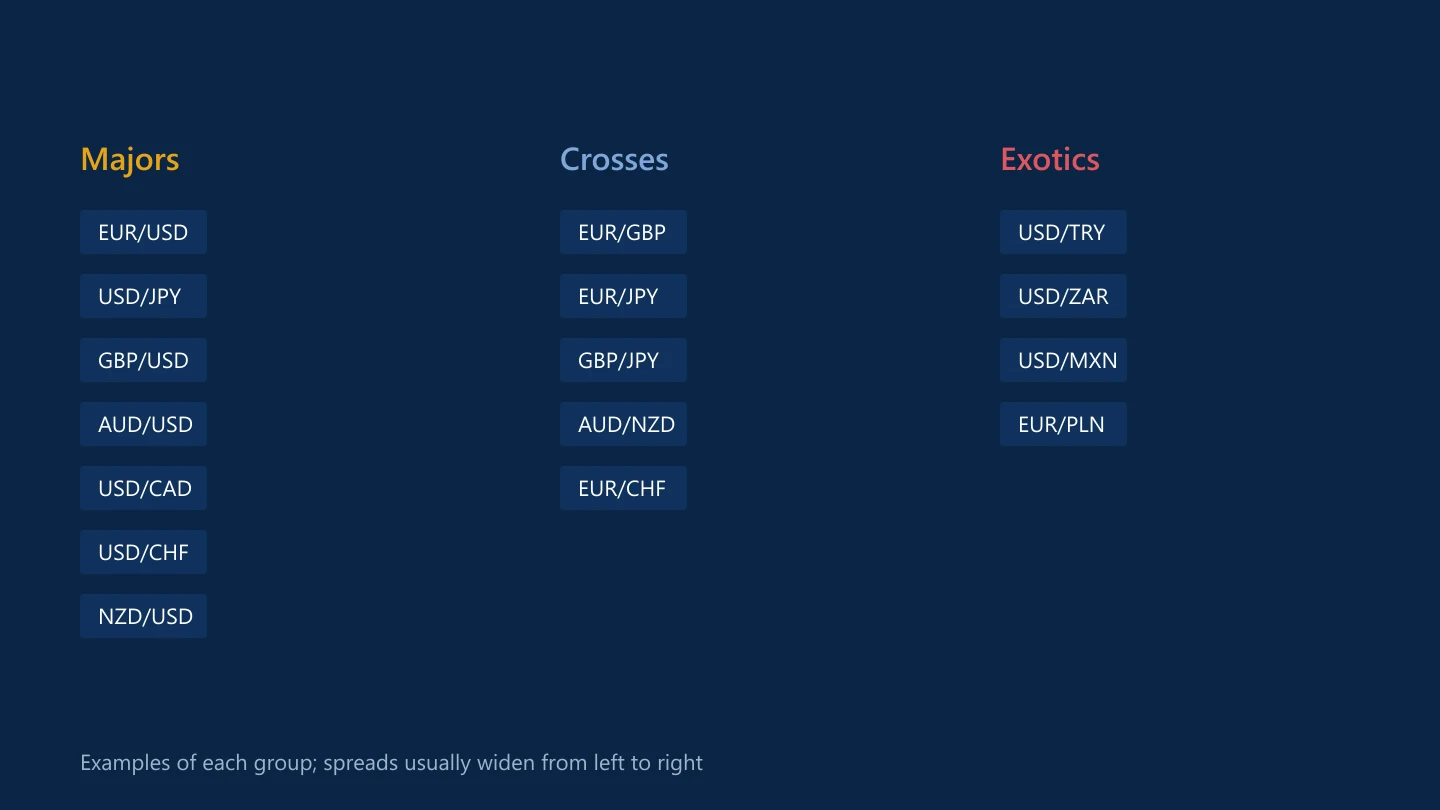
Major, minor and exotic currency pairs explained
How to read a currency quote, which pairs count as majors, crosses and exotics, and why spreads and risks differ so much between them.
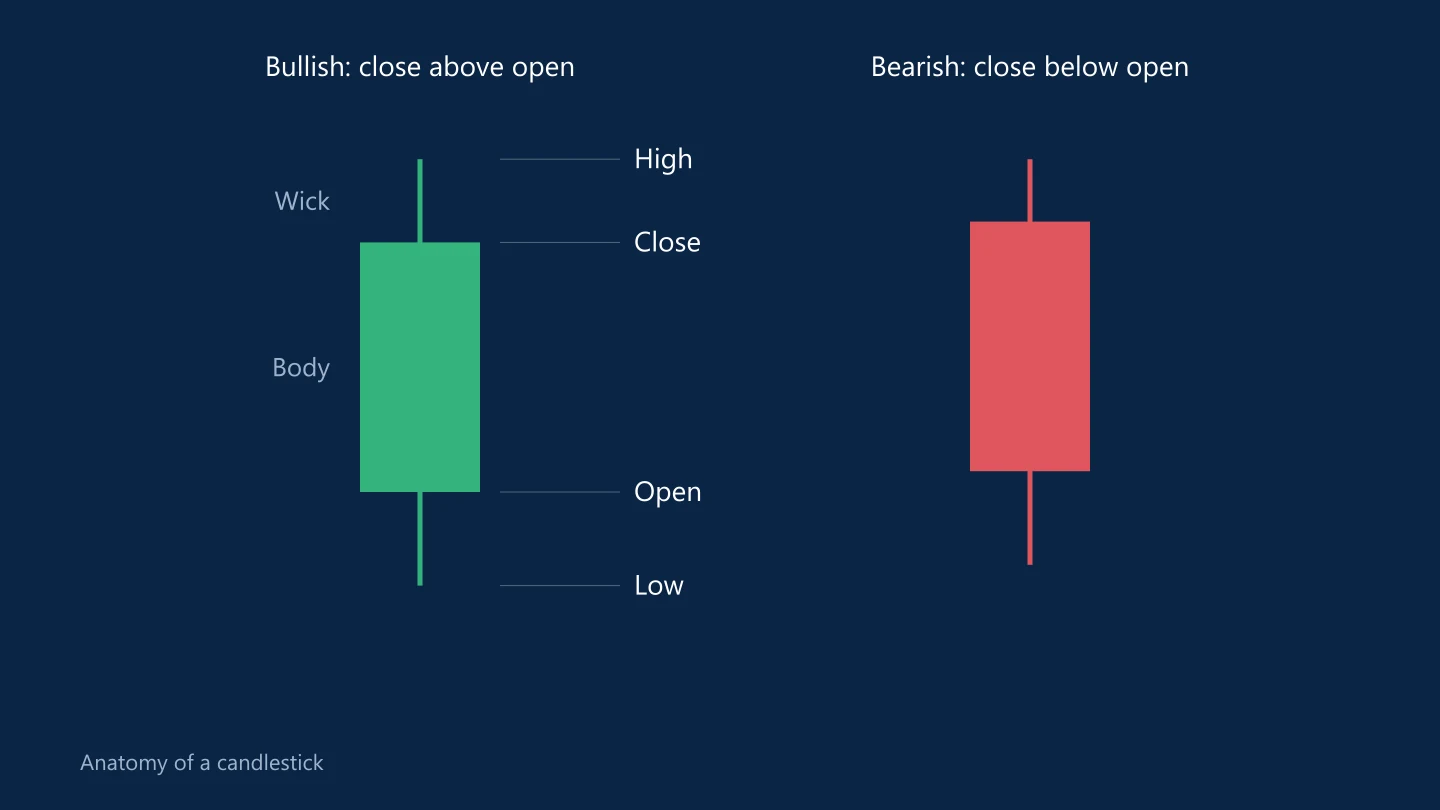
How to read candlestick charts
Candlesticks pack four prices into one shape. How to read the body and wicks, what timeframes mean and why single patterns are weaker than they look.
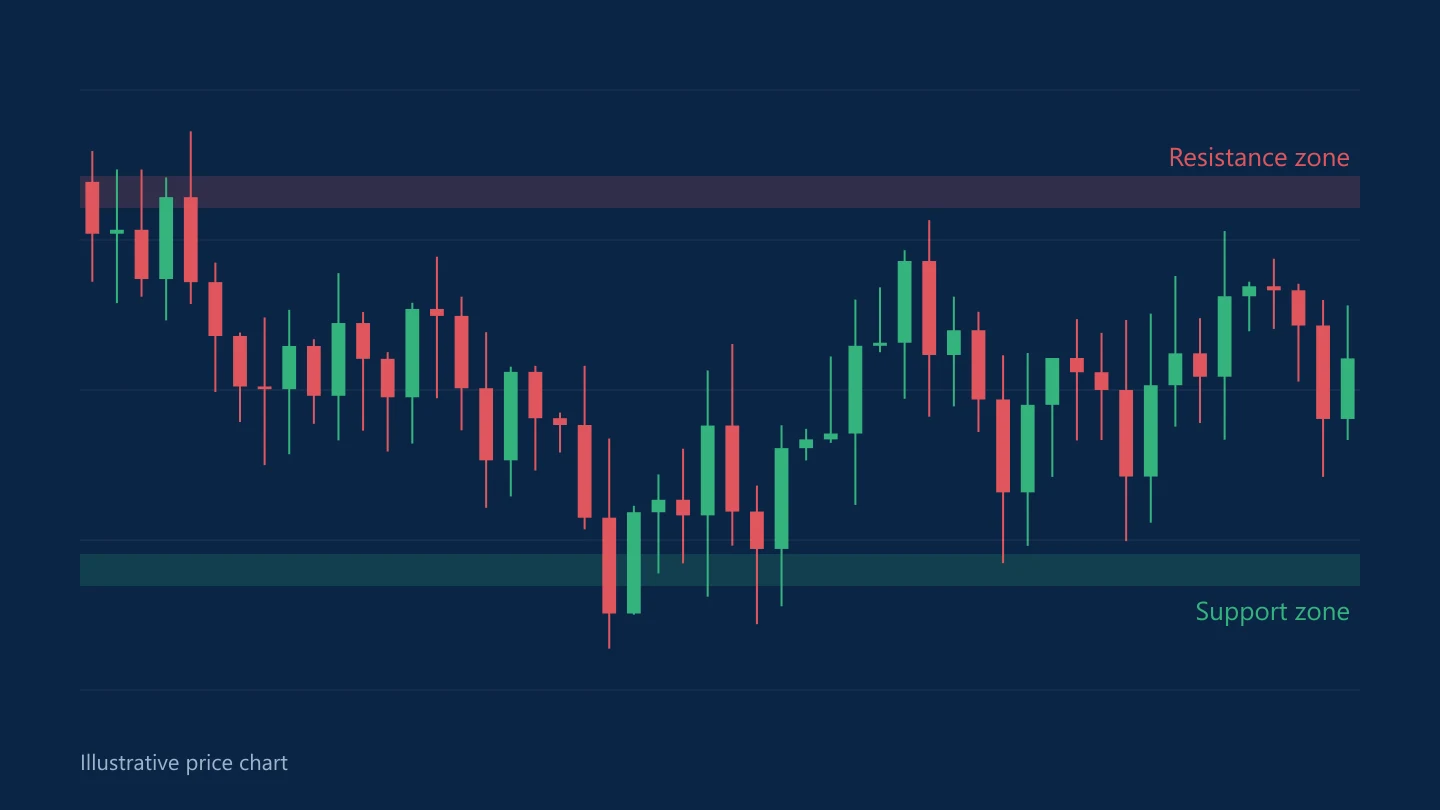
Support and resistance: how traders mark price levels
Support and resistance are the most widely used ideas in chart reading. How to find levels, why they work as zones, and what happens when they break.
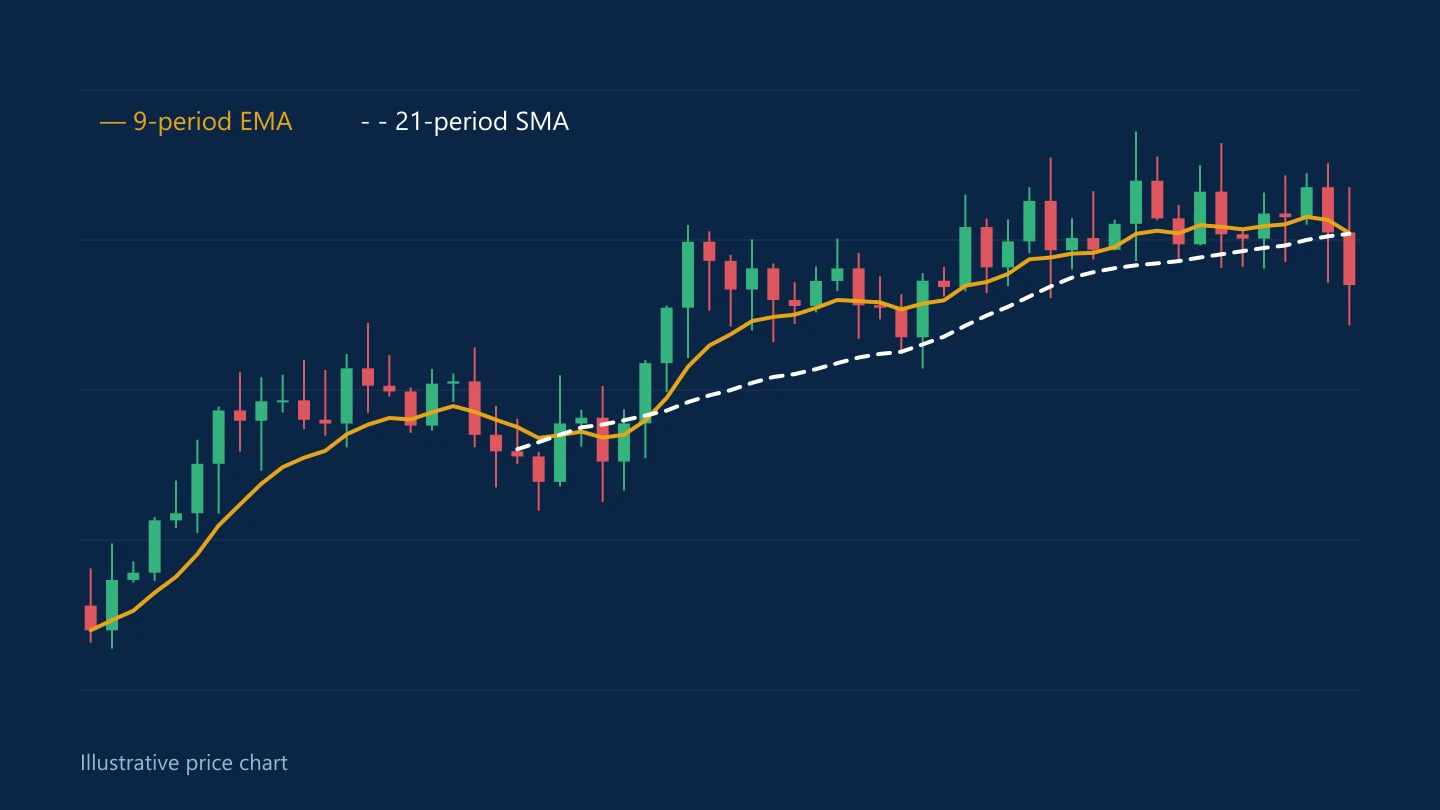
Moving averages explained: SMA and EMA
Moving averages smooth out price noise to show the trend. How simple and exponential averages are calculated, which periods traders use and where they fail.
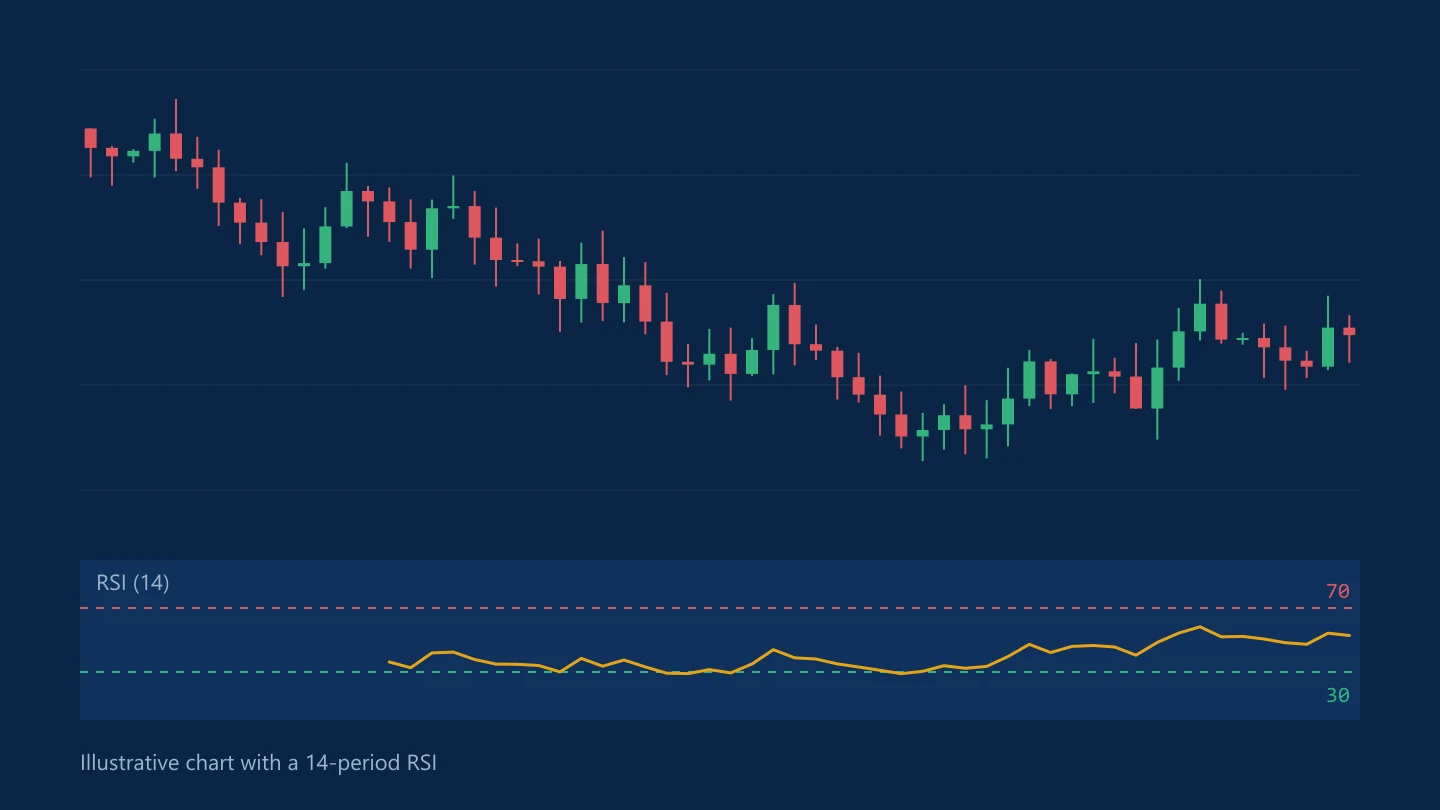
Forex RSI explained: overbought, oversold and divergence
The Relative Strength Index measures how strong recent moves have been. How it is calculated, what 70 and 30 really mean and why RSI can stay extreme in a trend.
Currency correlation: why EUR/USD and GBP/USD often move together
Pairs that share a currency or an economic driver tend to move in step. How correlation works, why it changes and how it can quietly double your risk.