Major, minor and exotic currency pairs explained
How to read a currency quote, which pairs count as majors, crosses and exotics, and why spreads and risks differ so much between them.
Every forex trade involves two currencies at once: you buy one and sell the other. Knowing how pairs are quoted and grouped helps you judge costs and risks before you trade.
Reading a quote
In EUR/USD 1.1500, the euro is the base currency and the US dollar is the quote currency. The price says one euro costs 1.15 dollars.
- Buying EUR/USD means buying euros and selling dollars.
- If the price rises, the euro has strengthened against the dollar.
Major pairs
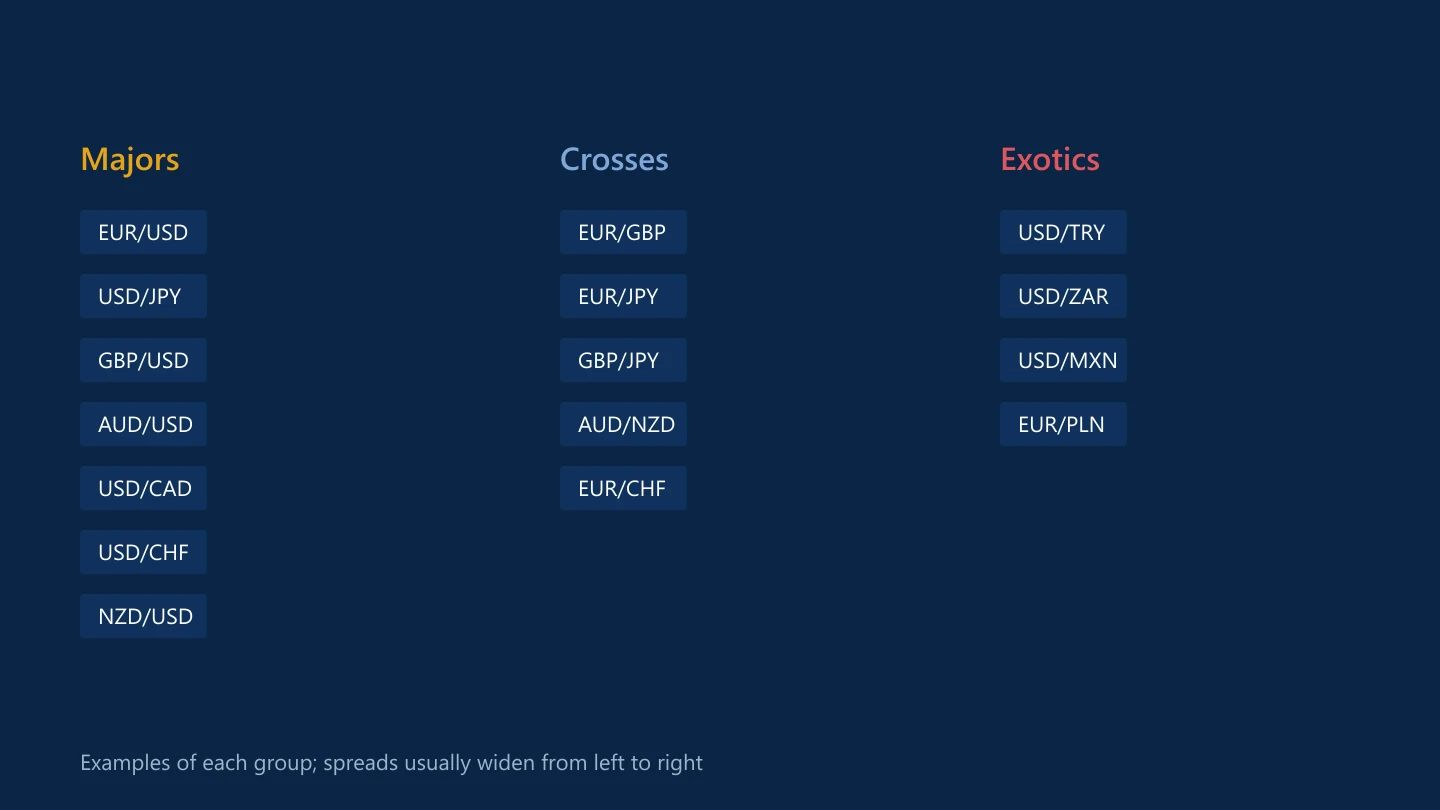
The majors are the most traded pairs, and all of them include the US dollar:
- EUR/USD (the euro, nicknamed fiber)
- USD/JPY
- GBP/USD (cable)
- AUD/USD (the aussie)
- USD/CAD (the loonie)
- USD/CHF (the swissy)
- NZD/USD (the kiwi)
The dollar's dominance is huge. In the Bank for International Settlements' 2025 survey of currency markets, the dollar was on one side of 89% of all trades, in a market turning over about $9.6 trillion a day. The euro was the second most traded currency and the yen the third.
Majors usually have the tightest spreads and the deepest liquidity.
Minor pairs, or crosses
Crosses are pairs between major currencies that don't include the dollar, such as EUR/GBP, EUR/JPY, GBP/JPY or AUD/NZD. They let you trade a view on two economies without taking a position on the dollar. Spreads are usually a little wider than on the majors.
Exotic pairs
Exotics pair a major currency with the currency of a smaller or emerging economy: for example USD/TRY (Turkish lira), USD/ZAR (South African rand), USD/MXN (Mexican peso) or EUR/PLN (Polish zloty).
They come with extra costs and risks:
- Wider spreads, sometimes many times those of the majors.
- Higher swaps, because interest rates in those economies are often much higher or lower.
- Sharper moves and gaps, driven by local politics, inflation or capital controls.
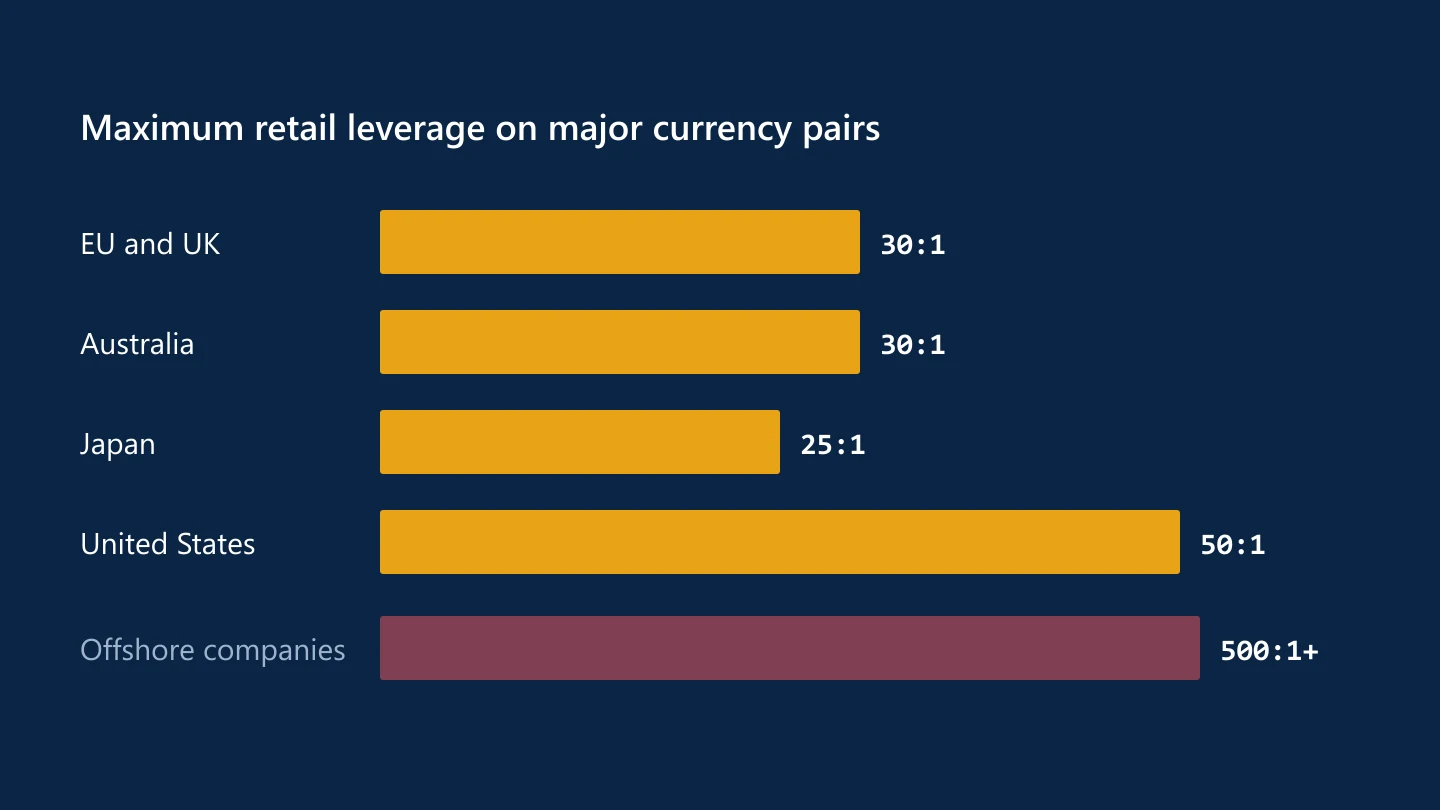
- Lower leverage limits at regulated brokers.
Which pairs to start with
Many traders begin with one or two majors, because costs are lower and information about them is plentiful. Live prices for all the pairs on FTC are on the markets page.
Sources
Common questions
What are the seven major currency pairs?
EUR/USD, USD/JPY, GBP/USD, AUD/USD, USD/CAD, USD/CHF and NZD/USD.
What is a cross currency pair?
A pair of major currencies that doesn't include the US dollar, such as EUR/GBP or GBP/JPY.
Why are exotic pairs more expensive to trade?
They trade in lower volumes, so spreads are wider, and interest rate differences often make swaps higher. They can also move sharply on local news.
This article is for information only and is not financial advice. Trading forex and CFDs carries a high risk of losing money. Read the risk warning. Spotted an error? Tell the editors.

Comments
Log in to join the discussion. Comments follow the community guidelines.
Log in to commentLoading comments…