What moves EUR/USD? The five drivers that matter most
EUR/USD is the market's default pair, and five forces decide its direction — with US rate expectations leading the list. Here is each driver, how they interact, and which one is in charge on any given day.
EUR/USD is the most analysed instrument in the world, and most of the analysis reduces to five forces. The pair's direction on any given day is the net of five stories — US rate expectations, euro-area policy, the growth gap, risk appetite and energy — and the trader's job is to know which story is leading. The forces are stable; their leadership rotates, and the rotation is the market.
This guide explains the five drivers, how they interact, and the diagnostic that tells you which one is in charge. The trading framework is in the EUR/USD guide; this guide is the driver map behind it.
Driver one: US interest-rate expectations
The dominant driver, most days: what the market expects the Federal Reserve to do next. The dollar's value rests on its rate story, and every US release that moves the Fed's expected path — CPI, payrolls, the Fed's own decisions — moves EUR/USD through the dollar leg. When US rate expectations rise relative to the euro area's, the pair tends to fall; when they fall, the pair rises. The Fed hike explainer walks the transmission, and how interest rate decisions move currencies covers the mechanics.
The driver's power comes from its speed: US rate expectations reprice in minutes on data surprises, which is why the pair's sharpest scheduled moves are US releases. The CPI trading guide covers the flagship event.
Driver two: euro-area policy
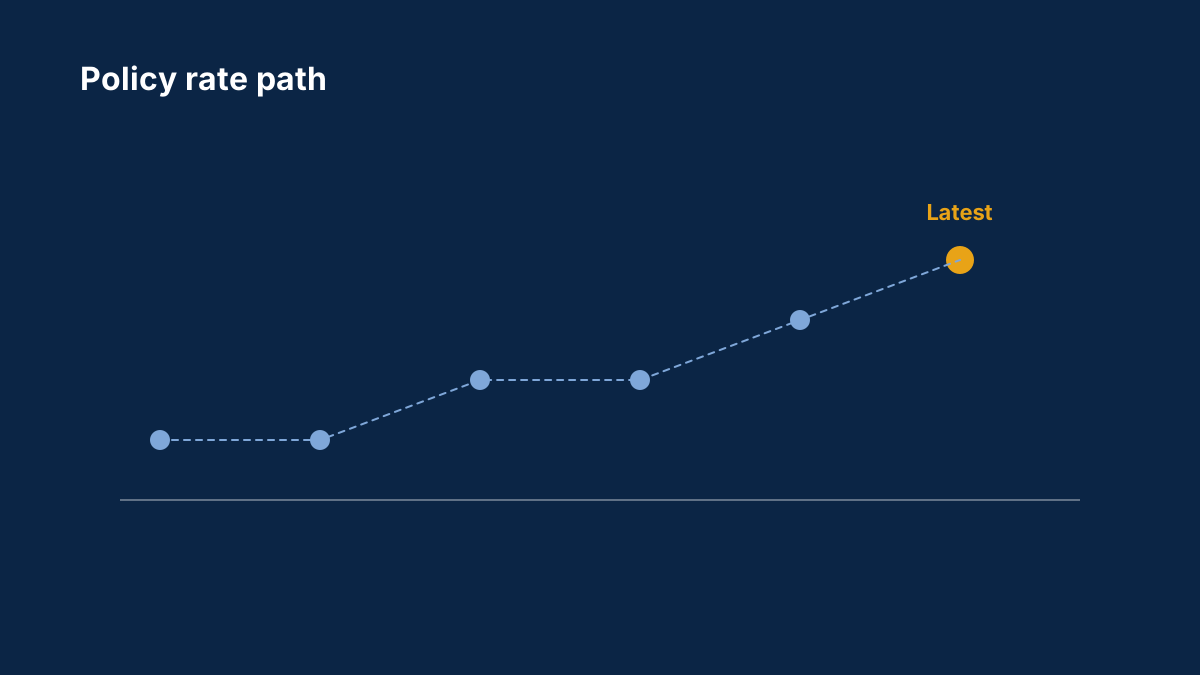
The euro's own rate story, run by the European Central Bank. The ECB raised its deposit rate to 2.50% in September (report), and its expected path — relative to the Fed's — is the euro leg of the pair. ECB decisions, euro-area inflation prints and the bank's speeches all move the pair through this driver.
The driver's practical weight: the euro side usually matters most when the dollar side is quiet, or when the ECB surprises. The pair's biggest euro-driven moves come on ECB days and euro-area inflation surprises — smaller in frequency than the US moves, but decisive when they land.
Driver three: the growth gap
Behind the rate stories sits growth. The pair's medium-term direction tracks the relative growth outlook: a US economy outperforming the euro area supports the dollar; a euro-area recovery outpacing the US supports the euro. The current picture is the live case: euro-area GDP grew 0.6% in the second quarter (report) while the US story is mixed — retail sales strong (report), housing soft (report).
The growth driver is slow: it moves the pair over weeks and months, and it shows up in the PMIs, GDP reports and sentiment surveys rather than in single releases. The PMI guide covers the surveys that track it.
Driver four: risk appetite
The sentiment driver: the dollar's haven status versus the euro's risk-asset character. When the world's mood turns fearful, money flows into dollars and out of the euro — the pair falls on fear regardless of the data. When calm returns, the flows reverse. The driver is intermittent but overwhelming while active: on genuine risk-off days, it overrides every other story. The risk-on risk-off guide covers the mechanics.
Driver five: energy prices
The fifth driver is the most structural: Europe imports energy on a scale the US does not, so energy shocks hit the euro area's terms of trade and inflation directly. The current cycle is the live demonstration — fuel prices pushing inflation up across Europe while the ECB tightens into it (UK PPI report shows the pipeline). The energy driver moves slowly but reshapes the other drivers' inputs: energy-driven inflation changes both central banks' paths, which is how the fifth driver reaches the first two. The oil and inflation explainer covers the channel.
Which driver is in charge?
The five drivers interact constantly, and the diagnostic question is: which one is leading today? The clues:
- US data days and Fed days: driver one leads.
- ECB days and euro-area prints: driver two leads.
- PMI and GDP weeks with no policy events: driver three leads.
- Equity swings, haven flows, headline fear: driver four leads — and overrides the rest while it lasts.
- Energy headlines and commodity shocks: driver five works through the others, changing the rate stories' inputs.
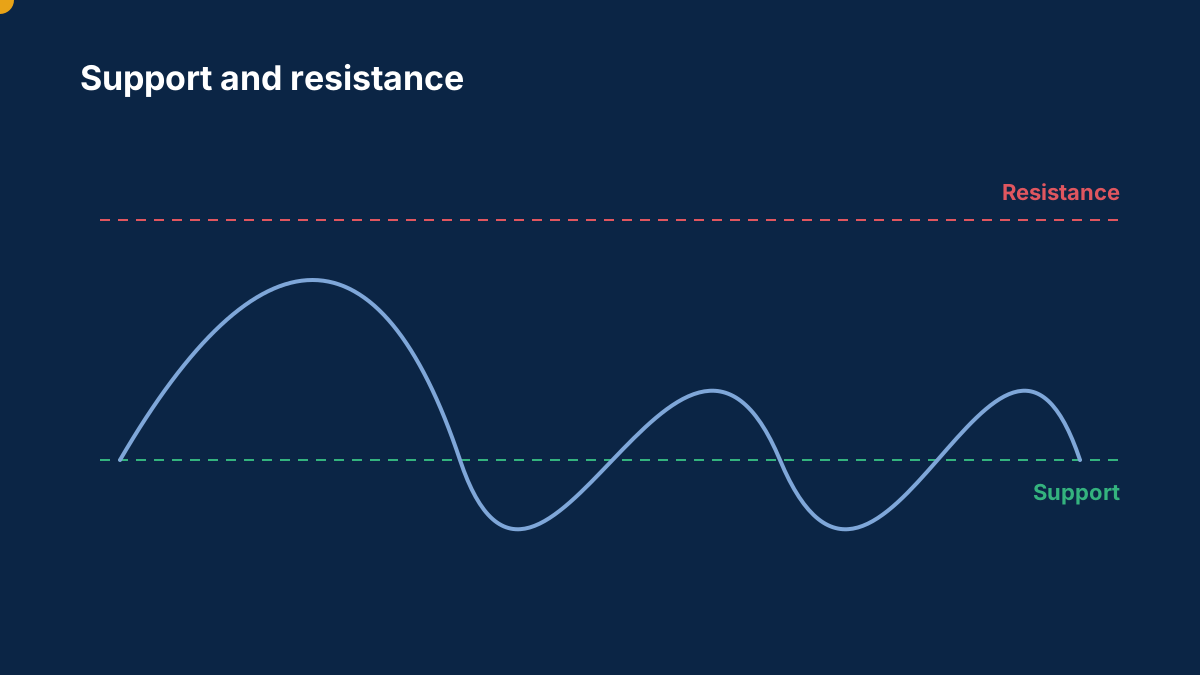
The diagnostic is not academic — it decides which calendar to watch and which trades to take. The pair trends when the drivers agree and chops when they fight, and the trader's first read of the day is the agreement or the fight. The DXY guide supplies the dollar-side read that anchors the diagnostic.
The driver rotation's mechanics
The five drivers' leadership rotates, and the rotation has mechanics worth mapping. The rotation's rhythm: the rate-expectations driver leads on the data days, the policy driver on the bank days, the growth driver on the quiet weeks, the risk driver on the fear days, and the energy driver works through the others over months. The rotation is not random — it follows the calendar's shape, and the economic calendar guide maps the week's driver before the week starts. The trader's read is the same diagnostic the whole guide teaches: name the leading driver, and trade the pair the driver describes.
The rotation's second mechanic is the handover: the drivers change leadership at identifiable moments — a Fed day handing to a growth week, a risk shock overriding the data. The handover's signature is the pair's behaviour change: the same levels, the same session, but the moves' causes shift. The risk sentiment guide covers reading the mood shift that most often forces the handover; the prepared trader recognises the change by the drivers' fingerprints the guide's earlier sections described.
The daily diagnostic, run end to end
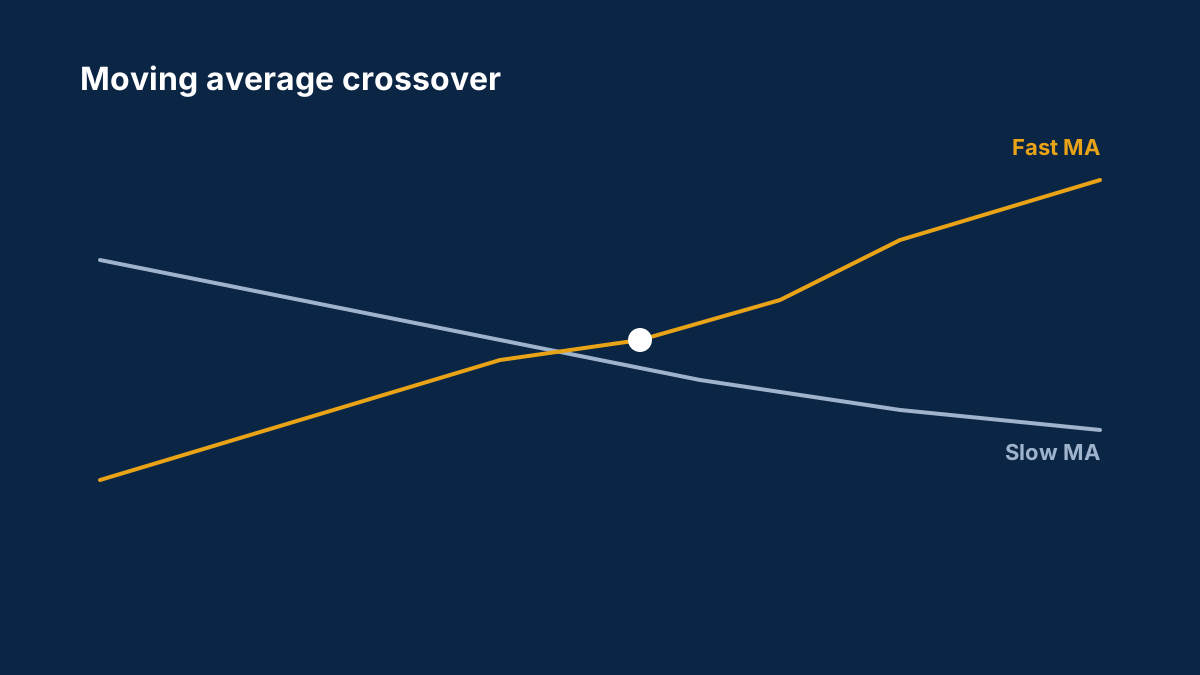
The diagnostic, run end to end on a typical session: open with the dollar's condition — the DXY's trend and the 10-year yield's direction, per the DXY guide and the 10-year yield explainer; check the calendar for the day's releases — the calendar on this site shows which driver's data lands today; check the risk mood — the five-minute read from the risk sentiment guide; and name the driver. The naming is the session's frame: a US CPI morning is driver one's day, an ECB speech is driver two's, a quiet Tuesday with PMIs is driver three's, an equity sell-off is driver four's, and an oil headline is driver five's. The pair's trades follow the driver's logic — the EUR/USD guide supplies the framework each driver feeds.
The diagnostic's output is one sentence — "today the pair trades driver X" — and the sentence's value is the trades it rules out as much as the ones it allows. The trader who names driver one on CPI morning does not fade the dollar on a pattern; the trader who names driver four on a fear day does not trade the rate story against the flows. The naming is the discipline, and the discipline is the edge.
The pair's current driver balance
The pair's current balance, read through the guide's five drivers: driver one leads on the Fed's "higher for longer" path (report) — the dollar's structural support and the pair's dominant force; driver two runs second, with the ECB's hike to 2.50% (report) keeping the euro's side live; driver three is the growth gap's mixed evidence — the euro-area recovery (report) against the US's mixed data; driver four is intermittent, with the energy shock and the geopolitical backdrop keeping the fear premium's floor; and driver five is the energy story feeding the other drivers' inputs through the oil and inflation channel. The balance's practical form: the pair trades driver one most days, driver two on the ECB's calendar, and driver four whenever the mood turns — the pair explainers map the balance's daily expression.
The balance's lesson is the guide's summary: the five drivers are always all present, and the pair's price is their weighted sum, with one driver leading at a time. The trader's entire job is the weighting's daily read — and the five-driver map is the tool that makes the read systematic.
EUR/USD is five stories in one chart. Name the leading driver, watch its calendar, and trade its direction — and the world's most analysed pair stops being a mystery and becomes a checklist.
Sources
Common questions
What moves EUR/USD the most?
US interest-rate expectations lead most days: US CPI, payrolls and Fed decisions move the pair through the dollar leg. The euro side matters most on ECB days and euro-area inflation surprises.
Why does EUR/USD fall on strong US data?
Strong US data raises Fed rate expectations, which attracts money into dollars. The pair falls as the expected rate gap widens in the dollar's favour — the same transmission as every dollar pair.
How does risk appetite affect EUR/USD?
The dollar is a haven and the euro a risk asset, so fear pushes the pair down and calm lifts it. On genuine risk-off days, the sentiment driver overrides the data.
Why do energy prices matter for the euro?
Europe imports energy on a scale the US does not, so energy shocks hit the euro area's terms of trade and inflation directly — and the inflation reaches the ECB's policy path.
How do I know which driver is leading?
Match the day to the calendar: US data days mean rate expectations lead, ECB days mean euro policy leads, equity swings mean risk appetite leads. The pair trends when drivers agree and chops when they fight.
This article is for information only and is not financial advice. Trading forex and CFDs carries a high risk of losing money. Read the risk warning. Spotted an error? Tell the editors.
Comments
Log in to join the discussion. Comments follow the community guidelines.
Log in to commentLoading comments…