Why trade crosses? The case for dropping the dollar
Crosses like EUR/GBP and EUR/JPY remove the dollar and trade two economies directly. Here is what changes without the dollar, and when the crosses are the cleaner trade.
Most of the market's attention flows through the dollar — and a large share of the dollar's daily noise comes from stories that have nothing to do with the two economies a trader actually wants to express. Crosses solve that: EUR/GBP, EUR/JPY and their siblings remove the dollar entirely and trade two currencies directly against each other. The result is a cleaner instrument, but a different one — and knowing when the cross is the better trade is a skill in itself.
This guide explains what changes without the dollar and when crosses are the cleaner choice. The construction is in cross rates explained; the trading frameworks in the individual guides across this pack.
What the cross removes
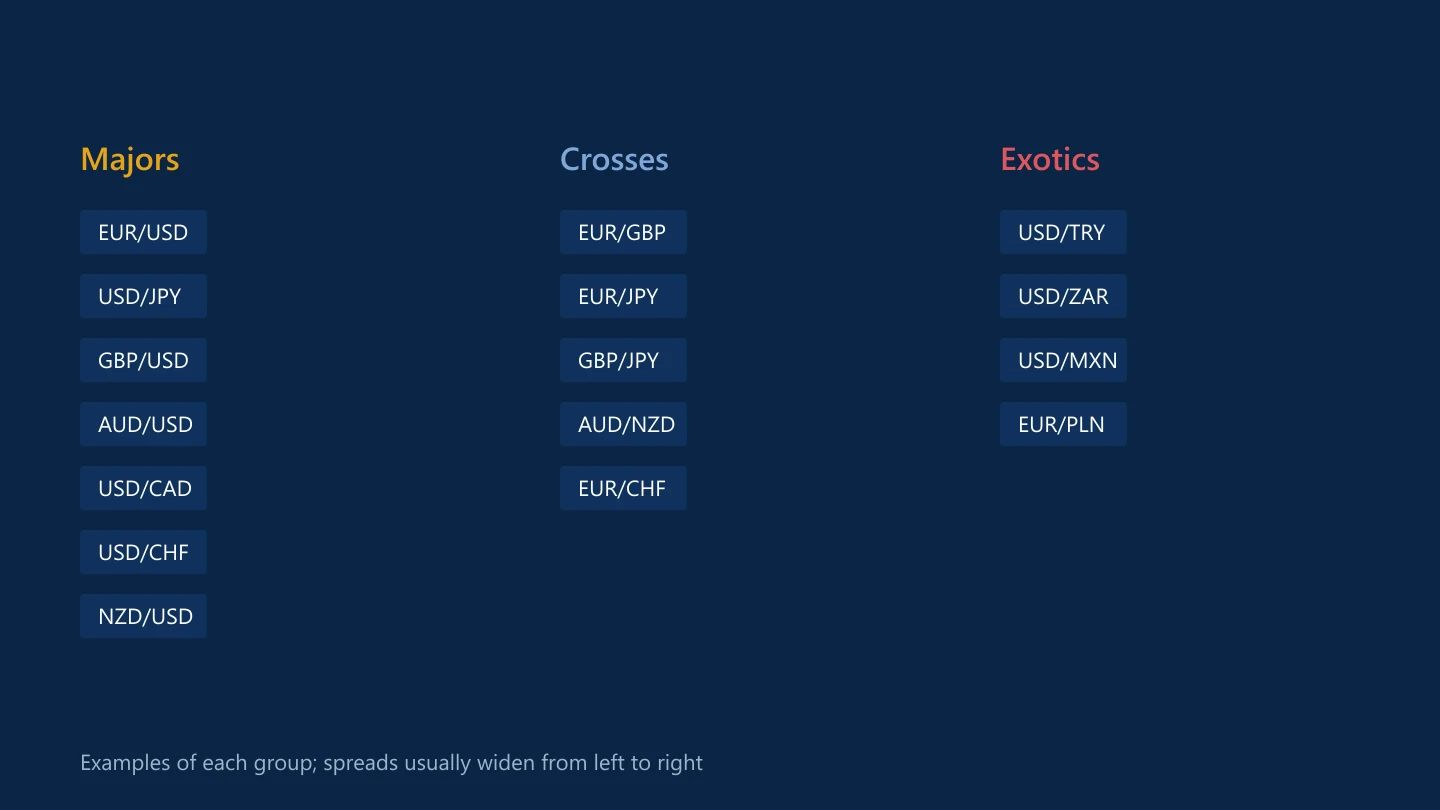
A cross is a pair with no dollar: EUR/GBP is the euro against the pound, EUR/JPY the euro against the yen. Removing the dollar removes three things:
The dollar's noise. The dollar moves on US data, Fed decisions and its own haven flows — none of which the cross's two economies control. When the dollar is choppy on its own story, the cross trades on the two currencies' relative stories instead, without the dollar's interference. The EUR/GBP guide covers the isolation in practice.
The double exposure. A dollar-pair trade is always two bets: the currency you chose and the dollar against it. A long EUR/USD is long the euro and short the dollar simultaneously — if the dollar strengthens for its own reasons, the trade loses despite the euro doing nothing. The cross removes the hidden bet: EUR/GBP is the euro against the pound, and nothing else.
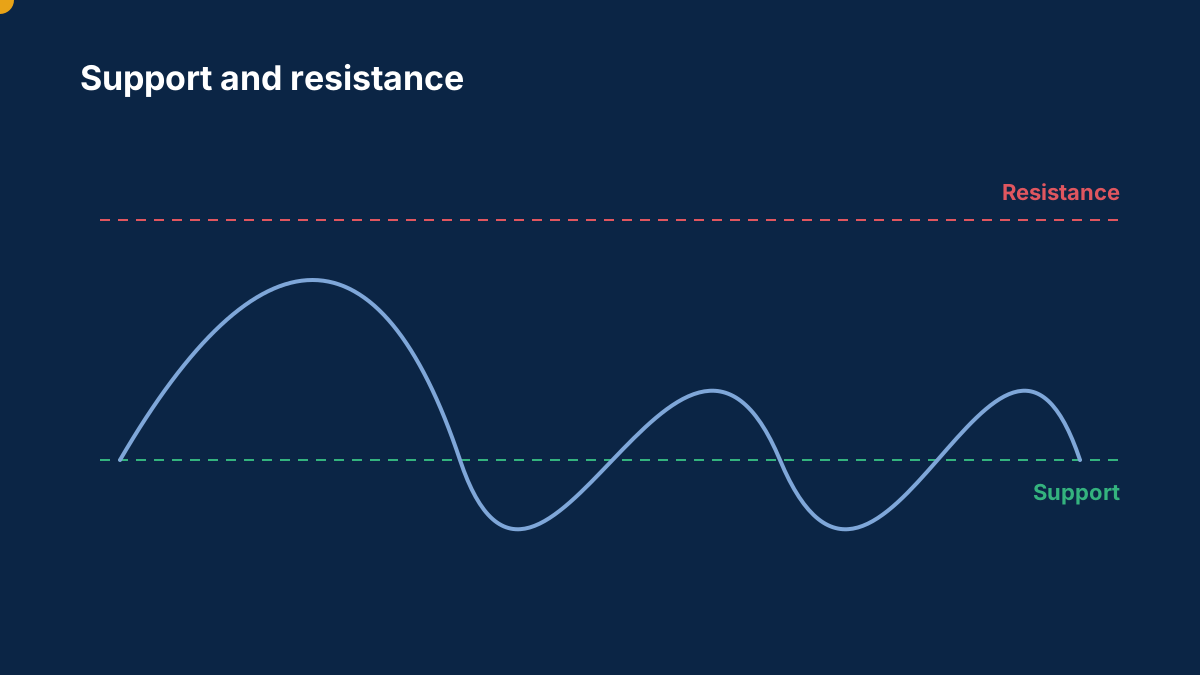
The crowded arena. The dollar pairs are where the market's attention concentrates — the most crowded, most stop-hunted and most news-driven instruments. The crosses, especially the smaller ones, trade with less crowding, which changes the price behaviour. The support and resistance guide explains why less-crowded levels hold differently.
What the cross keeps
The cross is not the dollar pair with a piece missing — it is its own instrument, with its own features:
The relative story. The cross trades the difference between two economies — their growth, inflation and policy paths measured against each other. The relative read is the cross's entire logic, and the EUR/GBP explainer shows the relative method applied. The cross only moves when the relative story changes, which makes its moves fewer and cleaner.
The range character. Without the dollar's trends, the European crosses in particular tend to range — the two economies are too integrated for long divergence. The range character suits the range trading playbook directly.
The pip-value conversion. The cross's pip value is quoted in the quote currency — £10 per pip per standard lot on EUR/GBP — and converting it to the account currency adds a step the dollar pairs skip. The pip value guide has the conversion arithmetic.
When the cross is the better trade
The cross wins in specific situations:
When the dollar is the noisy leg. A week of US data, Fed events and dollar headlines makes every dollar pair a dollar trade first. The cross expresses the view without the dollar's interference — the trader who wants the euro against the pound, and not the dollar's opinion, trades EUR/GBP.
When the view is relative. The trader who sees the ECB and the BoE diverging has a relative view — and the cross is its direct expression, without the dollar's third story blurring it. The central bank divergence thread covers the divergence logic the cross isolates.
When the dollar pairs are crowded. The majors' levels are the market's most hunted. The crosses' levels, watched by fewer eyes, often behave more technically — cleaner reactions, fewer false breaks. The breakout guide explains why confirmation matters less where the crowd is thin.
When the spread is acceptable. The crosses' spreads are wider than the majors' — the cost of their thinner liquidity — and the trade must clear the cost. The trading costs guide has the comparison arithmetic. The bigger crosses — EUR/GBP, EUR/JPY — carry manageable spreads; the smaller ones must justify theirs.
The honest trade-offs
The cross's advantages have honest costs. The spreads are wider, the liquidity is thinner, and the pairs' range behaviour frustrates trend traders. The cross is not better than the dollar pairs — it is different, and the difference is the point: a cleaner relative read, a quieter arena and a smaller crowd. The EUR/JPY guide and GBP/JPY guide show the difference in two very different crosses.
The cross trader's calendar
The cross's calendar is the two economies' calendars, minus the dollar's — and the subtraction changes the week's shape. A EUR/GBP trader's week has no Fed days, no US CPI mornings and no payrolls: the events that matter are the BoE's and the ECB's, the UK's and the euro-area's data, and the collision days when both sides land together. The economic calendar guide covers filtering the calendar to the pairs; the cross's version is the filter applied twice — the two economies' entries kept, the dollar's dropped.
The calendar's practical consequence is the quieter week: the cross's event days are fewer, its moves are more clearly attributable, and the plan's risk profile is smoother than the dollar pairs'. The quiet is the cross's appeal — the trader who wants the relative story without the dollar's noise gets exactly that, and the EUR/GBP guide shows the quieter calendar in practice.
The cross trader's pitfalls
The cross's differences carry their own pitfalls, and the honest list matters:
The conversion error. The pip value's quote-currency conversion — £10 per pip on EUR/GBP, converted to dollars — is the cross's most common sizing mistake, and the pip value guide exists to prevent it. The trader who sizes a cross like a dollar pair has already made the error.
The thinner liquidity's cost. The cross's spreads are wider and its fills are thinner than the majors' — the cost of the quieter arena — and the trading costs guide covers the arithmetic that must clear the cost.
The range's patience test. The European crosses' range behaviour frustrates the trend habits the dollar pairs reward — the range trading playbook covers the regime, and the trader who forces trend trades into a range pays the spread repeatedly for the privilege.
The overlooked counterparty story. The cross's moves are the relative story's, and the trader who reads only one economy's news is reading half the pair. The EUR/GBP explainer covers the two-sided read the cross demands.
The pitfalls' shared pattern is the dollar habits carried over: the sizing, the cost assumptions, the trend expectations. The cross rewards the trader who relearns the pair on its own terms — and the cross rates guide supplies the terms' mechanics.
Choosing the right cross
The cross family is not one instrument, and the choice among the crosses matters. The decision's axes: the liquidity — the bigger crosses (EUR/GBP, EUR/JPY) carry manageable spreads, the smaller ones must justify theirs; the regime — the European crosses range, the yen crosses trend with the risk mood; and the story — each cross isolates a specific relative view, and the trader's view should match the cross's logic. The EUR/GBP guide, EUR/JPY guide and GBP/JPY guide cover the family's members; the choice's rule is the view first, the cross second — the trader who picks the instrument before the story is trading the symbol, not the thesis.
The choice's practical test is the driver question: what relative story do I actually hold, and which cross expresses it with the least extra noise? The answer's cross is the trade's instrument — and the dollar pairs, with their hidden dollar bet, are the instruments the cross replaces.
Crosses are the market's quiet room — the same trading, minus the dollar's noise and crowd. Trade them when the view is relative and the dollar is loud, and the case for dropping the dollar makes itself.
Sources
Common questions
What is a cross currency pair?
A pair with no dollar — EUR/GBP, EUR/JPY and the like. The cross trades two currencies directly against each other, isolating their relative stories from the dollar's.
Why trade crosses instead of dollar pairs?
To remove the dollar's noise and its hidden bet. A cross expresses the relative view between two economies directly, without the dollar's third story blurring it.
Are cross spreads wider than the majors'?
Yes — the crosses are less liquid, so their spreads are wider. The bigger crosses like EUR/GBP and EUR/JPY are manageable; the smaller ones must justify the cost.
Why do European crosses range so much?
The economies are too integrated for long divergence, so the crosses spend most of their time between levels. The range character suits range-trading approaches.
How do I calculate the pip value on a cross?
The pip value is quoted in the quote currency — £10 per pip per standard lot on EUR/GBP — then converted to your account currency. The conversion step is where most cross-sizing errors happen.
This article is for information only and is not financial advice. Trading forex and CFDs carries a high risk of losing money. Read the risk warning. Spotted an error? Tell the editors.
Comments
Log in to join the discussion. Comments follow the community guidelines.
Log in to commentLoading comments…