The real cost of a forex trade: spread, commission and swap
Every trade has costs, and they are easy to underestimate. Here is how to add up the spread, commission and overnight swap on a position.
A trade has to overcome its costs before it makes money. For forex and CFDs there are three main costs, and each works differently.
1. The spread
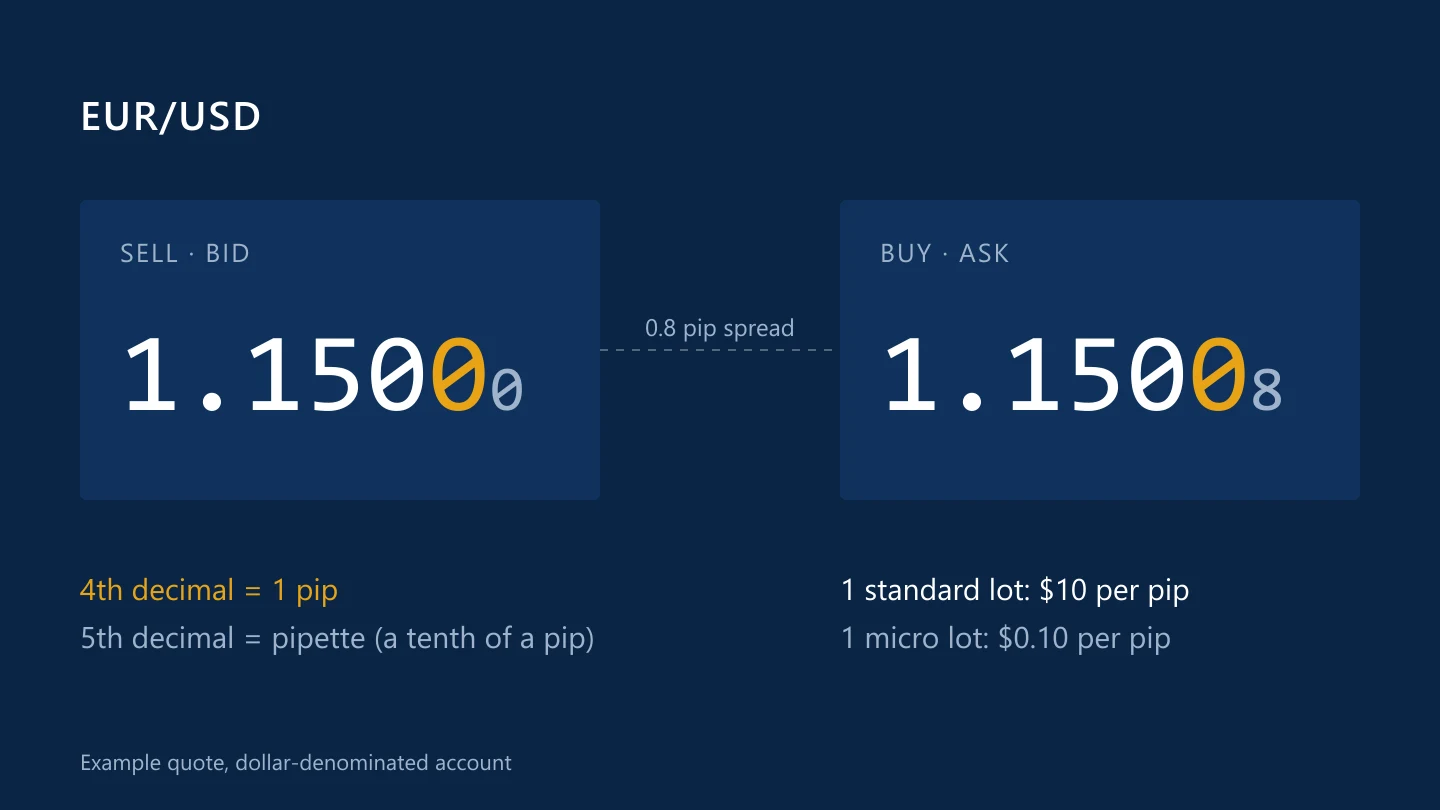
The spread is the gap between the bid price, at which you can sell, and the ask price, at which you can buy. If EUR/USD is quoted at 1.15000 / 1.15008, the spread is 0.8 pips.
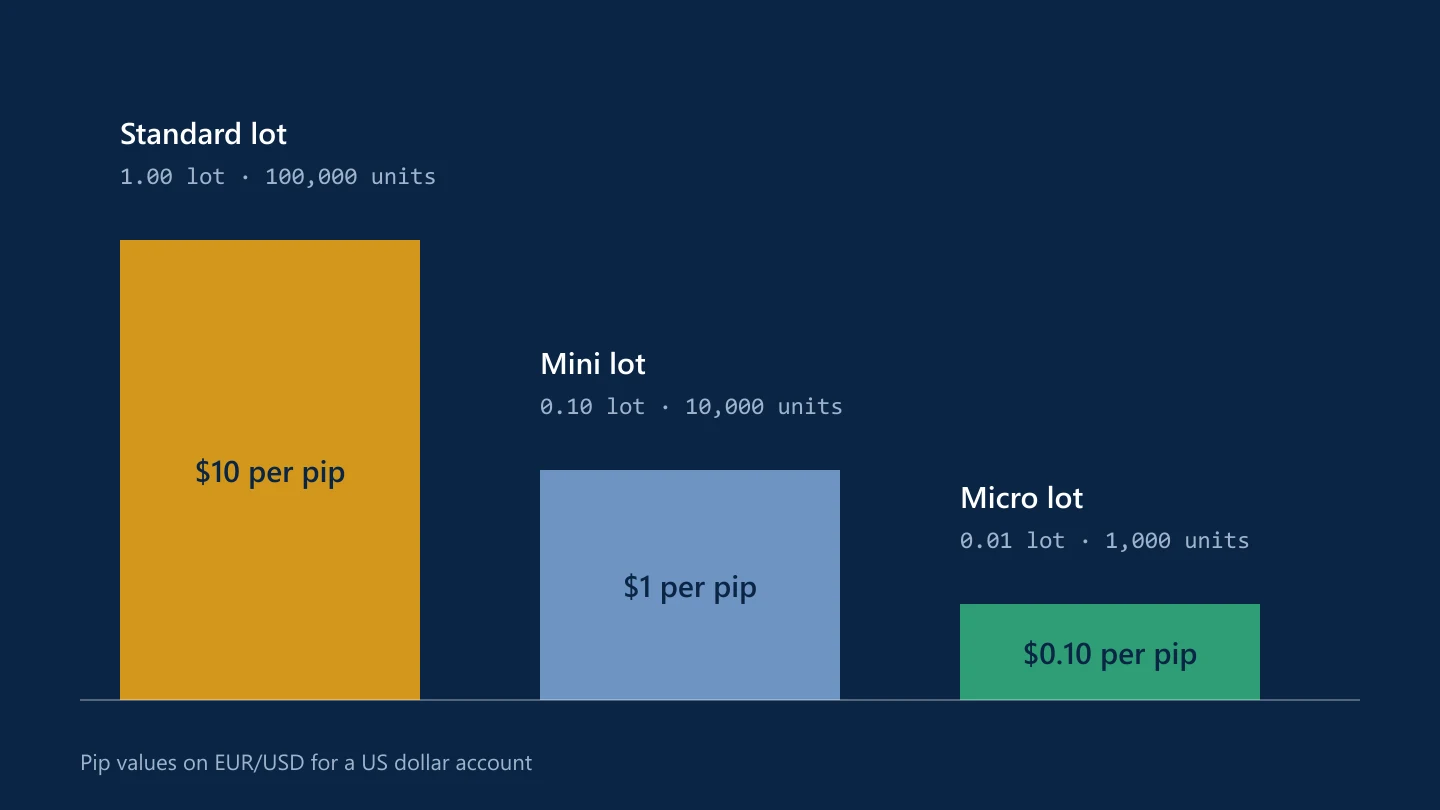
You pay the spread the moment a trade opens: a new position immediately shows a small loss equal to the spread. On one standard lot of EUR/USD, a 0.8-pip spread costs $8.
Spreads are not fixed. They widen when liquidity is thin, for example around major data releases, at the daily rollover and when markets reopen after the weekend.
2. Commission
Many brokers offer two account types:
- Spread-only accounts, where the broker's charge is built into a wider spread.
- Raw or ECN-style accounts, with spreads close to the market's and a separate commission per lot.
Commission is usually quoted per lot per side, so you pay it on the way in and again on the way out. A charge of $3.50 per lot per side costs $7 for a full round trip on one standard lot.
To compare accounts, add the two together. A raw account with a 0.1-pip spread and $7 round-trip commission costs $8 per lot on EUR/USD, the same as a spread-only account quoting 0.8 pips.
3. Swap, or overnight financing
If you hold a position past the broker's daily cut-off, usually 5 p.m. New York time, it is rolled over and charged or credited a swap. The swap reflects the difference between the interest rates of the two currencies, plus the broker's markup.
- Buying the higher-yielding currency can earn a positive swap, though markups often turn it negative.
- Selling the higher-yielding currency costs you the swap.
On many platforms the swap on currency pairs is tripled on Wednesday nights, to cover the weekend, because trades settle two business days later.
For short-term trades swaps hardly matter, but on positions held for weeks they can outweigh the spread. Your platform lists the swap rates in each instrument's specification.
Adding it up
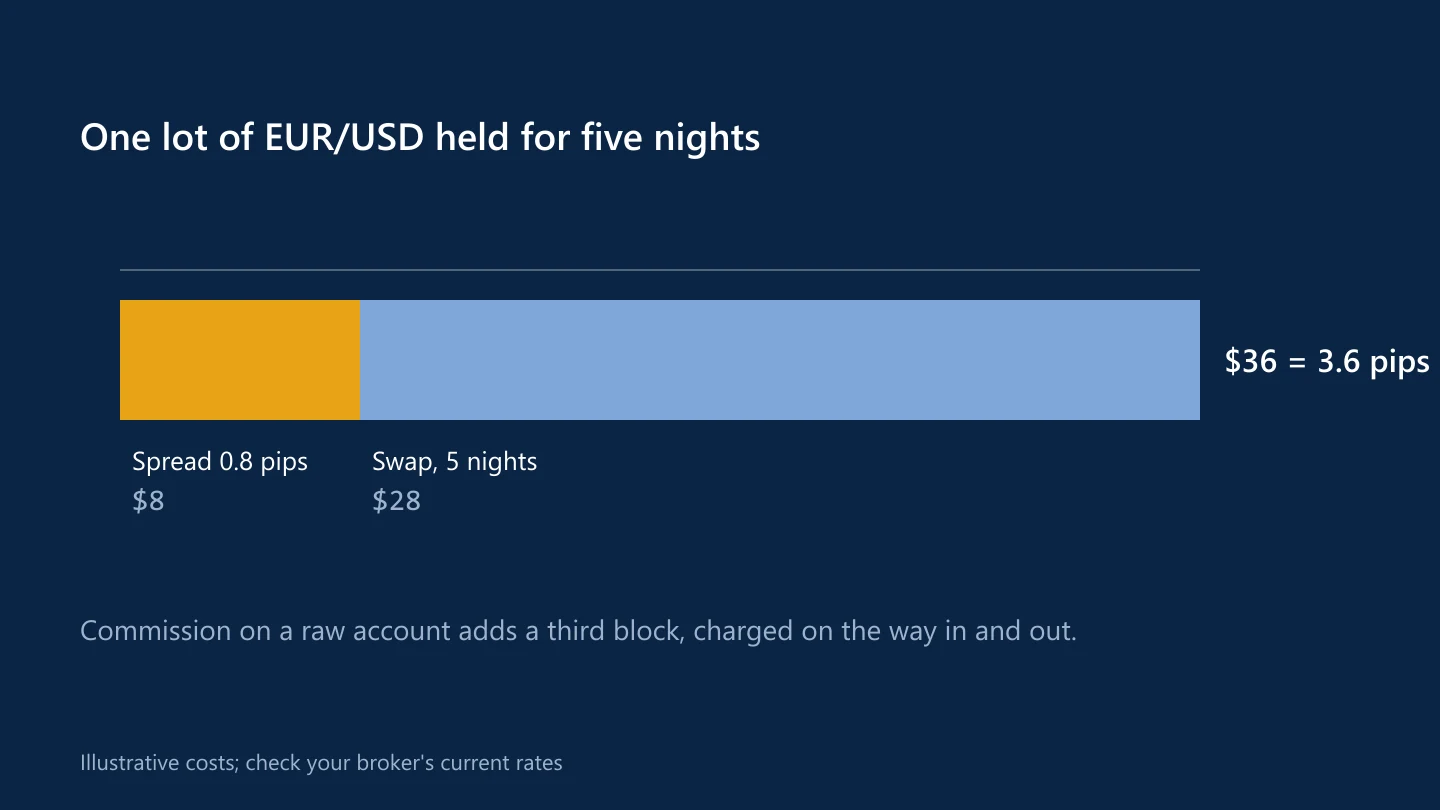
Costs on a one-lot EUR/USD trade held for five nights might look like this:
- Spread: 0.8 pips = $8
- Commission: none on a spread-only account
- Swap: five nights at a charge of $4 each, including one triple night = $28
Total: $36, or 3.6 pips, before the trade is in profit. The figures are illustrative; check your broker's current rates.
Some accounts have no swap at all but charge in other ways; see swap-free accounts explained.
Common questions
What is a spread in forex?
The difference between the bid (sell) and ask (buy) price. You pay it every time you open a trade, and it widens when the market is less liquid.
Is a raw spread account cheaper?
Not automatically. Add the spread and the round-trip commission together and compare the total with a spread-only account's typical spread on the pairs you trade.
Why is swap tripled on Wednesday?
Currency trades settle two business days after the trade date. A position held over Wednesday night settles over the weekend, so it is charged for three days of financing.
This article is for information only and is not financial advice. Trading forex and CFDs carries a high risk of losing money. Read the risk warning. Spotted an error? Tell the editors.
Comments
Log in to join the discussion. Comments follow the community guidelines.
Log in to commentLoading comments…