Bid, ask and slippage: why your order fills at a different price
Why buy trades open at one price and close at another, why a stop can trigger when the chart never touched it, and how slippage happens.
Every currency quote has two prices. Understanding which one applies to your order explains several things that confuse new traders.
Bid and ask
- Bid: the price at which you can sell.
- Ask: the price at which you can buy. It is always higher than the bid.
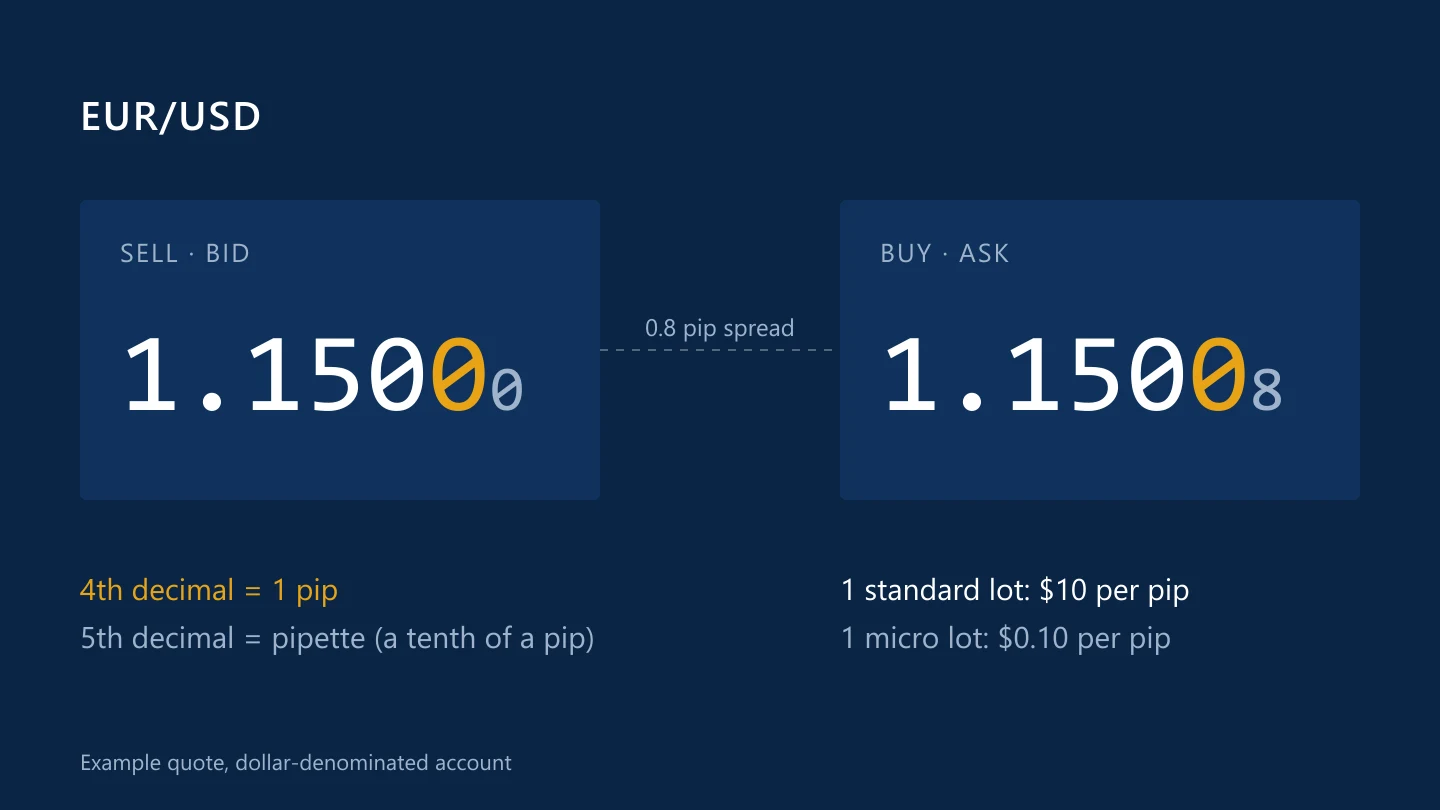
The gap between them is the spread. If EUR/USD shows 1.15000 / 1.15008, you sell at 1.15000 and buy at 1.15008.
Which price applies when
- A buy position opens at the ask and closes at the bid.
- A sell position opens at the bid and closes at the ask.
That is why a trade shows a small loss the moment it opens: you would have to close it at the other side of the spread.
Why a stop can trigger when the chart didn't reach it
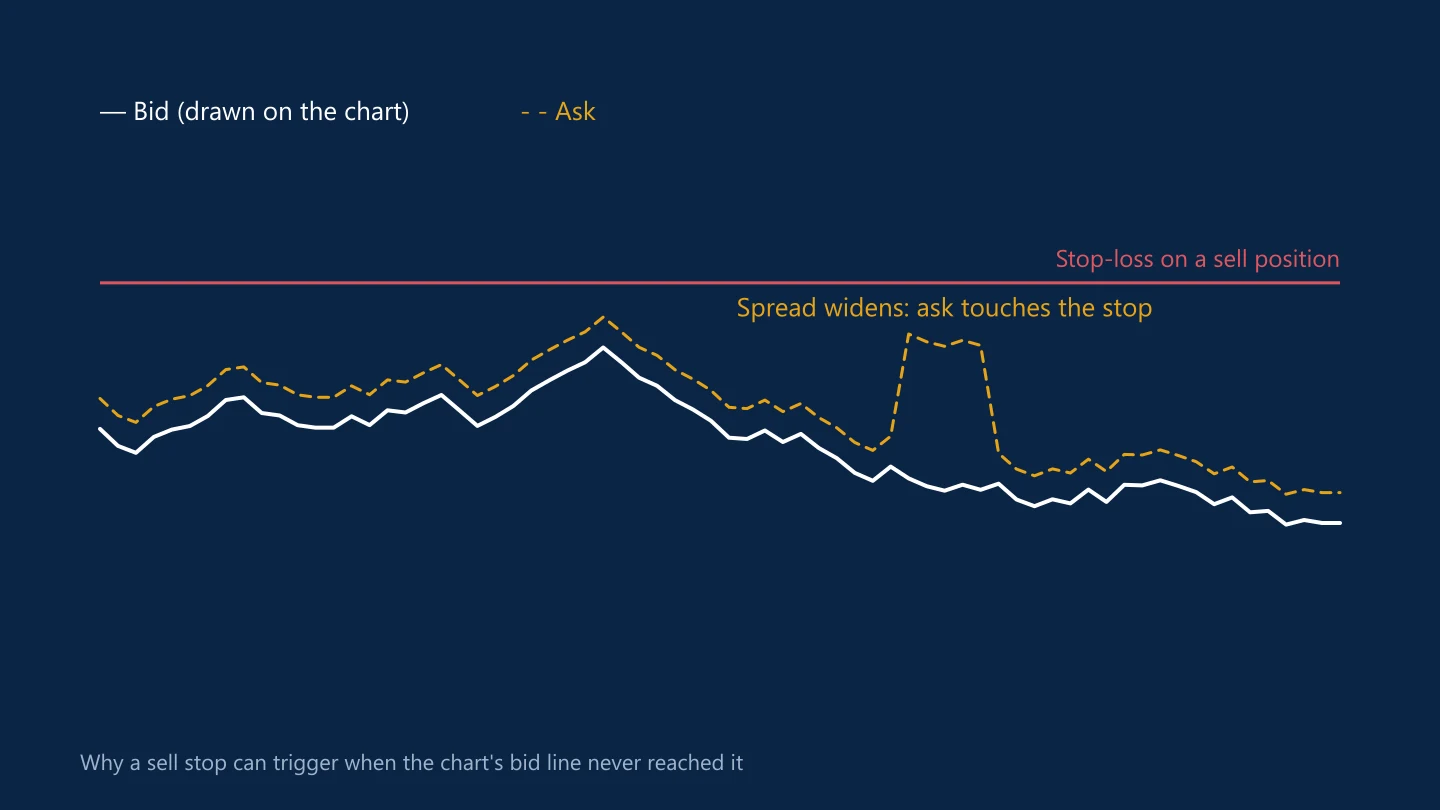
On MetaTrader and many other platforms, charts are drawn using the bid price. A sell position's stop-loss is triggered by the ask price, because that is where the position would be closed.
If the spread widens suddenly, for example at the daily rollover or just before a data release, the ask can reach your stop even though the bid line on the chart stayed below it. The same logic applies to take-profit orders on sell positions.
What slippage is
Slippage is the difference between the price you expected and the price you actually got. It happens because a market order fills at the best available price when it reaches the market, and in a fast market that price may have moved.
Slippage can go against you or in your favour, depending on the broker's execution policy and the direction of the move.
Common causes:
- Major data releases and central bank decisions
- Thin liquidity outside the main sessions or on holidays
- The market reopening after a weekend with a gap
- Very large orders relative to available liquidity
Stop orders and slippage
A stop-loss becomes a market order once it is triggered. It guarantees an exit, not a price. In a gap or a fast market, it fills at the next available price, which can be well beyond the stop level.
Some brokers offer guaranteed stop-loss orders for a fee or a wider spread, which fill at exactly the stop price regardless of gaps. Availability depends on the broker and the market.
Reducing slippage
- Avoid entering with market orders in the seconds around high-impact releases.
- Use limit orders when the exact entry price matters more than being filled.
- Check your broker's order execution policy, which describes how orders are filled.
- Keep position sizes small enough that slippage on a stop doesn't break your risk plan; see position sizing.
Common questions
Why did my stop-loss trigger when the price on the chart didn't reach it?
Charts usually show the bid price, but a sell position's stop is triggered by the ask. If the spread widened, the ask could have touched your stop while the bid line stayed away from it.
What is slippage?
The difference between the price you expected and the price your order was filled at. It is most common in fast or thin markets, such as around news releases.
This article is for information only and is not financial advice. Trading forex and CFDs carries a high risk of losing money. Read the risk warning. Spotted an error? Tell the editors.
Comments
Log in to join the discussion. Comments follow the community guidelines.
Log in to commentLoading comments…