How to trade EUR/GBP: the cross that isolates Europe
EUR/GBP removes the dollar and trades the euro against sterling on their own merits — two central banks, two inflation stories, one pair. Here is how it works and how to trade it.
EUR/GBP is the cross that strips the dollar out of the equation and leaves the two European heavyweights facing each other directly. When the dollar is noisy — chopping on its own data, swinging on its own headlines — the cross offers a cleaner read: this pair is about the euro area versus the United Kingdom, the ECB versus the Bank of England, and nothing else.
This guide explains the pair's mechanics, its two-sided drivers, and a framework for trading it. The cross-rate mechanics are in cross rates explained.
The basics
EUR/GBP is the price of one euro in British pounds: the euro is the base currency, the pound the quote. A rising pair means the euro is strengthening against sterling; a falling pair means sterling is winning. The pip is the fourth decimal place, and the pair's pip value on a standard lot is £10 — converted to your account currency if it is not pounds. Pip value explained has the conversion arithmetic for crosses.
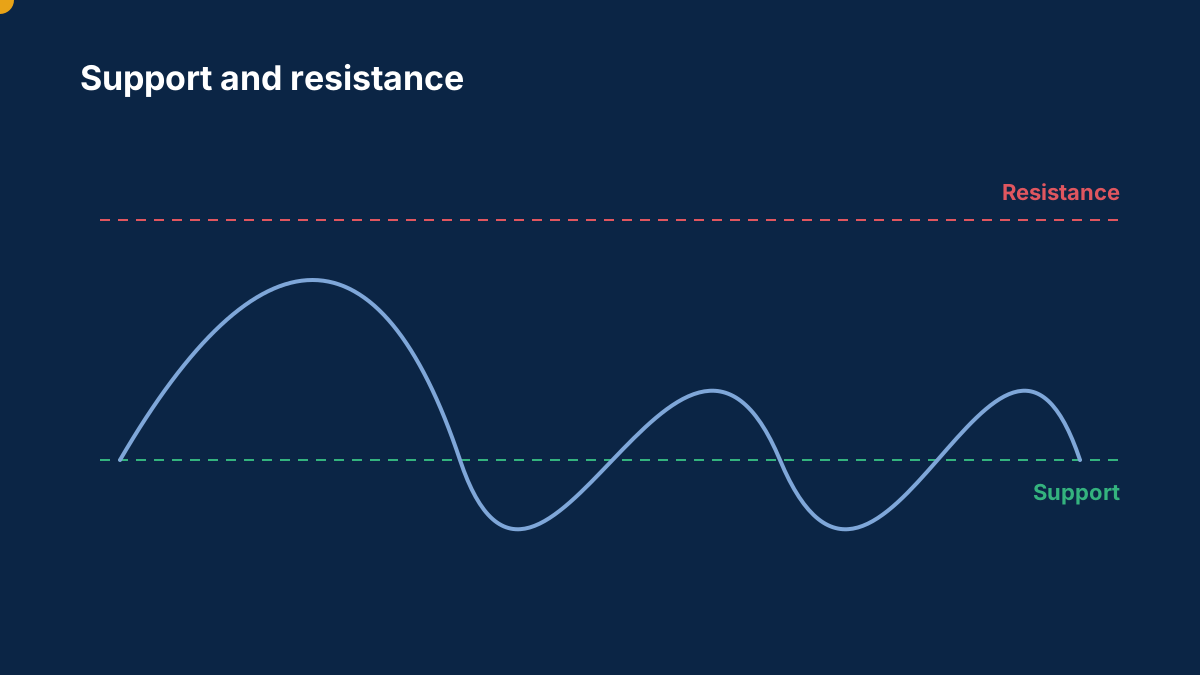
The pair's character is range-bound by nature. Two large, integrated European economies rarely diverge far for long, so EUR/GBP spends much of its time between well-defined levels — which makes it a favourite of range traders and a frustration for trend traders. The range trading playbook applies directly.
The two stories
The pair's direction comes from the relative stories of the two economies, and the stories currently differ in instructive ways.
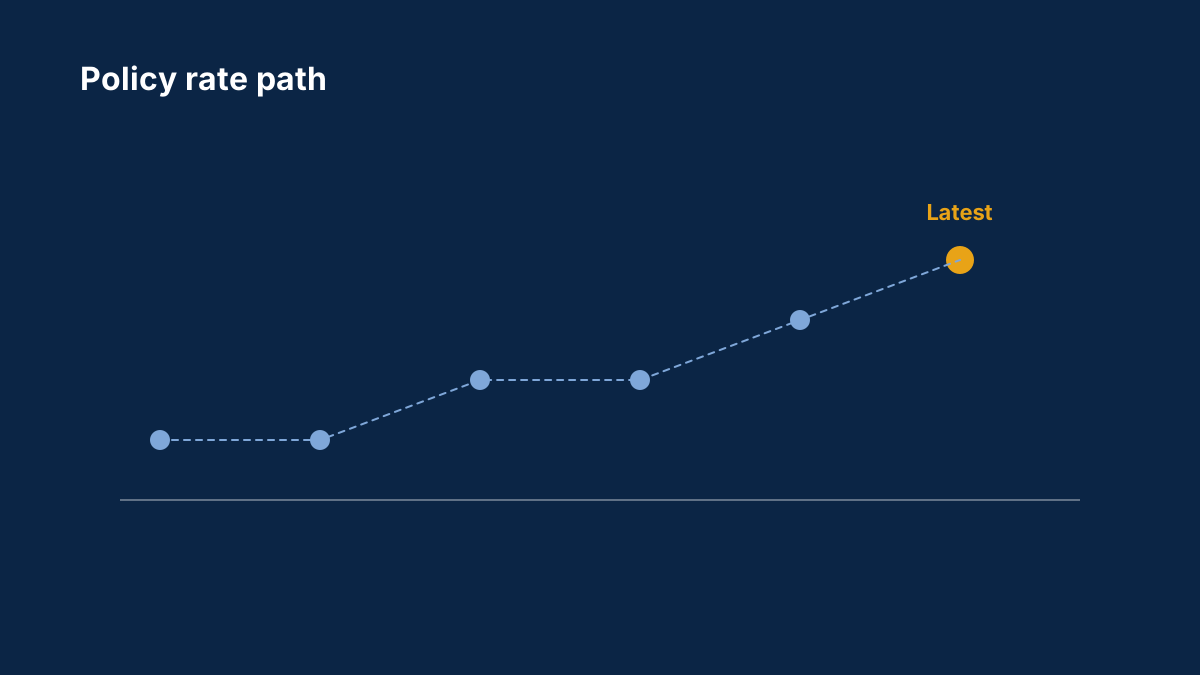
The euro side. The ECB raised its deposit rate to 2.50% in September (report) as euro-area growth picked up to 0.6% in the second quarter (GDP report). The euro's story is a recovering economy with a central bank tightening into it — hawkish on the margin.
The sterling side. The Bank of England's story is more conflicted: UK inflation has risen to 3.1% (CPI report), the labour market is mixed (report), and the Monetary Policy Committee went into its September meeting split, with three members preferring a hike (preview). Sterling's story is high inflation against a divided committee — a genuine dilemma.
The pair trades the difference between these stories: whichever side's narrative strengthens relative to the other moves the cross. How interest rate decisions move currencies covers the transmission for both legs.
The relative-value logic
The cross's defining feature is that it isolates relative value. When the dollar moves, EUR/USD and GBP/USD move together — but EUR/GBP barely moves, because both legs share the dollar's effect. The cross only moves on news that changes the relative story: a UK inflation surprise, an ECB shift, a political event on one side of the Channel. That purity is the cross's appeal: every move in EUR/GBP has a single, identifiable cause.
The practical read follows from it. Before trading the cross, ask what the two central banks' paths look like relative to each other, and what data could change the relative picture. The cross's moves are smaller and slower than the dollar pairs', but they are cleaner.
The range character
EUR/GBP's tendency to range is structural: the two economies are too integrated for the cross to trend for long. The range trader's playbook fits the pair well:
- Mark the range's boundaries — the pair's established support and resistance zones, which often persist for months.
- Fade the edges on rejection signatures, with stops beyond the zone.
- Target the opposite boundary, or the midpoint for partial profits.
The risk is the same as any range trade: the break that ends the range, usually driven by a genuine policy divergence between the two central banks. The range trading playbook covers the break-handling rules.
The data calendar
The cross's calendar is both sides' calendar, and the relative timing matters:
The UK side. CPI, the labour market report with wages, GDP, retail sales and every Bank of England decision and speech. UK data tends to produce the pair's sharpest moves, because sterling's story is the more volatile of the two.
The euro side. Euro-area flash CPI, the PMI surveys, German data such as the ZEW, and ECB decisions. Euro-side surprises move the cross too, though usually with less violence.
The collision days. When UK and euro-area data land close together, the cross's move is the net of the two surprises — the relative read in its purest form.
Session behaviour
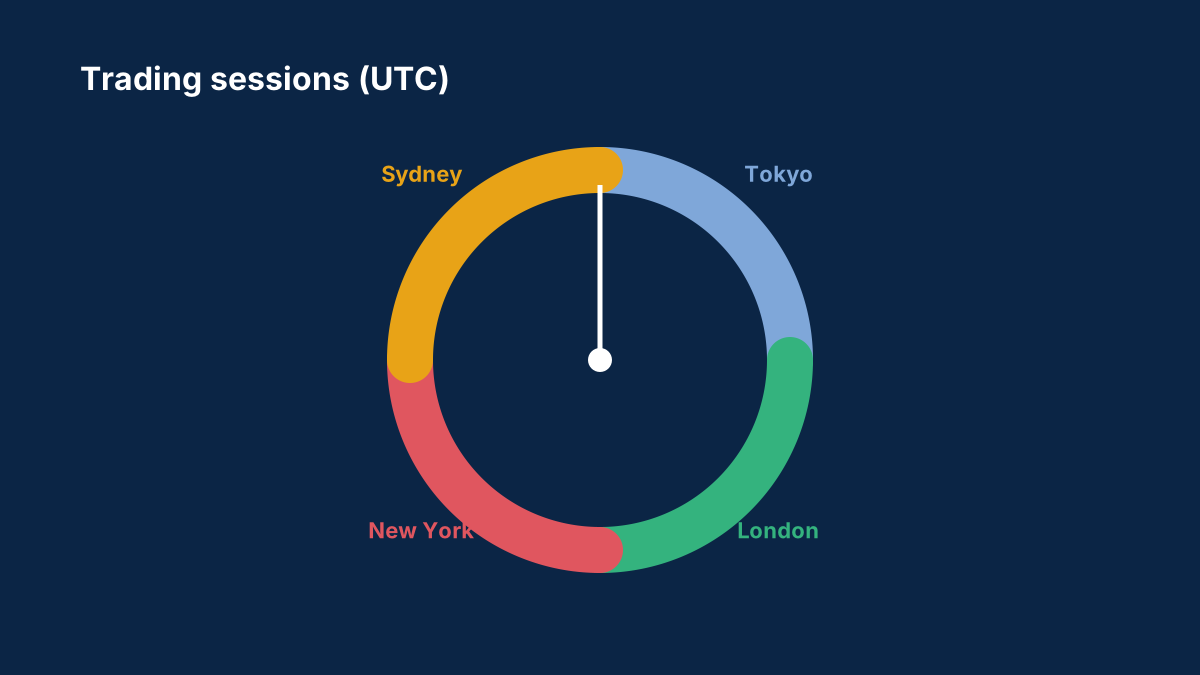
EUR/GBP trades its real hours during the European session: London's open is the pair's home, and its spreads are tightest there. The pair is thin in Asian hours and its ranges narrow; New York hours keep it tradeable but the pair's centre of gravity is London. The market hours guide maps the sessions.
A workable framework
A starting structure for EUR/GBP:
- Before the week, mark both calendars — UK and euro-area — and note where the releases collide.
- Read the relative story first: which central bank's path is strengthening relative to the other, and what data could flip it.
- Trade the range: mark the established boundaries, fade the edges on rejection, stop beyond the zone.
- Treat the cross as a swing instrument — its ranges reward patience and punish scalping, because the moves are slow and the spread matters.
- When a genuine policy divergence appears, expect the range to break — and switch to the breakout playbook for the transition.
EUR/GBP is the pair for traders who want purity: no dollar noise, no commodity stories, just two European economies measured against each other. Read the relative tale, trade the range, and the cross becomes one of the market's cleanest instruments.
Sources
Common questions
What moves EUR/GBP?
The relative stories of the euro area and the UK: the ECB's path versus the Bank of England's, their inflation and growth data, and political events on either side of the Channel. Dollar moves barely touch it.
Why does EUR/GBP range so much?
The two economies are large, integrated and rarely diverge far for long, so the cross spends most of its time between well-defined levels. Range-trading approaches suit it better than trend systems.
What is the pip value on EUR/GBP?
One pip on a standard lot is worth £10, converted to your account currency if it is not pounds. The conversion step is where most cross-pair sizing errors happen.
Which data moves EUR/GBP the most?
UK CPI, the UK labour market report and Bank of England decisions on the sterling side; euro-area flash CPI, PMIs and ECB decisions on the euro side. Collision days produce the cleanest relative moves.
What is the best time to trade EUR/GBP?
European hours, especially the London open. The pair's spreads are tightest there and its real liquidity lives in that session.
This article is for information only and is not financial advice. Trading forex and CFDs carries a high risk of losing money. Read the risk warning. Spotted an error? Tell the editors.
Comments
Log in to join the discussion. Comments follow the community guidelines.
Log in to commentLoading comments…