How to read an economic calendar: actual, forecast, previous and impact
The economic calendar tells you when markets are likely to move. Here is what each column means and how traders use it to plan the week.
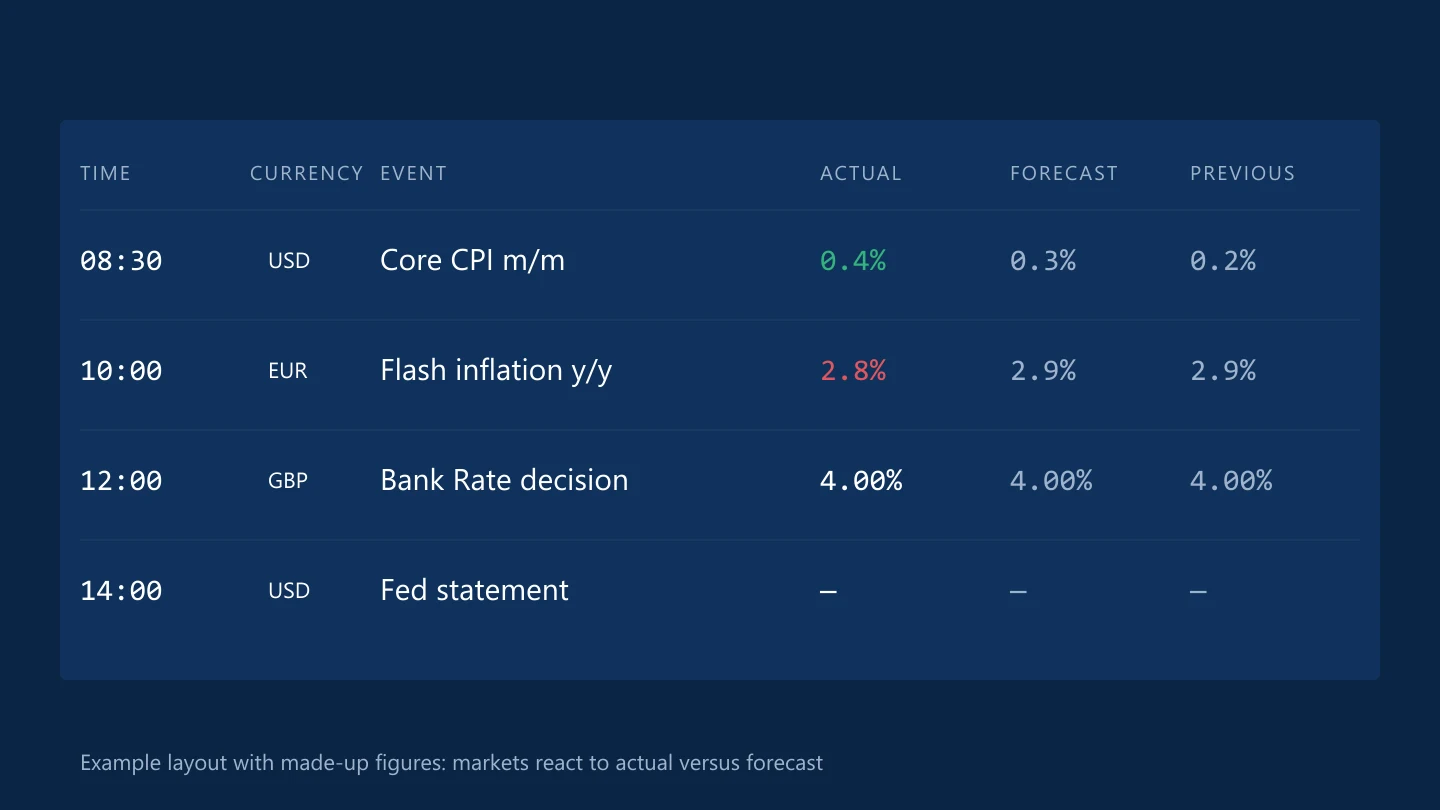
An economic calendar lists scheduled data releases and central bank events, with the time, the country and the numbers traders compare. Checking it before you trade is the simplest way to avoid being surprised by a sudden move.
The columns
- Time: when the figure is published. Good calendars convert it to your time zone; FTC's economic calendar does this automatically.
- Currency or country: which economy the release belongs to, and therefore which currency it is most likely to move.
- Event: the indicator, such as CPI, non-farm payrolls, retail sales or a rate decision.
- Impact: usually shown as low, medium or high. It reflects how much the release has historically moved markets.
- Actual: the figure as released.
- Forecast or consensus: the median expectation of economists surveyed before the release.
- Previous: the figure from the last release, sometimes marked as revised.
What actually moves the market: the surprise
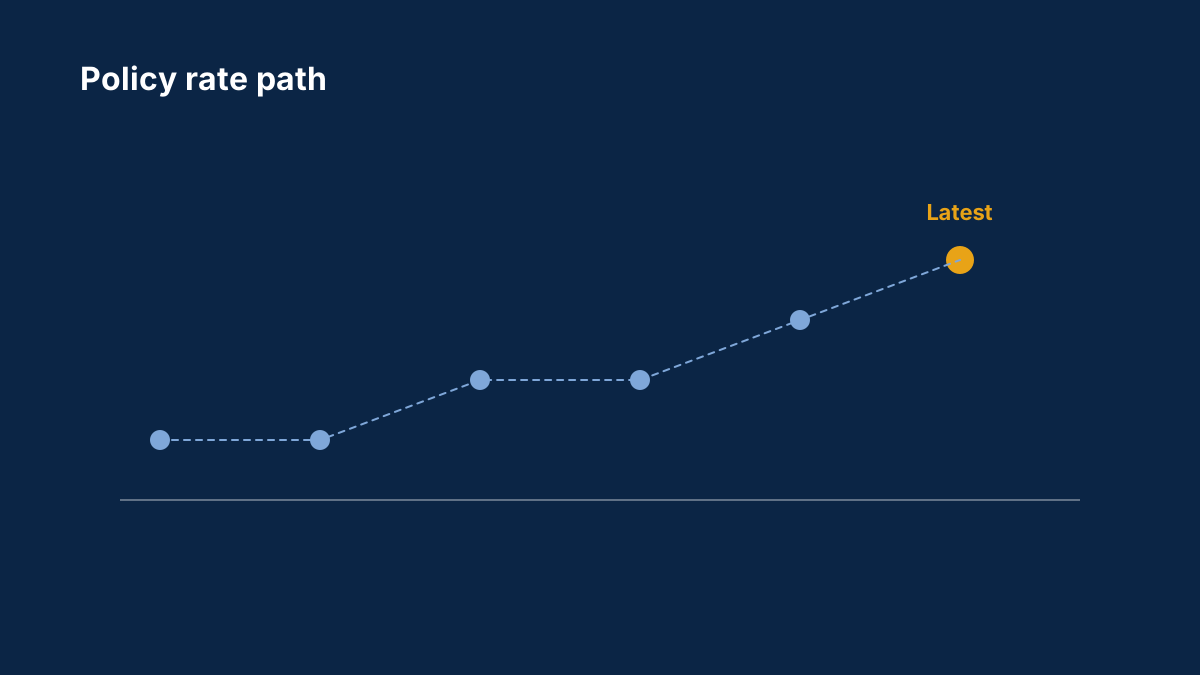
Markets price in the forecast before the release. The price reaction comes from the difference between the actual figure and the forecast, not from whether the number is good or bad in absolute terms.
A jobs report showing 150,000 new jobs can push the dollar down if 250,000 were expected, and up if 50,000 were expected.
Read the details, not only the headline
- Revisions. A strong headline paired with a large downward revision to the previous month often produces a move that reverses.
- Core versus headline. For inflation, traders often focus on core measures that exclude food and energy.
- Several numbers at once. The US jobs report includes payrolls, unemployment and wages; they can point in different directions.
Common release times
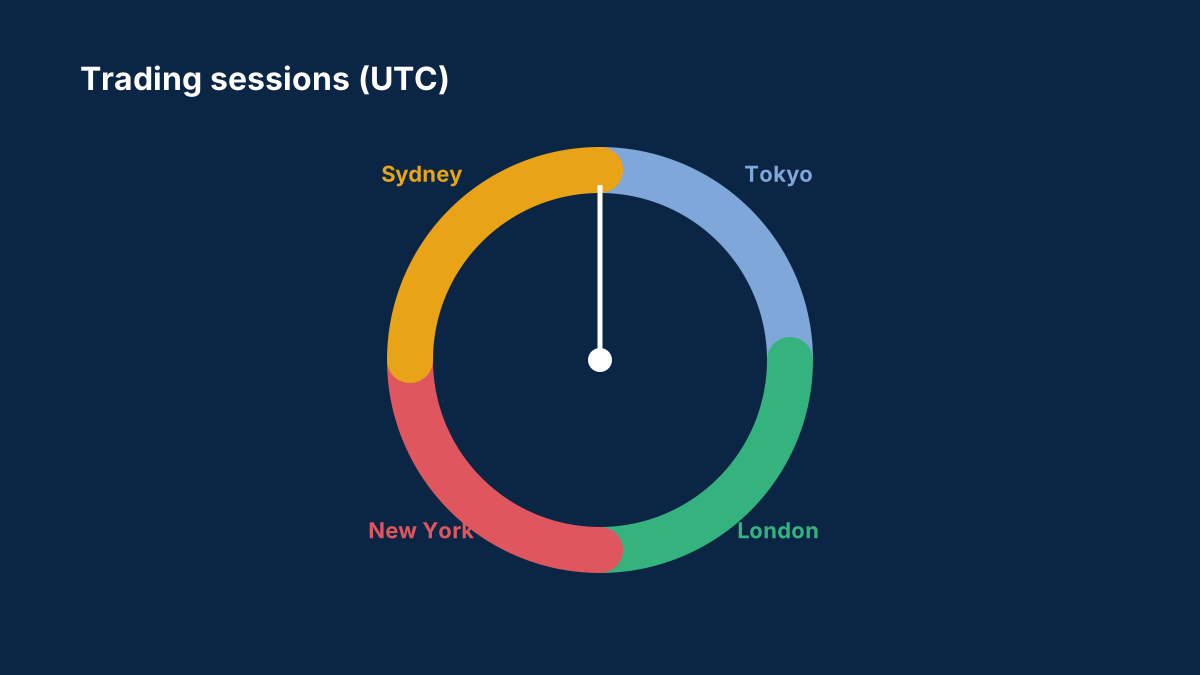
- US data from the Bureau of Labor Statistics, including CPI and payrolls: 8:30 a.m. New York time
- Federal Reserve decisions: 2:00 p.m. New York time
- Euro area flash inflation from Eurostat: 11:00 Central European Time
- UK inflation from the ONS: 7:00 a.m. UK time
Using the calendar to plan
- On Sunday or Monday, mark the high-impact events for the currencies you trade.
- Decide in advance whether you will be flat, reduce size or trade the reaction.
- Remember that spreads widen and stop orders can slip in the seconds around a release.
- After the event, compare actual with forecast before reading the price move.
For the two releases that move the dollar most, see non-farm payrolls explained and CPI explained.
Sources
Common questions
What does forecast mean on an economic calendar?
The median expectation of economists surveyed before the release. Markets usually price in the forecast, so prices react to the gap between the actual figure and the forecast.
What is a high-impact event?
A release that has historically caused large price moves, such as central bank decisions, CPI inflation and the US jobs report. Spreads often widen around them.
Was this guide helpful? 0 found it helpful, 0 did not.
Sign in with a confirmed email to answer.
Sign in to track which lessons you have read.
Check your understanding
Sign in to take the quiz.
This article is for information only and is not financial advice. Trading forex and CFDs carries a high risk of losing money. Read the risk warning. Spotted an error? Tell the editors.
Related reading



Discussions on this topic
Comments
Log in to join the discussion. Comments follow the community guidelines.
Log in to commentLoading comments…