What the ECB's September hike means for the euro
The ECB raised its deposit rate to 2.50% in September as euro-area growth picked up. Here is what the hike says about the bank's path, and what it means for the euro against the dollar and the pound.
The European Central Bank raised its deposit rate by a quarter point to 2.50% on 10 September (report) — a hike into an energy-driven inflation shock, with euro-area growth finally picking up behind it. The decision matters beyond its size: it positions the ECB as one of the tightening central banks at a moment when the market is weighing every bank's resolve, and it sets the euro's story against the dollar's and the pound's for the rest of the cycle.
This analysis explains the hike's context, the bank's reasoning, and the euro's implications. The transmission is in how interest rate decisions move currencies; the pair's driver map in the EUR/USD explainer.
The context: growth and inflation at once
The hike's context is the rare combination of recovering growth and rising inflation. Euro-area GDP grew 0.6% in the second quarter, after no growth in the first (report) — the recovery the ECB had been waiting for. At the same time, the energy shock is pushing prices up across the region, with the same fuel-driven pressures visible in the UK's producer prices (report) and in the inflation prints elsewhere.
The combination matters because it removes the usual objection to tightening — weak growth — and leaves the inflation side as the decision's driver. The ECB hiked into the energy shock because the growth data gave it room, and the inflation transmission explainer covers the transitory-versus-persistent question the bank answered with its decision.
What the hike signals about the path
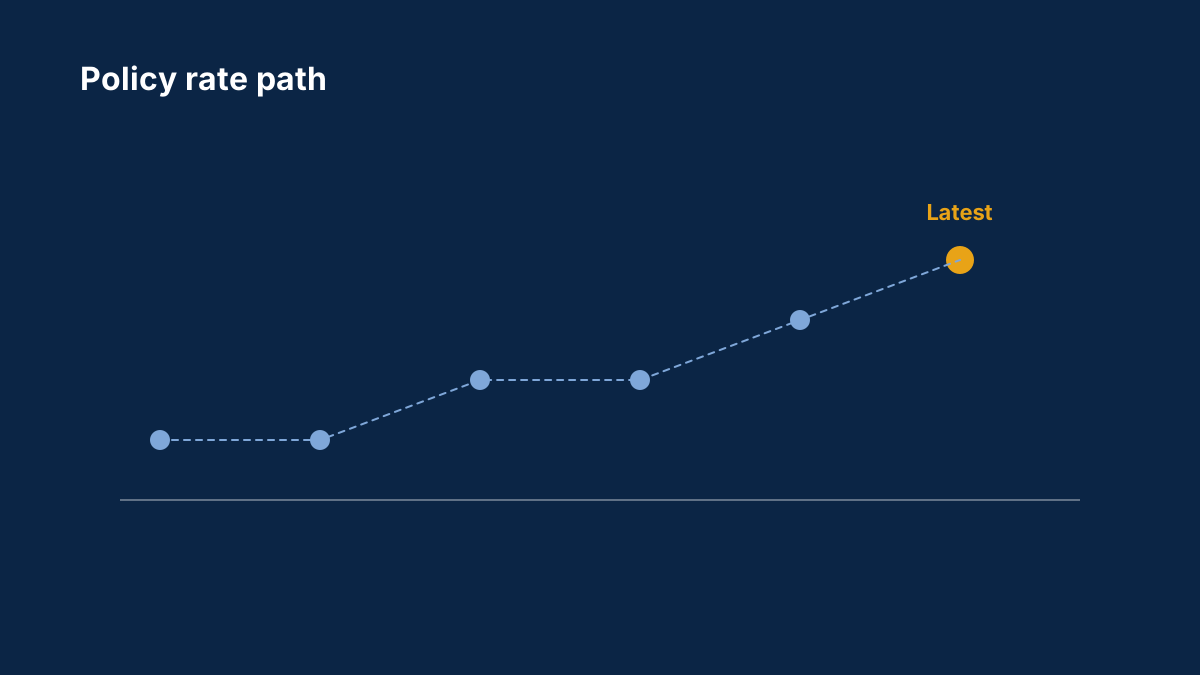
The hike's signal is about resolve. By tightening into an energy shock, the ECB told the market it will not let the shock's second-round effects — wages, services prices — take hold unchallenged. The signal's practical meaning: the ECB's path is now live, and every euro-area inflation print is read for whether the bank must go further. The central bank language explainer covers how the bank's vocabulary will signal the next steps.
The comparison that matters is relative: the ECB at 2.50% against the Fed near 4% (report) and the BoE's divided committee (preview). The euro's path is the ECB's resolve measured against those two — and the hike narrowed the gap with the Fed by one step.
The euro's implications, pair by pair
EUR/USD. The pair trades the Fed-ECB gap, and the hike's effect runs through the gap's arithmetic: the ECB's step narrows the dollar's advantage at the margin, but the Fed's "higher for longer" projections (report) keep the gap wide. The pair's direction remains the relative story — the EUR/USD explainer maps the five drivers, of which the gap is the first.
EUR/GBP. The cross trades the ECB against the BoE, and the two banks' positions are now mirrored: both tightening into energy inflation, both with their own internal debates. The cross's moves are the relative read of the two — the EUR/GBP guide covers the relative logic, and the two banks' next communications are the cross's catalysts.
EUR/JPY. The cross trades the ECB's tightening against the BoJ's slow normalisation — the widest policy divergence in the euro's pairs. The hike widens the gap further, supporting the cross on the policy channel, while the yen's intervention risk (report) remains the counterweight. The EUR/JPY guide maps the two channels.
What changes for euro traders
The hike changes the euro's environment in three practical ways:
The ECB is now a live story. Before the hike, the ECB's path was the market's quiet assumption; now every euro-area release is read for the next step. The economic calendar guide shows how to weight the euro-area entries.
The energy shock is the path's variable. The bank hiked into the shock; the shock's persistence decides whether more hikes follow. The oil and inflation explainer covers the chain from Brent to the ECB's next decision.
The gaps are the trades. The euro's trades are the gaps: against the dollar, the wide Fed-ECB spread; against the pound, the mirrored policy debates; against the yen, the widest divergence in the board. The pair explainers map each.
The risks to the view
The hike's story carries two risks. The first is the growth reversal: the energy shock that prompted the tightening can also slow the recovery that justified it, and a growth downturn would force the bank to reverse — the euro's hawkish tail risk cutting the other way. The second is the shock's persistence: if the energy inflation becomes entrenched, the ECB must choose between tightening into weakness and letting inflation run — the same dilemma the BoE's committee is debating in public (preview).
The hike's two-sided nature
The ECB's hike deserves the two-sided reading, because the same decision carries opposite signals depending on the lens. The hawkish lens: the bank tightened into the energy shock, signalling resolve against the second round — the euro's rate-side support, and the path's live story. The growth-risk lens: the same tightening lands on an economy whose recovery is young, and the energy shock that prompted it can stall it — the euro's growth-side risk, and the path's reversal tail. The two lenses are the market's live debate, and the euro prices both: the inflation transmission explainer covers the transitory-versus-persistent question the two lenses frame, and the energy shock analysis maps the same two-sided read across the cycle's central banks.
The two-sided nature's practical form is the euro's data sensitivity: every euro-area release is read for which lens it strengthens — the inflation prints for the hawkish, the growth prints for the growth-risk — and the pair's reaction runs through the stronger lens of the day. The EUR/USD explainer covers the driver diagnostic; the ECB's hike added the two lenses' tension to the pair's daily read.
The ECB's communication style
The ECB's communication carries the hike's meaning between decisions, and the bank's style matters. The ECB's statements and the president's press conferences are the market's read on the path's next step: the language's precision — the conditions for further moves, the inflation outlook's framing — is the bank's forward guidance, and the central bank language explainer covers the vocabulary. The forward guidance explainer covers the steering logic the ECB uses; the hike's aftermath is the guidance's live test, with every speech re-pricing the path the hike opened.
The communication's practical read is the meeting-to-meeting rhythm: the ECB's decisions and the president's conferences are the euro's scheduled events, and the speeches between them are the path's continuous updates. The central bank day playbook covers the event structure; the ECB's version runs the four-part read — decision, statement, projections, press conference — on the euro's schedule.
The euro's data calendar after the hike
The hike reshapes the euro-area calendar's weight: the releases that now carry the path's direction. The inflation prints — the flash CPI above all, the release the bank's next move turns on; the growth data — the PMIs and the GDP revisions, the growth-risk lens's evidence; and the energy side — the producer prices and the energy components, the shock's pass-through's progress. The economic calendar guide shows how to weight the euro-area entries; the hike's legacy is the weight's shift toward the inflation and second-round data.
The calendar's practical consequence is the event-day structure: the euro's data days now trade the two lenses' balance, and the flash CPI mornings are the euro's version of the dollar's CPI days — the pair's sharpest scheduled moves. The CPI trading guide supplies the event framework, applied to the euro-area's prints.
The scenarios for the euro's path
The hike's aftermath resolves into three scenarios for the ECB:
The pause scenario. The energy shock's first round fades, the growth recovery holds, and the bank pauses at 2.50% — the hike's resolve vindicated without the second round's cost. The scenario is the euro's balanced case, and the inflation prints' direction is its arbiter.
The continued tightening scenario. The second round arrives — wages and services absorbing the energy costs — and the bank continues. The scenario is the euro's hawkish tail, and the wage data is its trigger.
The reversal scenario. The tightening into the shock stalls the recovery, and the bank reverses — the growth-risk lens's vindication. The scenario is the euro's dovish tail, and the PMIs are its early warning.
The three scenarios' weights are the euro's price, and every euro-area release shifts them. The ECB hike analysis supplies the framework; the market's pricing of the three is the pair's event-day range.
The ECB's September hike was a statement of resolve delivered at a moment of recovering growth. Trade the gaps it reset, watch the energy shock's persistence, and the euro's story becomes the ECB's path, read one release at a time.
Sources
Common questions
What did the ECB do in September 2026?
It raised its deposit rate by a quarter point to 2.50% on 10 September — a hike into the energy-driven inflation shock, with euro-area growth having picked up to 0.6% in the second quarter.
Why did the ECB hike into an energy shock?
The growth recovery gave the bank room to act, and the hike signals resolve against the shock's second-round effects — wages and services prices. The decision is a statement about the path, not just the rate.
What does the ECB hike mean for EUR/USD?
It narrows the Fed-ECB gap by one step, but the Fed's 'higher for longer' projections keep the gap wide. The pair continues to trade the relative story between the two banks.
How does the hike affect EUR/JPY?
It widens the policy divergence with the BoJ's slow normalisation, supporting the cross on the policy channel — with the yen's intervention risk as the standing counterweight.
What could force the ECB to reverse?
A growth downturn caused by the same energy shock, or entrenched inflation that forces a choice between tightening into weakness and letting prices run.
This article is for information only and is not financial advice. Trading forex and CFDs carries a high risk of losing money. Read the risk warning. Spotted an error? Tell the editors.



Comments
Log in to join the discussion. Comments follow the community guidelines.
Log in to commentLoading comments…