How to trade EUR/JPY: risk appetite in one pair
EUR/JPY bundles the euro's policy story with the yen's haven status into the market's favourite sentiment cross. Here is what drives it and how to trade it.
EUR/JPY is the cross traders watch when they want to know what the market thinks. The euro brings Europe's policy and growth story; the yen brings its haven status and the Bank of Japan's path; and the combination produces a pair that rises when the world is confident and falls when it is afraid. It is a sentiment instrument first and a policy instrument second, and trading it well means knowing which role is active.
This guide explains the cross's construction, its two channels, and a framework for trading it. The sentiment mechanics are in risk-on risk-off explained, and the haven side in safe-haven currencies.
The basics
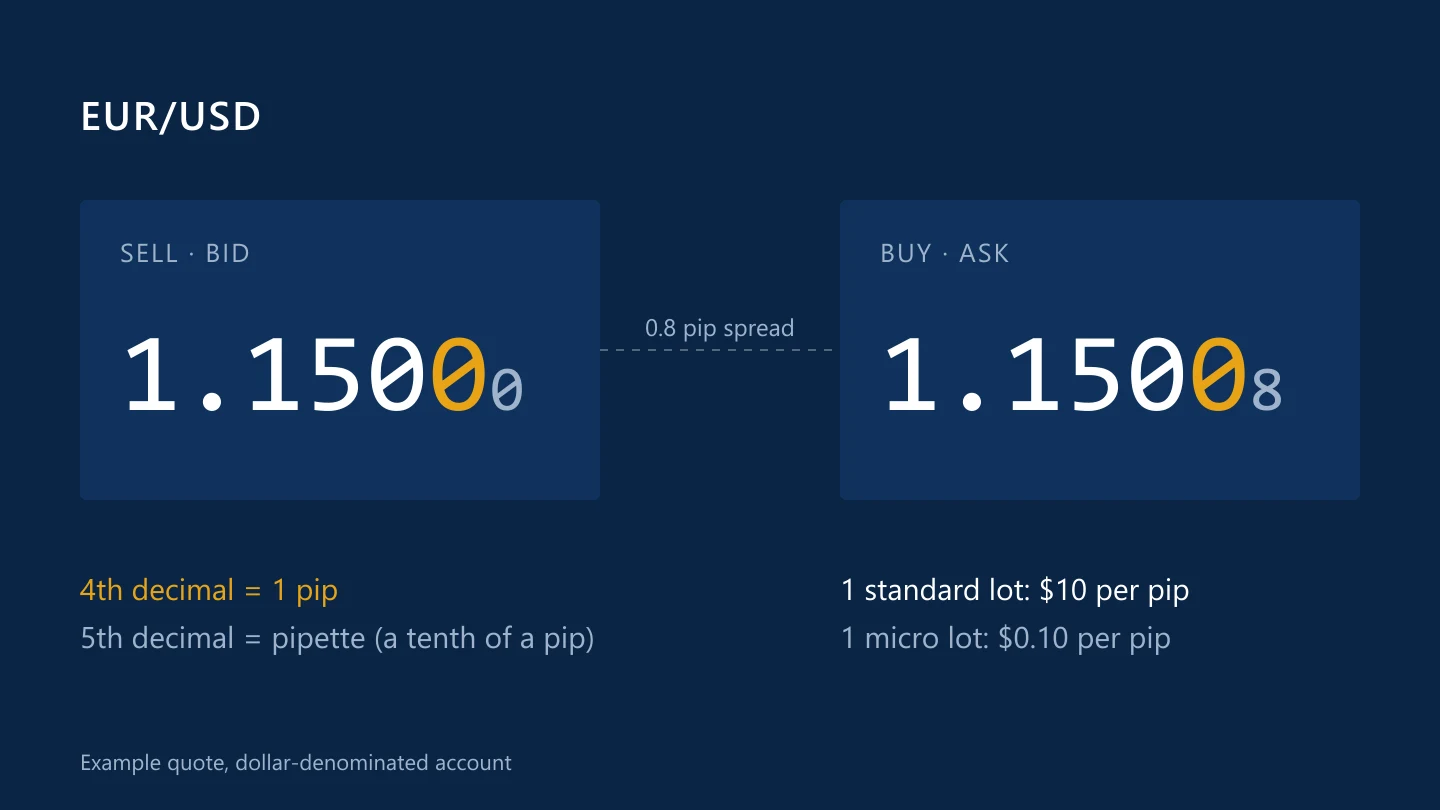
EUR/JPY is the price of one euro in Japanese yen: the euro is the base currency, the yen the quote. The pip is the yen-standard second decimal place, and one pip on a standard lot is worth ¥1,000 — converted to your account currency at the EUR/JPY rate itself, which is the conversion step most traders get wrong on this pair. Pip value explained has the cross-pair arithmetic in full.
The cross's ranges sit between the dollar pairs' and GBP/JPY's: wide enough to trend, calm enough to trade with normal discipline. Its character is defined by its two channels.
Channel one: the policy channel
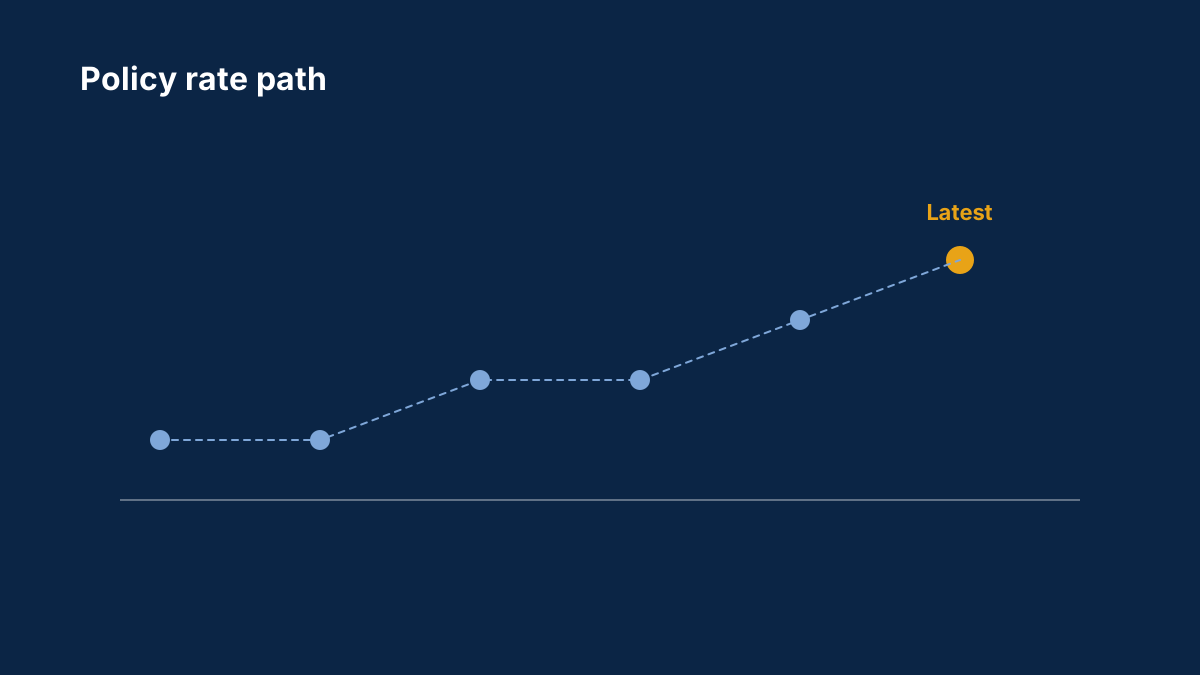
The policy channel is the ECB versus the Bank of Japan. The ECB raised its deposit rate to 2.50% in September (report) with euro-area growth picking up (GDP report); the BoJ has been normalising from zero and holds its rate at 1.00% (preview). The gap between the two banks' paths — and the market's expectations for each — is the cross's slow, structural driver.
When the ECB's path strengthens relative to the BoJ's, the cross rises; when the BoJ's normalisation accelerates relative to the ECB's, it falls. The policy channel is what the cross trades on its quiet, data-driven days. How interest rate decisions move currencies covers the transmission.
Channel two: the sentiment channel
The sentiment channel is the cross's louder voice. The yen is a haven, the euro is a risk asset — and when the world's mood shifts, the cross moves with it: up on risk-on days as money flows out of havens, down on risk-off days as it flows back in. The sentiment channel produces the cross's fastest moves, and it can overwhelm the policy channel for weeks at a time during genuine fear episodes.
The cross's sibling, USD/JPY, shares the yen side and adds the dollar; watching the two together separates the stories. When EUR/JPY and USD/JPY move together, the yen is the story; when they diverge, the dollar or the euro is. The safe-haven guide covers the yen's side of both.
Which channel is active?
The diagnostic is the same question every multi-driver pair demands: which channel is in charge today?
- On calm days with ECB or euro-area data on the calendar, the policy channel leads.
- On days when equities are swinging, havens are bid and headlines are about fear, the sentiment channel leads.
- On BoJ days — especially with intervention risk alive, as it has been since the joint intervention — the yen side dominates whatever the euro is doing.
The cross trends when the channels agree and chops when they fight. The agreement is the trade; the fight is the signal to stand aside.
The data calendar
The cross's calendar has three parts. The euro side: euro-area flash CPI, PMIs, ECB decisions. The yen side: BoJ decisions, Japanese inflation and wages. And the sentiment side, which has no calendar: global risk events, equity moves and haven flows set the cross's mood on their own schedule. The economic calendar guide helps structure the scheduled side; the sentiment side must be read from the market itself each morning.
Session behaviour
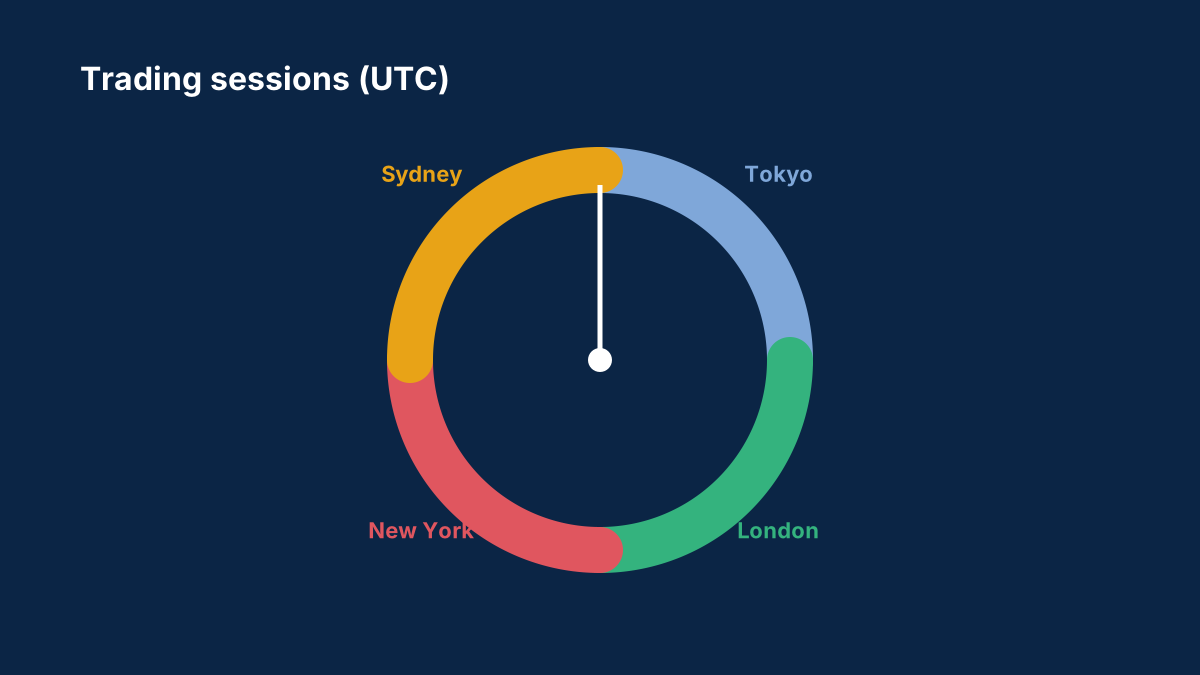
The cross's day spans two sessions with two characters. Tokyo hours carry the yen's real market — Japanese data, BoJ positioning and the Asian risk mood. London hours carry the euro's — European data and the ECB's story. The overlap is the cross's busiest stretch, and its spreads are tightest there. The market hours guide maps both.
A workable framework
A starting structure for EUR/JPY:
- Before the week, mark the euro-area and Japanese calendars, plus the obvious global risk events.
- Start each session by naming the active channel: policy or sentiment. Read the cross only through that lens.
- On policy days, trade the relative story — ECB versus BoJ — with the usual structure rules.
- On sentiment days, trade the risk direction, and confirm it against USD/JPY and the equity mood before committing.
- On BoJ days, respect the yen side's tail risk: intervention headlines reach this cross almost as violently as they reach USD/JPY, and sizing must reflect it. The method is in position sizing and risk per trade.
EUR/JPY is the pair for traders who read the room as well as the chart. Name the channel, trade with it, and the market's favourite sentiment cross becomes one of its most informative instruments.
Sources
Common questions
Why is EUR/JPY a sentiment pair?
Because it combines a risk asset (the euro) with a haven (the yen). When risk appetite rises, the cross climbs as money leaves havens; when fear rises, it falls as money returns to them.
What moves EUR/JPY the most?
The ECB-BoJ policy gap on calm days, global risk appetite on volatile days, and the yen's intervention risk whenever Japanese authorities are active.
How do I read EUR/JPY against USD/JPY?
When both move together, the yen is the story. When they diverge, the dollar or the euro is. Watching the pair side by side separates the yen's moves from the euro's.
What is the pip value on EUR/JPY?
One pip on a standard lot is worth ¥1,000, converted to your account currency at the EUR/JPY rate itself. The double conversion is where most sizing errors on this pair happen.
When is the best time to trade EUR/JPY?
Tokyo hours for the yen's market, London hours for the euro's, and the overlap for the deepest liquidity and tightest spreads.
This article is for information only and is not financial advice. Trading forex and CFDs carries a high risk of losing money. Read the risk warning. Spotted an error? Tell the editors.
Comments
Log in to join the discussion. Comments follow the community guidelines.
Log in to commentLoading comments…