News
Forex news and guides: page 2
Central bank decisions, economic data, gold and oil, and plain-English guides to how currency trading works. Every article links to its primary sources.
More articles
What moves USD/CAD? Oil, rates and the BoC
USD/CAD has two masters: the oil price and the interest-rate gap between the Fed and the Bank of Canada. Here is how each channel works, which one leads, and how to read the tug-of-war.
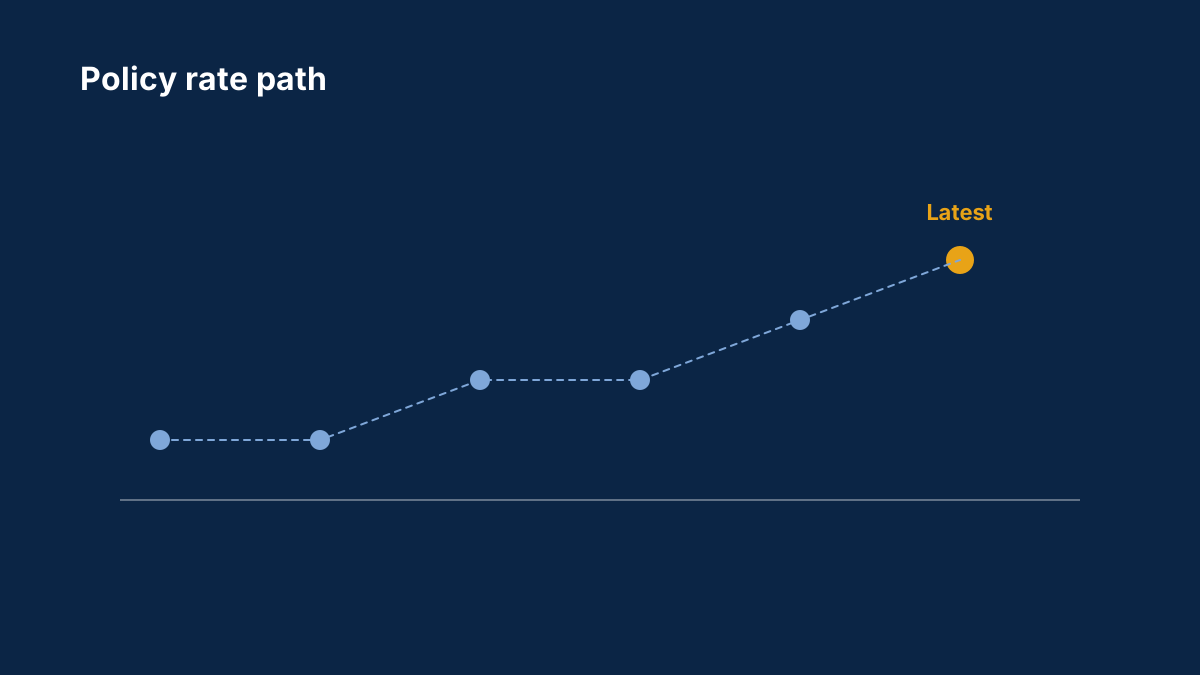
Bank of England holds Bank Rate at 3.75% on a 6–3 vote, and votes to unwind its bond holdings to zero
The Monetary Policy Committee kept Bank Rate unchanged on 17 September, with three members wanting a rise to 4%, and unanimously voted to sell down its remaining gilt holdings by 2034.
Bank of Japan raises its policy rate to 1.25% on a 7–2 vote, three months after its last increase
The Policy Board voted 7–2 on 18 September to lift the overnight call rate target from 1.00% to 1.25%, saying underlying inflation is approaching its 2% goal. Two members dissented.
What moves AUD/USD? China, iron ore and risk
The Australian dollar is a China proxy, a commodity currency and a risk barometer rolled into one. Here is how the three roles interact, which one leads, and the signals that tell you.
What moves USD/JPY? Yields, the BoJ and intervention
USD/JPY is the pair where US yields meet the Bank of Japan — with the threat of intervention sitting over both. Here is the three-force driver map and how they take turns leading.
What moves GBP/USD? UK data, the BoE and politics
Cable answers to the Bank of England, the UK's data calendar and sterling's political weather — on top of everything that moves the dollar. Here is the full driver map and how the stories interact.
What moves EUR/USD? The five drivers that matter most
EUR/USD is the market's default pair, and five forces decide its direction — with US rate expectations leading the list. Here is each driver, how they interact, and which one is in charge on any given day.
Why carry trades unwind so violently
Carry trades earn steady yield for months and then collapse in days — and the collapse is structural, not accidental. Here is the mechanics of the unwind and why it hits every market at once.
How inflation moves currency pairs: the CPI transmission
Inflation is the input central banks watch most closely, which makes CPI the release that moves currencies most. Here is the transmission chain — from print to policy to price — and why the details beat the headline.
How to trade Bollinger Bands: squeezes, touches and rides
Bollinger Bands measure how stretched price is — and stretched markets can stretch further. Here is what the bands actually show, when to fade the touch and when to ride it, and how to trade the squeeze.
How to trade with RSI: overbought, oversold and divergence
RSI is the most popular oscillator in trading and the most misread. Here is what it actually measures, where its signals work, where they fail, and how professionals use it as a filter rather than a trigger.
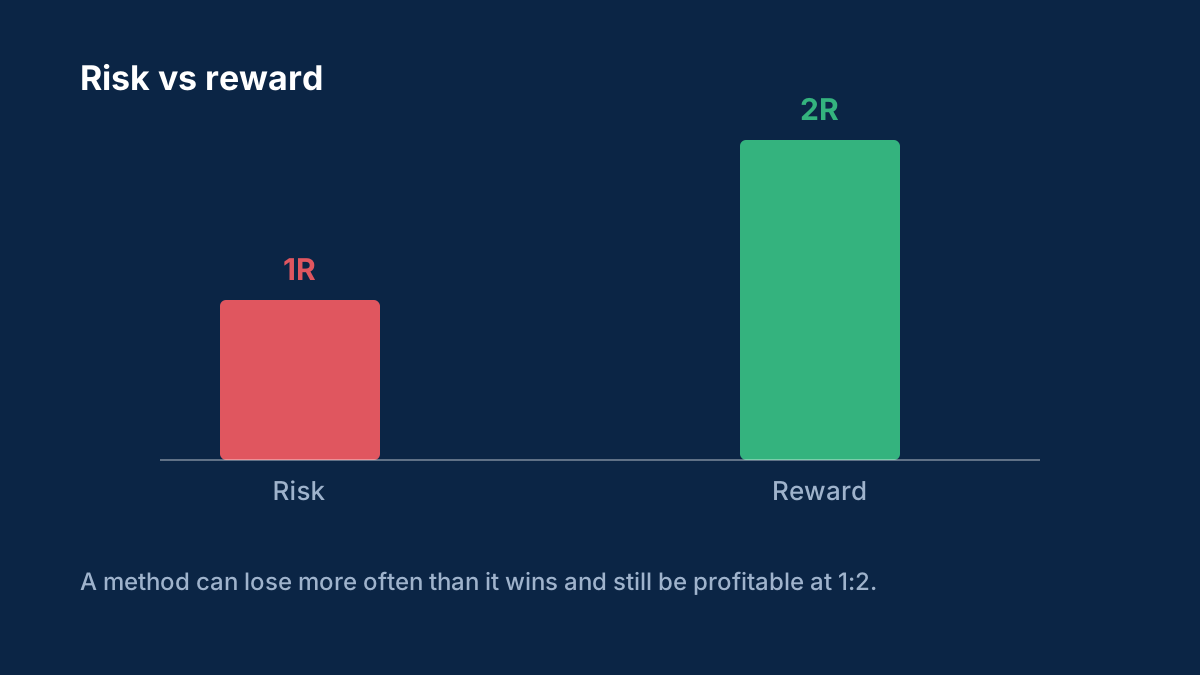
How to set a stop-loss and take-profit: the R-based method
Stops and targets decide the economics of every trade before it starts. Here is the R-based method: anchor the stop to structure, set the target from the risk, and let the maths filter the trades.
How to trade multiple time frames without analysis paralysis
The higher time frame sets the direction, the middle finds the setup, the lower times the entry — but each added frame adds conflicts. Here is a three-frame system that stays simple.
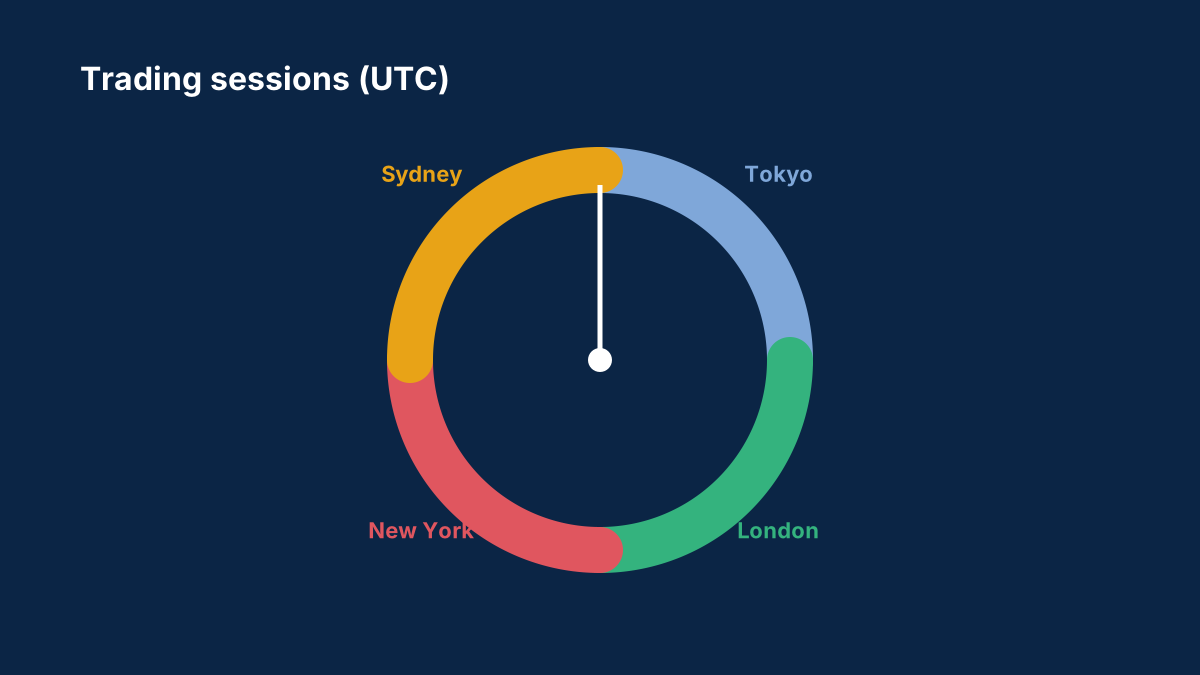
How to trade the Asian session: the range that sets the day
The Asian session is quiet, range-bound and dismissed by most traders — which is exactly why its range matters so much. Here is how to trade it, and how to use it even if you don't.
How to trade the New York session and the London overlap
The New York open — overlapping London's afternoon — is the busiest, fastest window in forex. Here is what happens in it, which pairs come alive, and how to trade the overlap with a plan.
How to spot a fake or cloned broker website
Fake brokers clone real brands, invent regulators and design websites that look more professional than the genuine article. Here are the checks that expose them before the deposit leaves your account.
How to choose a forex broker: the 2026 checklist
The broker is the most important business decision a trader makes, and the marketing makes it hard. Here is the checklist that cuts through it — regulation first, costs second, everything else after.
How to switch from demo to live trading without the shock
The demo-to-live switch is where trading changes from a game to a business, and the transition usually goes badly. Here is a staged process that turns it into a ramp instead of a cliff.
How to review your trades: the weekly review that improves results
The weekly review turns a week of trades into a week of lessons — the habit that separates traders who improve from traders who repeat themselves. Here is the framework, the metrics and the decisions it produces.
How to recover from a drawdown without blowing up
Drawdowns are statistically guaranteed, and how you trade inside one decides whether it becomes a memory or a catastrophe. Here is the recovery framework that protects the account while it heals.
How to manage open positions: the trade-management playbook
Entries get studied; management gets improvised — yet the hours after entry decide most of the outcome. Here is a framework for managing a live position without micromanaging it to death.
How to use an economic calendar to plan your trading week
The calendar is the trader's weekly map: which releases matter, which pairs they move, and which days to trade small or not at all. Here is a Sunday-evening routine that turns it into a plan.
How to trade the dollar index: DXY strategies
The dollar index condenses the dollar's strength against six currencies into one number — and its euro-heavy weighting shapes everything about how it trades. Here is how to use it as a filter, a signal and an instrument.
How to trade USD/CNH: the yuan's managed float
The offshore yuan trades inside a policy-managed band, with the PBOC's daily fix setting the frame. Here is how the managed float works and how to trade around it.
How to trade USD/ZAR: the rand's volatility premium
The South African rand pays one of the highest carries in the liquid EM complex and charges for it in volatility. Here is how the pair works, what drives the rand, and how to trade it without being run over.
How to trade USD/MXN: carry, risk and the peso
The Mexican peso is the liquid emerging-market currency: high carry, deep market, and sensitivity to US policy and risk appetite. Here is how the pair works and how to trade it.
How to trade oil (WTI and Brent): supply, demand and rollover
Crude is the world's most political market, with two benchmarks, weekly inventory data and a rollover quirk that surprises new traders. Here is how it works and how to trade it.
How to trade silver: the wilder metal
Silver follows gold's macro story and adds its own industrial demand layer — and its swings are wilder than either. Here is what drives it, how it differs from gold, and how to trade it without oversized risk.
How to trade EUR/JPY: risk appetite in one pair
EUR/JPY bundles the euro's policy story with the yen's haven status into the market's favourite sentiment cross. Here is what drives it and how to trade it.
How to trade GBP/JPY: the wildest major cross
GBP/JPY combines sterling's energy with the yen's sensitivity to rates and risk, producing the widest ranges in the majors. Here is how the cross works and how to trade it without being shaken out.
How to trade EUR/GBP: the cross that isolates Europe
EUR/GBP removes the dollar and trades the euro against sterling on their own merits — two central banks, two inflation stories, one pair. Here is how it works and how to trade it.
How to trade USD/CHF: the franc's two faces
The Swiss franc is a safe haven and an SNB-managed currency at once, and USD/CHF trades both stories. Here is how the two faces interact, what the SNB's zero rate means, and how to trade the pair.
How to trade NZD/USD: the kiwi's quiet character
The New Zealand dollar is the smallest major and one of the least understood. Here is what drives the kiwi, how the RBNZ's aggressive style shapes it, and how to trade a pair few others watch carefully.
How to trade AUD/USD: China, commodities and the RBA
The Australian dollar is a China proxy, a commodity currency and a risk-appetite barometer all at once. Here is how the three roles interact, which one leads, and how to trade the pair.
How to trade USD/CAD: oil, the BoC and the loonie
USD/CAD answers to two masters: the oil price and the interest-rate gap between the Fed and the Bank of Canada. Here is how the pair works, when each master dominates, and how to build a plan around it.
How to trade (or avoid) weekend gaps
The market closes Friday and reopens Sunday, and the price in between can be very different. Here is why gaps happen, what they do to your stops, and how to trade — or simply survive — the Monday open.
How to trade the first hour of a session safely
The first hour of a session is the most liquid, most volatile and most deceptive hour of the day. Here is what happens in it, why most first-hour trades fail, and how to trade it without becoming the liquidity.
How to trade ranging markets: the range trader's playbook
Markets spend more time ranging than trending, and most trend systems bleed in the chop. Here is how to define a range precisely, trade its edges, and recognise the moment it ends.
How to trade with moving averages: setups and filters
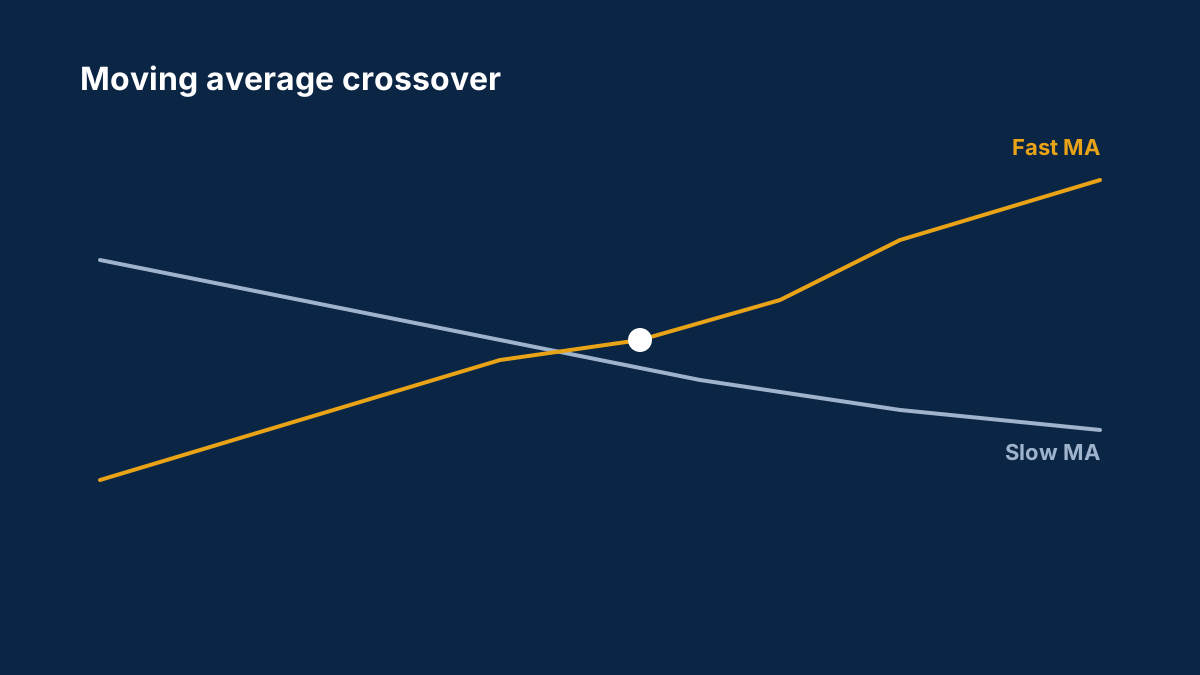
The moving average is the oldest trend tool in trading and the most misused. Here is what it actually measures, how professionals use it as a filter and a level, and why crossover systems need extra care.
How to read price action: candles, structure and context
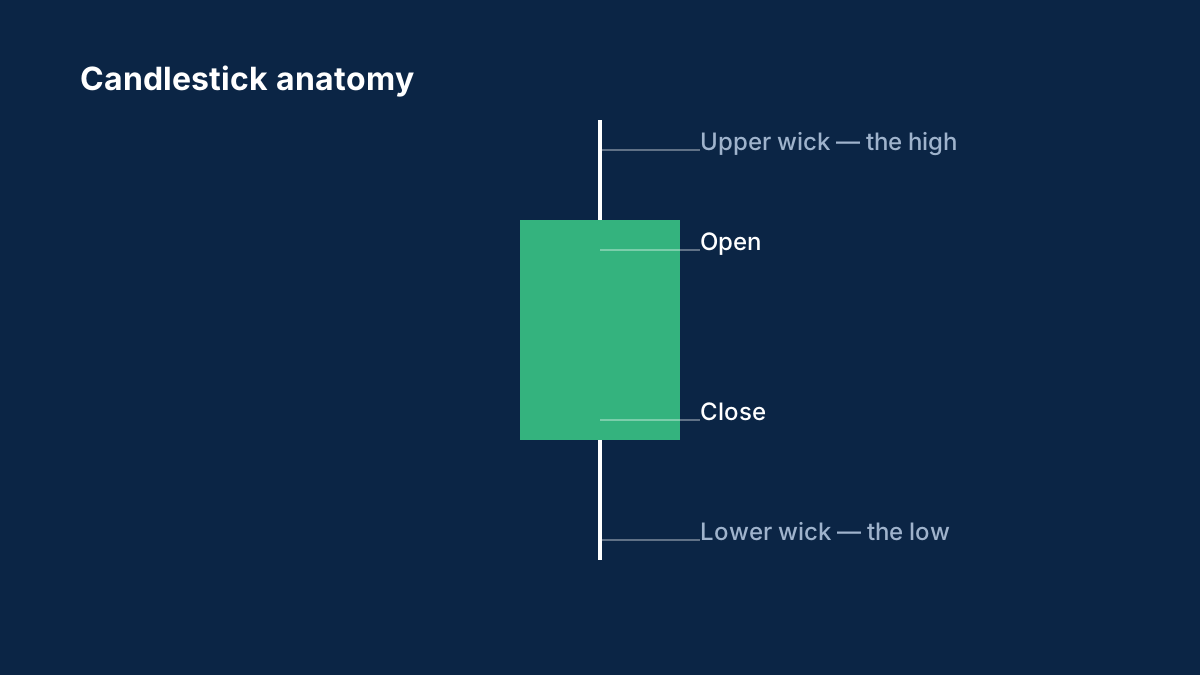
Price action is the market's own language — candles, structure and levels, read in context. Here is how professionals read it, what the rejection signatures mean, and how to practise until it becomes instinct.