How to trade the dollar index: DXY strategies
The dollar index condenses the dollar's strength against six currencies into one number — and its euro-heavy weighting shapes everything about how it trades. Here is how to use it as a filter, a signal and an instrument.
The dollar index — the DXY — is the market's shorthand for the dollar. One number, six currencies, and the fastest read on dollar strength available. Traders use it three ways: as a filter for every dollar-pair trade they take, as a signal in its own right, and — at brokers that offer it — as a tradeable instrument. Each use has its own rules, and the index's peculiar construction shapes all three.
This guide explains what the DXY actually measures, its euro-heavy bias, and how to trade with it. The mechanics are in the dollar index explained; this guide is the trading application.
What the DXY actually is
The dollar index measures the dollar against a basket of six currencies, weighted by their importance in US trade when the index was designed: the euro carries the largest weight at over 57%, followed by the yen, the pound, the Canadian dollar, the Swedish krona and the Swiss franc. The basket is fixed — it has not been updated since the euro's launch — which means the index is, in practice, mostly a euro-dollar measure with five smaller influences.
That construction has a consequence every DXY trader must internalise: the index can move on the euro alone. A sharp euro move — an ECB surprise, a euro-area political shock — moves the DXY even when nothing dollar-specific has happened. Reading the index without checking the euro first is how traders misattribute moves. The full basket breakdown is in the dollar index guide.
Use one: the filter
The DXY's most common use is as a filter for dollar-pair trades. The logic is simple: before taking any trade involving the dollar, check the dollar's overall direction. A long EUR/USD against a strong, rising DXY is fighting the dollar's current — sometimes correctly, but always against the tide.
The filter's practical form: read the DXY's trend on the higher time frame, and require dollar-pair trades to agree with it, or to have a specific reason to disagree. The filter costs a few skipped trades and saves the ones taken into the dollar's strength. The trend reading supplies the trend definition.
Use two: the signal
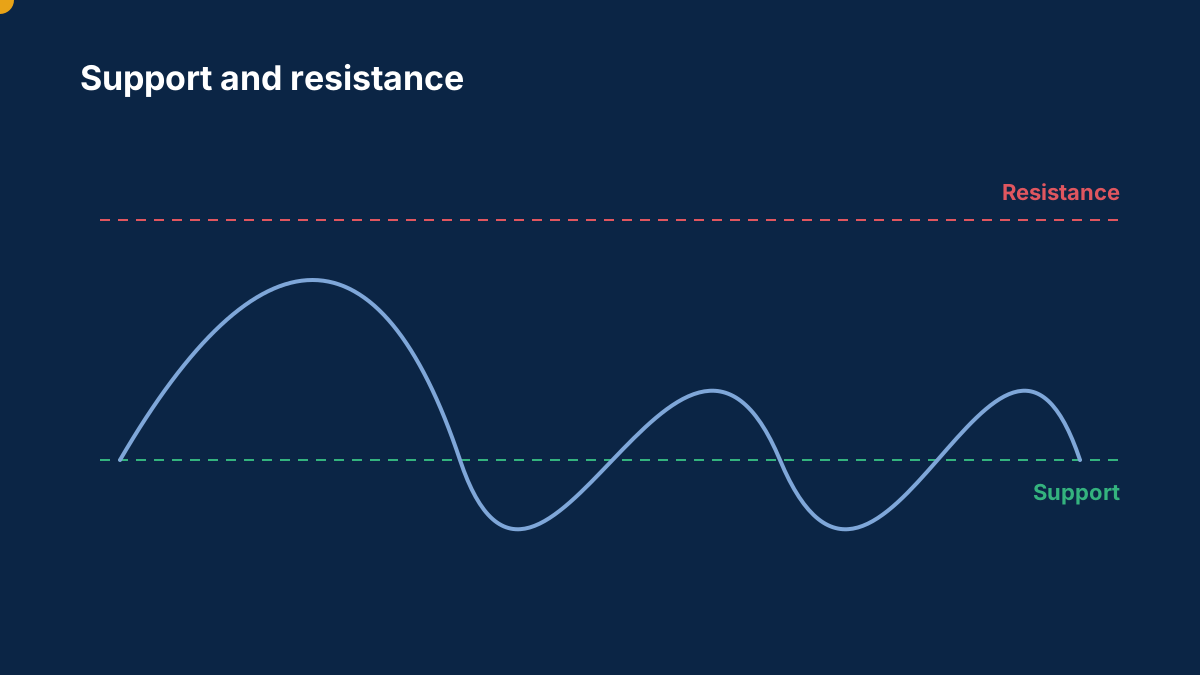
The DXY's second use is as a signal in its own right. The index's levels — its own support and resistance — are the dollar's levels, and they often matter more than any pair's, because so much order flow is placed against them. When the DXY approaches a major level, every dollar pair feels it.
The signal's strength is concentration: the index shows the dollar's story without any counterparty currency's noise. When the DXY breaks a level, the break is the dollar's, and the pairs follow in proportion to their own counterparties' strength. The breakout playbook applies to the index's levels directly.
The signal's weakness is the euro bias: a DXY breakout driven entirely by the euro is not a dollar story at all, and the pairs' reactions will be uneven. The diagnostic is simple — check EUR/USD's contribution before treating a DXY move as dollar-wide.
Use three: the instrument
Some brokers offer the DXY itself as a tradeable CFD, and trading it directly has one advantage: pure dollar exposure, with no counterparty currency's story attached. The trade is a view on the dollar's overall strength, expressed in one instrument instead of several pairs.
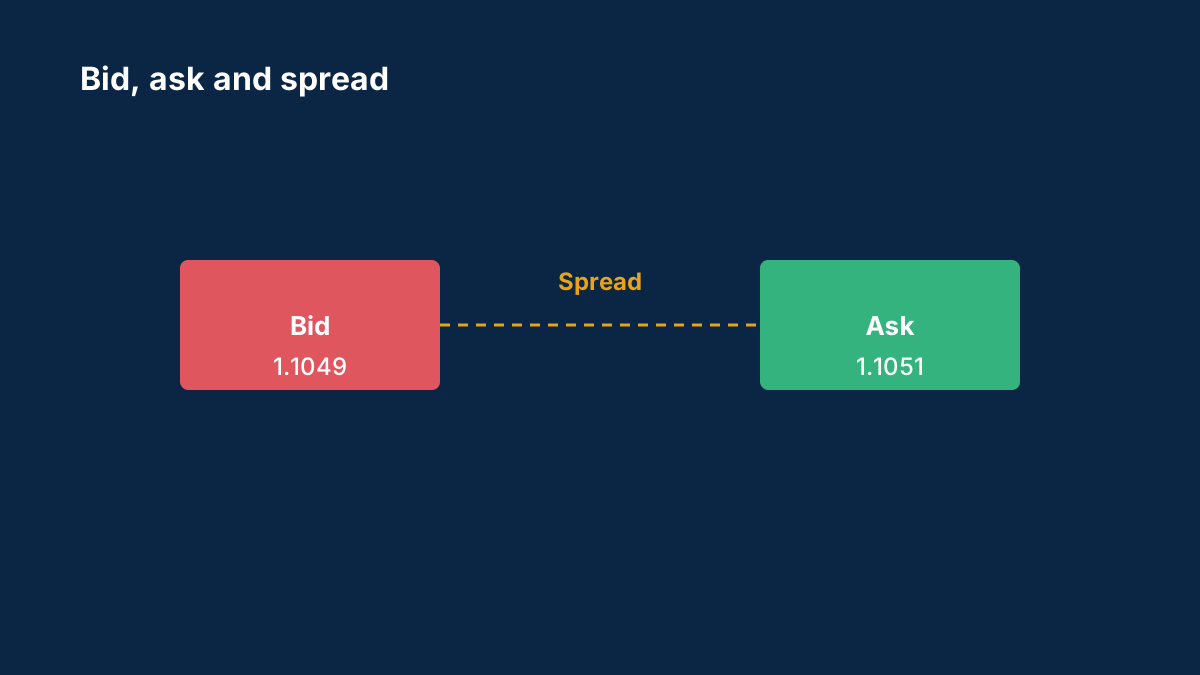
The instrument's quirks are its own: spreads are wider than the major pairs', liquidity is thinner, and the index's session behaviour concentrates in US and European hours. The instrument suits swing traders expressing multi-week dollar views rather than intraday traders. Trading costs explained covers the cost profile.
The divergence read
The DXY's most informative moment is the divergence: when the index and a dollar pair disagree. If the DXY rises while EUR/USD barely falls, the euro is strong and the dollar's rise is coming from elsewhere in the basket. If the DXY falls while USD/JPY rises, the yen is the story. The divergences are where the information lives, and the habit of checking them is what separates DXY readers from DXY followers.
Session behaviour
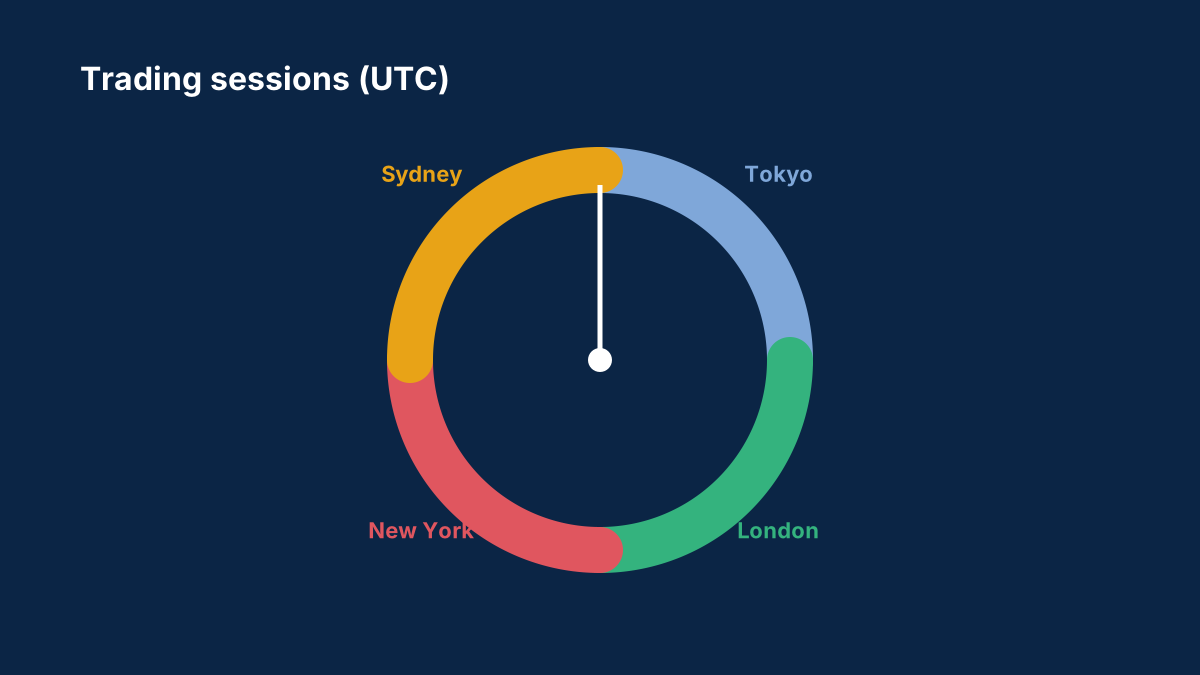
The DXY's real market runs during European and US hours, with the deepest liquidity in the London-New York overlap and the sharpest reactions to US data during the New York morning. Asian hours are thinner, and the index's moves there are often retraced. The market hours guide maps the sessions.
A workable framework
A starting structure for the DXY:
- Start every session with the index: what is the dollar doing, on what time frame, and — critically — is the move euro-driven or dollar-wide?
- Use the index's trend as the filter for every dollar-pair trade; require agreement or a specific reason to disagree.
- Mark the index's own levels — its support and resistance are the dollar's — and watch the pairs react when they break.
- Check for divergences daily: the pairs that disagree with the index are carrying the day's real story.
- If trading the index itself, treat it as a swing instrument and size for its wider spreads. The sizing method is in position sizing and risk per trade.
The dollar index is the market's most concentrated information source about the world's most important currency. Read it first, check the euro's contribution, and use its levels as your own — and every dollar-pair trade gets a better frame than any single chart can provide.
Sources
Common questions
What is the dollar index (DXY)?
A weighted measure of the dollar against a basket of six currencies, with the euro carrying over 57% of the weight. It is the market's shorthand for dollar strength.
Why does the euro dominate the DXY?
The basket's weights were fixed at the euro's launch and reflect trade shares at that time. The result is that the index often moves on euro news alone, even when nothing dollar-specific happened.
How do I use the DXY in my trading?
As a filter — check the dollar's trend before any dollar-pair trade — as a signal from its own levels, and as an instrument at brokers that offer it. The divergence between the index and a pair is where the real information lives.
Can I trade the DXY directly?
At brokers that offer it as a CFD, yes. It gives pure dollar exposure without a counterparty currency, with wider spreads and thinner liquidity than the major pairs.
What does it mean when the DXY and EUR/USD diverge?
The dollar's move is coming from elsewhere in the basket — or the euro has its own story. Checking the divergence before acting prevents misattributing euro moves to the dollar.
This article is for information only and is not financial advice. Trading forex and CFDs carries a high risk of losing money. Read the risk warning. Spotted an error? Tell the editors.
Comments
Log in to join the discussion. Comments follow the community guidelines.
Log in to commentLoading comments…