Bank of England holds Bank Rate at 3.75% on a 6–3 vote, and votes to unwind its bond holdings to zero
The Monetary Policy Committee kept Bank Rate unchanged on 17 September, with three members wanting a rise to 4%, and unanimously voted to sell down its remaining gilt holdings by 2034.
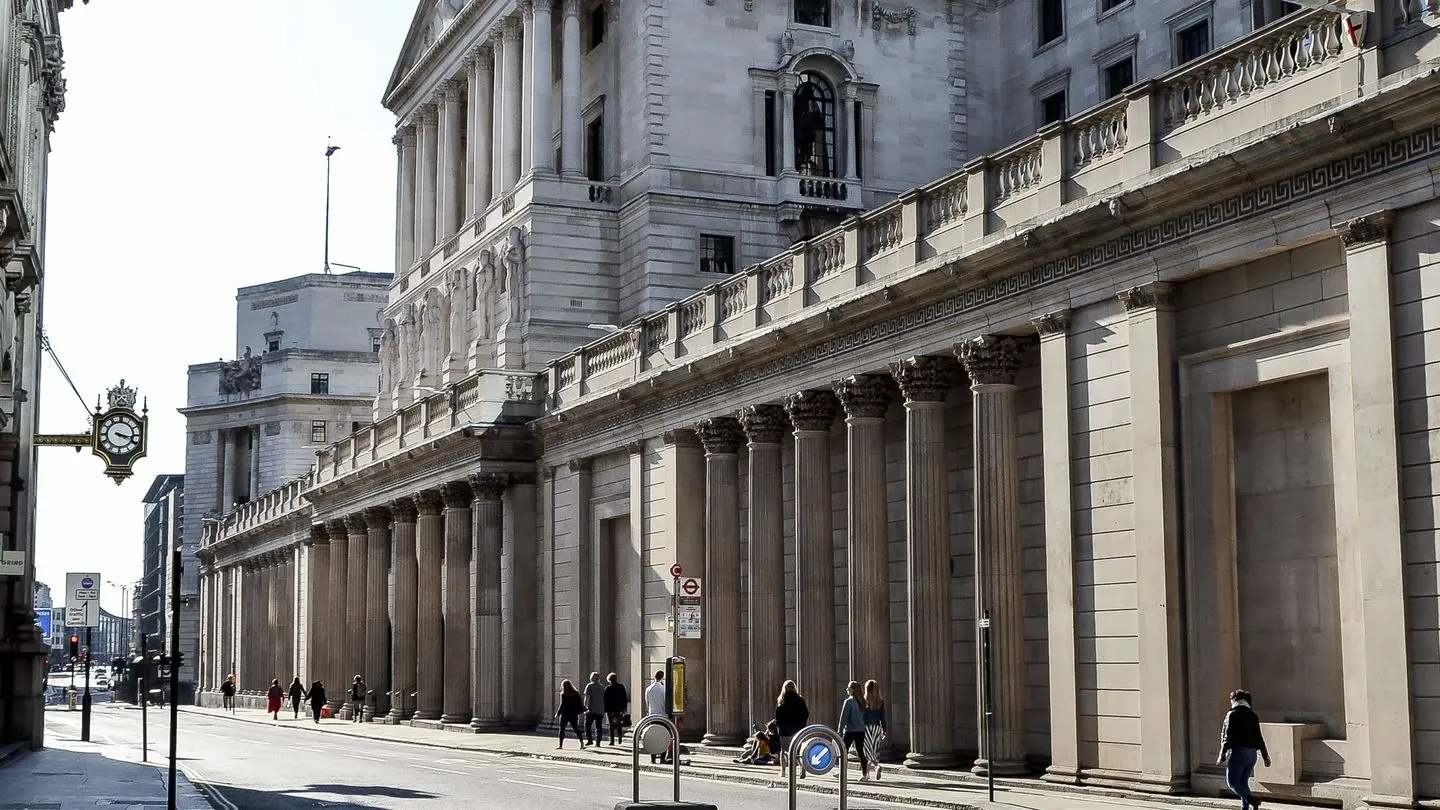
The Bank of England announced its interest rate decision on Thursday 17 September 2026, the day after the Federal Reserve raised its own rate (report). Our preview set out the split the committee faced.
The vote
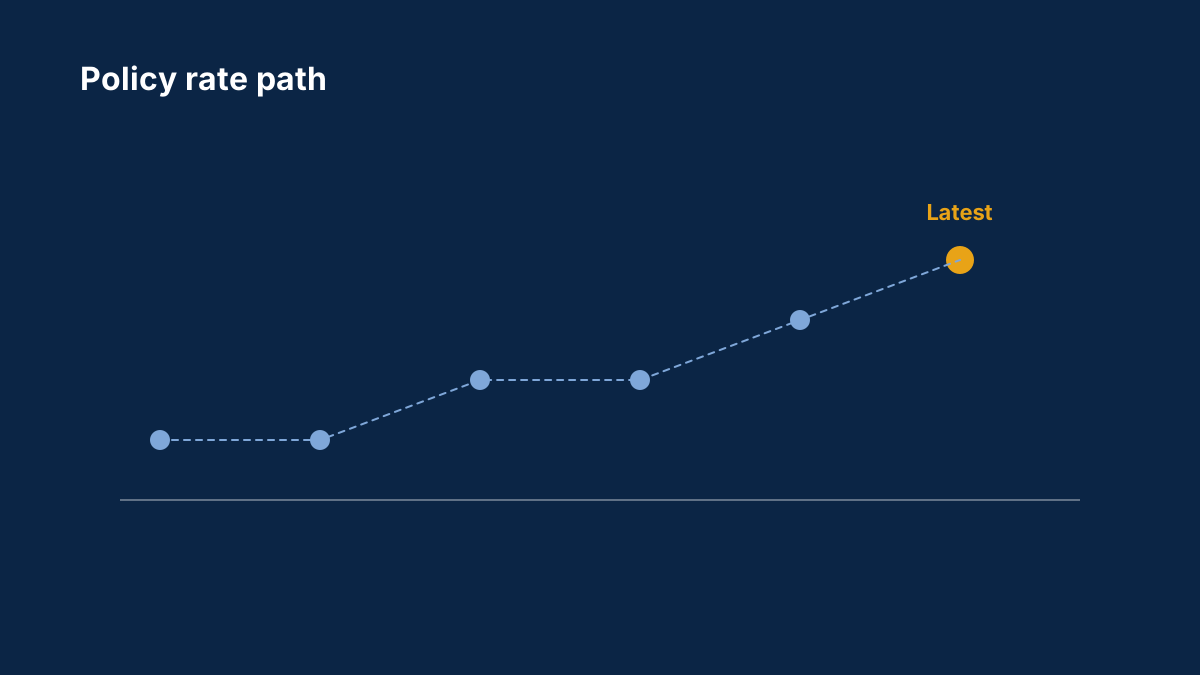
The Monetary Policy Committee voted 6–3 to maintain Bank Rate at 3.75%. The three dissenters voted to raise it a quarter point, to 4%.
Why the majority held
The Committee pointed to the energy shock from the conflict in the Middle East:
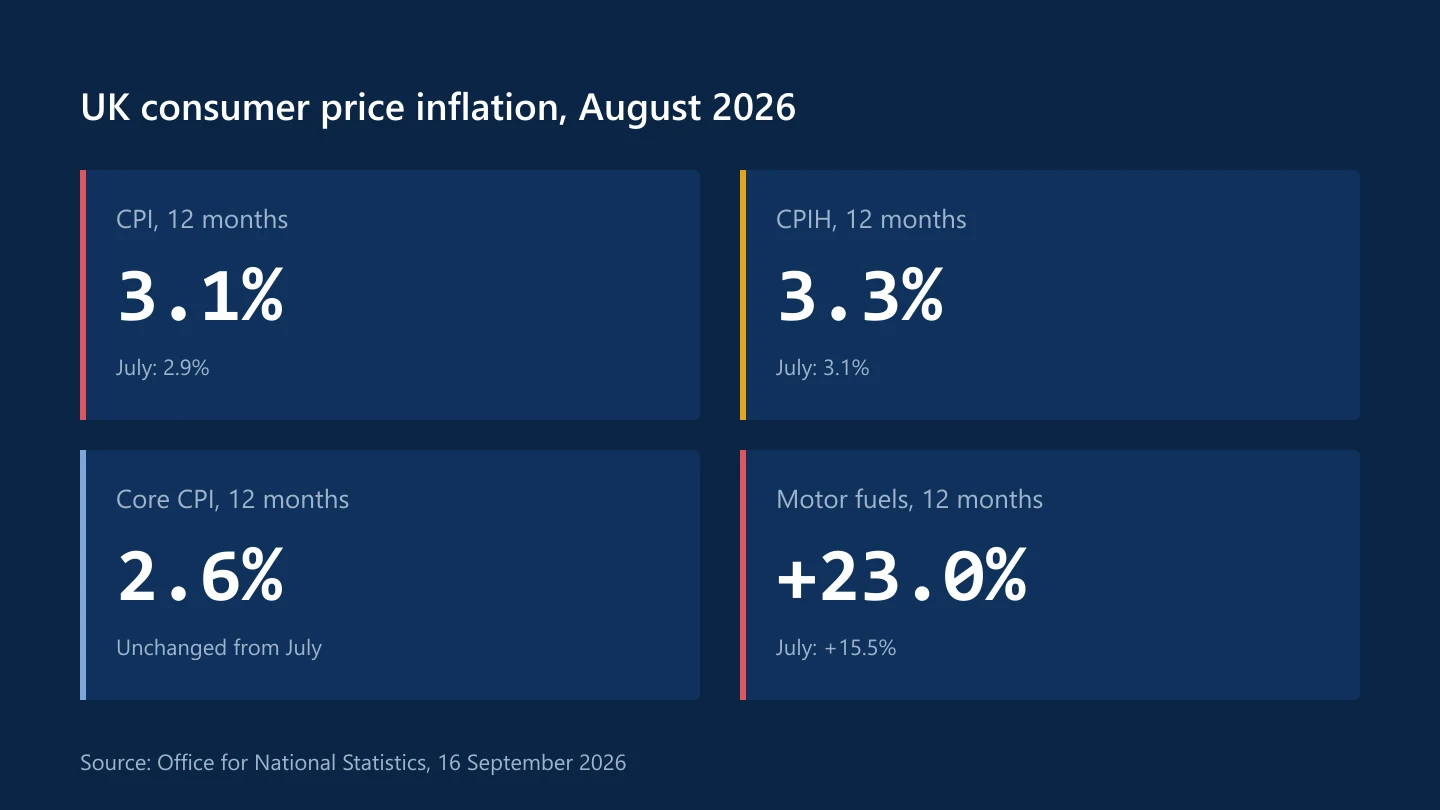
- UK CPI inflation rose to 3.1% in August and is "likely to rise further over coming quarters" (report)
- Energy prices: Brent crude and UK wholesale gas had risen 36% and 78% respectively since the July Monetary Policy Report; Brent closed at $106 a barrel and UK wholesale gas at 207 pence a therm on 14 September
- Second-round effects: the Committee saw "little evidence so far" of the energy shock spreading into wider prices and wages, but said the risk grows the longer prices stay high or volatile
- Activity: slightly stronger than expected, but soft labour market conditions and higher borrowing costs since the conflict began are expected to weigh on growth and inflation over time
The Committee judged the risks to the inflation outlook "tilted to the upside, and more so than at the time of the July Monetary Policy Report."
Unwinding the bond portfolio
Separately, the Committee voted unanimously to reduce its stock of gilts held for monetary policy purposes to zero, financed by the issuance of central bank reserves. The unwind will run through a multi-year plan: an annual average pace of £46 billion by the end of 2034, made up of £20 billion of annual sales alongside maturing gilts. See quantitative easing and quantitative tightening explained for what running down a bond portfolio does to yields and, indirectly, currencies.
What's next
- Mortgage rates have already moved: two-year fixed rates were around 95 basis points higher than before the conflict began
- The next Bank Rate decision is due 5 November 2026
- UK retail sales for August were published the next day, on 18 September (report)
The Bank of Japan raised its own rate the following day (report). Live prices: GBP/USD and EUR/GBP.
Sources
Common questions
What is the Bank of England's interest rate now?
Bank Rate is 3.75%, unchanged after the Monetary Policy Committee's 6–3 vote on 17 September 2026. Three of the nine members voted for an increase to 4%.
Why did the Bank of England hold rates in September 2026?
The Committee said inflation risks were tilted to the upside because of an energy shock linked to the conflict in the Middle East, but judged it appropriate to hold Bank Rate at 3.75% for now while standing ready to act if needed.
What did the Bank of England decide about its bond holdings?
It voted unanimously to reduce its stock of UK government bond purchases to zero, through a multi-year plan that unwinds the remaining stock at an annual average pace of £46 billion by the end of 2034, via £20 billion of annual sales alongside maturing gilts.
When is the next Bank of England interest rate decision?
The Monetary Policy Committee's next scheduled decision is on 5 November 2026.
This article is for information only and is not financial advice. Trading forex and CFDs carries a high risk of losing money. Read the risk warning. Spotted an error? Tell the editors.
Comments
Log in to join the discussion. Comments follow the community guidelines.
Log in to commentLoading comments…