How to trade the first hour of a session safely
The first hour of a session is the most liquid, most volatile and most deceptive hour of the day. Here is what happens in it, why most first-hour trades fail, and how to trade it without becoming the liquidity.
The first hour of a trading session is the market's most energetic and most dangerous hour. Volume surges, spreads tighten, and the day's range often begins to form — while the early moves are also the least trustworthy, full of false starts and stop-hunts that exist to catch the impatient. The hour is tradeable, but only with a plan built for its specific character.
This guide explains what happens in the first hour, why the early moves deceive, and two workable approaches — the patient one and the structured one — for trading it without becoming its victim. The session mechanics are in forex market hours and trading sessions.
What happens in the first hour
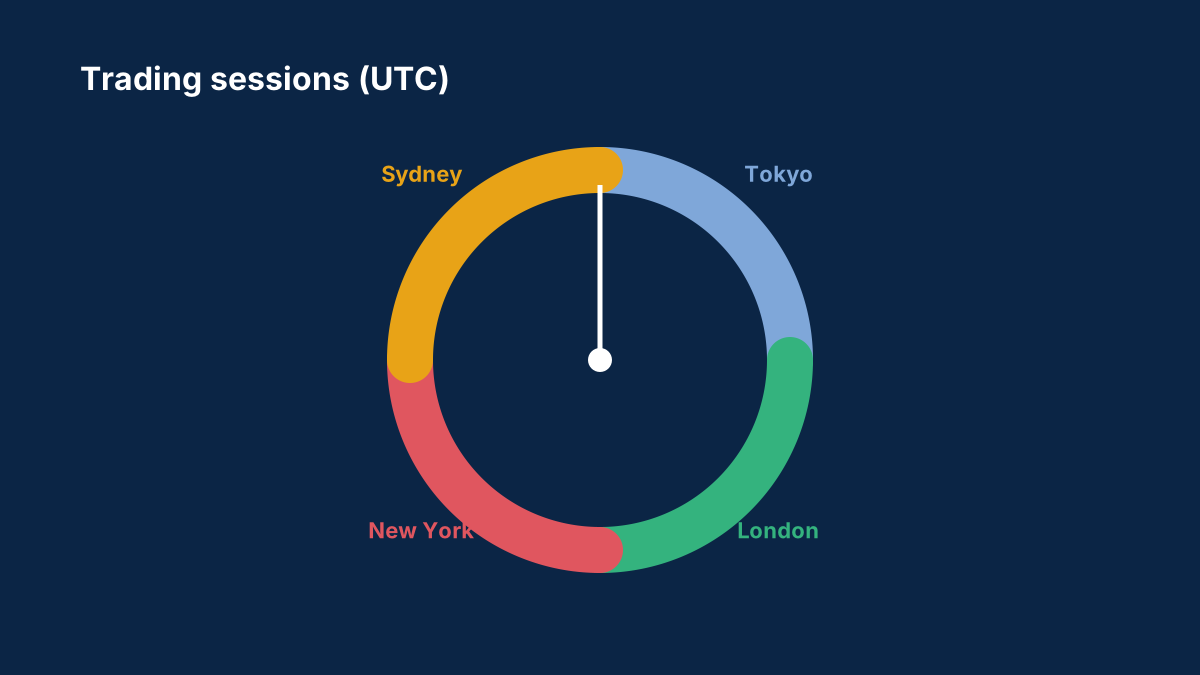
At the open of London or New York, three things happen at once. Volume multiplies as the session's traders arrive. Spreads tighten to the day's best levels as liquidity deepens. And the overnight range — the Asian range for London, the European range for New York — gets tested.
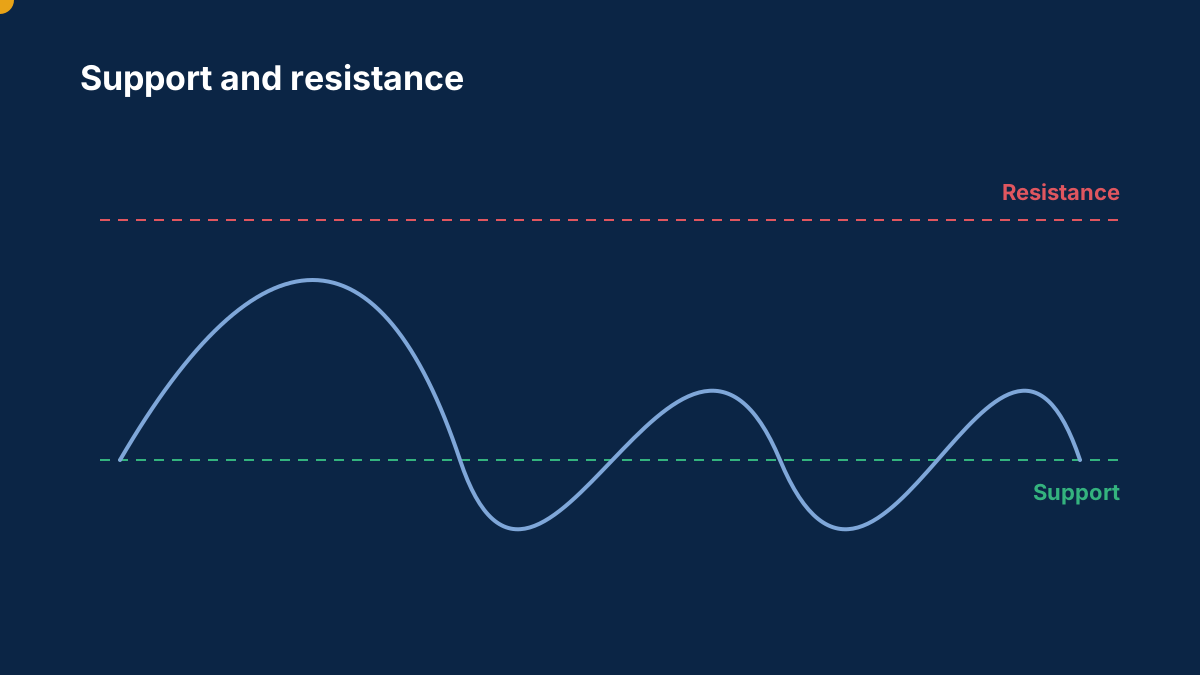
The testing is where the danger lives. The overnight range's extremes are where the overnight stops cluster, and the first hour's moves frequently run to those extremes and beyond — not because the market has decided on a direction, but because the liquidity is there to be collected. The first break of the overnight range is the most famous trap in session trading, and it repeats daily.
Why the first minutes lie
The first 15 minutes of a session are the market's least informative period. The moves are fast, the spreads are still settling, and the participants include the previous session's traders squaring positions, algorithms adjusting to the new flow, and the impatient placing their first trades of the day. The result is noise wearing the costume of direction: a sharp move that looks like the day's trend and frequently reverses within the hour.
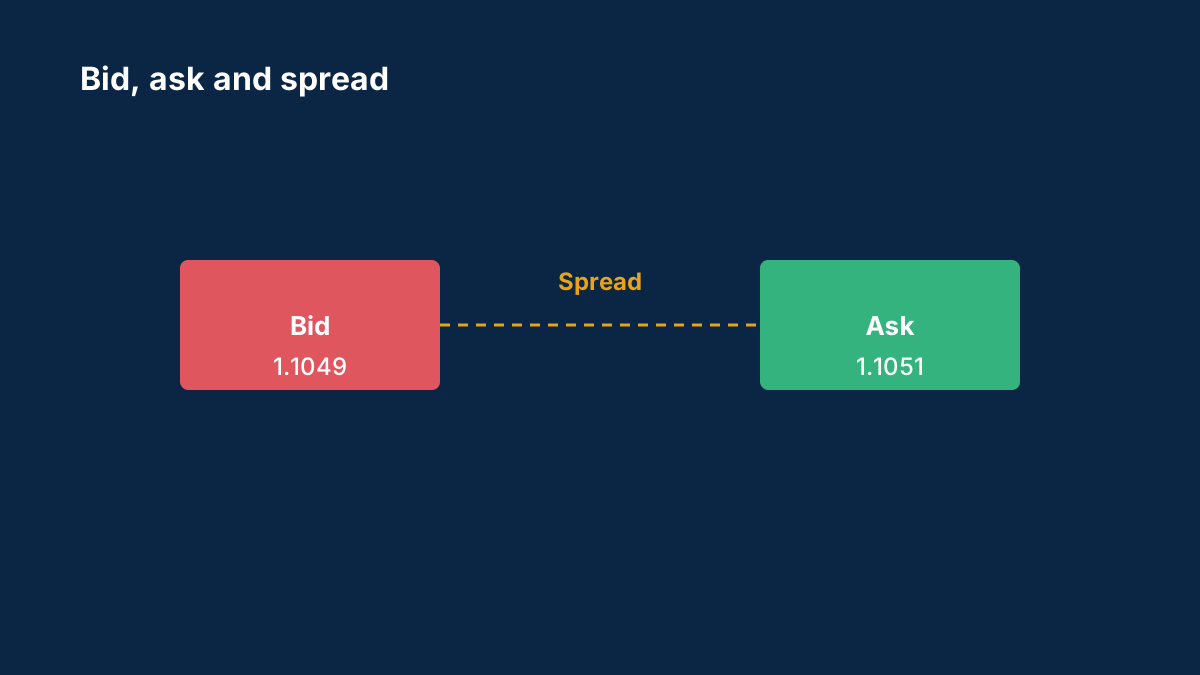
The professional response is structural: the first minutes are for observation, not participation. The traders who skip them lose nothing but the noise; the traders who trade them are the liquidity the first move runs on. Bid, ask and slippage explained describes what fills look like in those minutes.
The patient approach: wait for the range
The simplest first-hour strategy is to let the hour build the day's first range, then trade the levels it leaves behind. The process:
- Mark the overnight range before the open.
- Let the first hour trade without you — watch where price is accepted and rejected.
- When the hour's range has formed, mark its high and low.
- Trade the day from those levels: the break-and-retest if the hour's range breaks, or the fade at its edges if the market is ranging.
This approach costs the first hour's moves and buys the market's own information: the hour's range is where the real orders revealed themselves, and the levels it leaves are more reliable than anything drawn before the open. The breakout playbook covers the break-and-retest structure in full.
The structured approach: the opening range breakout
The classic first-hour system trades the opening range's break with strict rules. The trader defines the opening range — commonly the first 15, 30 or 60 minutes after the open — and places orders to buy a break of its high or sell a break of its low, with the stop on the other side and a target measured from the range's height.
The system's logic is sound: the opening range measures the day's initial balance, and its break often sets the day's direction. Its failure mode is equally well known: the first break of the opening range is frequently the stop-hunt described above, and the system's raw version buys exactly that trap.
The fixes that make the system workable:
Require a retest. Enter on the return to the broken level rather than the break itself. The retest filters the stop-hunts and costs only the pips of patience.
Filter by context. The break matters more when it agrees with the higher-time-frame trend and when a real catalyst — a data release, a session's institutional flow — is behind it. A break on a quiet day with no story is less trustworthy.
Use the stop as the definition. The stop beyond the opening range's other side means the system risks the range's full height on every attempt — the position must be sized for exactly that risk. Position sizing and risk per trade has the arithmetic.
The news complication
The first hour is also when the session's data often lands — UK releases in London's first hour, US releases in New York's. A normal-open plan trading through a CPI release is not the same plan; the release rewrites the hour's behaviour entirely. The rule is absolute: check the economic calendar before the open, and if a high-impact release is due in the first hour, either stand down or trade the release's own playbook — the news trading guide covers that day instead.
The discipline that makes it work
First-hour trading is a discipline problem more than an analysis problem. The market offers the same temptations every day — the early spike that looks like the trend, the break that looks like the breakout — and the traders who resist them trade the hour well; the traders who chase them fund the hour. The rules that hold:
No trades in the first 15 minutes. The observation window is non-negotiable.
One trade per hour, maximum. The second and third entries are the emotional ones, and the first hour punishes them hardest. The revenge trading guide explains the mechanism.
The range is the map. Whether trading its break or its edges, the opening range's high and low are the hour's structure; everything else is noise.
The first hour rewards preparation and punishes impulse with equal efficiency. Mark the overnight range, observe the first minutes, trade the structure the hour leaves behind — and the market's most energetic hour becomes one of its most tradeable.
Sources
Common questions
What is the opening range in trading?
The high and low of the first 15, 30 or 60 minutes of a session. The opening range measures the day's initial balance, and its break often sets the session's direction.
Why do first-hour moves often reverse?
The early moves are driven by position-squaring, algorithmic flow and stop-hunts around the overnight range's extremes — not by a decided direction. The first break of the overnight range is the classic trap.
Should I trade the first 15 minutes of a session?
Most traders should not. The first minutes are the least informative of the session — fast moves, settling spreads and noise. Observing them and trading the levels they leave is the safer structure.
How do I trade the opening range breakout?
Define the range (15, 30 or 60 minutes), then trade the break with confirmation — ideally the retest of the broken level — with the stop beyond the range and a target measured from its height.
What if news lands in the first hour?
Stand down or switch playbooks. A high-impact release rewrites the hour's behaviour entirely, and a normal-open plan trading through it is not the same plan.
This article is for information only and is not financial advice. Trading forex and CFDs carries a high risk of losing money. Read the risk warning. Spotted an error? Tell the editors.
Comments
Log in to join the discussion. Comments follow the community guidelines.
Log in to commentLoading comments…