How to trade GBP/JPY: the wildest major cross
GBP/JPY combines sterling's energy with the yen's sensitivity to rates and risk, producing the widest ranges in the majors. Here is how the cross works and how to trade it without being shaken out.
GBP/JPY is the market's wildest major cross: sterling's headline-driven energy on one side, the yen's sensitivity to rates, risk and intervention on the other, and no dollar in between to cushion either. The result is a pair whose daily ranges dwarf every other major's, whose trends run further than most, and whose reversals arrive without apology.
This guide explains the cross's construction, its three drivers, and how to build a plan for a pair that punishes normal-sized positions. The two legs' individual stories are covered in the GBP/USD guide and the USD/JPY guide.
The basics
GBP/JPY is the price of one British pound in Japanese yen: the pound is the base currency, the yen the quote. The pip is the yen-standard second decimal place — a move from 195.00 to 195.01 is one pip — and the pip value on a standard lot is ¥1,000, converted to your account currency. Pip value explained has the yen-pair conversion arithmetic.
The cross's volatility is the first fact of any plan. Its average daily range is several times EUR/USD's in pip terms, and its range in percentage terms is the widest among the majors' crosses. A position sized like a EUR/USD trade will be stopped out of GBP/JPY by ordinary noise — and a position sized by habit rather than calculation will do worse. The ATR guide gives the volatility measure that makes sizing consistent.
The three drivers
The sterling leg. Everything that moves cable moves this cross's pound side: UK CPI, the labour market, Bank of England decisions and the split votes that accompany them (preview). Sterling's political and fiscal headlines add their own spikes, and the cross inherits all of it.
The yen leg. Everything that moves the yen moves the other side: the Bank of Japan's path, US yields, and — uniquely — the risk of intervention, which in 2026 has been conducted jointly with the United States (report). The yen's moves are the cross's sharpest, because they can arrive without warning. Currency intervention explained covers the mechanics.
The risk channel. The cross's third driver is the one that combines the other two: risk appetite. GBP/JPY is a classic risk barometer — it rises when the world wants risk and falls hard when it doesn't, because both legs carry risk sensitivity (sterling through its high beta, the yen through its haven status). The cross's biggest trends are risk trends, and its biggest reversals are risk-off events. Risk-on risk-off explained covers the sentiment mechanics.
Why the cross is so volatile
The volatility is structural, not accidental. Sterling is the most volatile of the European majors; the yen is the most intervention-prone of the Asian ones; and the cross removes the dollar, which usually damps the other majors' moves. Each leg's shocks land on the cross undiluted, and when both legs move at once — a UK surprise on a risk-off day — the result is the pair's signature: ranges that exceed most traders' stop distances several times over.
How the plan must change
GBP/JPY demands a different plan from the dollar pairs, in three specific ways:
Wider stops, anchored to structure. A stop that survives EUR/USD dies on GBP/JPY. The stop must sit beyond the cross's real structure — beyond the swing, beyond the zone — and the stop-loss guide explains the anchoring. The alternative is a volatility-based stop from the ATR guide, sized to the cross's actual range rather than a pip habit.
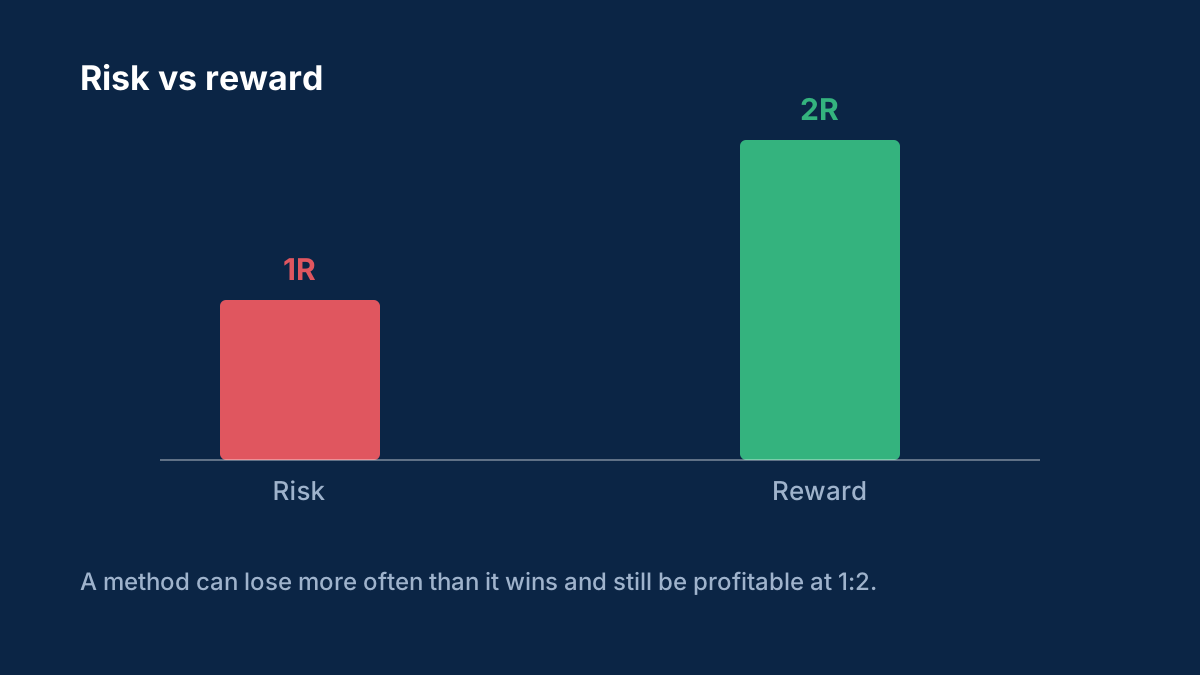
Smaller positions. The wider stop forces the smaller position, and the risk-first arithmetic makes it automatic: fix the risk per trade, divide by the stop distance, and the cross's math produces a smaller size than any dollar pair would. Position sizing and risk per trade has the full method.
Event discipline on both legs. The cross's calendar is both countries' calendars: UK data and BoE days on one side, BoJ days and intervention risk on the other. Reducing or flattening into the biggest of both is the professional standard, because the cross's event moves are the ones that break accounts.
Session behaviour
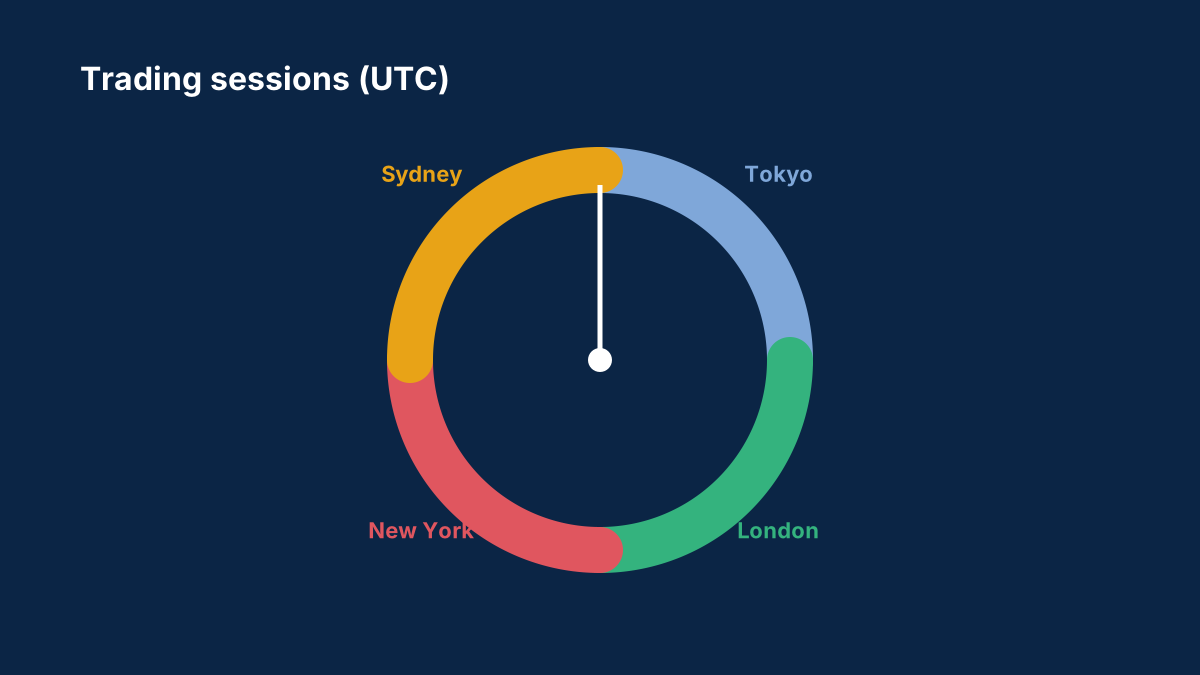
The cross trades actively across three sessions: Tokyo hours carry the yen's real market, London hours carry sterling's, and the overlap hours carry both. Its spreads are widest in the Asian session and tightest during London and New York. The practical rhythm: trade it when both legs are awake, respect the Asian session's yen-side news, and never hold oversized positions into a BoJ decision or a weekend with intervention risk. The market hours guide maps the sessions.
A workable framework
A starting structure for GBP/JPY:
- Before the week, mark both calendars — UK and Japanese — and the global risk events that move the cross's sentiment channel.
- Read the three drivers together: which leg is active, and what is the risk mood? The cross trends when all three agree and chops when they conflict.
- Size first, trade second: calculate the position from the cross's real stop distance, never from a dollar-pair habit.
- Trade the trends on pullbacks rather than chasing the cross's long runs — its retracements are deep, and the trend trading playbook applies directly.
- Treat intervention headlines as instant risk-off events on this cross: the yen side's spikes reach GBP/JPY amplified.
GBP/JPY is not a beginner's pair, but it is a serious trader's instrument: wide ranges, long trends and the discipline it demands in return. Size for its character, respect both legs' calendars, and the wildest major cross becomes one of the most rewarding.
Sources
Common questions
Why is GBP/JPY so volatile?
Both legs are volatile — sterling is headline-driven and the yen is intervention-prone — and the cross has no dollar to dampen either. When both legs move at once, the ranges dwarf every other major.
What moves GBP/JPY the most?
UK data and Bank of England decisions on the sterling side, the Bank of Japan and intervention risk on the yen side, and global risk appetite, which drives the cross's biggest trends.
How should I size GBP/JPY positions?
Much smaller than dollar pairs. The cross's stops must be wider, so the position must shrink to keep the money at risk constant. Risk-first sizing is non-negotiable on this pair.
Is GBP/JPY a risk barometer?
Yes. It rises when the world wants risk and falls sharply when it does not, because sterling is high-beta and the yen is a haven. Its biggest reversals are risk-off events.
What is the best time to trade GBP/JPY?
Tokyo and London hours, when both legs' markets are awake. The overlap carries the deepest liquidity, and the Asian session carries the yen side's news.
This article is for information only and is not financial advice. Trading forex and CFDs carries a high risk of losing money. Read the risk warning. Spotted an error? Tell the editors.
Comments
Log in to join the discussion. Comments follow the community guidelines.
Log in to commentLoading comments…