News
Forex news and guides: page 3
Central bank decisions, economic data, gold and oil, and plain-English guides to how currency trading works. Every article links to its primary sources.
More articles
How to size a forex trade in four steps
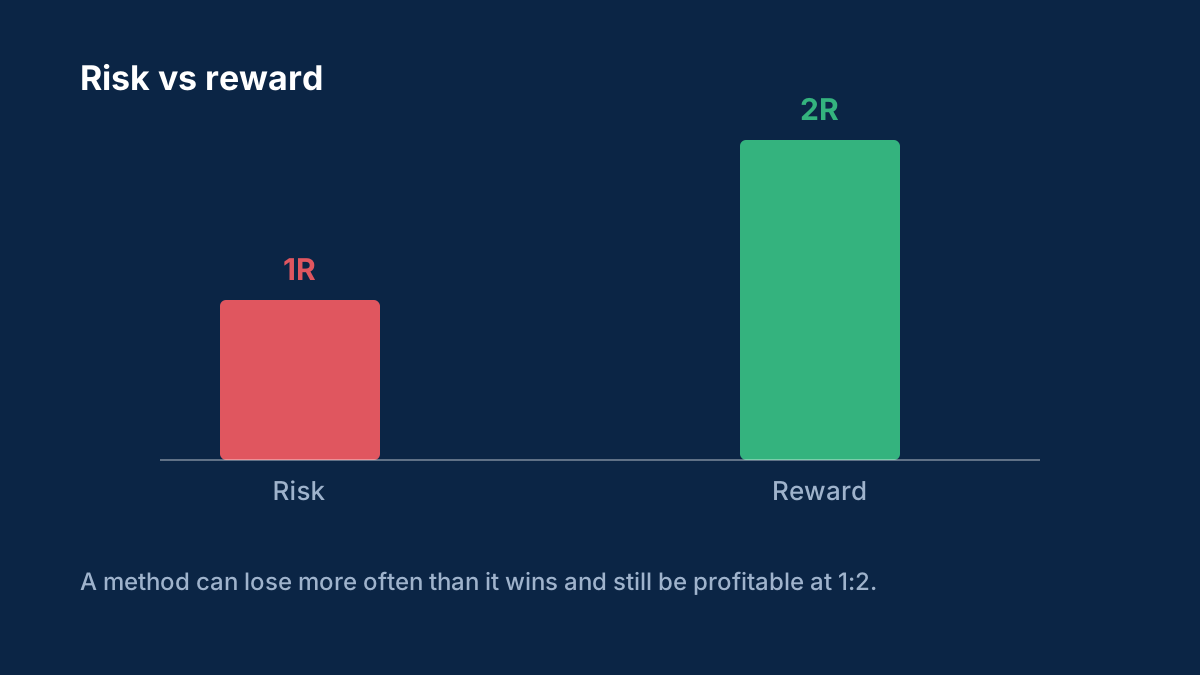
Position sizing is the calculation that keeps one bad trade from becoming a bad month. Here is the four-step method, with worked examples for dollar pairs, yen pairs and crosses.
How to use leverage responsibly: sizing for survival
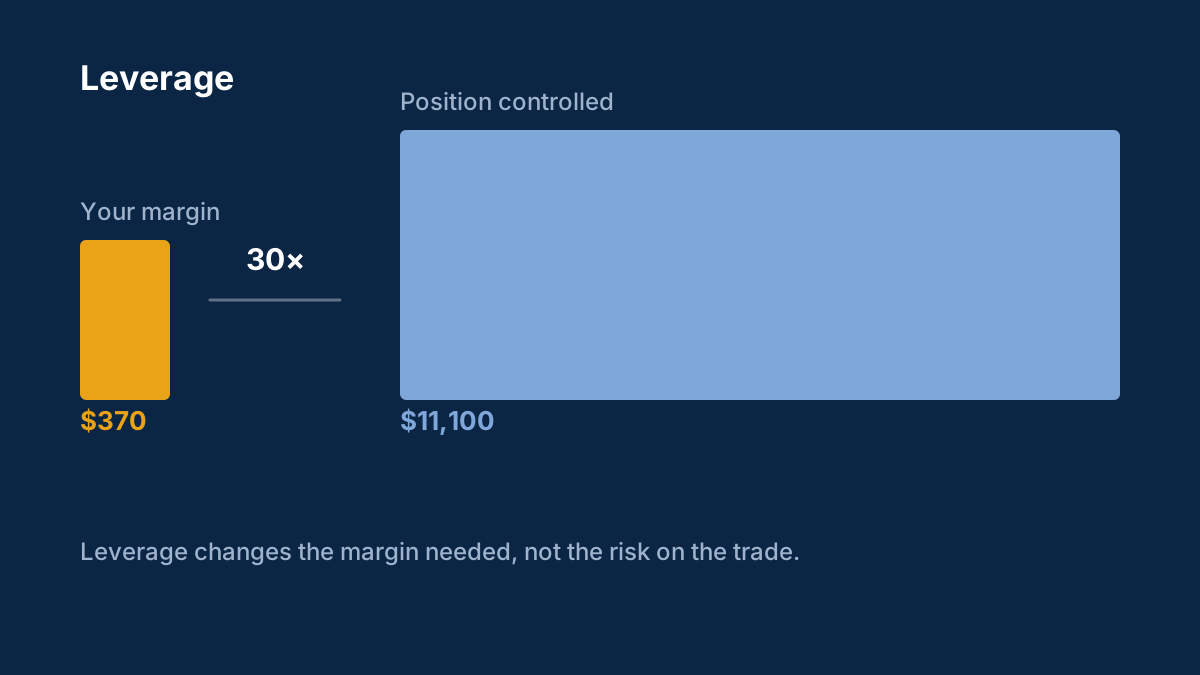
Leverage multiplies both the gains and the losses, and the account usually learns this before the trader does. Here is how offered leverage differs from used leverage, and how to set yours so a bad week stays a bad week.
How to trade trends: entry, exit and the patience between
Trend trading is simple in description and brutal in execution: small losses, long waits and the occasional trade that pays for everything. Here is how to define a trend, enter it on pullbacks and stay in it without getting shaken out.
How to trade support and resistance levels properly
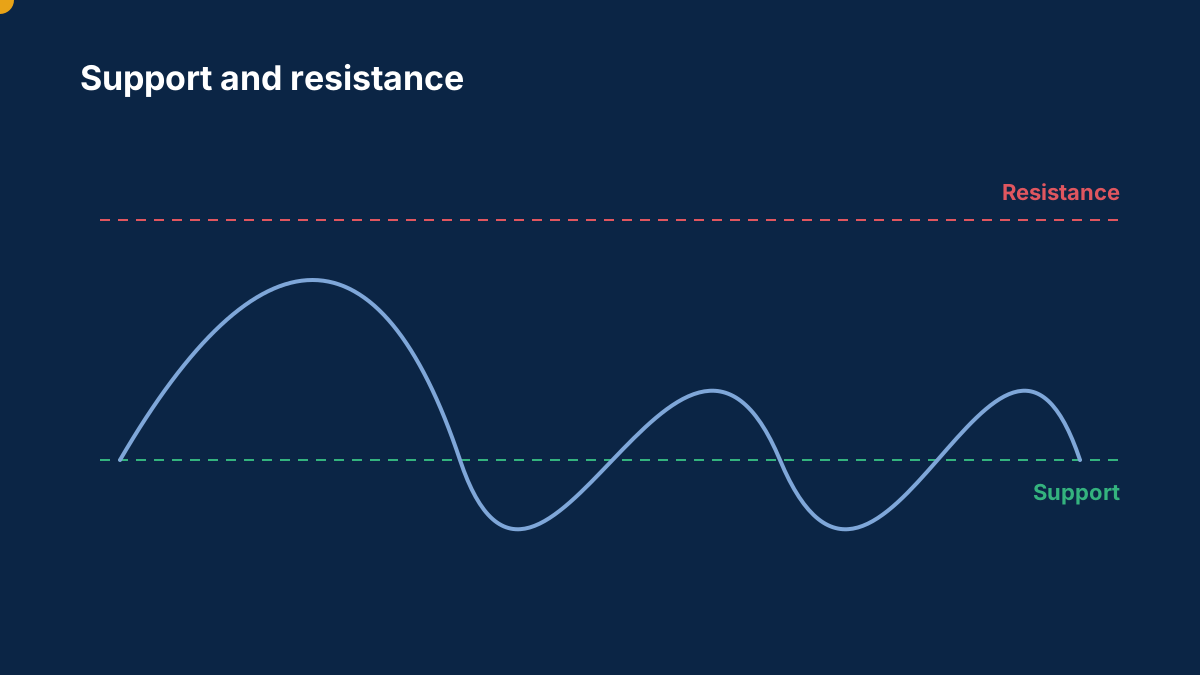
Support and resistance are the market's most used concepts and most misused lines. Here is how professionals draw them as zones, which touches count, and how to turn a level into a complete trade.
How to trade breakouts without buying the false ones
Most breakouts fail, and the ones that succeed usually let you in on the retest. Here is how to separate real breaks from stop-hunts, where to place the stop, and how to size the trade.
How to trade the London open: session strategies and risks
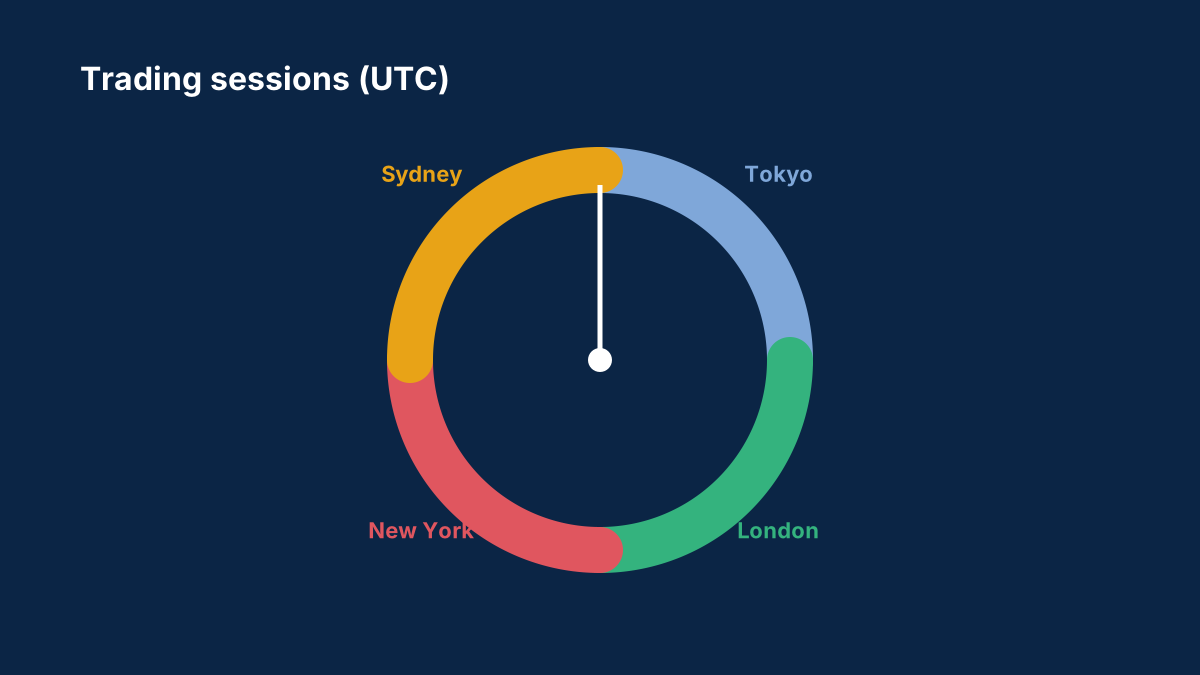
The London open brings the day's real volume, and the first hours set the ranges the rest of the day trades. Here is how the open behaves, which pairs wake up, and how to trade it with a plan.
How to trade Fibonacci retracements without hindsight
Fibonacci levels are everywhere on charts and nowhere near as precise as their fans claim. Here is what the retracement actually is, which levels matter, and how to trade it with the hindsight removed.
How to trade forex safely as a beginner: the first 90 days
The first ninety days decide whether a beginner becomes a trader or a cautionary tale. Here is a month-by-month plan that keeps the account alive while the skills form.
Why the US dollar moves the entire forex market
The dollar is one side of nearly every trade, the world's reserve currency and the pricing unit for commodities. Here is why its moves ripple through every pair, every market and every trading plan.
What happens to currencies when the Fed raises rates?
A Fed rate hike reprices the dollar against everything, but the move isn't always what the textbook says. Here is the transmission chain — expectations, yields, carry and risk — and what the September 2026 hike showed.
How to trade central bank decisions: the rate-day playbook
Rate decisions move currencies through the vote, the statement and the press conference — not just the rate itself. Here is how to read all four parts and trade the day with the risk controlled.
How to trade non-farm payrolls: an NFP playbook that respects the risk
Non-farm payrolls is the most scheduled-and-scripted volatility in forex. Here is what the report actually measures, why the details beat the headline, and how to trade the day with a plan instead of a guess.
How to trade CPI releases without getting run over
CPI mornings move every dollar pair at once, and the first move often lies. Here is how to read the report properly, what the market actually reacts to, and three ways to trade inflation day with the risk controlled.
How to build a forex trading plan that survives losing streaks
A trading plan is the difference between a system and a mood. Here is exactly what belongs in one, how to write it in an afternoon, and why the losing-streak test decides whether it is real.
How to trade gold (XAU/USD): drivers, strategies and risk
Gold moves in dollars per ounce, not pips, and its daily range dwarfs most currency pairs. Here is what actually drives the metal, how position sizing differs from forex, and how to trade it without getting shaken out.
How to trade USD/JPY: BoJ, carry and intervention risk
USD/JPY pays you for the rate gap and threatens you with intervention. Here is how the Bank of Japan, US yields and the threat of sudden yen-buying operations all fit into one trading plan.
How to trade GBP/USD (cable): what moves it and when
GBP/USD, nicknamed cable, is the most volatile of the major dollar pairs. Here is what drives it, how its session behaviour differs from EUR/USD, and how to build a plan around its moods.
How to trade EUR/USD: the complete beginner's guide
EUR/USD is the most traded currency pair in the world, with the tightest spreads and the deepest liquidity. Here is what moves it, when it moves, and how to build a trading plan around it.
How to trade the news: a step-by-step strategy guide
News moves currency pairs faster than anything else in the market. Here is how to trade news releases with a plan, not a prayer — including the releases that matter, the risks around the release minute, and three strategies that respect both.
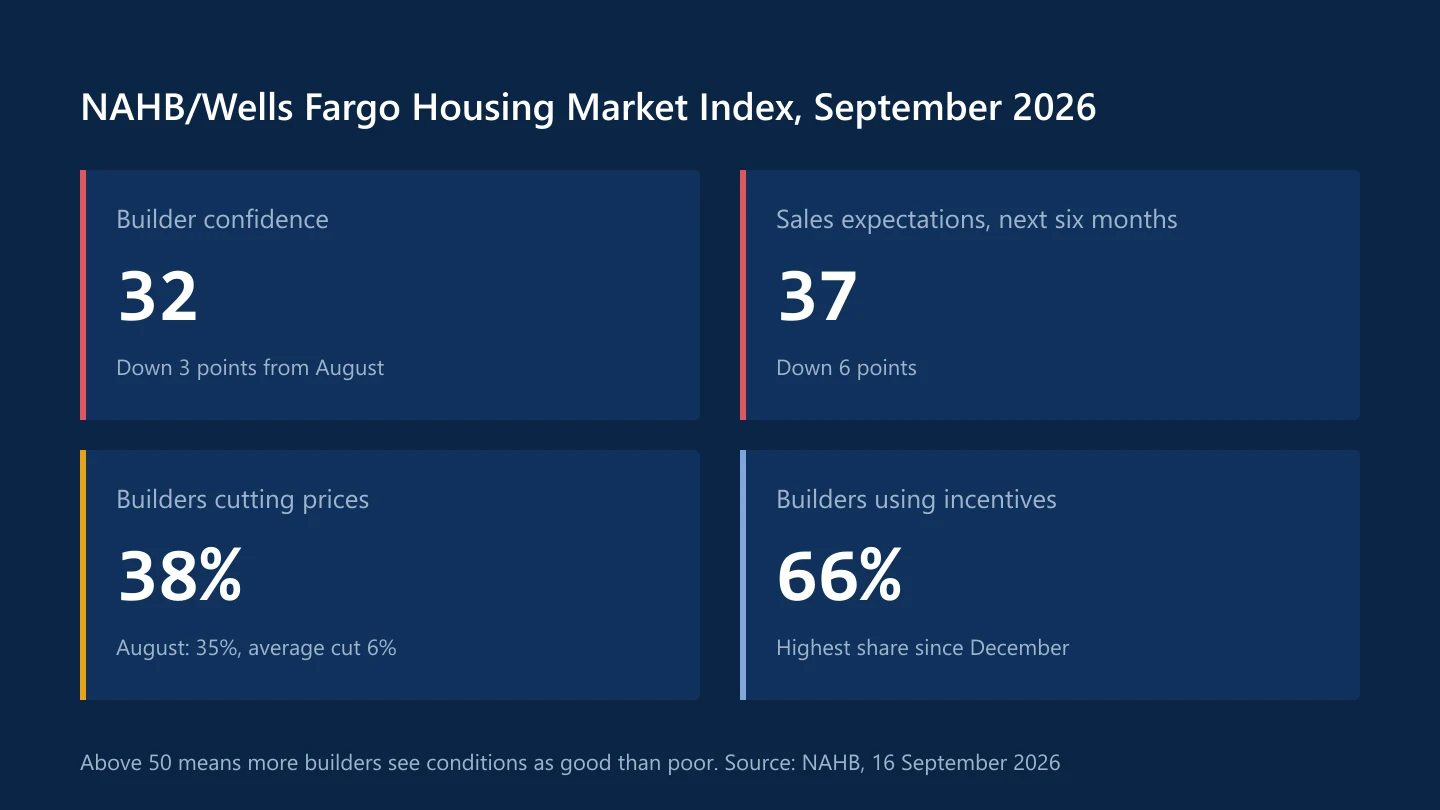
US home builder confidence falls to 32 in September as mortgage rates and costs rise
The NAHB/Wells Fargo Housing Market Index dropped three points, and 38% of builders cut prices, up from 35% in August, the National Association of Home Builders said on 16 September.
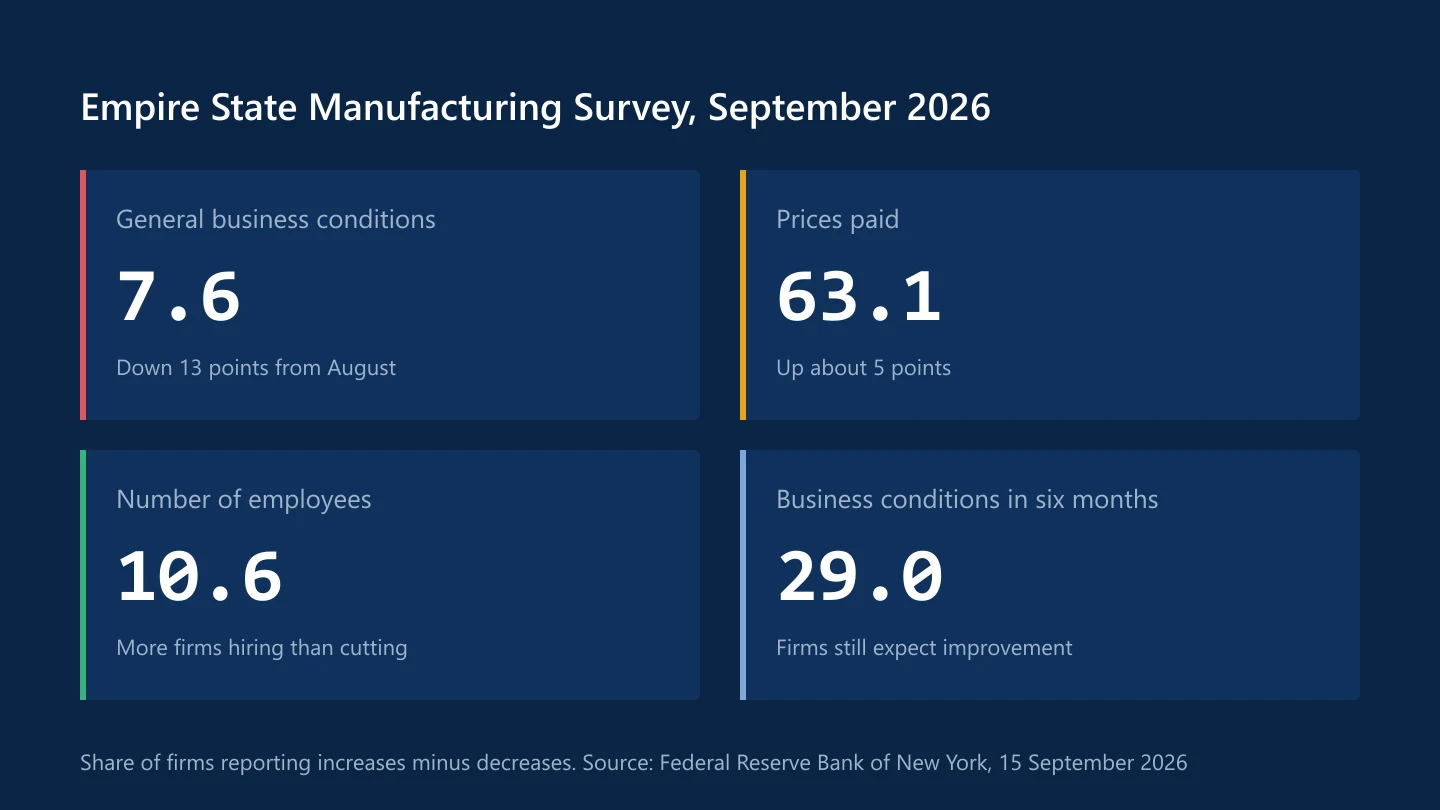
New York factory activity slows in September as prices paid climb to 63.1
The Empire State Manufacturing Survey's general business conditions index fell 13 points to 7.6, the New York Fed said on 15 September, while input and selling prices rose faster.
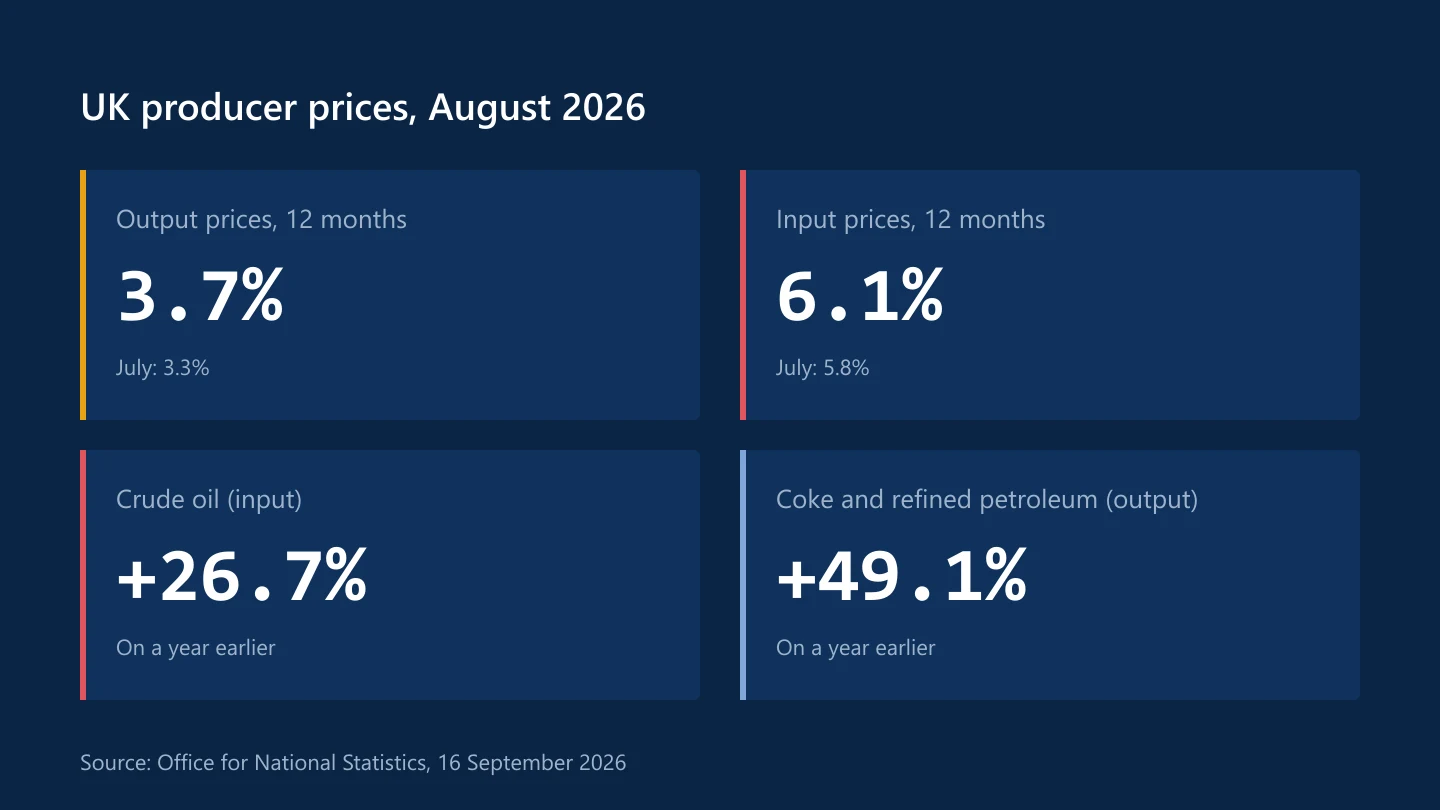
UK factory gate inflation rises to 3.7% as refined petroleum prices climb 49%
Output prices rose 3.7% in the year to August 2026 and input prices 6.1%, the ONS said on 16 September, with crude oil the biggest driver of manufacturers' costs.
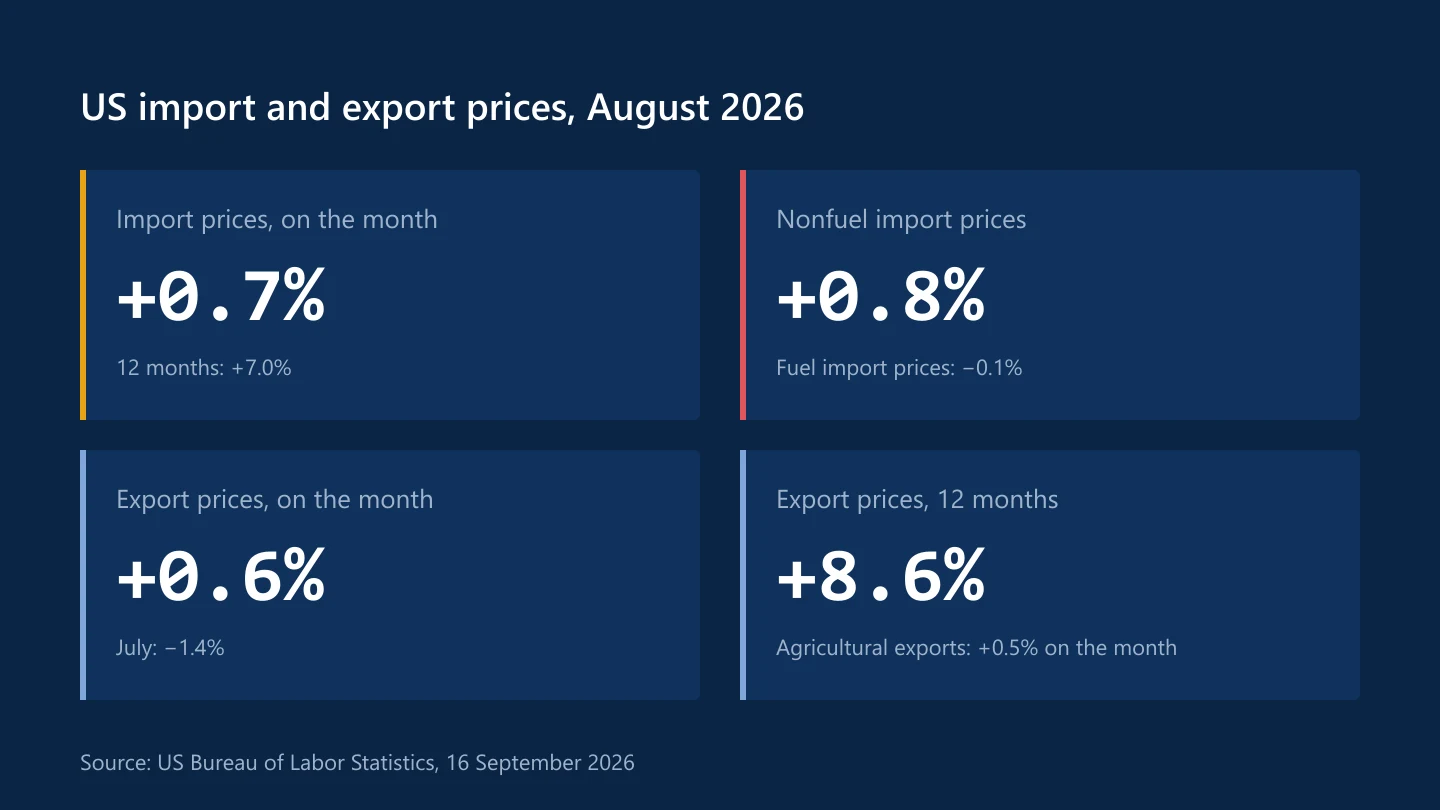
US import prices rise 0.7% in August and are 7.0% higher than a year earlier
Nonfuel import prices climbed 0.8% while fuel prices slipped 0.1%, the Bureau of Labor Statistics said on 16 September. Export prices rose 0.6% after falling 1.4% in July.
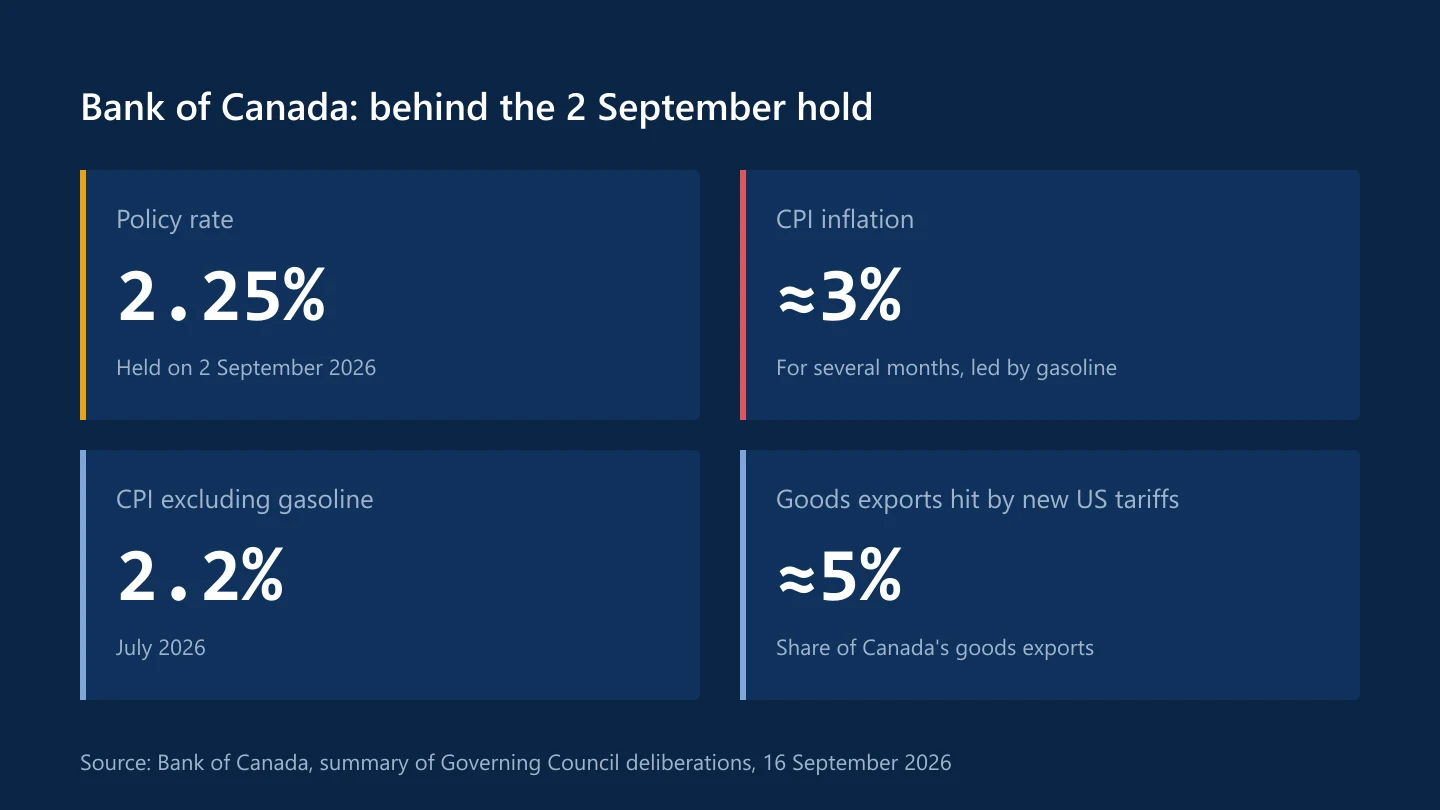
Bank of Canada deliberations: fuel prices and new US tariffs kept the rate at 2.25%
The summary of the Governing Council's discussions before its 2 September hold, published on 16 September, shows members worried that high gasoline and diesel prices could keep inflation above target for longer.
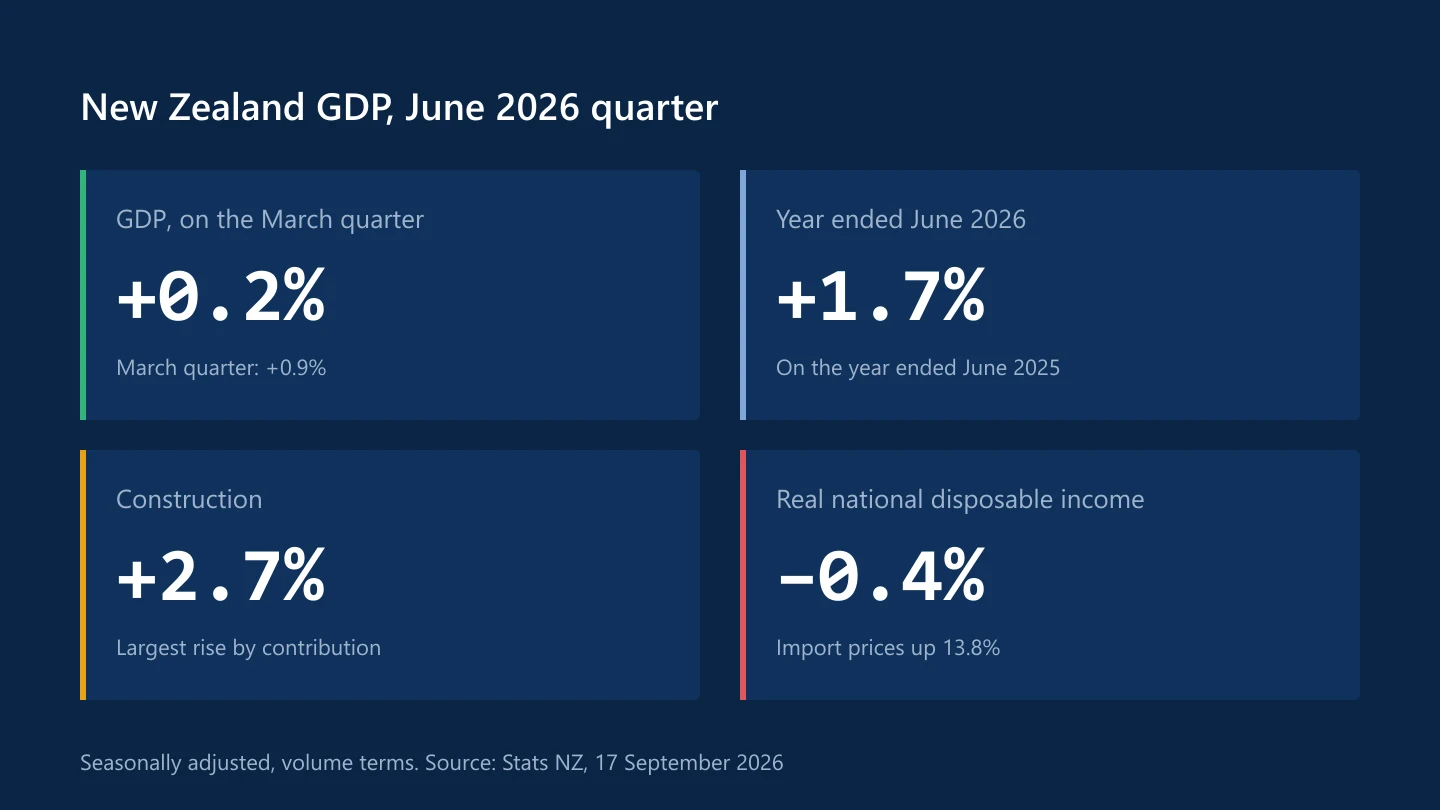
New Zealand's economy grows 0.2% in the June quarter as construction offsets weaker transport and retail
GDP rose 0.2% after 0.9% in the March quarter, Stats NZ said on 17 September. Higher import prices cut real national disposable income by 0.4%.
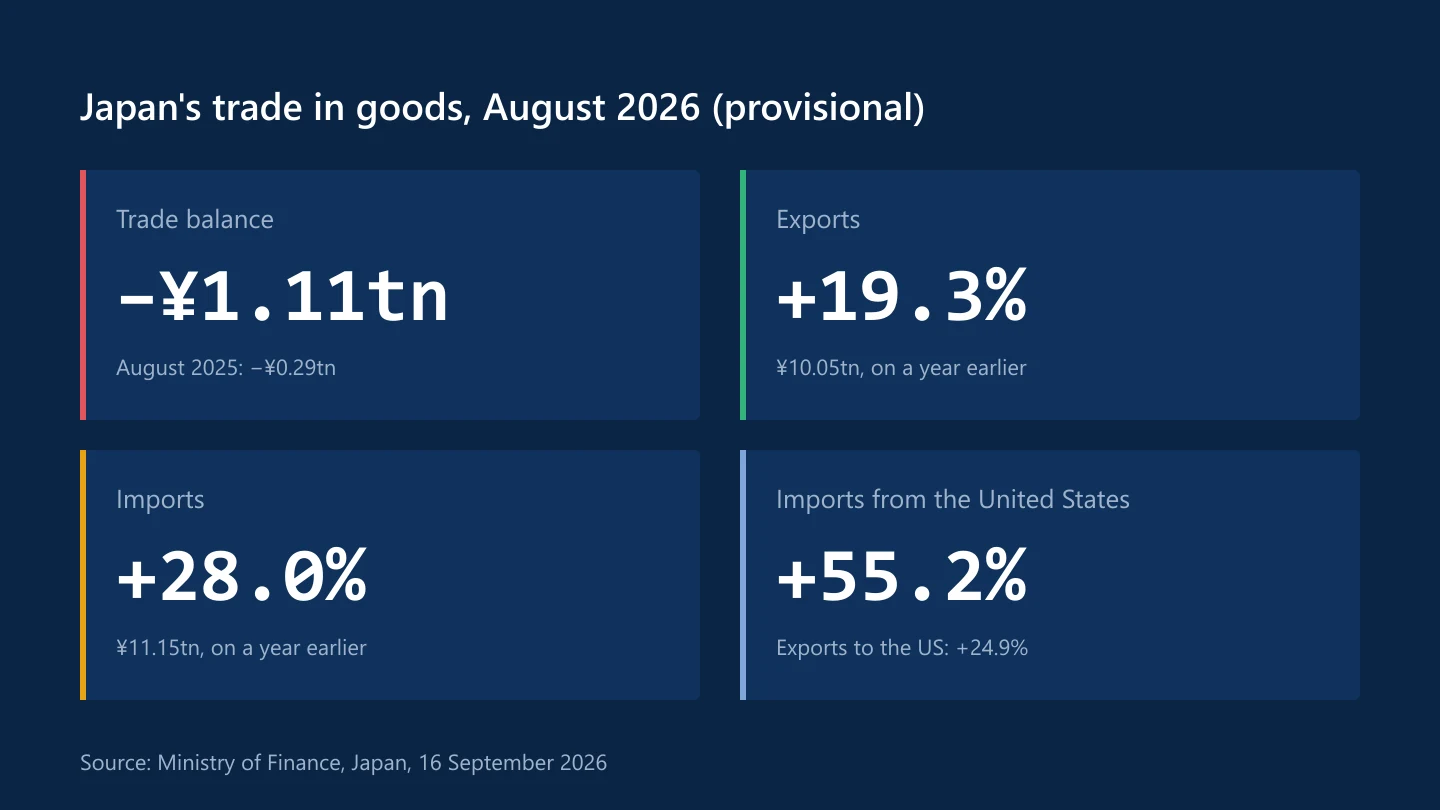
Japan's trade deficit widens to ¥1.1 trillion in August as imports jump 28%
Exports rose 19.3% from a year earlier and imports 28.0%, according to the Ministry of Finance's provisional figures. Imports from the United States climbed 55.2%.
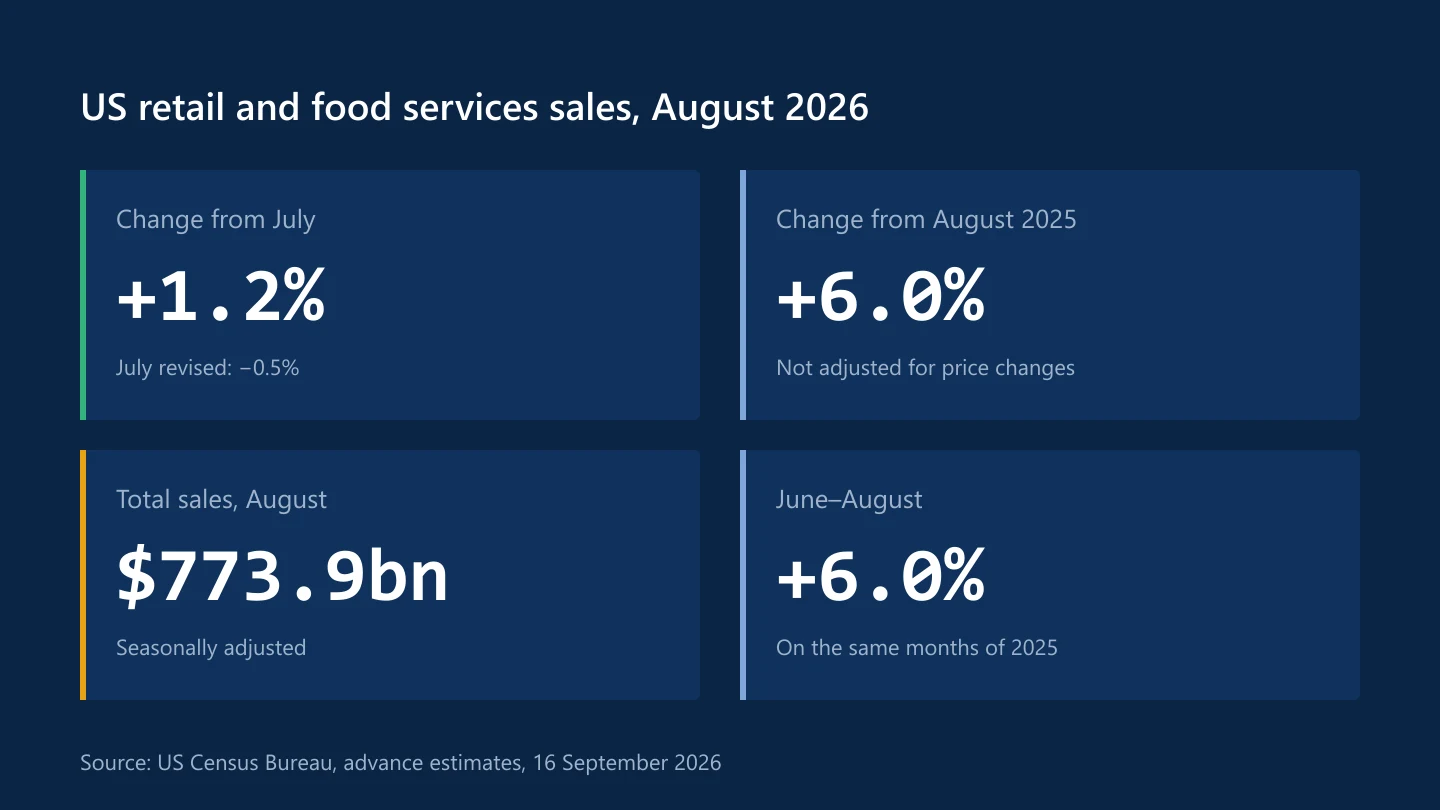
US retail sales jump 1.2% in August after a fall in July
Sales at US retailers and restaurants reached $773.9 billion, 6.0% more than a year earlier, the Census Bureau said on 16 September. July's decline was revised to 0.5%.
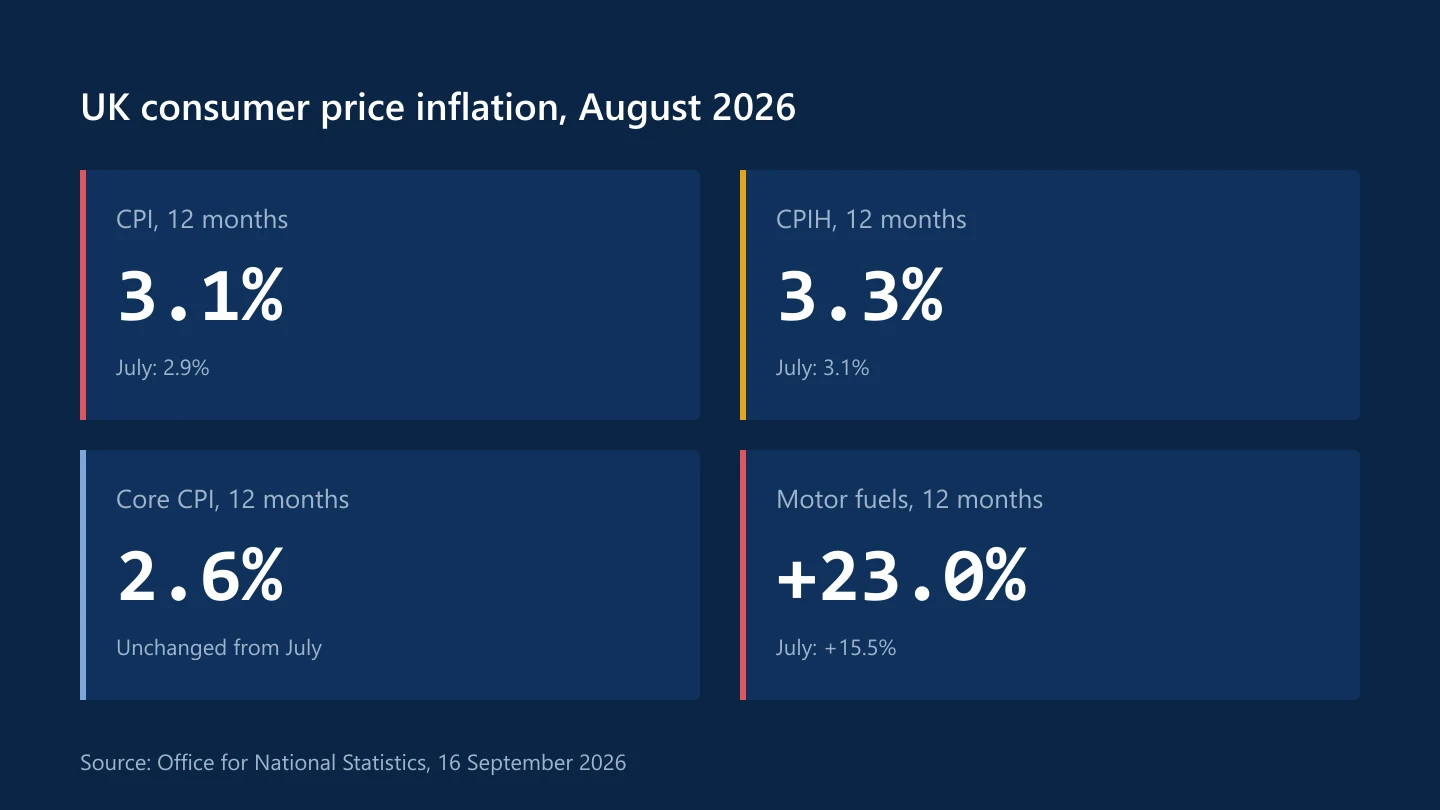
UK inflation rises to 3.1% in August as petrol and diesel prices jump
Consumer prices rose 3.1% in the year to August 2026, up from 2.9% in July, the ONS said on 16 September. Core inflation held at 2.6%, a day before the Bank of England's decision.
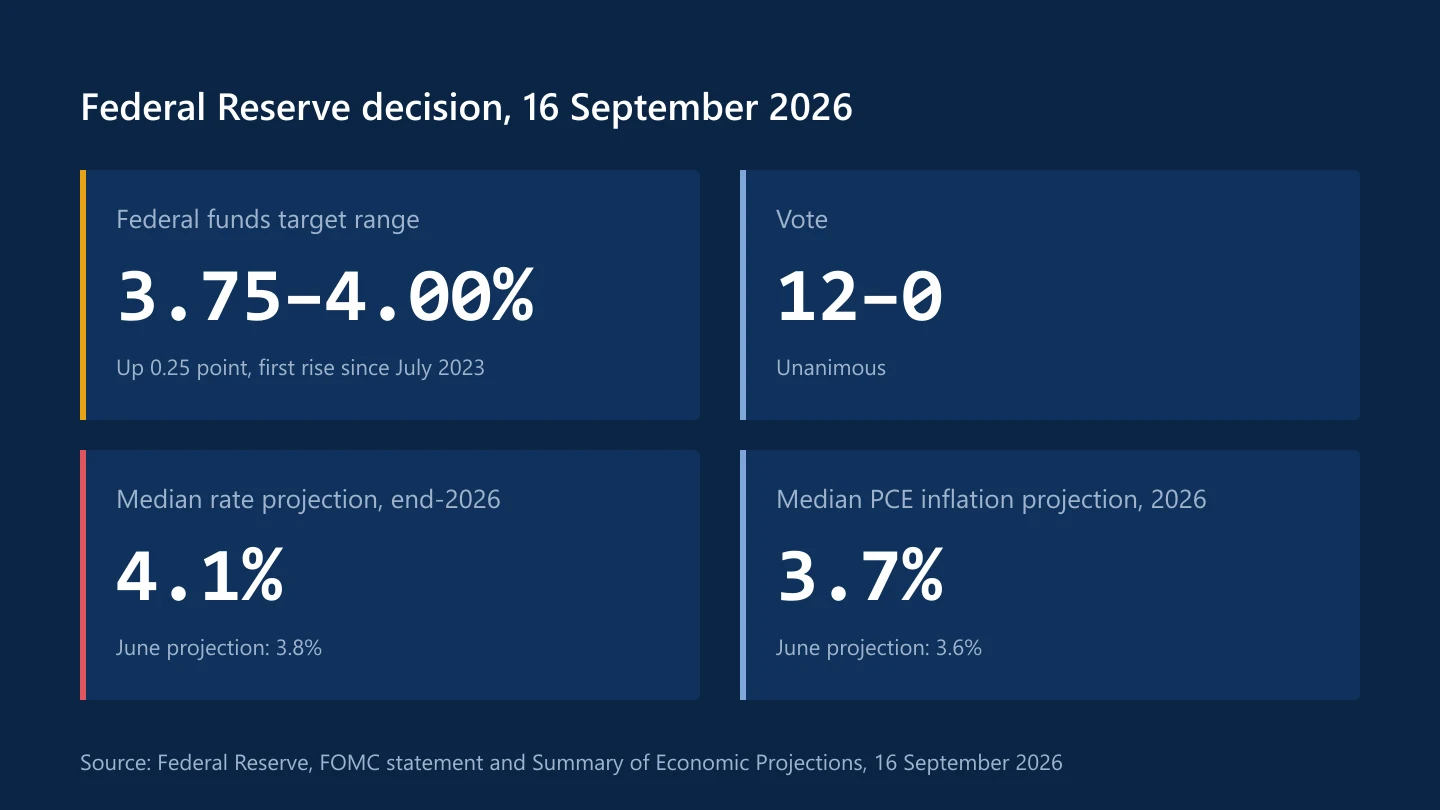
Fed raises rates to 3.75%–4.00%, its first increase since July 2023, in a unanimous vote
The FOMC lifted the federal funds target range by a quarter point on 16 September. Officials' median projection now puts the rate at 4.1% at the end of 2026, up from 3.8% in June.
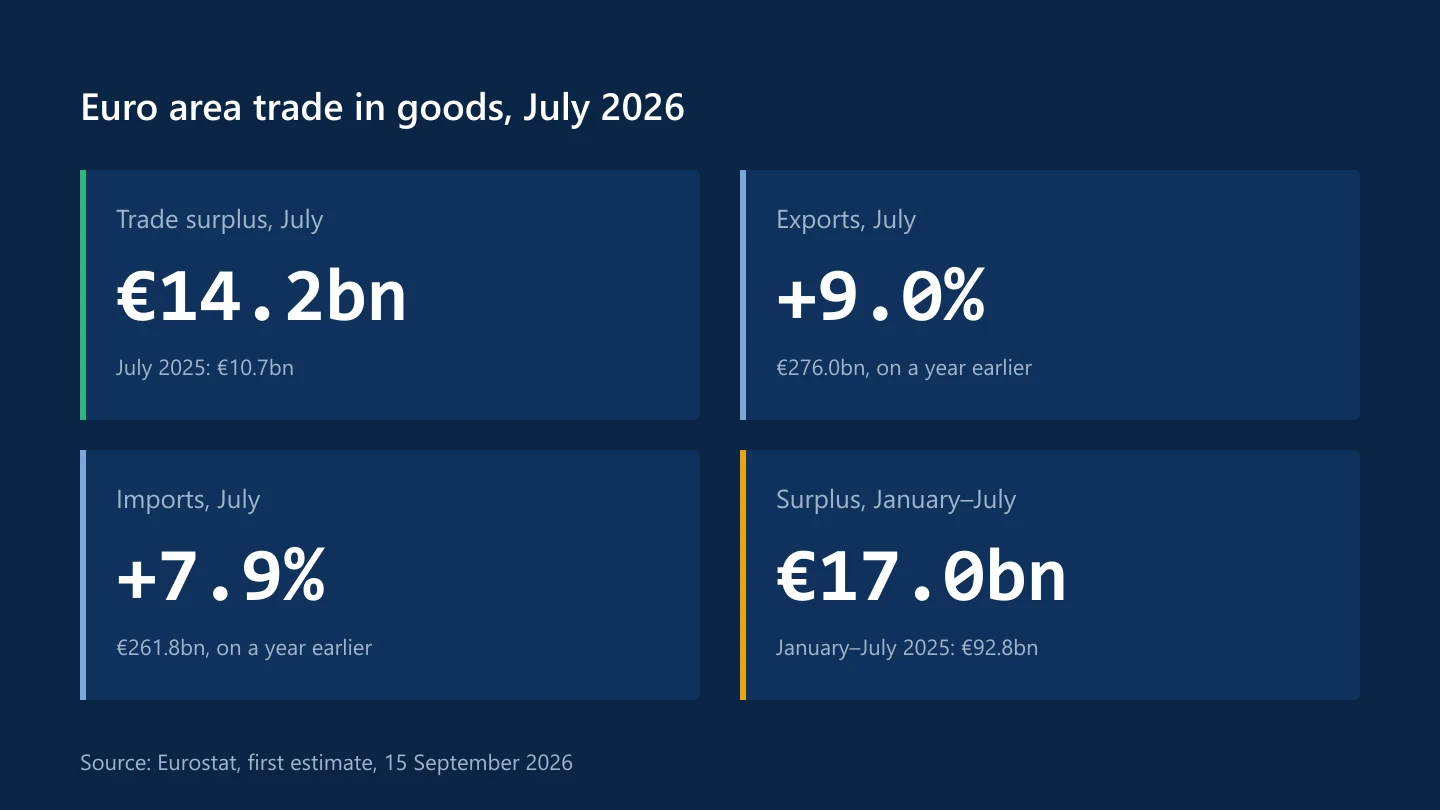
Euro area trade surplus widens to €14.2 billion in July as exports rise 9%
Eurostat's first estimate shows the surplus for January to July at €17.0 billion, down from €92.8 billion a year earlier, as imports outpaced exports. The EU's deficit with China reached €36.5 billion in July.
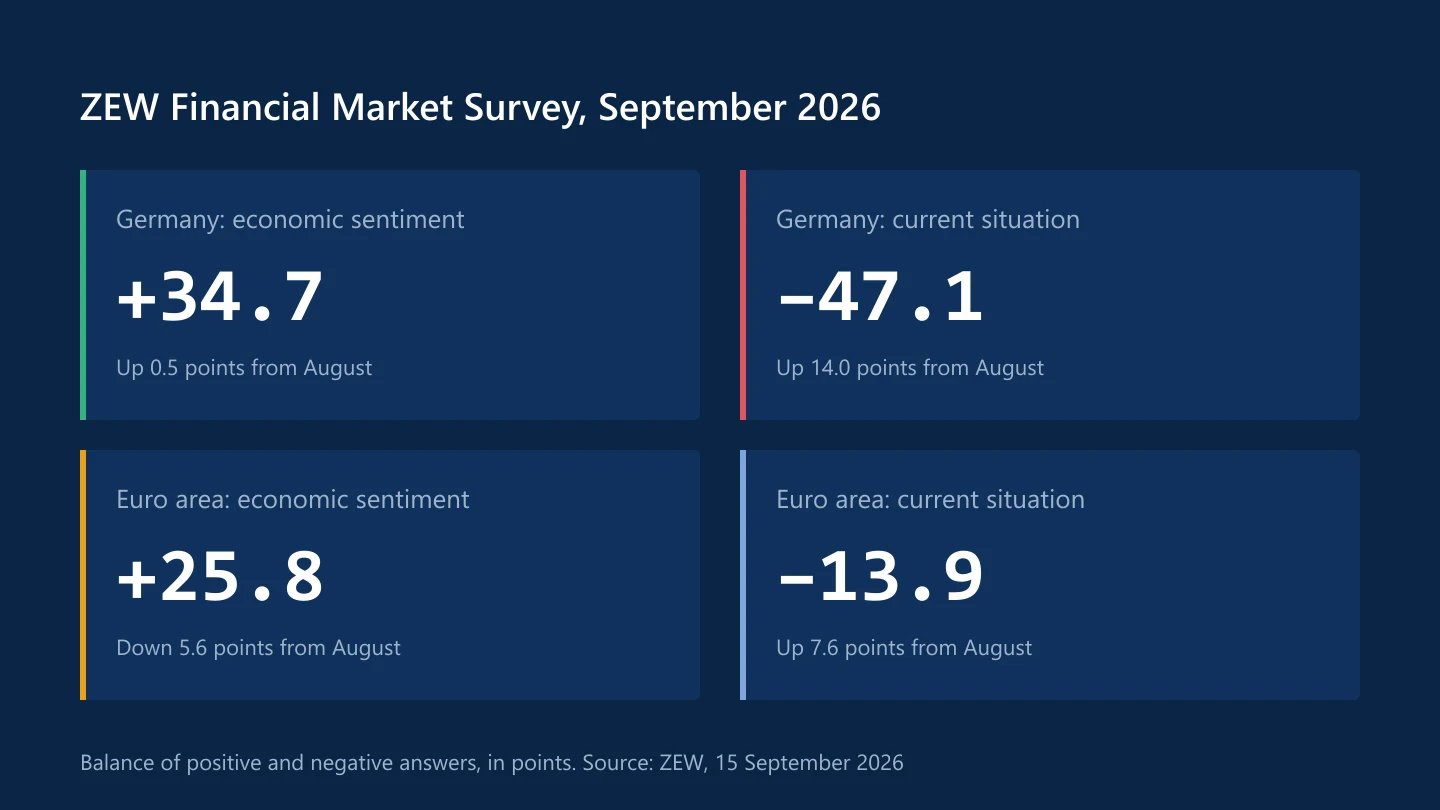
ZEW sentiment edges up to +34.7 as experts judge Germany's current situation 14 points less negative
Germany's ZEW Indicator of Economic Sentiment rose 0.5 points in September, while expectations for the euro area fell 5.6 points to +25.8. ZEW's president named high energy prices as the main risk.
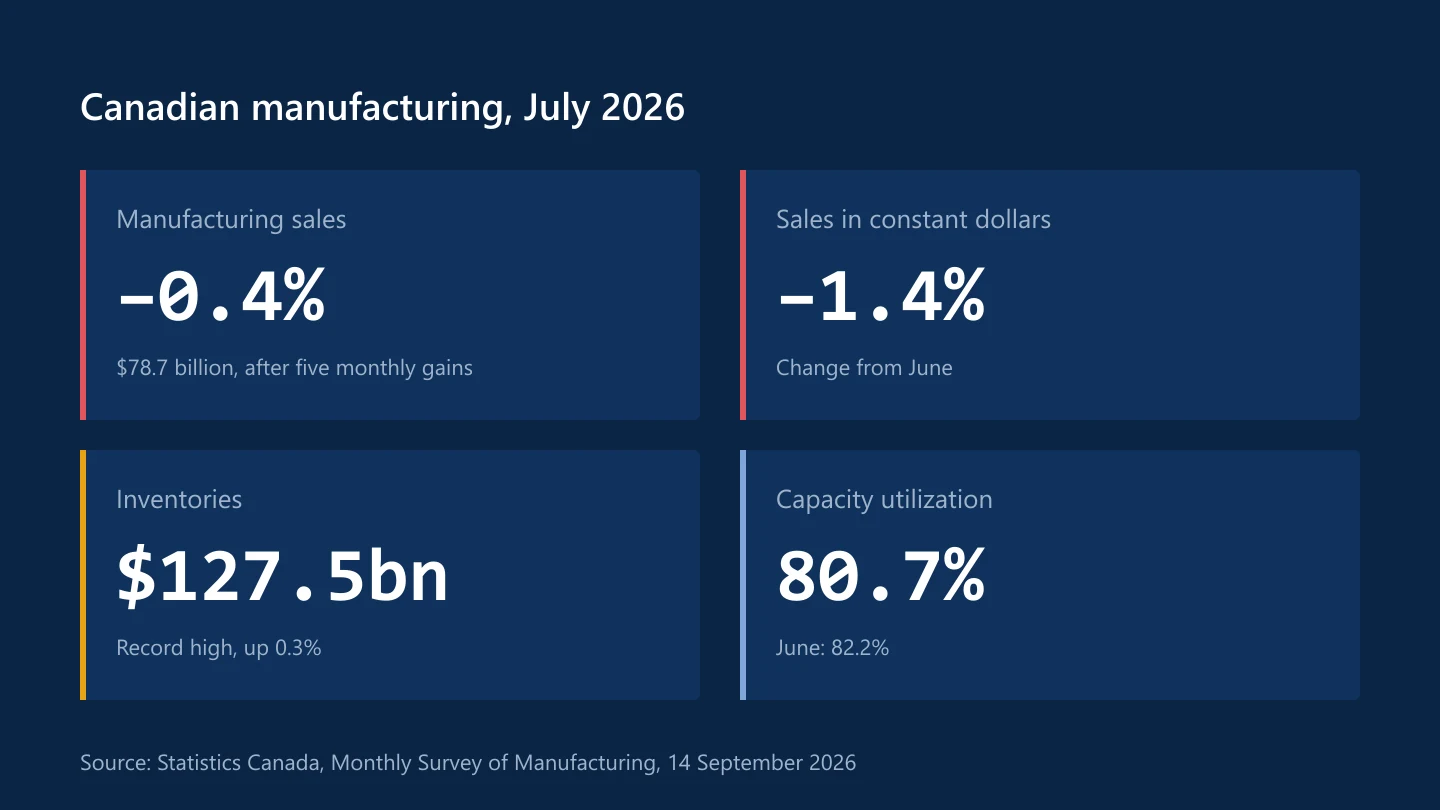
Canadian manufacturing sales fall 0.4% in July, ending a five-month run of gains
Sales slipped to $78.7 billion as chemical and food manufacturers sold less, while inventories and unfilled orders reached record highs and capacity use dropped to 80.7%.
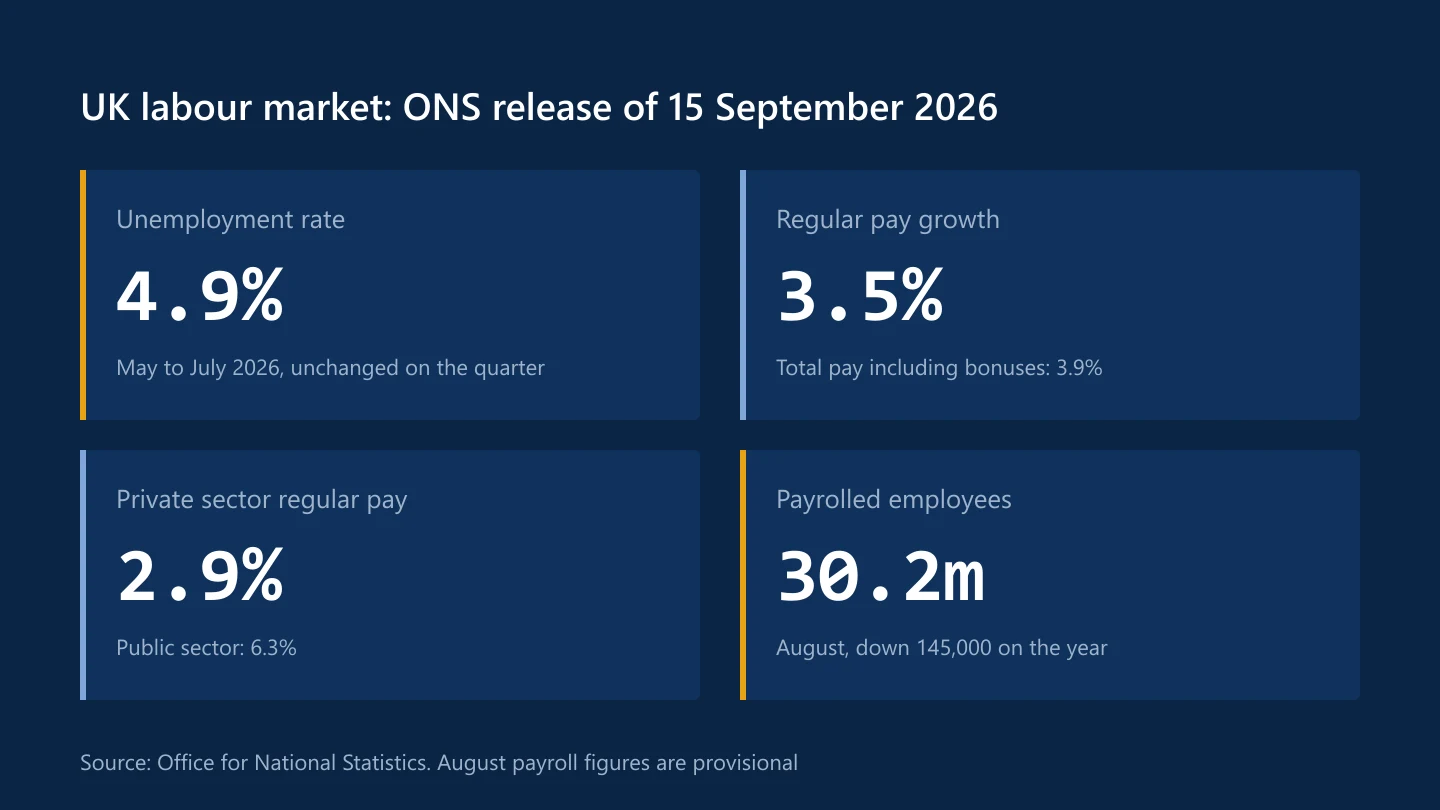
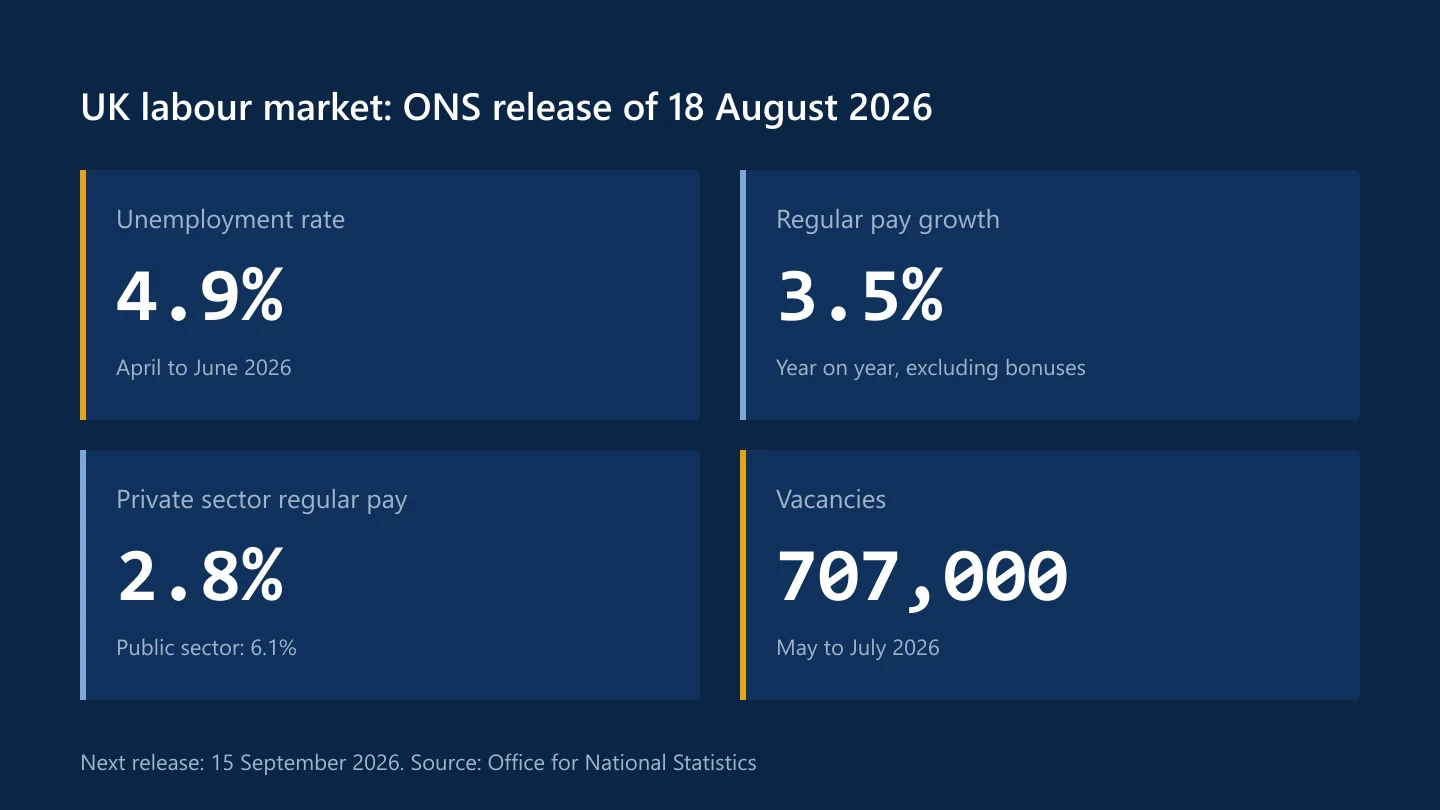
UK unemployment steady at 4.9% as private sector pay growth edges up to 2.9%
ONS figures for May to July show unemployment at 4.9% and regular pay growth of 3.5%, while payrolled employees fell 145,000 on the year. The Bank of England decides on 17 September.
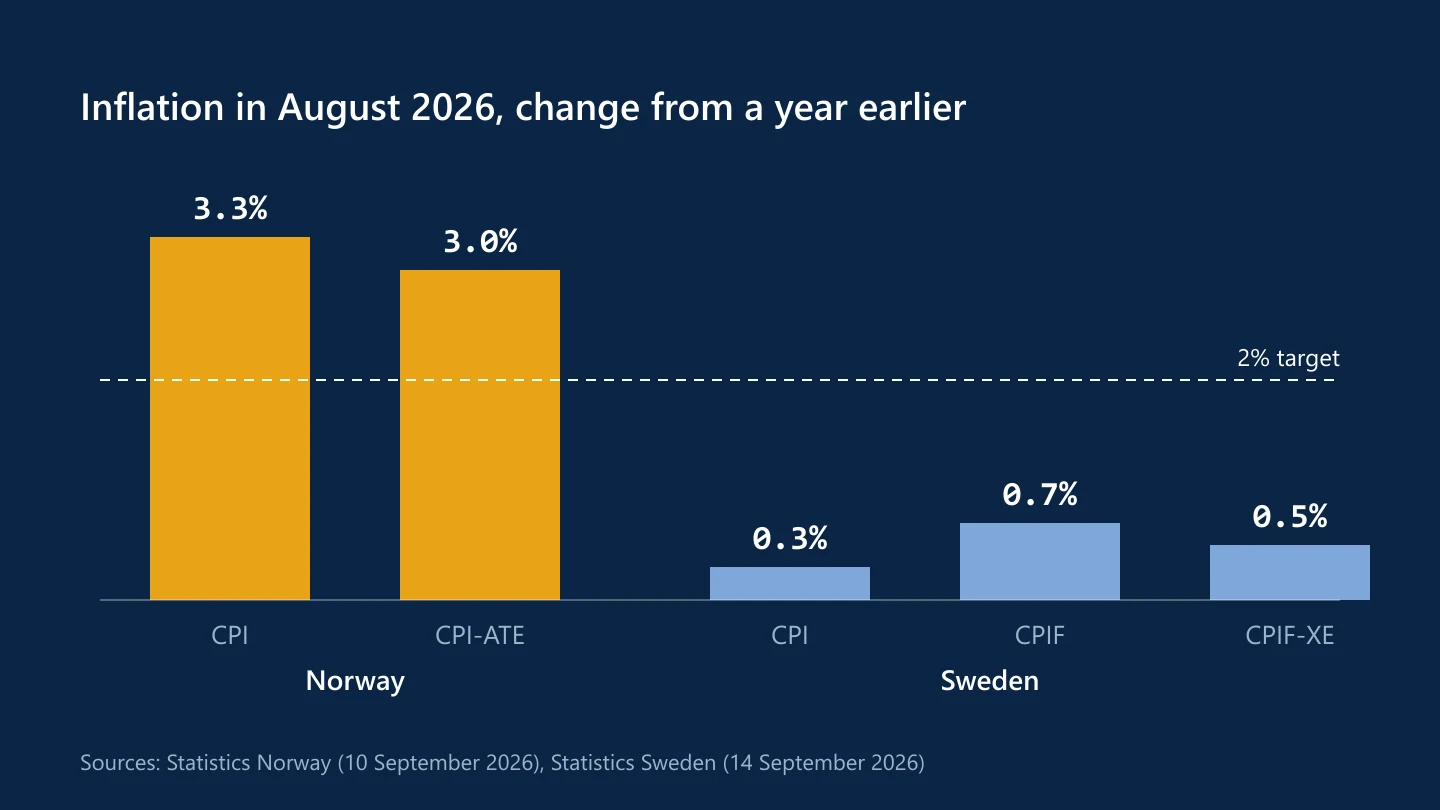
Nordic inflation before 24 September: Sweden's CPIF holds at 0.7% as Norway's core rate rises to 3.0%
Statistics Sweden and Statistics Norway have published August inflation, the last figures before Norges Bank and the Riksbank announce rate decisions on 24 September.
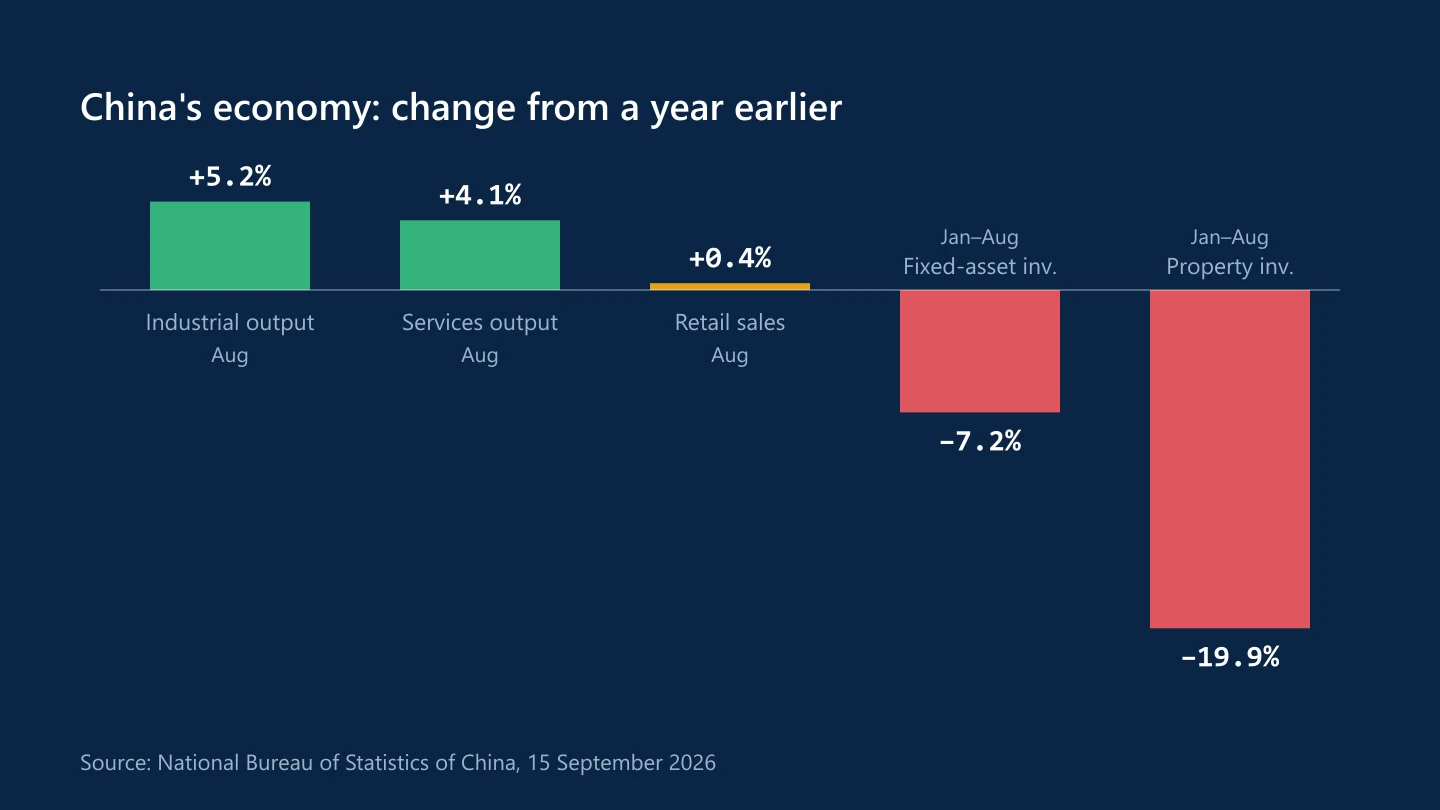
China's retail sales grow just 0.4% in August as industrial output speeds up to 5.2%
The National Bureau of Statistics says the external environment has worsened and the gap between strong supply and weak demand remains acute. Fixed-asset investment fell 7.2% in January to August.
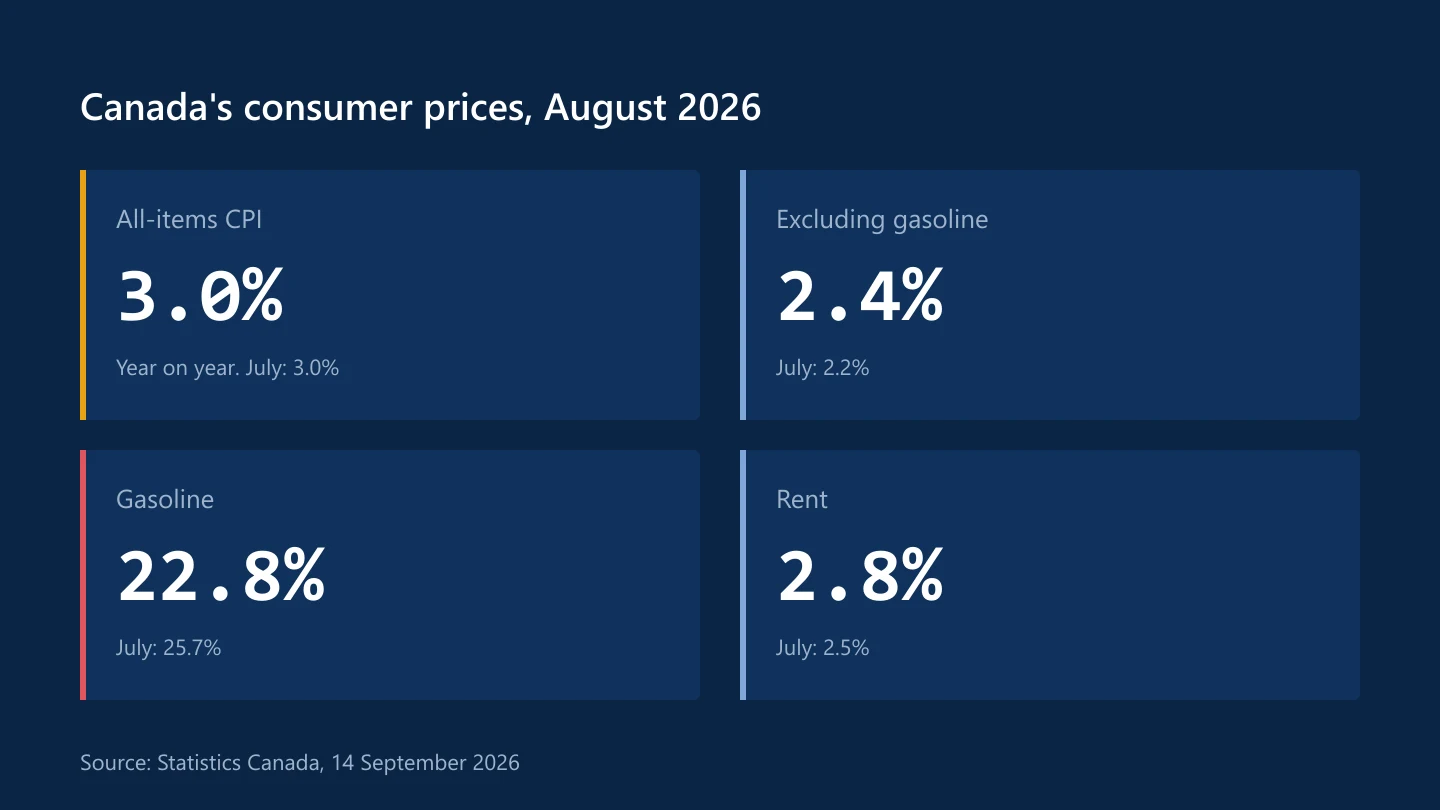
Canada's inflation holds at 3.0% in August; excluding gasoline it rises to 2.4%
Gasoline prices were still 22.8% higher than a year earlier, but that was less than July's 25.7%. Rent and travel tours rose faster.
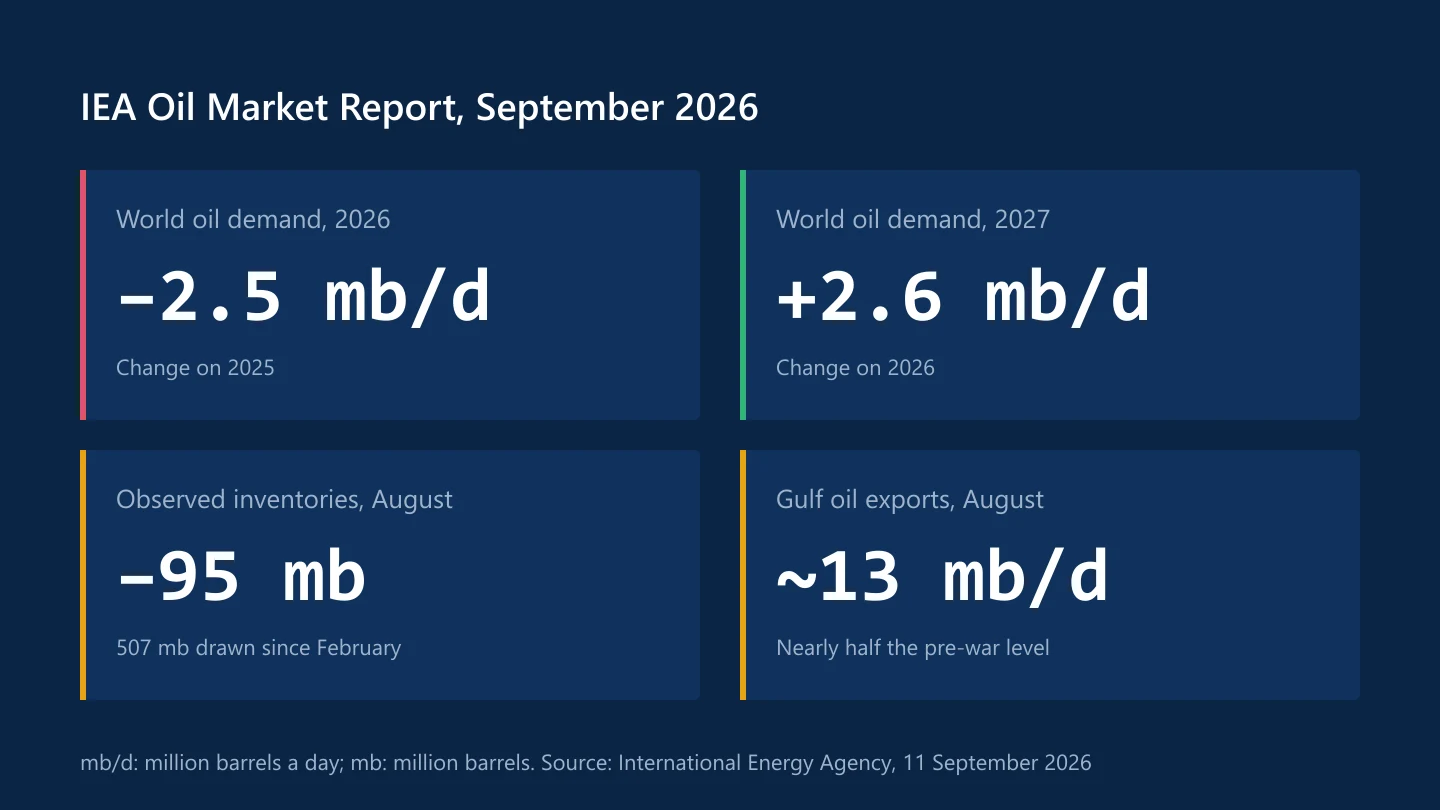
IEA expects world oil demand to fall 2.5 million barrels a day in 2026 as Gulf exports stay near half their pre-war level
The International Energy Agency's September report says global inventories fell by a further 95 million barrels in August, taking draws since February to 507 million barrels.
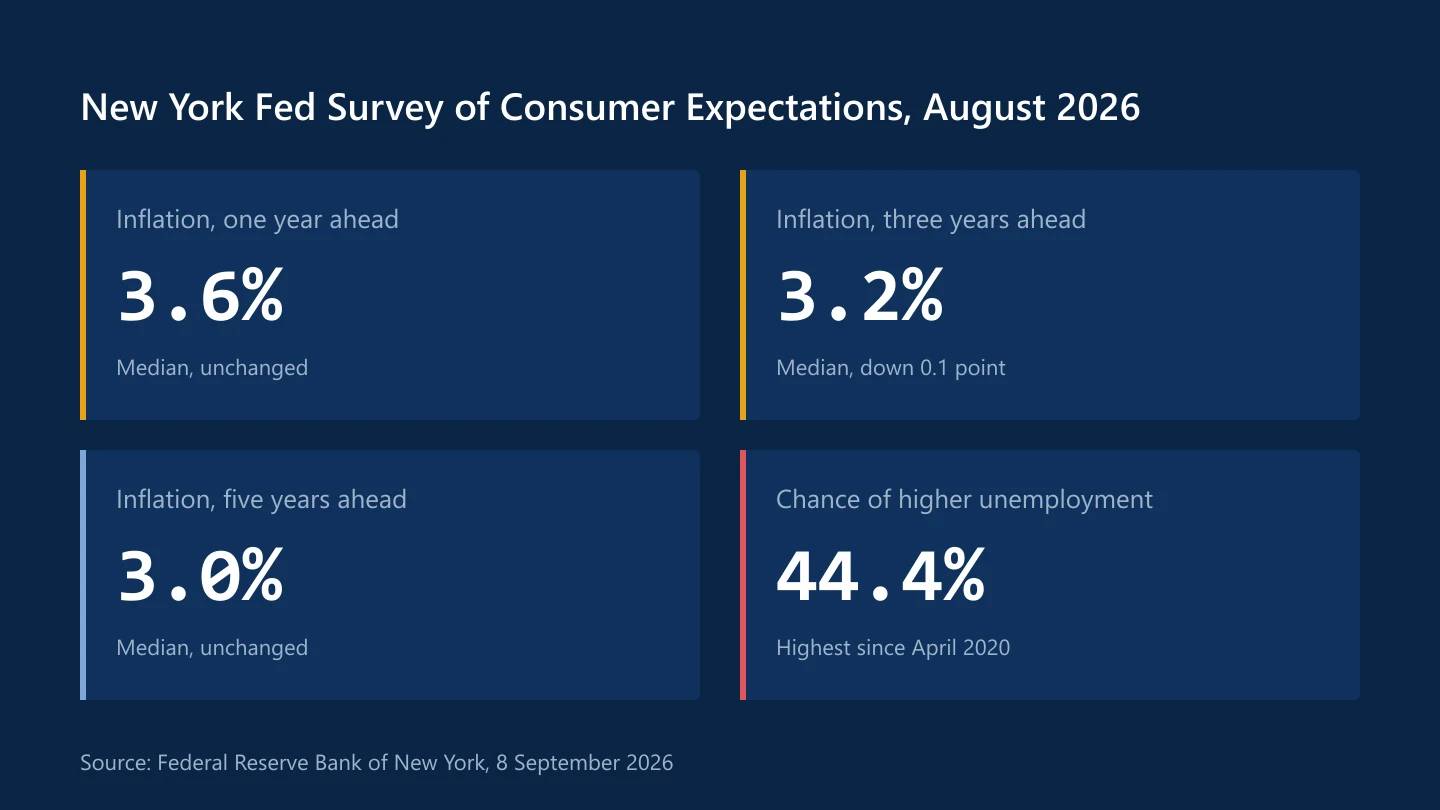
New York Fed survey: US consumers' inflation expectations steady at 3.6% as job worries reach the highest since 2020
One-year inflation expectations were unchanged in August and three-year expectations slipped to 3.2%, but the expected chance of higher unemployment rose to 44.4%.
Norges Bank and the Riksbank both announce rate decisions on 24 September
Norges Bank is at 4.25% and says a rise may still be needed; the Riksbank is at 1.75%. Both announce their next decisions on Thursday 24 September 2026.
UK jobs data on 15 September: unemployment and pay growth before the Bank of England
The last ONS figures showed unemployment at 4.9% and regular pay growth of 3.5%. The next release lands two days before the Bank of England's decision on 17 September.