How to trade the New York session and the London overlap
The New York open — overlapping London's afternoon — is the busiest, fastest window in forex. Here is what happens in it, which pairs come alive, and how to trade the overlap with a plan.
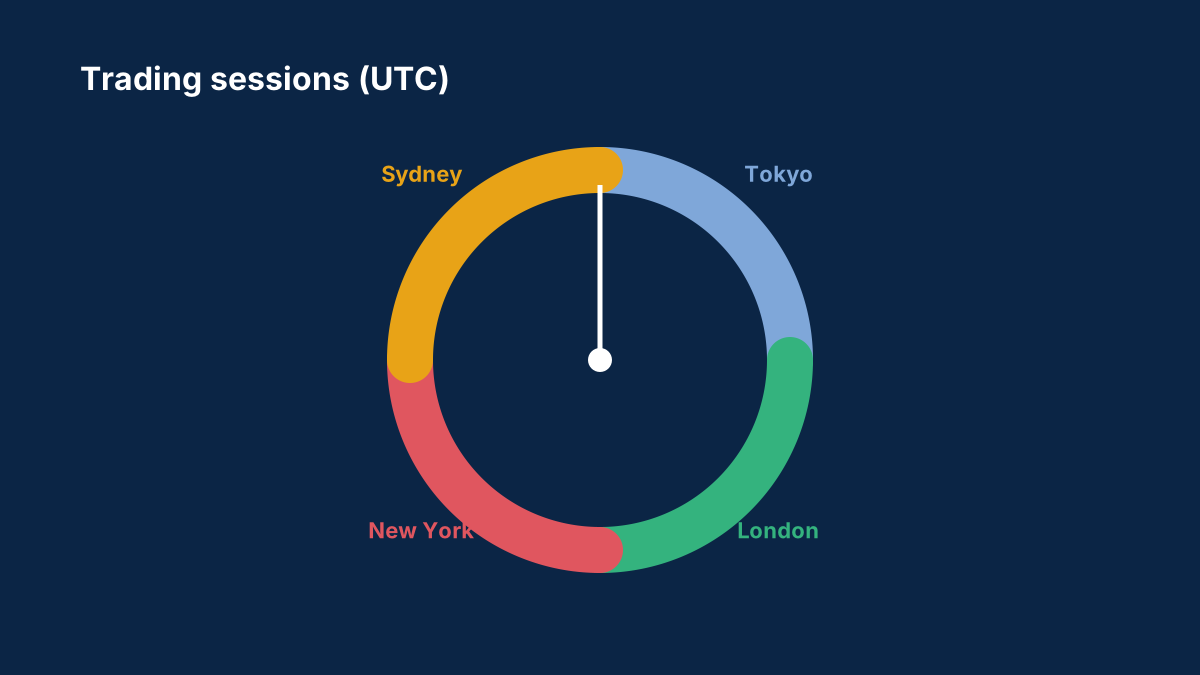
The New York session is where the forex day reaches its peak. New York opens at 8:00 a.m. Eastern — 13:00 UTC in summer, 14:00 in winter — while London is still in its afternoon, and for the next few hours the world's two largest trading centres run at the same time. The overlap is the deepest liquidity the forex market ever sees, and it is where the day's most important moves are decided.
This guide explains what happens at the New York open, which pairs come alive, and how to trade the overlap with a plan. The session mechanics are in forex market hours and trading sessions; the London-side framework is in the London open guide.
What happens at the open
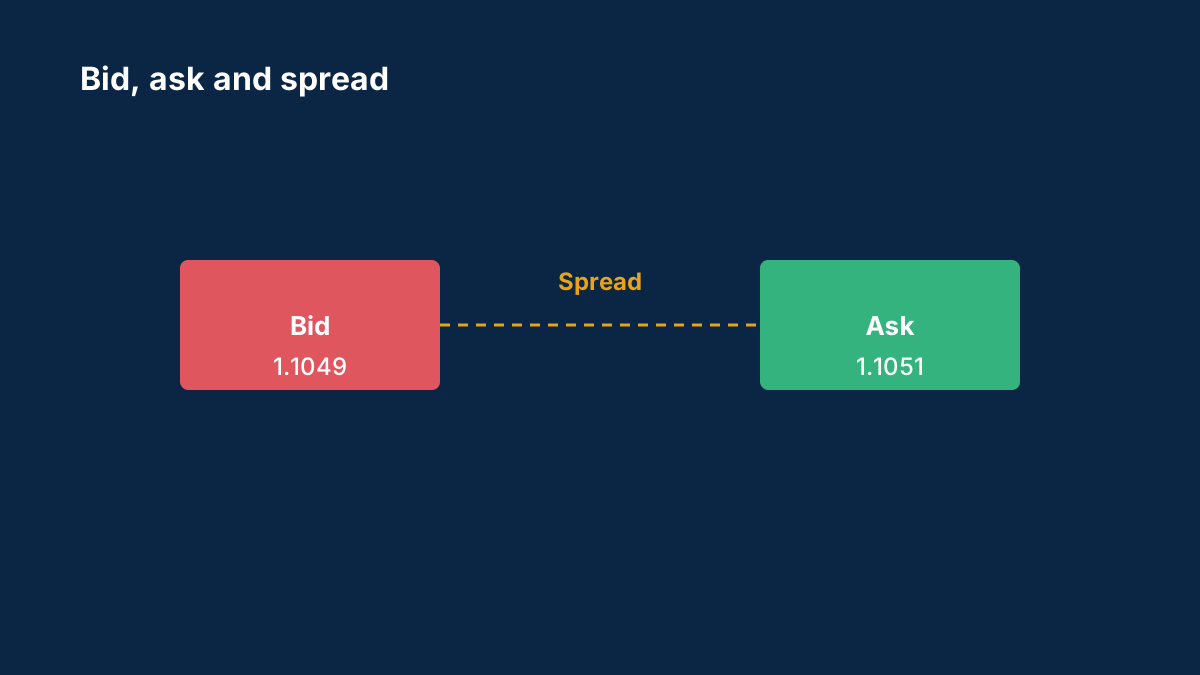
The New York open brings three things at once. US traders arrive, adding the world's largest single pool of order flow. US data often lands in the first hours — the releases that move every dollar pair. And the London session, still active, reprices everything New York does. The result is the market's busiest stretch: spreads tighten to their best levels, ranges expand, and the moves that define the day's dollar direction usually start here.
The open's signature is its information density. The European session has already drawn the day's ranges; New York arrives with the US data and the US institutional flow that either confirm or reverse them. The overlap is where the day's story gets its final draft. The economic calendar guide shows which US releases land in the window.
Which pairs come alive
The overlap's energy concentrates in the dollar pairs, and within them, the US-sensitive instruments:
The dollar majors. EUR/USD, GBP/USD and USD/JPY all trade their peak liquidity here, with the dollar leg driven directly by US data and US flows.
USD/CAD. The pair's home session: Canadian data often lands alongside US releases, and the pair's oil channel is most active while the North American energy market is awake. The USD/CAD guide covers the pair's double channel.
USD/MXN. The peso's deepest liquidity lives in this window, when both countries' markets are open. The USD/MXN guide has the details.
Gold. US data days move gold through both the dollar and real-yield channels, and the overlap is where the metal's biggest reactions happen. The gold guide covers the drivers.
The overlap's structure
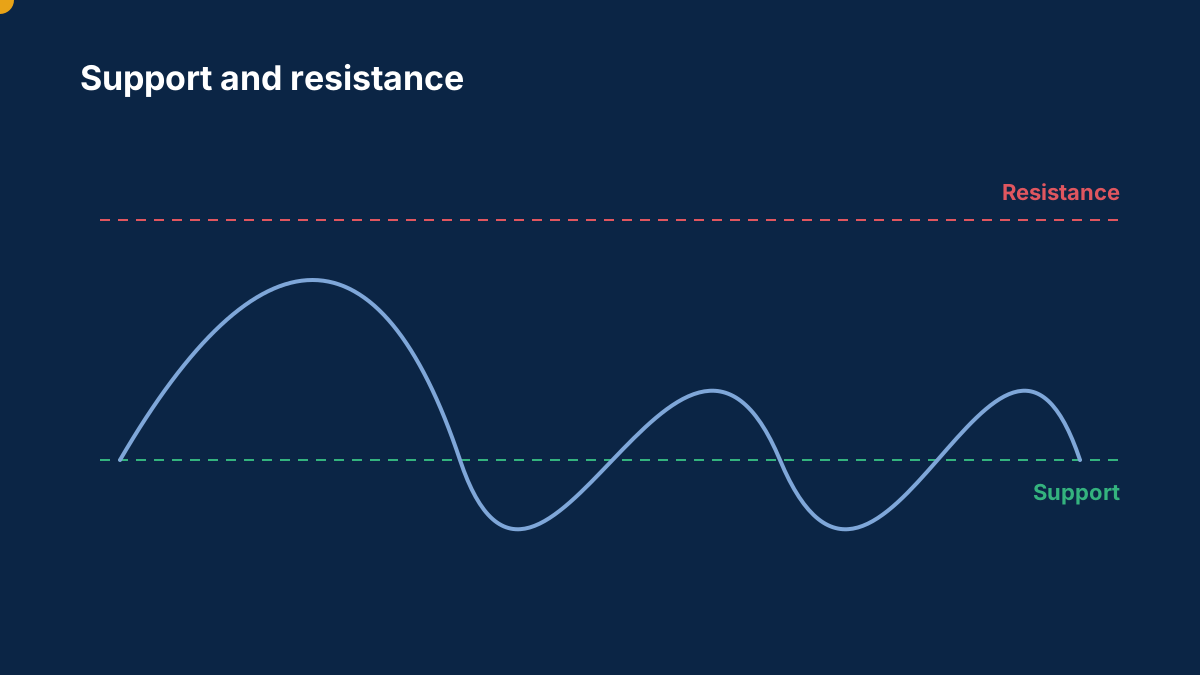
The overlap has a structure worth marking. Before New York opens, London has already traded the day: the European ranges are drawn, the levels are tested, and the dollar's morning direction is established. New York's arrival then does one of two things: it confirms the European direction and extends it, or it reverses it on US data and US flow.
The practical read is the same structure the London open guide uses, moved one session along: the European range is the day's first balance, and the New York open tests it. The break-and-retest of the European range's extremes, or the fade of a failed break, are the overlap's standard setups — with one difference: US data can override everything, so the calendar check comes first.
The US data complication
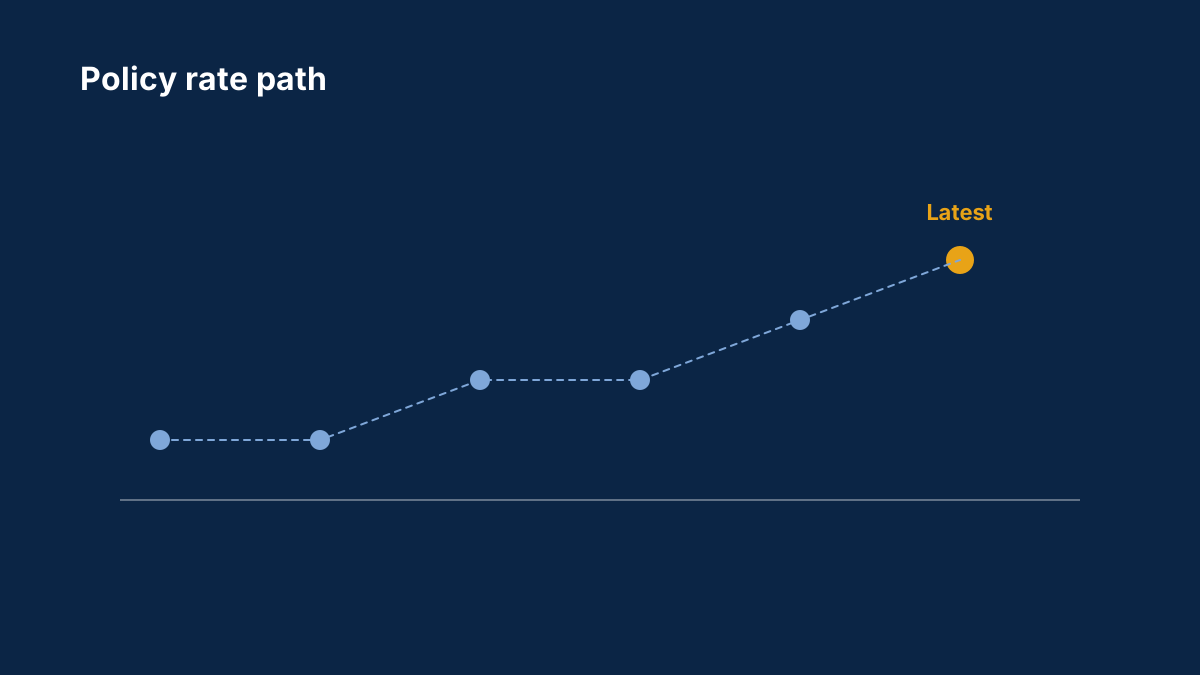
The New York morning is where the US data lands — CPI, payrolls, retail sales, the ISM surveys — and the releases rewrite the overlap's behaviour. A normal-open plan trading through a payrolls release is not the same plan. The rules that handle it:
The calendar is the first check. Before the open, mark what lands in the first hours. A release at 8:30 a.m. Eastern makes the open's first half-hour an event window, not a trading window.
Event days trade smaller. The releases expand the plausible range, and the position that fits a quiet open does not fit a payrolls open. The news trading playbook has the event framework.
The aftermath is the opportunity. The overlap after a release — once the first move settles and the market chooses its direction — is often the day's cleanest trading, with full liquidity and a decided direction. The payrolls guide and CPI guide explain the two flagship releases.
A workable framework
A starting structure for the New York session:
- Before the open, mark the European session's range — its high, low and the levels it tested — and check the US calendar for the morning's releases.
- Let the first 15 minutes trade without you: the open's first minutes are the noisiest of the day.
- Trade the European range's test: the break-and-retest if it breaks with confirmation, the fade if the break fails. The breakout playbook supplies the structure.
- On data mornings, stand aside through the release and trade the aftermath once the direction is decided.
- Know when the edge fades: the overlap's energy lasts through London's close — 12:00 p.m. Eastern in summer — and the New York afternoon thins after it.
The mistakes that define the session
The New York session's mistakes are speed mistakes. Trading the open's first minutes — the most liquid and least informative stretch of the day. Ignoring the calendar — trading a normal plan through a payrolls release. Fighting the European direction without a reason — the overlap usually extends London's story, and the reversal requires a catalyst, not a preference. Each mistake is a decision to trade the session's noise instead of its structure.
The New York overlap is the market at its best: deep liquidity, tight spreads and the day's real information flow. Trade it on structure, respect the calendar, and the busiest hours in forex become the most tradeable.
Sources
Common questions
What time does the New York forex session open?
8:00 a.m. Eastern time — 13:00 UTC in summer and 14:00 UTC in winter. It overlaps London's afternoon for about four hours, which is the deepest liquidity the market sees.
What is the London-New York overlap?
The hours when both centres trade at once, roughly 8:00 a.m. to noon Eastern. Spreads tighten to their best levels, ranges expand, and the day's dollar direction is usually decided there.
Which pairs are best during the New York session?
The dollar majors — EUR/USD, GBP/USD, USD/JPY — plus USD/CAD, USD/MXN and gold, whose US data sensitivity and North American liquidity peak in this window.
How does US data affect the New York session?
The morning's releases — CPI, payrolls, ISM — rewrite the session's ranges. The calendar must be checked before the open, and event mornings trade smaller or stand aside through the release.
What is the best strategy for the New York open?
Let the first minutes pass, then trade the European range's test — the break-and-retest if it breaks with confirmation, the fade if the break fails. On data days, trade the aftermath instead.
This article is for information only and is not financial advice. Trading forex and CFDs carries a high risk of losing money. Read the risk warning. Spotted an error? Tell the editors.
Comments
Log in to join the discussion. Comments follow the community guidelines.
Log in to commentLoading comments…