How to trade USD/MXN: carry, risk and the peso
The Mexican peso is the liquid emerging-market currency: high carry, deep market, and sensitivity to US policy and risk appetite. Here is how the pair works and how to trade it.
USD/MXN is where the major-currency playbook meets the emerging-market one. The Mexican peso is the most liquid emerging-market currency — deep enough to trade like a major, high-yielding enough to behave like an EM, and tied to the US economy more closely than any other currency in the world. The combination makes the pair a carry trade, a risk instrument and a US-policy proxy all at once.
This guide explains the peso's three roles, the pair's mechanics, and a framework for trading it. The carry mechanics are in carry trade explained, and the EM context in major, minor and exotic pairs.
The basics
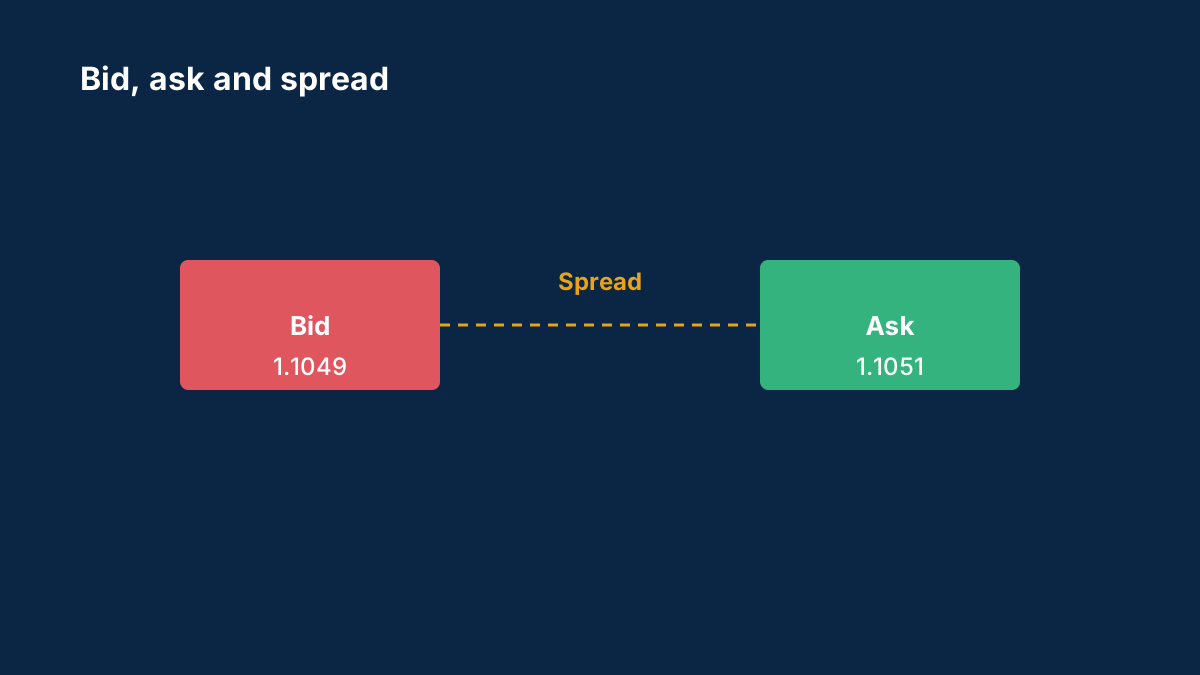
USD/MXN is the price of one US dollar in Mexican pesos: the dollar is the base currency, the peso the quote — so a falling pair means a strengthening peso. The pip is the fourth decimal place, and the pair's spreads are wider than the majors' — the cost of the EM category — though tighter than most other emerging pairs'. Pip value explained has the arithmetic.
The pair's defining feature is its triple role, and each role produces different behaviour on different days.
Role one: the carry trade
The peso's first role is carry. Mexico's interest rates have sat well above the US's, which makes the peso a classic carry currency: traders borrow dollars, buy pesos, and earn the rate difference — expressed in the pair as a short USD/MXN position earning positive swap. The carry is the pair's steady structural bid, and it is why the peso has been one of the strongest emerging currencies over the past years. Carry trade explained covers the mechanics and the unwind risk.
The unwind is the pair's signature danger: when risk appetite collapses, carry trades reverse violently, pesos are sold, and the pair spikes upward — often faster than any major moves. The carry that pays steadily in calm markets is exactly what makes the pair's risk-off days so sharp.
Role two: the US-policy proxy
The peso's second role is its US tie. Mexico's economy is integrated with the United States' through trade, remittances and supply chains, which makes the peso unusually sensitive to US policy: Fed rate changes, tariff decisions, and the US growth outlook all move the pair directly. The current environment shows the channel live: the Bank of Canada cited US tariffs among the reasons for its hold (deliberations), and the same forces reach Mexico with at least equal force.
The practical consequence: US data days move USD/MXN through two channels at once — the dollar leg and the peso's own US sensitivity — which makes the pair's US-data reactions larger than most.
Role three: the risk barometer
The peso's third role is the one day traders feel: it is a risk instrument. In calm, risk-on markets the carry flows in and the peso strengthens; in risk-off markets the flows reverse and the pair spikes. The peso's sensitivity to the global mood makes it a leveraged bet on calm — rewarding when the world is stable, punishing when it is not. Risk-on risk-off explained covers the sentiment mechanics.
The Mexican calendar
The peso's domestic story matters too: Banxico — the Bank of Mexico — sets the rate side of the carry, and its decisions, along with Mexican inflation data, move the pair directly. The US calendar matters equally, through both the dollar leg and the US-policy channel. The pair's calendar is therefore both countries' calendars, with the US side usually dominant.
Session behaviour
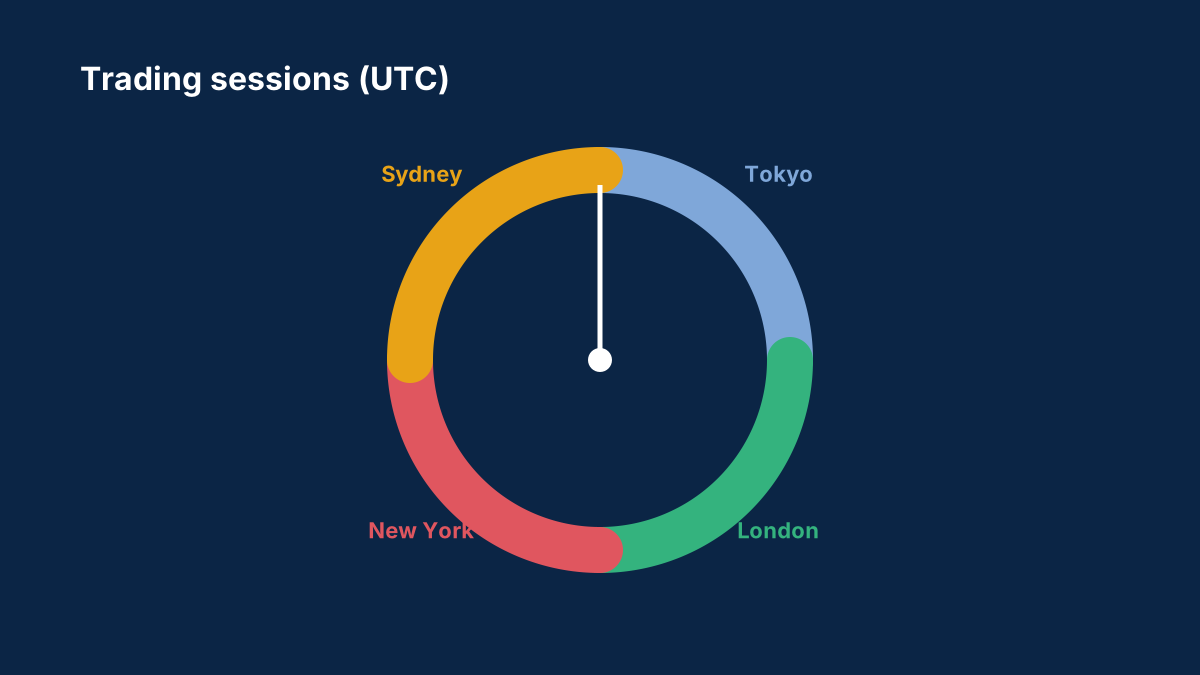
USD/MXN trades most actively during New York hours, when both countries' markets are open and the pair's liquidity is deepest. Mexican data lands in the New York morning; US data follows; and the pair's ranges are widest through the overlap. Asian hours are thin, and the pair's spreads widen noticeably outside New York. The market hours guide maps the sessions.
A workable framework
A starting structure for USD/MXN:
- Before the week, mark both calendars — Banxico and Mexican inflation, US CPI, payrolls and Fed days — and the global risk events that trigger carry unwinds.
- Read the carry first: is the rate gap intact, and is the market calm enough to sustain it? The pair's direction follows the carry in calm markets and reverses it in panics.
- Trade the pair in New York hours, where its real liquidity lives.
- Treat US data days as event days: the pair's double channel means reactions larger than the dollar's alone.
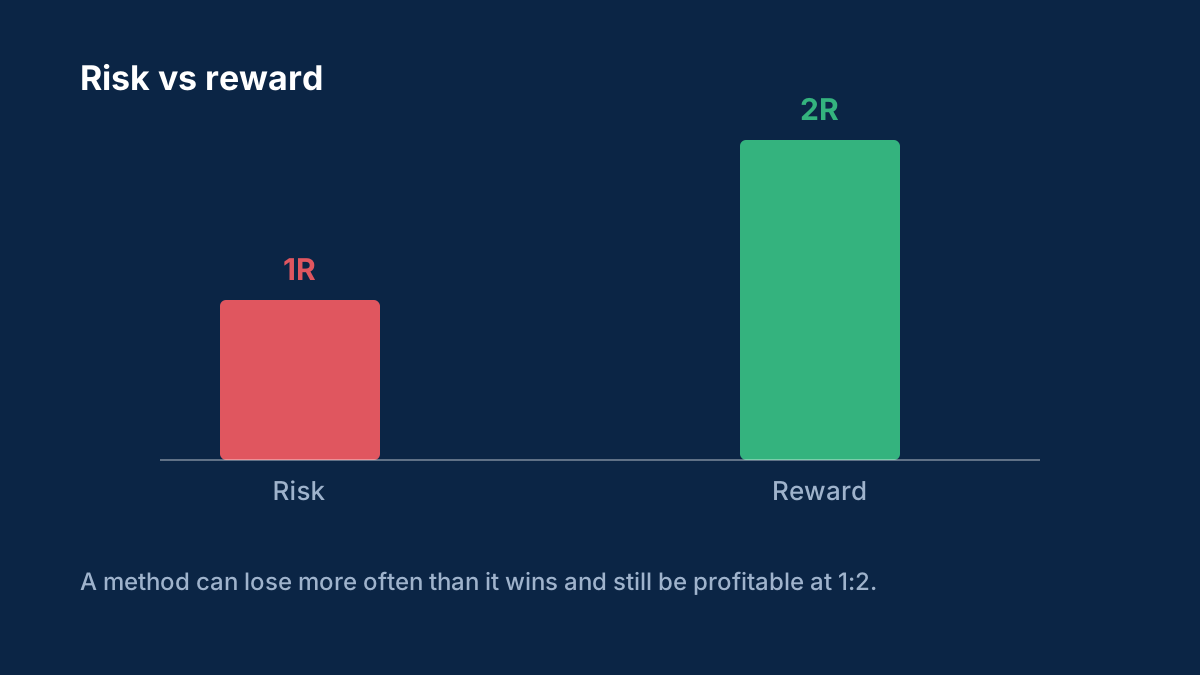
- Size for the unwind risk. The pair's risk-off spikes are violent, and the position must survive them — the sizing method is in position sizing and risk per trade.
USD/MXN is the emerging market's gateway pair: liquid enough to trade like a major, yielding enough to carry like an EM, and sensitive enough to US policy to teach lessons no major can. Respect the unwind risk, trade the New York session, and the peso becomes one of the market's most rewarding carries.
Sources
Common questions
Why is the Mexican peso a carry currency?
Mexico's interest rates have been well above US rates, so traders borrow dollars and hold pesos to earn the difference. The carry is the peso's structural bid — and the source of its risk-off vulnerability.
Why does USD/MXN spike during risk-off episodes?
Carry trades unwind: traders sell pesos and buy back dollars when fear rises. The reversal is fast and violent, which is why the pair's calm-market behaviour and its crisis behaviour look like different instruments.
What moves USD/MXN the most?
US policy and data — Fed decisions, tariffs, growth — through the peso's US tie, plus Banxico's decisions and global risk appetite through the carry channel.
When is the best time to trade USD/MXN?
New York hours, when both countries' markets are open and liquidity is deepest. The pair's spreads widen noticeably outside that session.
Is USD/MXN suitable for beginners?
It is an emerging-market pair with wider spreads and sharp unwind spikes — better suited to traders who already understand carry mechanics and risk-off dynamics on the majors.
This article is for information only and is not financial advice. Trading forex and CFDs carries a high risk of losing money. Read the risk warning. Spotted an error? Tell the editors.
Comments
Log in to join the discussion. Comments follow the community guidelines.
Log in to commentLoading comments…