How to trade USD/ZAR: the rand's volatility premium
The South African rand pays one of the highest carries in the liquid EM complex and charges for it in volatility. Here is how the pair works, what drives the rand, and how to trade it without being run over.
USD/ZAR is the emerging market's honesty test. The South African rand offers yields far above the majors' — and delivers the volatility to match, with wide spreads, sharp gaps and a sensitivity to global risk that makes the major pairs look sedate. Traders who respect the pair's character find a carry trade and a risk instrument in one; traders who treat it like a major learn the difference within a week.
This guide explains the rand's drivers, the pair's mechanics and quirks, and a framework for trading it. The carry mechanics are in carry trade explained, and the EM category's general risks in major, minor and exotic pairs.
The basics
USD/ZAR is the price of one US dollar in South African rand: the dollar is the base currency, the rand the quote — so a falling pair means a strengthening rand. The pip is the fourth decimal place, and the pair's spreads are among the widest in the liquid EM complex, routinely ten to a hundred times EUR/USD's. The spread is not a detail here; it is a structural cost that shapes the entire trading plan. Trading costs explained shows how wide spreads change the economics of every trade.
The pair's defining feature is the yield-volatility bargain. The rand's interest rates sit well above the dollar's, so shorting the pair earns positive swap — the carry — while the rand's risk sensitivity produces the spikes that can erase months of carry in days. Every rand plan is built around that bargain.
The rand's drivers
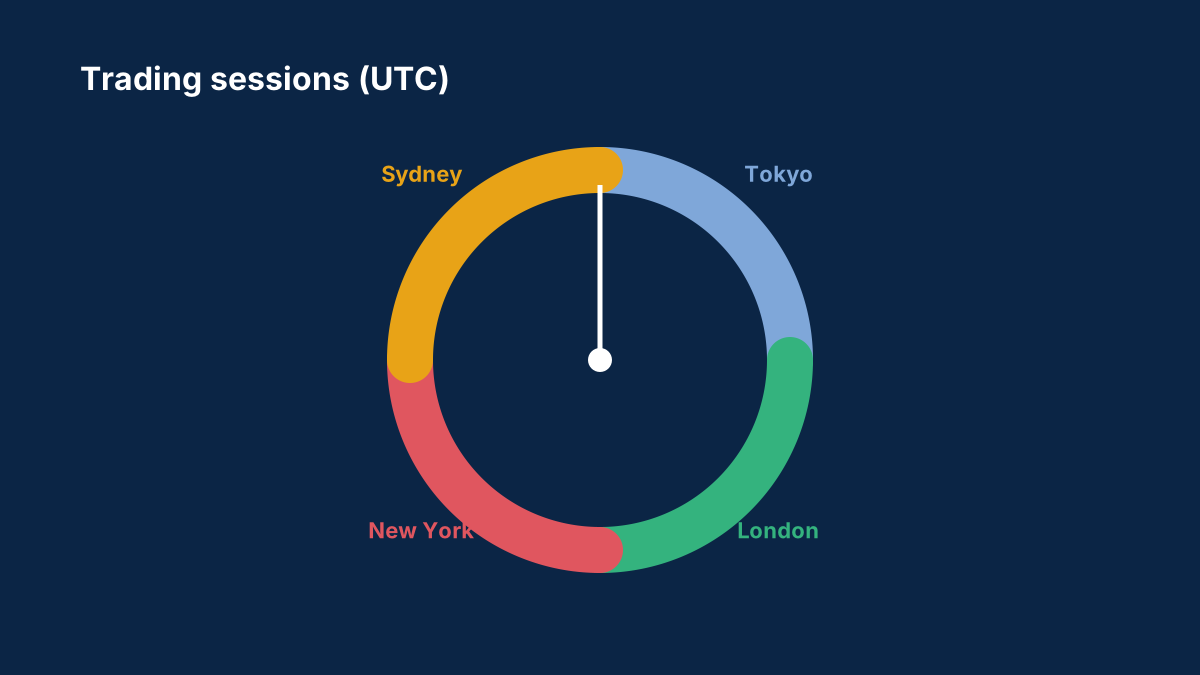
Global risk appetite. The rand's dominant driver is the world's mood. South Africa is a small, open, commodity-linked economy, and its currency is one of the market's preferred risk barometers: the rand strengthens when the world wants risk and weakens sharply when it does not. Risk-off days are the pair's danger days, and they arrive on the world's schedule, not South Africa's. Risk-on risk-off explained covers the sentiment mechanics.
Commodities. The rand's second driver is the commodity complex — South Africa is a major exporter of gold, platinum and other metals, and commodity price trends feed the currency's medium-term direction. The metals channel gives the rand its commodity-currency membership, covered alongside the others in commodity currencies.
Domestic policy. The South African Reserve Bank sets the rate side of the carry, and domestic politics — fiscal policy, governance headlines, electricity supply — move the rand in bursts. The domestic channel is the pair's wildcard: headlines that barely register elsewhere can move the rand several per cent.
The dollar side. Everything that moves the dollar moves the pair's other leg, and US rate expectations matter doubly here: they set the carry's attractiveness and the dollar's direction at once.
The pair's quirks
Three quirks shape the plan:
The spread. The rand's spread is wide enough that intraday scalping is usually uneconomic — the cost per trade eats the edge. The pair suits swing and position approaches where the spread is paid once and the carry accrues for days. The trading costs guide has the arithmetic.
The gap risk. The rand gaps at the weekend open more often than the majors, because South African and global news accumulate over the break. The weekend gaps guide explains the mechanics, and the Friday decision — what to hold into the weekend — matters more here than on any major.
The crisis behaviour. In genuine risk-off episodes, the rand's falls are fast and deep — the pair can move several per cent in a session. The moves are survivable only with positions sized for exactly that scenario. Position sizing and risk per trade has the method.
Session behaviour
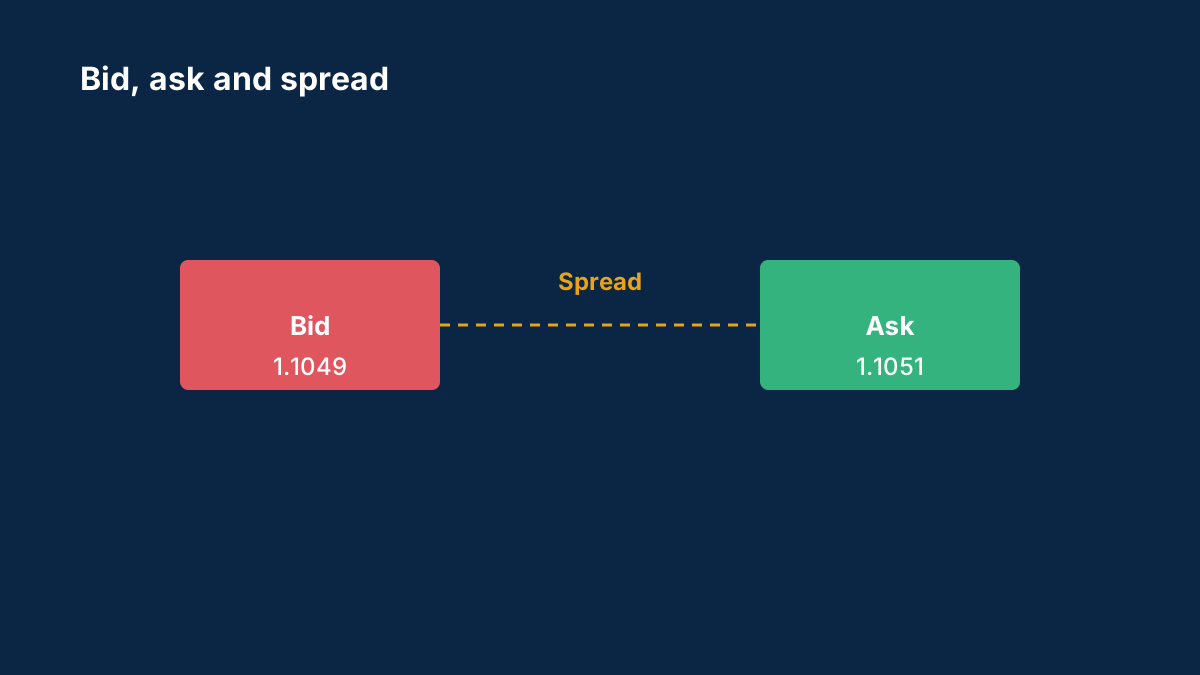
USD/ZAR trades most actively during European hours — South Africa's time zone overlaps London's, and the pair's real liquidity lives there — with a second wave during New York. Asian hours are thin, spreads widen further, and the pair's moves can be erratic. The practical rhythm: trade it in European and early US hours, avoid the Asian session, and never hold oversized positions into a weekend with global risk events pending.
A workable framework
A starting structure for USD/ZAR:
- Before the week, mark the global risk calendar — US CPI, payrolls, Fed days, and any geopolitical flashpoints — plus South Africa's rate decisions and inflation data.
- Read the carry first: is the yield bargain intact, and is the market calm enough to sustain it? The pair's direction follows the carry in calm markets and reverses it in panics.
- Trade the pair as a swing instrument: the spread argues against scalping, and the carry argues for holding periods measured in days.
- Use the weekend rule strictly: positions held over the weekend must be sized for the gap, and the decision is made Friday, not Sunday.
- Size for the crisis. The pair's risk-off spikes are its signature, and the position must survive the worst plausible one. The method is in position sizing.
USD/ZAR is the pair for traders who understand that yield is compensation for risk, not a free lunch. Respect the spread, size for the spikes, and the rand's volatility premium becomes a feature of the plan rather than its undoing.
Sources
Common questions
Why does the rand have such high interest rates?
South Africa's inflation history and risk premium keep its rates above the majors'. The high yield attracts carry traders, which is why the rand strengthens in calm markets — and why it falls hard when risk appetite turns.
What moves USD/ZAR the most?
Global risk appetite is the dominant driver, followed by commodity prices, South African policy and politics, and the dollar's own story. Risk-off days produce the pair's sharpest moves.
Why is the spread so wide on USD/ZAR?
The rand's market is smaller and less liquid than the majors', so market makers charge more for the risk of providing prices. The wide spread makes scalping uneconomic and favours swing holding periods.
When is the best time to trade USD/ZAR?
European hours, when South Africa's market overlaps London's, with a second wave in New York. Asian hours are thin and the spreads widen further.
Is the rand carry trade worth the risk?
The carry pays steadily in calm markets and can be erased violently in risk-off episodes. The trade works only with positions sized so that the worst spike is survivable, and with the weekend gap planned for.
This article is for information only and is not financial advice. Trading forex and CFDs carries a high risk of losing money. Read the risk warning. Spotted an error? Tell the editors.
Comments
Log in to join the discussion. Comments follow the community guidelines.
Log in to commentLoading comments…