How to recover from a drawdown without blowing up
Drawdowns are statistically guaranteed, and how you trade inside one decides whether it becomes a memory or a catastrophe. Here is the recovery framework that protects the account while it heals.
Every trading system produces drawdowns — stretches where the equity curve falls, trade after trade. The drawdown itself is not the danger; the response is. Traders who chase the recovery with bigger size turn a routine drawdown into an account-ending one, while traders with a recovery plan treat it as the system's normal breathing. The difference is written in advance.
This guide explains the recovery framework: the maths that governs drawdowns, the trading rules for being inside one, and the review process that decides when the drawdown is over. The statistics are in drawdown and recovery maths; this guide is the operational layer.
The maths that governs recovery
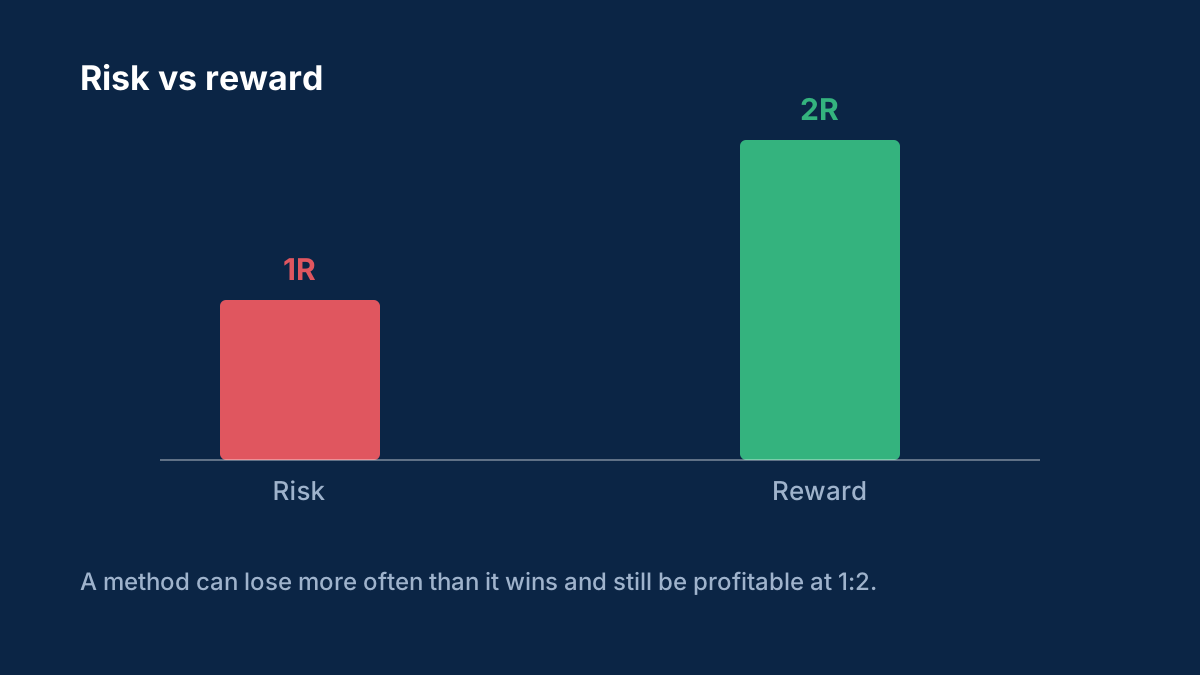
The recovery maths is the first thing to understand, because it is the argument against every impulsive response. Recovery is asymmetric: the deeper the hole, the harder the climb. A 10% drawdown needs an 11% gain to recover; a 20% drawdown needs 25%; a 50% drawdown needs 100%. The asymmetry is why drawdowns must be kept shallow in the first place — and why trading bigger inside one is the worst possible response. The full arithmetic is in drawdown and recovery maths.
The second piece of maths is the streak: losing streaks of eight or ten trades are normal for systems with modest win rates, even profitable ones. The streak is not evidence the system broke; it is the system's expected behaviour. The expectancy guide explains why streaks and drawdowns are statistical certainties rather than anomalies.
The pre-written drawdown rules
The recovery plan is written before the drawdown arrives, because the drawdown's middle is the worst place to design one. The plan's standard parts:
The size rule. Risk per trade stays fixed or shrinks during a drawdown — it never grows. The common professional rule: cut risk per trade in half after a drawdown crosses a threshold, and restore it only after a defined recovery. The position sizing guide supplies the mechanics.
The stop rule. Trading stops entirely at a pre-set drawdown level — commonly 10–15% of the account — for a review period. The stop converts "one more bad week" into "a scheduled examination" and is the single most protective rule in the plan. The trading plan guide covers how to set the level.
The journal rule. Every drawdown trade gets the same journal treatment as any other — the journal is how the review distinguishes a broken system from a normal streak. The journal guide has the fields.
Trading inside the drawdown
The practical rules for trading while the drawdown is open:
Trade smaller, not harder. The instinct inside a drawdown is to increase size to recover faster — the exact behaviour the maths punishes. The professional response is the reverse: smaller size until the equity curve stabilises, which keeps the recovery maths shallow.
Reduce frequency. Drawdowns are emotional weather, and emotional weather degrades judgement. Fewer trades — only the highest-quality setups — both protects the account and shortens the drawdown by avoiding the impulsive trades that extend it. The overtrading guide covers the impulse directly.
Hold the process constant. The setup rules, the stops, the targets — nothing about the method changes mid-drawdown. A system abandoned at its statistical worst is a system whose edge was never collected. The expectancy guide is the reminder that the edge lives on the far side of the streak.
Skip the recovery narrative. The account does not need to be "won back" — that framing produces exactly the revenge trading that deepens drawdowns. The reframe that works: the drawdown is a cost already paid, the account is what it is today, and the job is the same job as always — take the next good trade at the right size.
The review that ends the drawdown
The drawdown ends when the review says so, and the review asks two questions:
Is the system intact? The journal's drawdown trades are compared against the system's expectations: the win rate, the average win and loss, the setups taken. If the numbers match the system's historical profile, the drawdown is a streak — normal, survivable, already ending. If the numbers are structurally worse — different setups, broken rules, changed market regime — the drawdown is the system's message, and the system needs the scheduled revision. The review guide has the comparison framework.
Is the trader intact? The second question is psychological: is the trading still rule-following, or has the drawdown changed the decisions? The honest answer decides whether the recovery is a trading problem or a rest problem — and the rest is a legitimate part of the plan. The psychology threads cover the human side.
Drawdowns are the price of the edge, paid in instalments. Trade smaller inside them, hold the process constant, and let the review — not the emotions — decide when they are over. The traders who do this recover; the traders who chase the recovery are the ones the maths warns about.
Sources
Common questions
How long does it take to recover from a drawdown?
Longer than the drawdown itself took, because recovery is asymmetric: a 20% drawdown needs a 25% gain. That asymmetry is why drawdowns should be kept shallow and why chasing the recovery makes them worse.
Should I increase my position size to recover losses faster?
No. Larger size inside a drawdown deepens it — the recovery maths punishes exactly this response. The professional rule is the reverse: size stays fixed or shrinks until the equity curve stabilises.
When should I stop trading during a drawdown?
At a pre-set drawdown level — commonly 10–15% — written into the plan before the drawdown exists. The stop triggers a scheduled review instead of another emotional week.
How do I know if my strategy is broken or just unlucky?
Compare the drawdown's trades with the system's historical profile: win rate, average win and loss, setups taken. If they match, it's a normal streak. If the numbers are structurally worse, the system needs revision.
What is the recovery narrative, and why does it hurt?
The framing that the account must be won back — which produces revenge trading and deeper drawdowns. The working reframe: the loss is already paid, the account is what it is, and the next good trade at the right size is the only job.
This article is for information only and is not financial advice. Trading forex and CFDs carries a high risk of losing money. Read the risk warning. Spotted an error? Tell the editors.
Comments
Log in to join the discussion. Comments follow the community guidelines.
Log in to commentLoading comments…