How to trade NZD/USD: the kiwi's quiet character
The New Zealand dollar is the smallest major and one of the least understood. Here is what drives the kiwi, how the RBNZ's aggressive style shapes it, and how to trade a pair few others watch carefully.
NZD/USD is the pair most traders ignore and the one that rewards those who don't. The New Zealand dollar — the kiwi — is the smallest of the majors, with thin liquidity, a distinctive central bank and an economy small enough that its data rarely makes global headlines. That obscurity is the edge: fewer eyes mean fewer crowded trades, and the kiwi's trends are often cleaner than its more famous cousins'.
This guide explains the kiwi's drivers, the RBNZ's unusual style, the pair's quirks, and a framework for trading it. The commodity background is in commodity currencies.
The basics
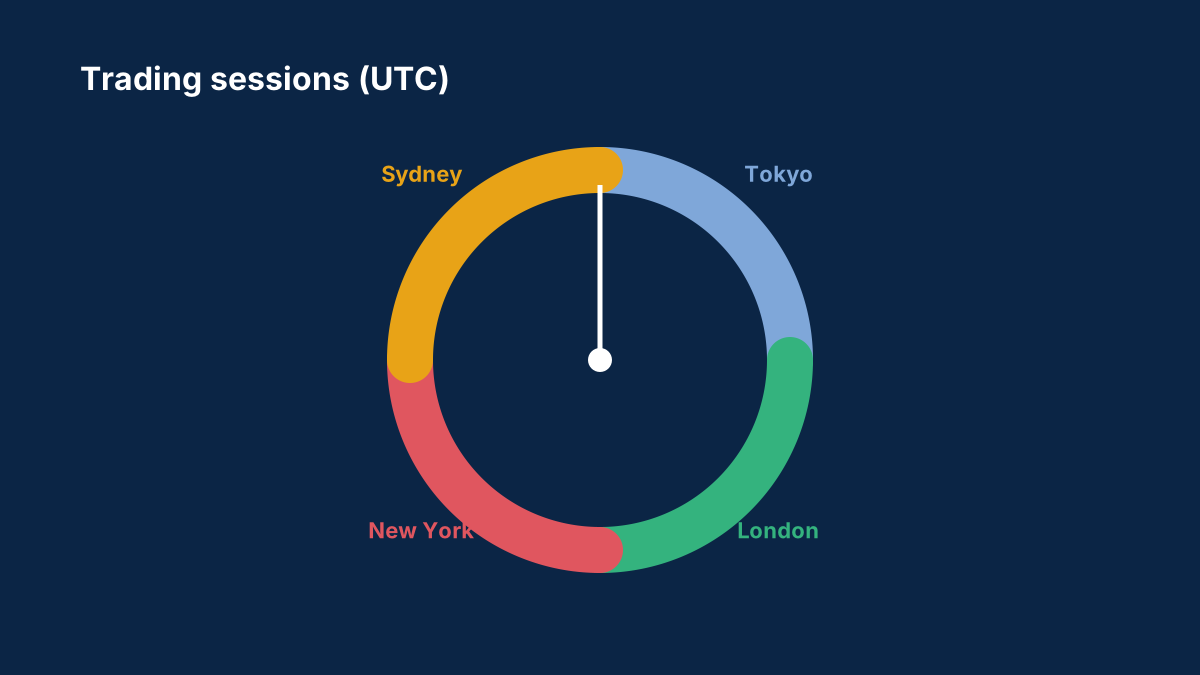
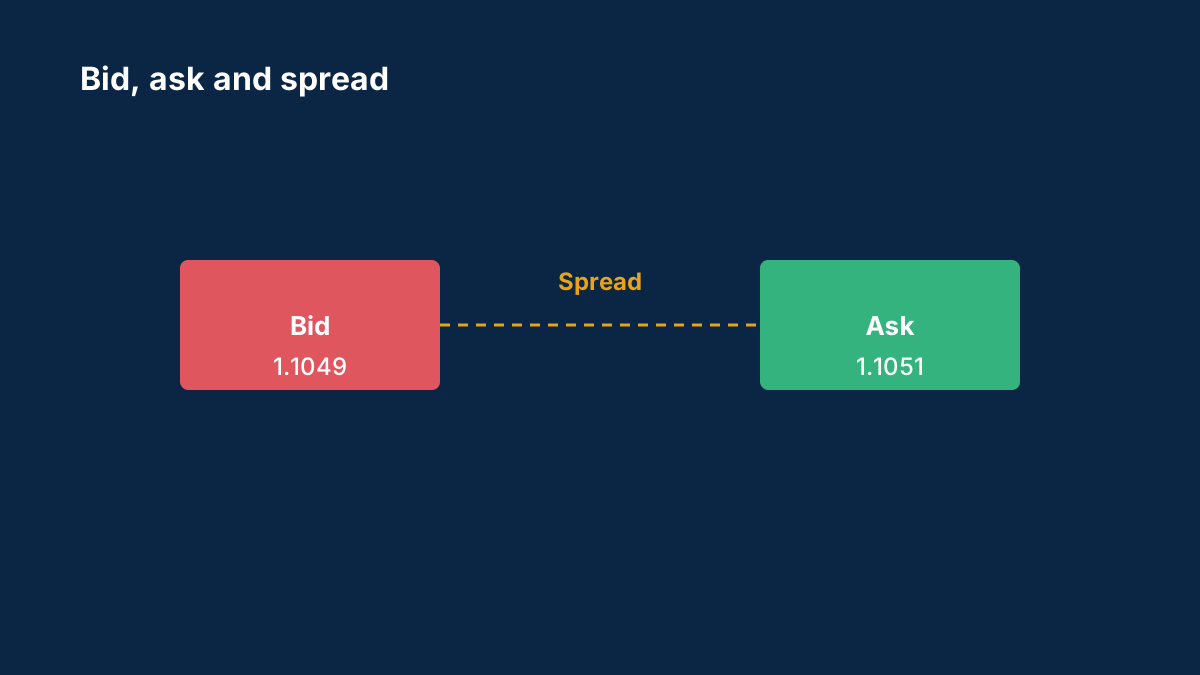
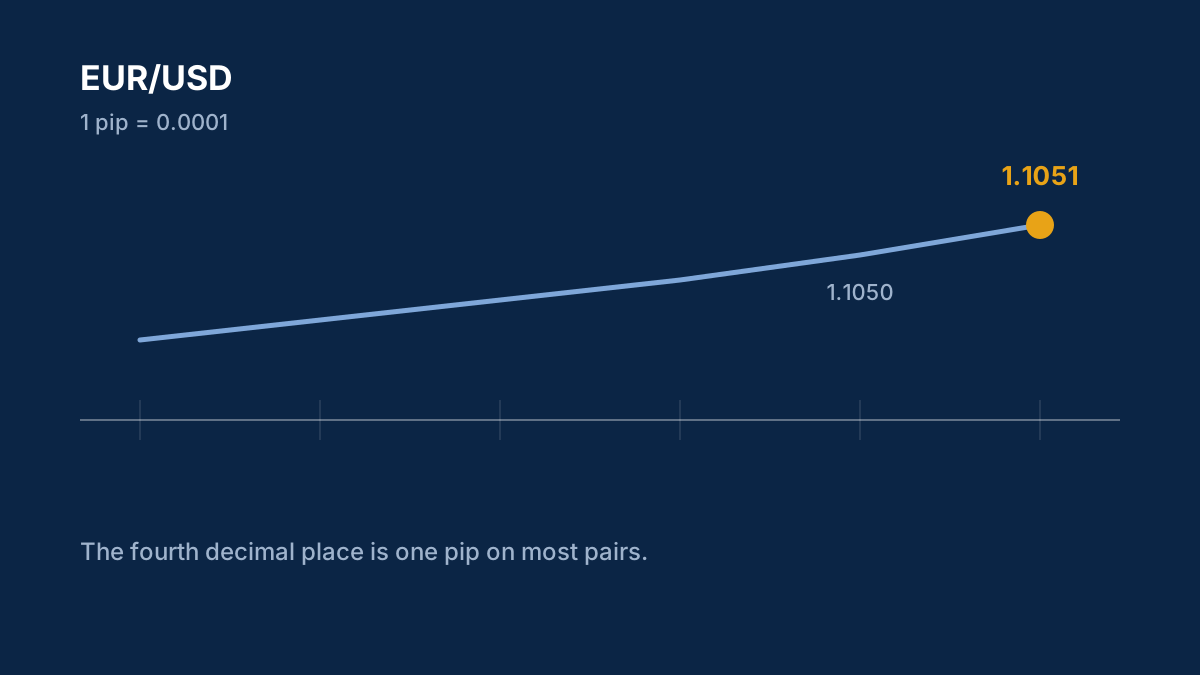
NZD/USD is the price of one New Zealand dollar in US dollars. The kiwi is the base currency; the pip is the fourth decimal place. The pair's spreads are wider than EUR/USD's or AUD/USD's — the cost of its thinness — and its trading day is anchored to the Asia-Pacific session, where New Zealand's data lands. Pip value explained has the arithmetic.
The pair's defining features are its drivers, which overlap with the aussie's but with their own weighting: dairy rather than iron ore, the RBNZ's style rather than the RBA's, and a smaller, more rate-sensitive economy.
The dairy legacy and the commodity mix
New Zealand's traditional export story is dairy: milk powder, butter and cheese, auctioned through the Global Dairy Trade platform whose results used to move the kiwi on their own. The relationship has faded as services and rates took over the currency's story, but dairy prices remain part of the kiwi's background — a slow influence rather than a daily driver. The broader commodity mix — meat, forestry, horticulture — gives the kiwi its commodity-currency membership, covered in commodity currencies.
The RBNZ's style
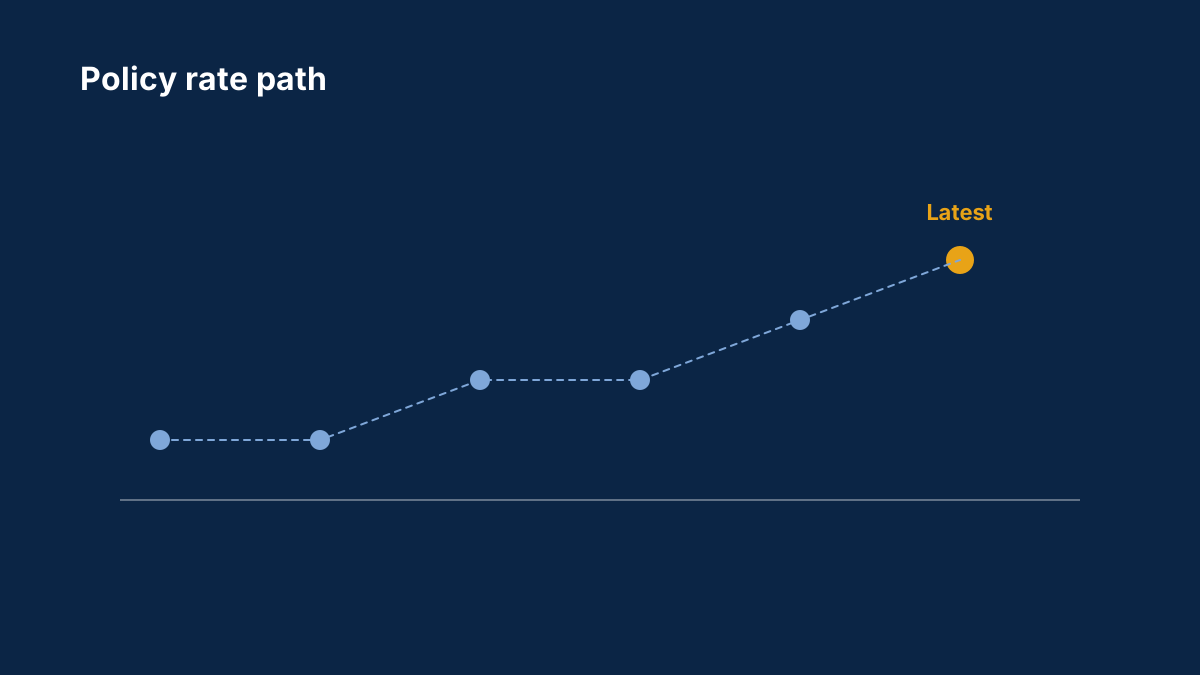
The Reserve Bank of New Zealand has a reputation among currency traders for being more aggressive than its peers — quicker to hike, quicker to cut, and less predictable in between. That style matters because it makes the kiwi a rates story more than a commodity story: the pair's biggest moves in recent years have come from RBNZ surprises rather than dairy or China.
The current position is the live example: the RBNZ raised its official cash rate to 2.75% in September (report), responding to fuel-driven inflation pressures, while New Zealand's economy grew just 0.2% in the June quarter (GDP report). The tension between slow growth and sticky inflation is the kiwi's current story, and the market prices the RBNZ's next move around every piece of data that resolves it. How interest rate decisions move currencies covers the transmission.
The kiwi's sibling relationships
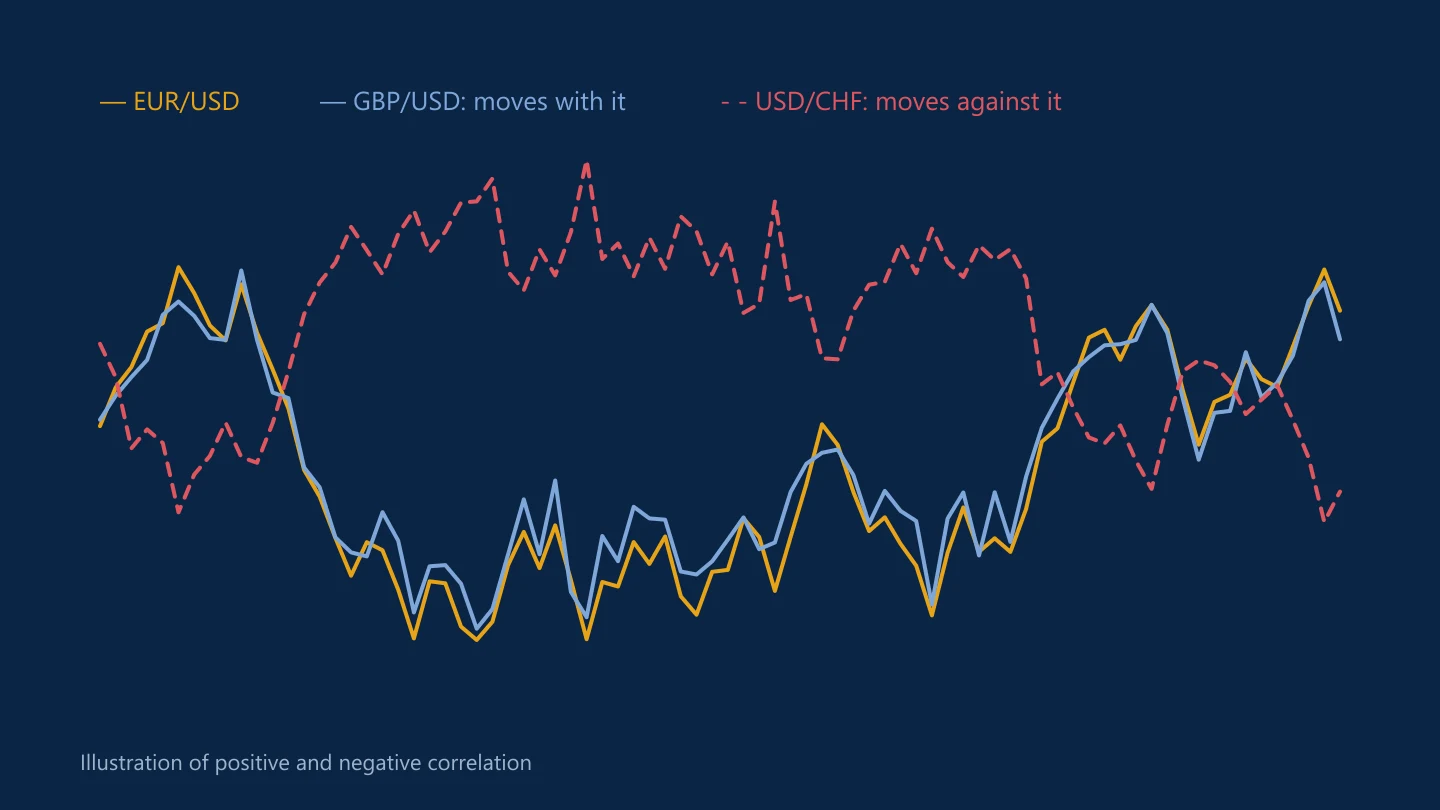
The kiwi trades in a family, and the family relationships matter:
NZD versus AUD. The two antipodean currencies share the region, the commodity complex and the China story, which makes AUD/NZD a tight, mean-reverting pair. When AUD/NZD stretches far from its norm, it often tells you something about relative policy or relative commodity exposure — and the kiwi side of that stretch shows up in NZD/USD too.
NZD as a risk proxy. Like the aussie, the kiwi strengthens on risk-on days and weakens on risk-off days, but with a smaller liquidity pool behind it — which makes its risk-off moves sharper. Risk-on risk-off explained covers the sentiment mechanics.
The pair's quirks
The kiwi's thinness produces specific, tradeable quirks:
Wider spreads. The pair's spread is a real cost, especially outside London and New York hours. The plan must account for it — scalping the kiwi is paying its spread repeatedly, and the arithmetic rarely works. Trading costs explained shows how spread eats into trade frequency.
Sharper reaction to its own data. Because fewer traders watch New Zealand's releases, the market's reaction can be larger and less efficient than the data deserves. The kiwi's CPI and employment prints have produced outsized moves precisely because the crowd was thin.
The Asia-Pacific anchor. The pair's genuine liquidity arrives with the Asia-Pacific session and fades through the US afternoon. Trading the kiwi in its own hours is trading its real market; trading it elsewhere is trading the leftover. The market hours guide maps the sessions.
New Zealand data that matters
The kiwi's calendar is compact and worth memorising:
- CPI — the RBNZ's priority, and the release most likely to surprise a thin market.
- Employment and wages — the labour side of the RBNZ's mandate.
- GDP — the June quarter report is the latest read on the growth-inflation trade-off.
- RBNZ decisions — the pair's biggest scheduled events, given the bank's reputation for surprises.
- Dairy auctions — a background signal rather than a trade trigger in the modern market.
A workable framework
A starting structure for NZD/USD:
- Before the week, mark the New Zealand calendar — CPI, jobs, GDP, RBNZ — and the US releases that move every dollar pair.
- Trade the pair in its hours: Asia-Pacific sessions carry the kiwi's real liquidity.
- Read the pair through its family: check AUD/NZD for the cross's message, and check the broader risk mood before taking direction.
- Account for the spread in every plan — targets must clear the pair's wider costs, which pushes the style toward swing and away from scalping.
- Size by risk as always, and expect sharper reactions to kiwi data than the calendar's impact rating suggests. The sizing method is in position sizing and risk per trade.
NZD/USD is the quiet corner of the majors where attention is the scarcest resource and therefore the most valuable. Learn its compact calendar, respect its thinness, and trade it in its own hours — and the pair everyone overlooks becomes one of the cleanest on the board.
Sources
Common questions
What moves NZD/USD?
The RBNZ's policy path is the dominant driver, followed by New Zealand's CPI and growth data, the broader commodity complex, and global risk appetite. Dairy prices remain a background influence.
Why is the RBNZ considered aggressive?
It has a history of larger and less predictable policy moves than its peers — quicker to hike, quicker to cut. That style makes RBNZ decisions the kiwi's biggest scheduled events.
Is NZD/USD more volatile than AUD/USD?
Its liquidity is thinner, so its reactions — especially to its own data and to risk-off episodes — can be sharper. Its spreads are also wider, which makes scalping expensive.
What is the best time to trade NZD/USD?
The Asia-Pacific session, when New Zealand's data lands and the pair's real liquidity is present. London hours add a second wave; the US afternoon is the thinnest stretch.
Does dairy still move the New Zealand dollar?
Less than it used to. Dairy auction results can still produce short-lived moves, but the modern kiwi trades primarily on the RBNZ's path and the broader risk environment.
This article is for information only and is not financial advice. Trading forex and CFDs carries a high risk of losing money. Read the risk warning. Spotted an error? Tell the editors.
Comments
Log in to join the discussion. Comments follow the community guidelines.
Log in to commentLoading comments…