How to trade ranging markets: the range trader's playbook
Markets spend more time ranging than trending, and most trend systems bleed in the chop. Here is how to define a range precisely, trade its edges, and recognise the moment it ends.
Markets trend less often than the trend literature suggests. Most of the time, most pairs are ranging — trading between two boundaries, frustrating the trend systems and rewarding the traders who adapt. The range is not the market's boring default; it is a specific regime with its own rules, its own setups and its own way of ending, and it deserves a complete playbook.
This guide explains how to define a range precisely, how to trade its edges, how to handle the break, and the psychological discipline that range trading demands. The boundary mechanics are in support and resistance explained; this guide is the range-specific application.
Defining the range precisely
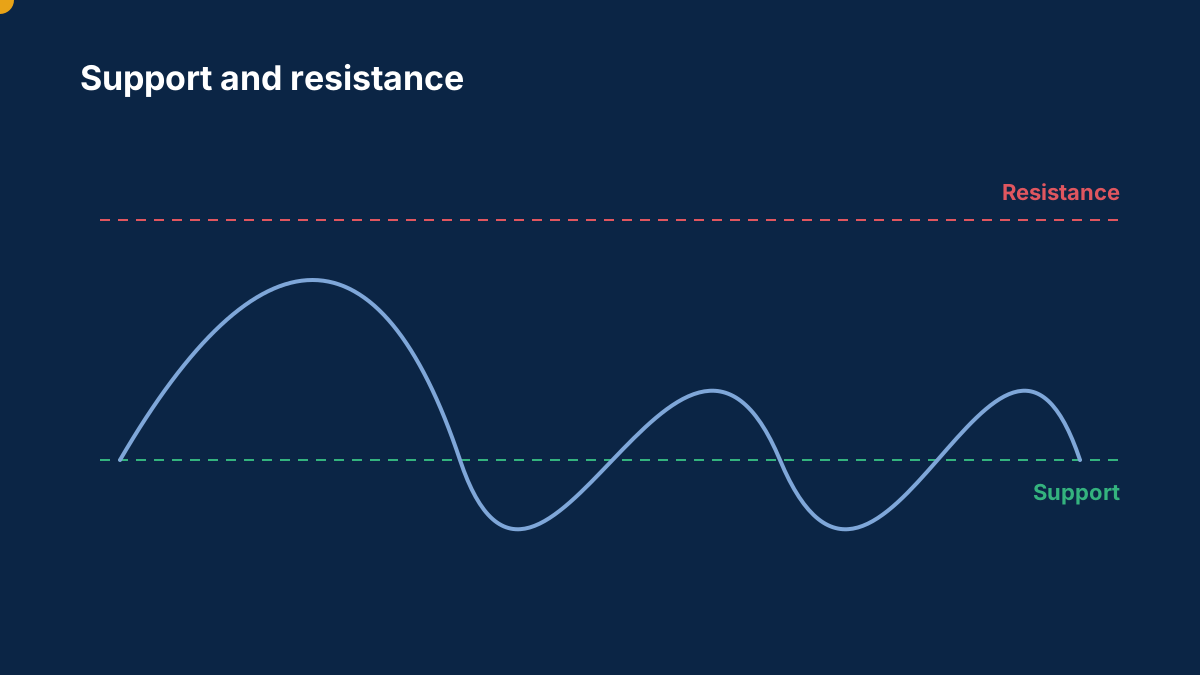
A range is two levels — support below, resistance above — that price has respected at least twice each. The precision matters because everything downstream depends on it:
The boundaries. Mark the zone, not the line: the area where price turned, sized to the pair's volatility. The ATR guide gives the volatility measure that makes the zone width consistent.
The touches. Two touches per boundary is the minimum for a tradable range; three or more makes the levels real. Each touch that holds adds evidence; each touch is also a warning that the level's shelf life is shortening.
The middle. The range's midpoint matters too: it is the no-trade zone. Entries in the middle of the range have poor risk-reward in both directions, because the stop is far and the target is near.
Why ranges form
Ranges form when the market has no reason to trend: no policy divergence to price, no data surprise to absorb, no directional story to chase. The two sides of the range are where the market has decided the pair is cheap and expensive — below support, buyers have consistently appeared; above resistance, sellers have consistently taken profit. The range is the market's equilibrium, and it persists until something changes the fundamentals or the positioning behind it.
The practical read: before trading a range, ask what story is keeping the pair contained, and what could break it. The range trader trades the containment but stays alert to the breakout catalysts — the central bank meetings, the data releases, the event risks that end ranges. The economic calendar guide shows where the range's threats are scheduled.
The edge trade
The core range setup is the fade at the boundary: sell at resistance, buy at support, with the range's opposite side as the target. The rules:
- Let price arrive at the boundary — never anticipate it.
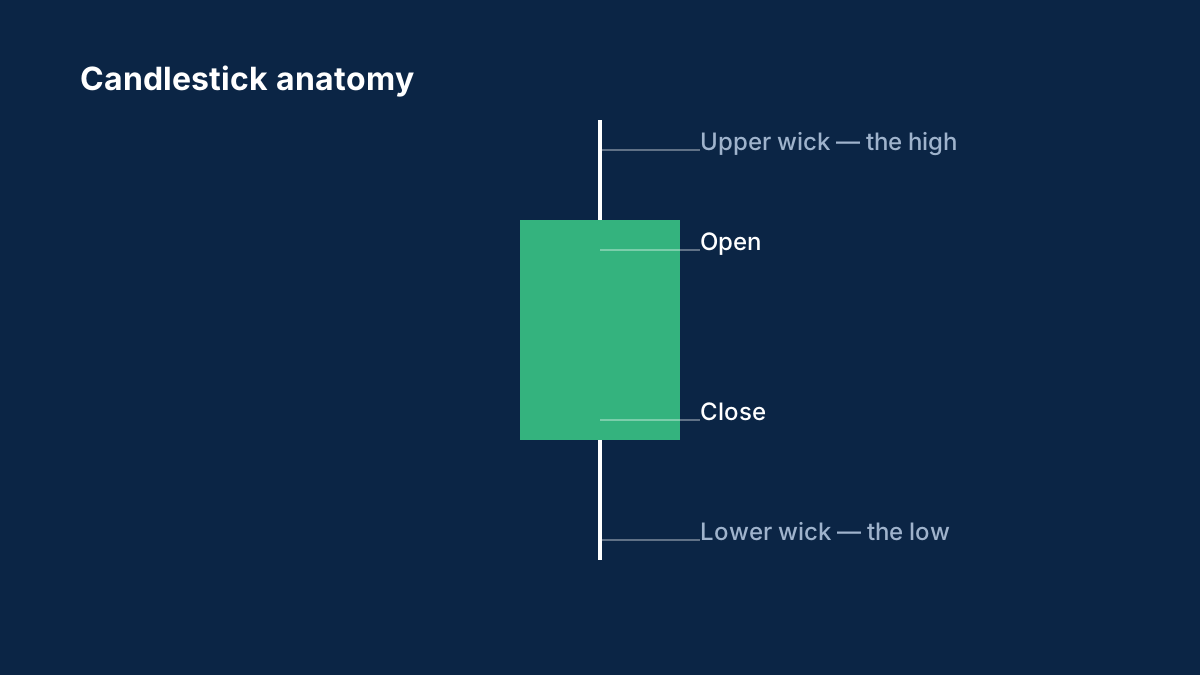
- Wait for the rejection signature: a wick, an engulfing candle, a failed break of the boundary. Candlestick charts explained decodes the signatures.
- Enter in the direction back into the range, stop beyond the boundary's far edge — beyond the zone, where the range idea is wrong.
- Target the opposite boundary, or the midpoint if the range is wide and the trader takes partial profits.
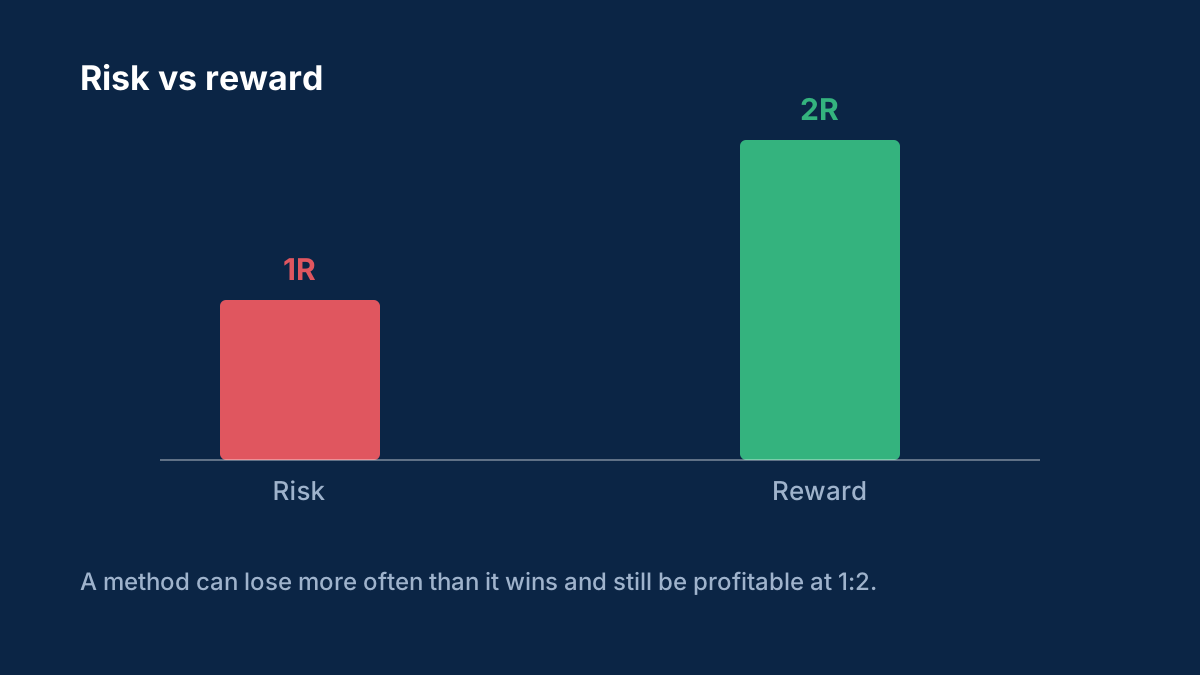
The edge trade's economics are its strength: the stop is just beyond the boundary and the target is the range's full width, so the risk-reward is naturally attractive — often 2:1 or better. The risk-reward guide explains why that asymmetry allows range trading to profit even when half the fades fail.
The break, and how to handle it
Every range ends, and the ending has a signature: price closes beyond the boundary and stays there. The range trader's rules for the break:
Never fade the first break. The first close beyond the range is exactly the moment the fade is most dangerous — the range may be ending, and the fading trader is buying the beginning of the new trend. The failed-break pattern is tradeable, but only after price has returned inside the range and the failure is confirmed.
The break-and-retest is the transition trade. When price breaks, retests the broken boundary and holds, the range has flipped into a new regime — and the breakout playbook takes over. The range trader either switches strategy or stands aside.
The false break is the range trader's gift. When price breaks the boundary, runs a few pips, and reverses back inside, the failure often produces a fast move to the opposite side — everyone who traded the break is now wrong and must exit. The false break is one of the range's best setups, and it is the reward for the discipline of waiting for confirmation.
The psychological challenge
Range trading is psychologically peculiar: the wins are frequent and small, the losses are rare and larger, and the method demands fading strength — buying weakness and selling strength, against every instinct. The traders who fail at range trading usually fail on temperament: they cannot sell at the top because the market looks strong, and cannot buy at the bottom because it looks like it is breaking.
The defences are the same as everywhere else: rules written in advance, the rejection signature as the trigger, and the stop beyond the boundary so that being wrong is defined before the emotions arrive. The journal guide records the fades that worked and failed, and the record — not the feeling — decides whether the range is still tradeable.
Knowing when to switch
The range trader's most important skill is recognising the end of the range's usefulness. The signs: rejections getting shallower, boundaries being tested more often, the range's width compressing before a break, or a fundamental story arriving that gives the market a reason to trend. When the signs appear, the range playbook is retired and the trend playbook or the breakout playbook takes over. The regime decides the strategy — never the other way around.
Ranging markets are where most of the market's time is spent and most of its impatient traders are separated from their money. Define the range precisely, fade the edges on rejection, respect the break, and the market's quietest regime becomes one you can trade with a clear plan.
Sources
Common questions
How do you know if a market is ranging?
Price is respecting two boundaries — support below and resistance above — with at least two touches at each. A flat moving average on the higher time frame confirms the regime.
What is the best strategy for a ranging market?
Fading the boundaries: buy support on a rejection and sell resistance on a rejection, with the stop beyond the boundary and the opposite side as the target. The range's width gives the trade its risk-reward.
Should I trade in the middle of a range?
No. The middle of the range has poor risk-reward in both directions — the stop is far and the target is near. Range trades belong at the boundaries, on rejection signatures.
What happens when a range breaks?
Price closes beyond the boundary and stays there. Never fade the first break. Trade the break-and-retest if it holds, or the confirmed false break back inside the range.
Why is range trading psychologically hard?
It requires fading strength — selling at tops that look strong and buying at bottoms that look like breaks. Rules written in advance, rejection triggers and defined stops are the standard defences.
This article is for information only and is not financial advice. Trading forex and CFDs carries a high risk of losing money. Read the risk warning. Spotted an error? Tell the editors.
Comments
Log in to join the discussion. Comments follow the community guidelines.
Log in to commentLoading comments…