How to trade USD/CNH: the yuan's managed float
The offshore yuan trades inside a policy-managed band, with the PBOC's daily fix setting the frame. Here is how the managed float works and how to trade around it.
USD/CNH is the pair where policy is the chart. The Chinese yuan is not a free-floating currency: the People's Bank of China sets a daily reference rate, allows the currency to trade within a managed band around it, and intervenes when it chooses. Trading the offshore yuan — CNH, as opposed to the onshore CNY — means trading within that frame, reading the fix every morning, and respecting the authorities' presence at every level.
This guide explains the managed float, the onshore-offshore split, and a framework for trading the pair. The China channel's reach into other pairs is covered in commodity currencies.
The basics
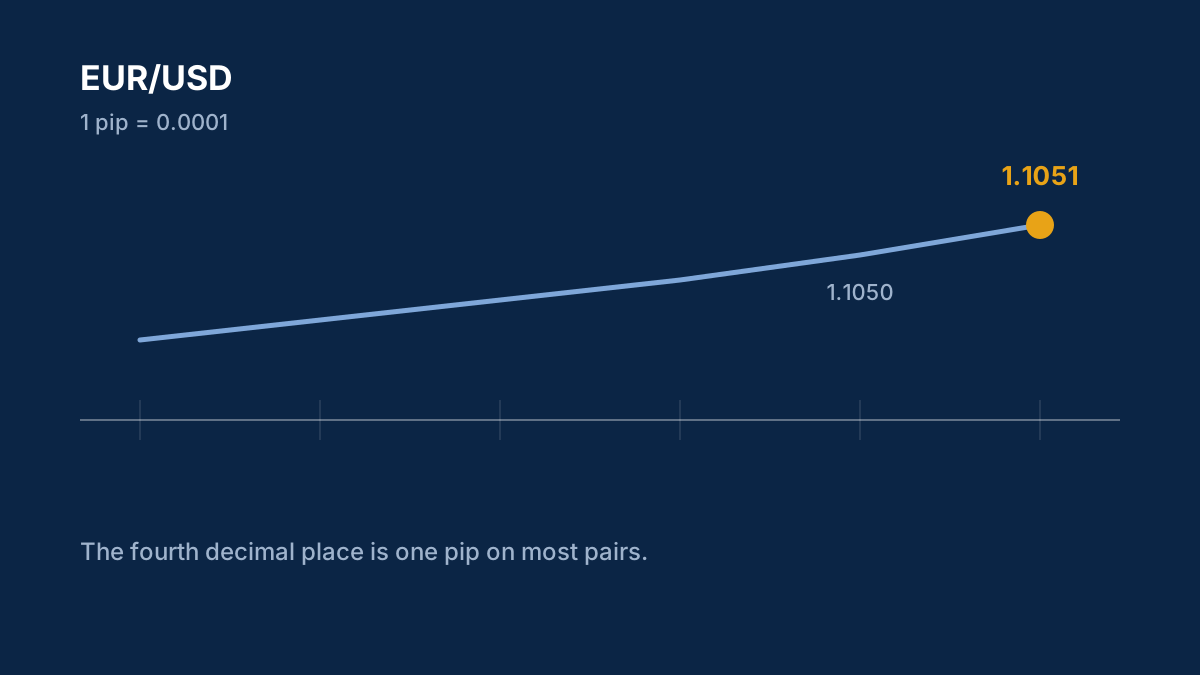
USD/CNH is the price of one US dollar in offshore Chinese yuan. The dollar is the base currency, the yuan the quote — so a falling pair means a strengthening yuan. The pip is the fourth decimal place, and the pair's spreads are wider than the majors' but manageable. Pip value explained has the arithmetic.
The pair's defining feature is its two-market structure. The onshore yuan (CNY) trades inside mainland China, under the PBOC's direct management. The offshore yuan (CNH) trades in Hong Kong and international markets, more freely but still under the PBOC's shadow. The two prices usually track each other closely, and the gap between them — the onshore-offshore spread — is itself a signal about capital-flow pressure and policy intent.
The daily fix
The PBOC's daily fix is the pair's morning ritual. Each trading day the bank publishes a reference rate — the midpoint around which the onshore yuan may trade, within a band of plus or minus 2%. The fix is the policy signal: a stronger-than-expected fix says the authorities are leaning against yuan weakness; a weaker one says they are tolerating or encouraging it.
Reading the fix is a skill in itself. The market compares the fix to the previous day's close and to its own expectations; the difference tells you the PBOC's stance for the day. The fix frames everything that follows: the band's edges become the day's effective boundaries, and the pair's behaviour near them is where the policy story is told. Currency intervention explained covers the wider toolkit the authorities use alongside the fix.
How the managed float behaves
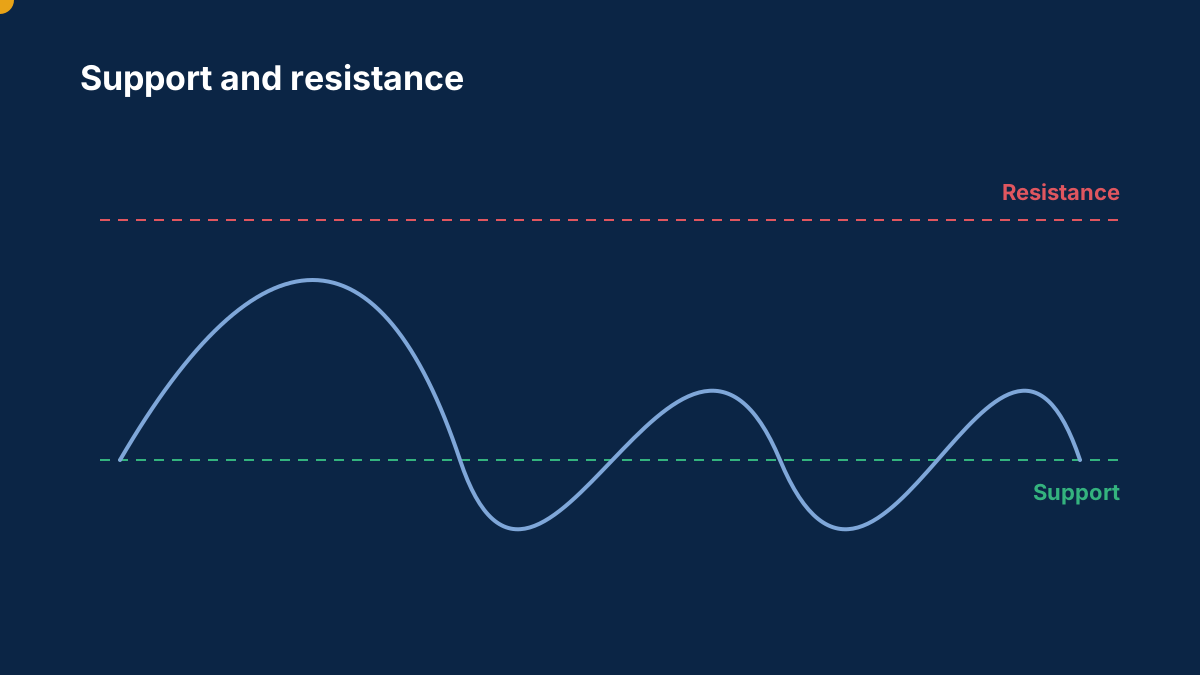
The managed float produces a distinctive price behaviour. Within the band, the pair trades like a normal currency pair, driven by dollar strength, Chinese data and global flows. Near the band's edges, the behaviour changes: the authorities' hand appears through intervention, through state-bank flows, and through the fix itself. The result is a pair that trends within a policy envelope and chops violently when the market tests the envelope's limits.
The practical read: the band's extremes are the pair's most important levels, and the market's tests of them are the pair's signature events. A test that the authorities defend produces a fast reversal; a test that they allow produces the pair's biggest trends, because the envelope itself has moved.
The drivers
The dollar side. The dollar's global story — Fed policy, US data, risk appetite — moves the pair's other leg directly, and it is the driver the pair shares with every dollar pair.
Chinese data. China's releases — trade, inflation, activity data — move the yuan through the growth channel, and the pair reacts with the rest of the China complex. The latest reads are on the site: China's exports, inflation and activity data.
Policy and geopolitics. Tariffs, capital-flow measures and geopolitical headlines reach the pair through the policy channel, and the fix is where the policy stance shows up first.
The onshore-offshore spread
The gap between CNY and CNH — normally a few pips, occasionally much wider — is the pair's internal signal. A widening spread means capital-flow pressure: demand for dollars offshore exceeds the onshore supply, and the market is testing the policy envelope. Watching the spread alongside the pair tells you whether a move is flow-driven or policy-driven, and the distinction decides how far the move can run.
A workable framework
A starting structure for USD/CNH:
- Before the session, read the day's fix against expectations — the PBOC's stance is the day's first signal.
- Mark the band's edges as the session's key levels; the pair's behaviour near them is the day's story.
- Trade the pair's normal behaviour inside the band with standard structure rules; treat the band's edges as policy zones where the rules change.
- Watch the onshore-offshore spread: a widening gap is a flow warning, and the move's sustainability depends on what the authorities do next.
- Respect the political dimension. Policy changes can arrive without warning, and the position must survive them — the sizing method is in position sizing and risk per trade.
USD/CNH is a pair for traders who like reading policy as much as price. The fix, the band and the spread are the map; the dollar and the data are the weather. Read both, and the managed float becomes one of the market's most structured trades.
Sources
Common questions
What is the difference between CNY and CNH?
CNY is the onshore yuan, traded inside mainland China under the PBOC's direct management. CNH is the offshore yuan, traded in Hong Kong and internationally. The two prices usually track closely, and their gap signals capital-flow pressure.
What is the PBOC daily fix?
The reference rate the People's Bank of China publishes each trading day. The onshore yuan trades within a band around it, and the fix's strength or weakness signals the authorities' policy stance for the day.
Is the yuan a free-floating currency?
No. It operates in a managed float: a daily fix, a trading band, and intervention when the authorities choose. Policy frames every move, which makes the pair's behaviour different from the free-floating majors.
What moves USD/CNH the most?
The dollar's global story, Chinese data and growth expectations, and policy — tariffs, capital-flow measures and the PBOC's own stance, visible first in the daily fix.
What does a widening CNY-CNH spread mean?
Capital-flow pressure: offshore demand for dollars exceeds onshore supply, and the market is testing the policy envelope. The spread tells you whether a move is flow-driven or policy-driven.
This article is for information only and is not financial advice. Trading forex and CFDs carries a high risk of losing money. Read the risk warning. Spotted an error? Tell the editors.
Comments
Log in to join the discussion. Comments follow the community guidelines.
Log in to commentLoading comments…