Bank of Japan raises its policy rate to 1.25%, its first hike since March
The Policy Board voted 7–2 on 18 September to lift the overnight call rate target from 1.00% to 1.25%, saying underlying inflation is approaching its 2% goal. Two members dissented.

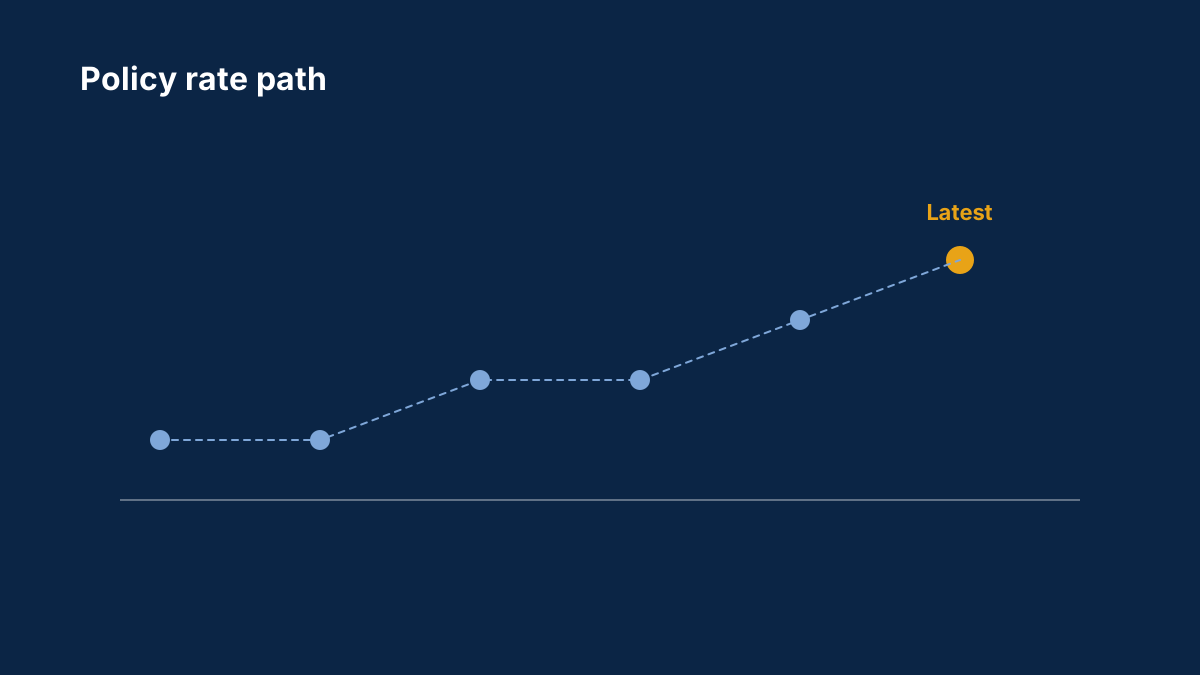
The Bank of Japan raised interest rates on Friday 18 September 2026. The Policy Board voted 7–2 to lift the target for the uncollateralized overnight call rate to around 1.25%, from 1.00%, effective 24 September. It is the Bank's first increase since March 2026. Our preview set out what traders were watching.
The vote and the new rates
- Policy rate: raised to around 1.25%, a 7–2 majority vote
- Complementary deposit facility rate: 1.25%, from 24 September
- Basic loan rate (complementary lending facility): 1.5%
- Dissents: Asada Toichiro and Sato Ayano voted against the increase. Asada argued that with core CPI still below 2%, the economy wasn't clearly strong enough to justify it; Sato said prices and activity hadn't accelerated enough to raise now
Why the Bank moved
The Bank said Japan's economy "has recovered moderately," though the situation in the Middle East is weighing on activity. On prices:
- Underlying CPI inflation has been "approaching 2 percent," helped by rising producer prices, high crude oil prices and yen depreciation feeding into consumer prices
- Risk skewed upward: the Bank flagged a risk that underlying inflation could deviate above the 2% target as firms keep raising wages and prices, and as medium-term inflation expectations rise
- Guidance: the Bank said it "will continue to raise the policy interest rate and adjust the degree of monetary accommodation," with the timing and pace depending on the Middle East situation, AI-related demand and the exchange rate
Two board members, Takata Hajime and Tamura Naoki, went further, dissenting from the price outlook itself on the grounds that underlying inflation had already reached a level consistent with the 2% target.
What it means for the yen
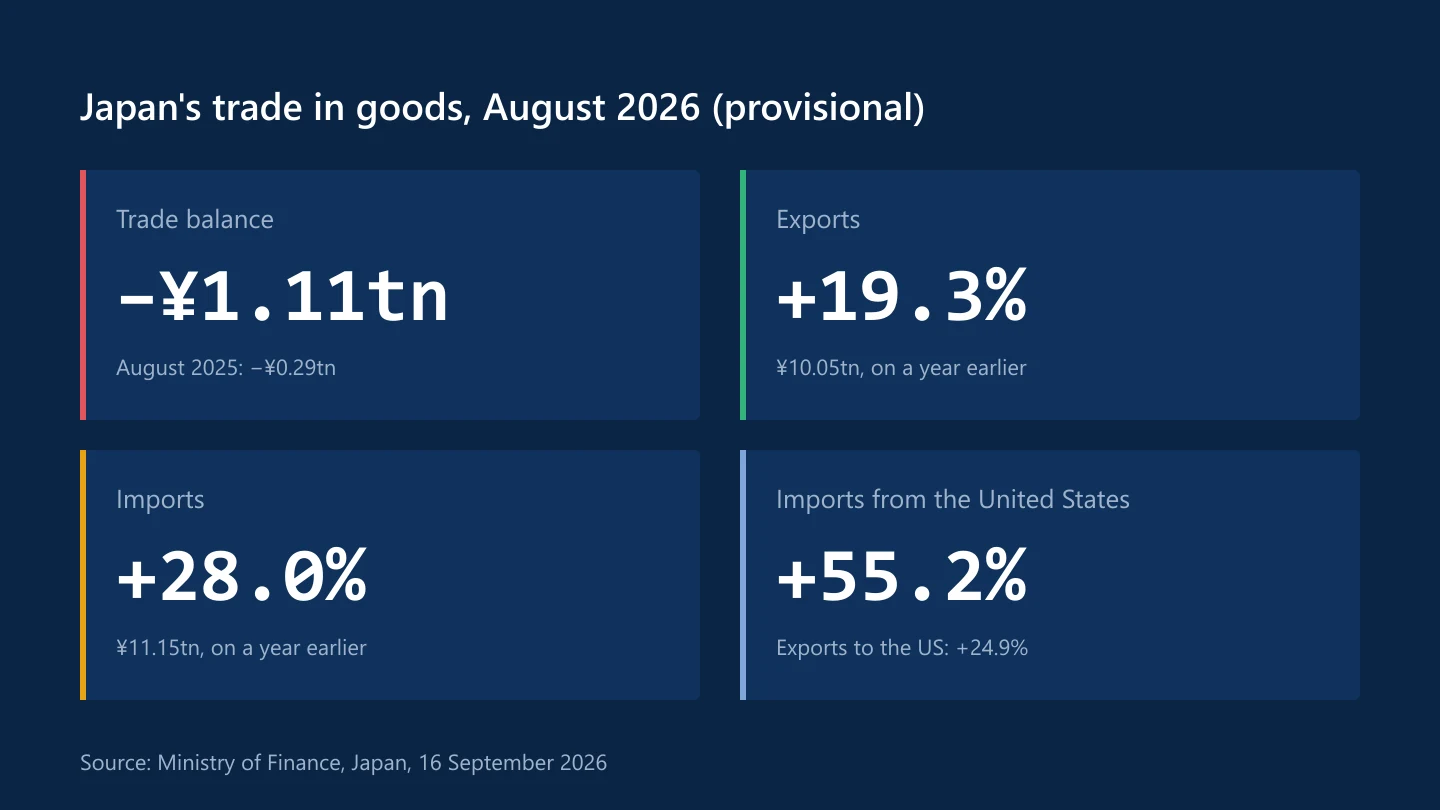
A rate increase narrows the gap between Japanese and US rates that has driven the yen's weakness and funded carry trades for years. The Federal Reserve raised its own target range to 3.75%–4.00% two days earlier (report), so even after today's move the gap remains wide. Japan's trade figures this week showed imports climbing faster than exports as the import bill grows (report), and Japan and the US intervened jointly to support the yen on 31 July (report). How interest rate decisions move currencies explains why the size of a move often matters less than the guidance that comes with it.
The Bank of England held its rate at 3.75% a day earlier while announcing a plan to run down its bond holdings (report). The Bank of Japan's next scheduled decision is at its October meeting; the Summary of Opinions from today's meeting is due 1 October and the full minutes on 5 November. Live prices: USD/JPY and EUR/JPY.
Sources
Common questions
Did the Bank of Japan raise interest rates in September 2026?
Yes. On 18 September 2026 the Policy Board voted 7–2 to raise the target for the overnight call rate to around 1.25%, from 1.00%, effective 24 September. It was the Bank's first increase since March 2026.
What is Japan's interest rate now?
The Bank of Japan's policy rate is 1.25% following the 18 September 2026 decision, up from 1.00%. The complementary deposit facility rate is also 1.25% and the basic loan rate is 1.5%, both effective 24 September.
Why did the Bank of Japan raise rates?
It said underlying CPI inflation has been approaching its 2% target, with producer prices, high crude oil prices and yen depreciation feeding into consumer prices, and flagged a risk that inflation could overshoot if wage and price increases continue.
Who voted against the Bank of Japan's rate rise?
Asada Toichiro and Sato Ayano dissented. Asada argued core inflation was still below 2%, and Sato said price and activity growth hadn't accelerated enough to justify raising rates now.
This article is for information only and is not financial advice. Trading forex and CFDs carries a high risk of losing money. Read the risk warning. Spotted an error? Tell the editors.


Comments
Log in to join the discussion. Comments follow the community guidelines.
Log in to commentLoading comments…