What moves AUD/USD? China, iron ore and risk
The Australian dollar is a China proxy, a commodity currency and a risk barometer rolled into one. Here is how the three roles interact, which one leads, and the signals that tell you.
AUD/USD is the pair that packs the most global narrative into one chart. The Australian dollar answers to China's demand, to the commodities Australia exports to meet it, and to the world's appetite for risk — all against the dollar's own story and the RBA's rate path. No other major demands as broad a read, and few reward it as consistently.
This guide maps the aussie's three roles and the signals that show which one is leading. The trading framework is in the AUD/USD guide; this guide is the driver map behind it.
Role one: the China proxy
The aussie's oldest role is its China link. China is Australia's largest export market, and China's demand for iron ore — Australia's biggest export — has historically driven the currency. When Chinese data strengthens, the aussie tends to strengthen; when China's economy slows, the aussie weakens. The link has loosened over the years as other forces grew louder, but it remains the pair's defining background story.
The current data tells the story's latest chapter: China's exports jumped 25% in August (report), producer prices rose 3.8% (report), and retail and industrial output softened (report). The mixed picture is itself the signal: the aussie trades the balance of China's data, not any single release. The commodity currencies guide covers the China channel in the wider context.
Role two: the commodity currency
The aussie's second role is commodity exposure. Iron ore is the headline export, with coal, metals and agriculture behind it, and the commodity complex sets the currency's medium-term direction. When commodity prices rise, the aussie follows; when they fall, it weakens. The relationship is slower and looser than oil's link to the loonie, but it is the aussie's structural backbone.
The signal to watch is the iron ore price itself, plus the broader metals complex: the commodities lead the currency, and the currency's moves that contradict the commodities are usually driven by one of the other roles. The commodity currencies guide maps the full complex.
Role three: the risk barometer
The aussie's third role is the one day traders feel most: it is a risk instrument. Australia is a high-beta economy tied to global growth and trade, so the aussie strengthens when the world wants risk and weakens when it does not — with a consistency that makes it one of the market's cleanest sentiment gauges. The role's extreme form is AUD/JPY, the aussie's even more volatile sibling; AUD/USD is the same story with the dollar on the other side. The risk-on risk-off guide covers the mechanics.
The RBA and the dollar
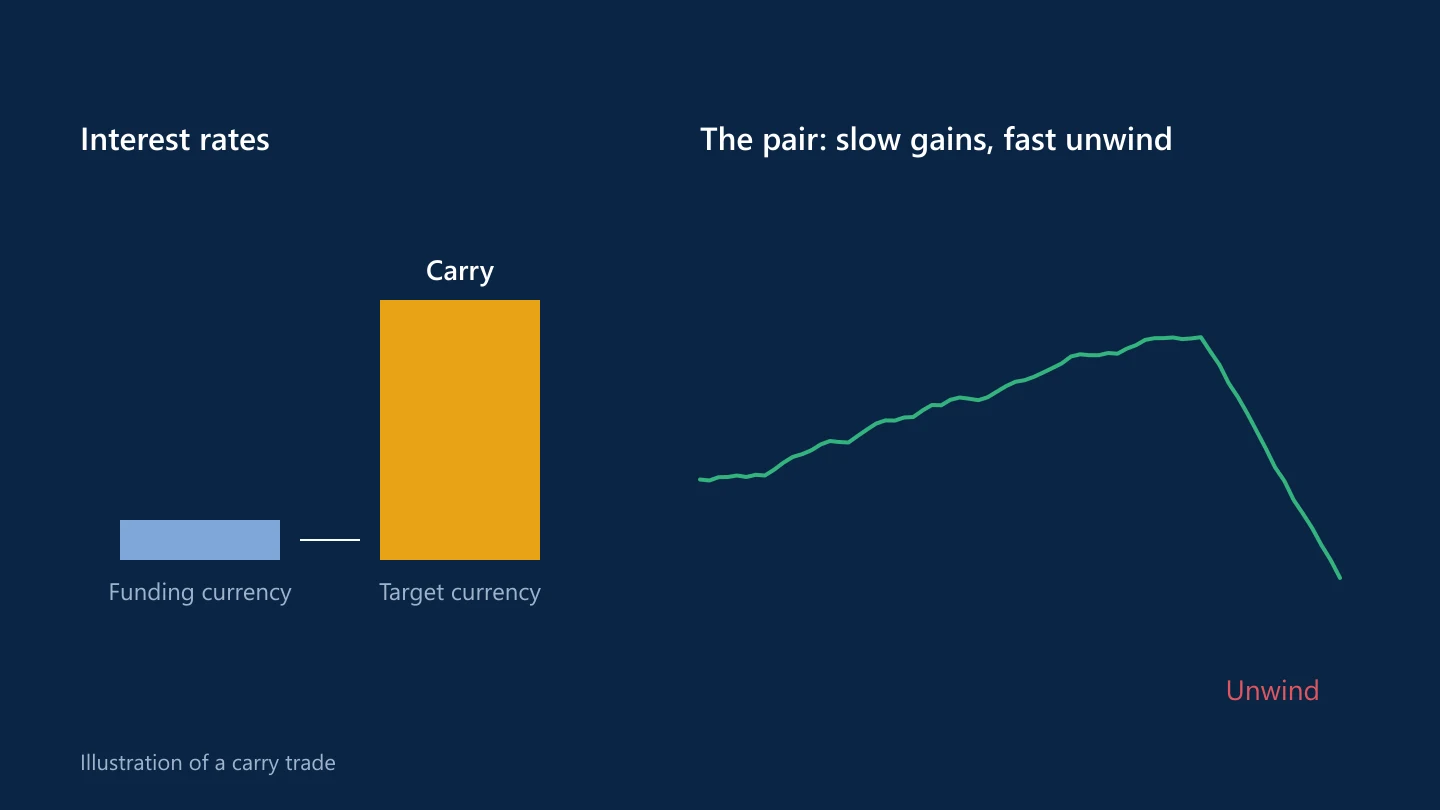
Behind the three roles sit the two rate stories. The RBA has held its cash rate at 4.35% (report) — among the highest in the majors — which gives the aussie a carry-adjacent appeal when risk appetite is stable. The dollar side is the familiar US rate story, dominant on US data days. Australia's own data — GDP grew 0.4% in the June quarter (report), inflation and employment tracked by the RBA — moves the aussie's rate expectations on its own schedule.
Which role is leading?
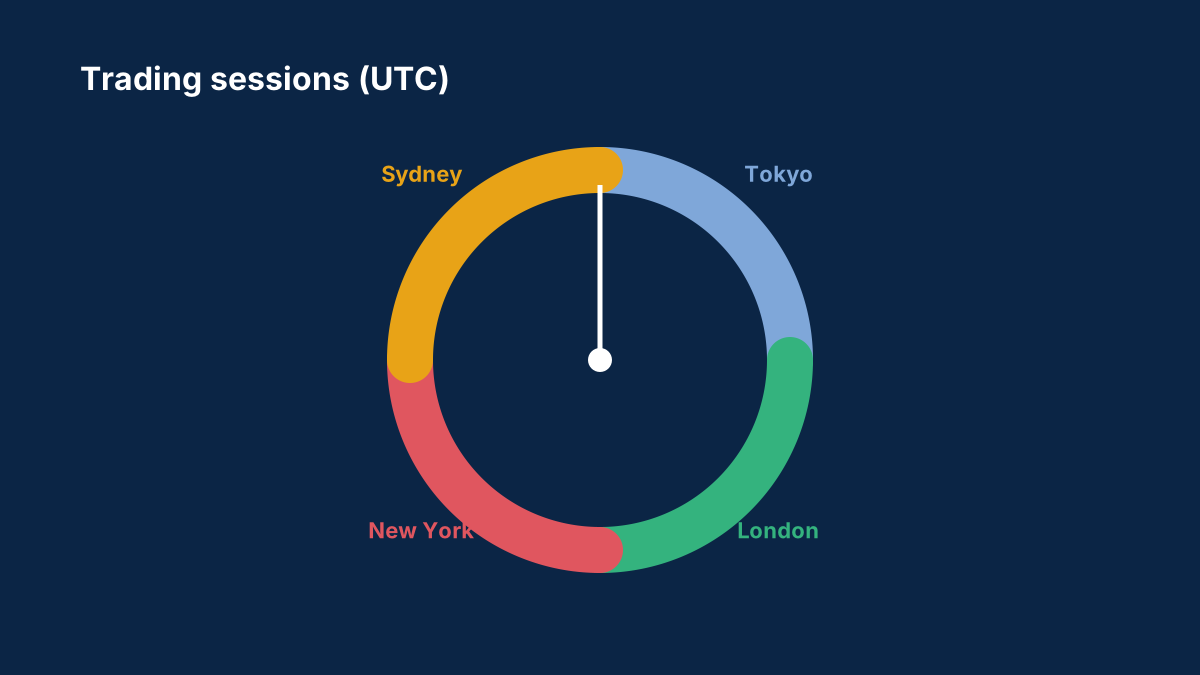
The three roles rotate, and the diagnostic is the day's story:
- China data days: role one leads. The aussie trades China's balance of data, and the calendar's Chinese entries are the day's events.
- Commodity headlines: role two leads. Iron ore and metals moves reach the aussie within the session.
- Risk-on risk-off days: role three leads — and overrides the others. Equity swings and haven flows move the aussie regardless of China or commodities.
- RBA and US data days: the rate stories lead, with the US side usually dominant.
The pair trends when the roles agree — China strong, commodities firm and risk-on all pulling the same way — and chops when they fight. The agreement is the trade; the fight is the signal to stand aside. The multi-driver diagnostic in the EUR/USD explainer generalises the method.
The signatures to read
Each role has its fingerprint:
China leading: the aussie moving with Chinese data releases and with the CNY's fix, independent of the dollar's direction.
Commodities leading: the aussie tracking iron ore and the metals complex, diverging from the other majors.
Risk leading: the aussie moving with equities and against the havens — rising with risk-on, falling with risk-off — in step with AUD/JPY. The sibling's confirmation is the cleanest read: when AUD/USD and AUD/JPY agree, the risk role is driving.
Rates leading: the aussie tracking the RBA-Fed gap, moving with the bond market rather than the commodity complex.
The practical read
The map compresses into a routine:
- Check the China calendar and the commodity screens — iron ore first.
- Check the risk mood: equities, havens, AUD/JPY's agreement with the pair.
- Check the rate stories: RBA and Fed events on the calendar.
- Name the leading role and trade it — China days on China data, risk days on the sentiment direction, rate days on the gap.
- When the roles fight, stand aside; the pair's chop is the disagreement made visible.
AUD/USD is the market's most global pair — China, commodities, risk and rates in one chart. Name the leading role, watch its signals, and the aussie becomes one of the market's most informative instruments.
Sources
Common questions
Why is AUD/USD called a China proxy?
China is Australia's largest export market, and China's demand for iron ore has historically driven the aussie. Strong Chinese data tends to strengthen the currency, though the link has loosened over the years.
What role does iron ore play in AUD/USD?
Iron ore is Australia's biggest export, and its price sets the aussie's commodity channel. The currency tracks iron ore and the metals complex over the medium term, with the other roles overriding in the short term.
Why is the aussie a risk barometer?
Australia's economy is high-beta and trade-dependent, so the aussie rises with risk appetite and falls with fear. AUD/JPY is the same story amplified, and the siblings' agreement confirms the risk read.
Which driver leads AUD/USD on a given day?
China data days lead with the China role, commodity headlines with the commodity role, equity swings with the risk role, and RBA or US events with the rate stories. The pair trends when the roles agree.
How do I know which role is active?
Match the pair's moves to the signals: Chinese releases and the yuan's fix for China, iron ore for commodities, equities and AUD/JPY for risk, and the bond market for rates.
This article is for information only and is not financial advice. Trading forex and CFDs carries a high risk of losing money. Read the risk warning. Spotted an error? Tell the editors.
Comments
Log in to join the discussion. Comments follow the community guidelines.
Log in to commentLoading comments…