How to trade multiple time frames without analysis paralysis
The higher time frame sets the direction, the middle finds the setup, the lower times the entry — but each added frame adds conflicts. Here is a three-frame system that stays simple.
The multi-time-frame method is the closest thing trading has to a standard professional workflow: read the higher time frame for direction, the middle for setups, and the lower for entries. The concept is simple, and the practice usually isn't — because each added time frame adds its own signals, its own levels and its own contradictions, until the analysis becomes paralysis and the trades never happen.
This guide sets out a three-frame system that stays disciplined: what each frame is for, how the frames interact, and the rules that stop the contradictions from multiplying. The time-frame-to-style mapping is in trading styles.
What each frame is for
The three-frame structure assigns one job per frame, and the discipline is refusing to let a frame do another's job:
The higher time frame — the bias. The daily or 4-hour chart sets the direction: trend up, trend down, or range. Its job is one decision — long bias, short bias or no bias — and nothing else. The trend definition is structural, the same higher highs and higher lows logic from the trend guide.
The trading time frame — the setup. The 4-hour or 1-hour chart finds the actual trades: the levels, the pullbacks, the patterns that fit the bias. Its job is to produce setups that agree with the higher frame's direction.
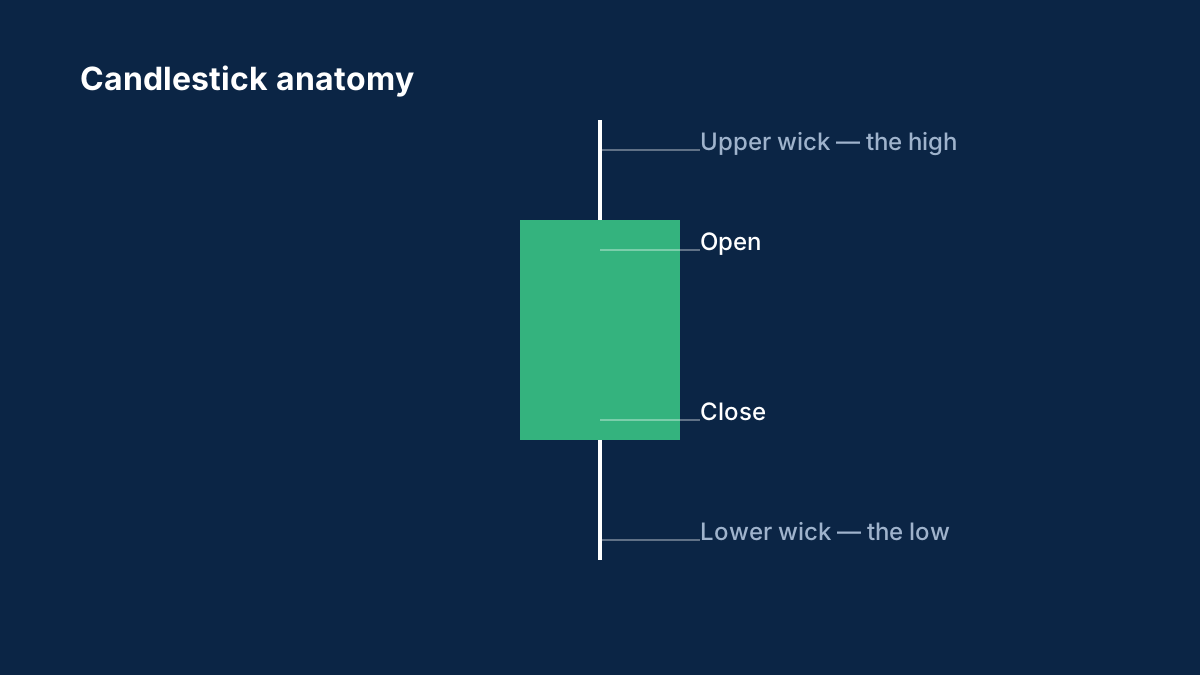
The lower time frame — the entry. The 15-minute or 5-minute chart times the entry: the rejection candle, the stall, the trigger that says the setup is live now. Its job is execution, not analysis.
The structure is top-down, and the order matters. The bias comes first, the setup must agree with it, and the entry only times what the two higher frames have already approved. The price action guide supplies the entry-level signatures.
Why the order matters
The top-down order is what separates the method from chart-hopping. Traders who read bottom-up — finding a tempting 5-minute pattern and then looking for time frames to justify it — are constructing cases for trades the market never offered. The 5-minute chart is full of patterns, and most of them contradict the hour's story.
The top-down version inverts the flow: the higher frame's bias filters out most of the lower frame's noise before it is ever considered. A 15-minute long setup against a daily downtrend is not a trade; it is a counter-trend attempt that needs a special reason to exist. The filter's value is in what it refuses — and it refuses most of the market's temptations.
Handling the conflicts
The frames conflict constantly, and the conflicts are where the discipline is tested. The standard rules:
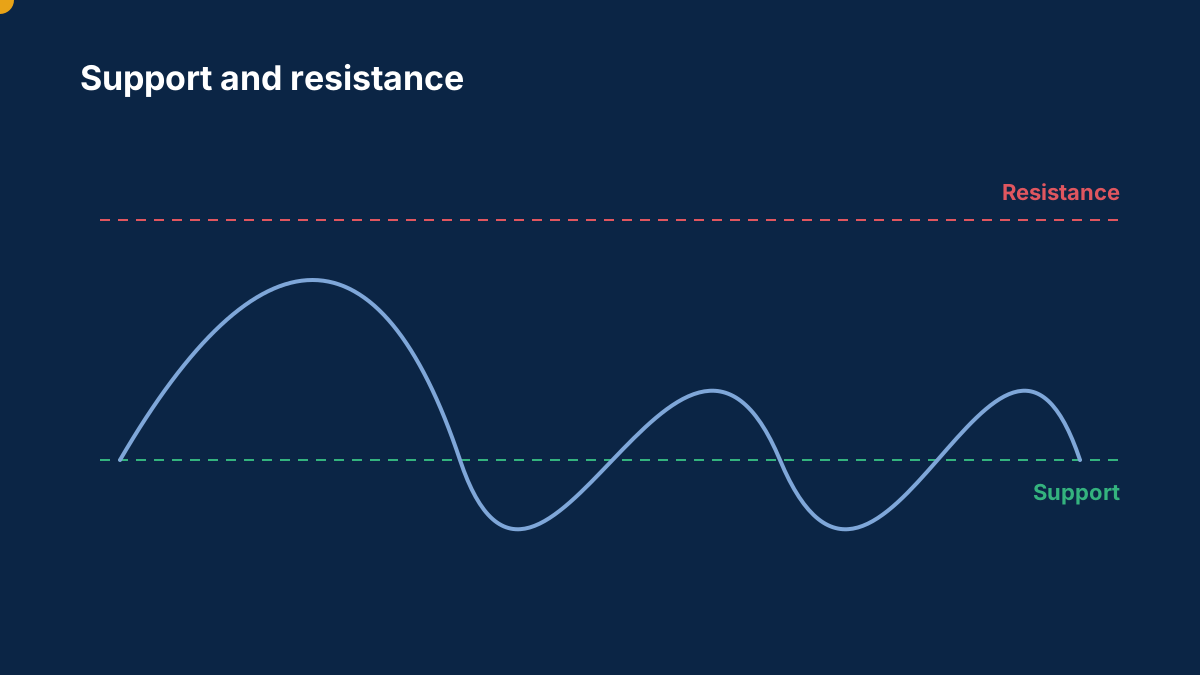
The higher frame wins. When the daily says down and the 4-hour says up, the 4-hour's move is a pullback inside a downtrend — tradeable only as a counter-trend fade with reduced expectations, or not at all. The higher frame is the context, and context outranks signal. The support and resistance guide explains why higher-frame levels dominate.
No bias means no trades. When the higher frame is ranging, the three-frame trend system is out of its regime. The answer is the range playbook, or patience — not forcing trend trades into a range.
The entry frame never overrides. A 5-minute signal that contradicts the two higher frames is noise. The entry frame's only authority is timing within an already-approved trade.
Keeping it to three
The system's discipline is also its size limit: three frames, no more. The temptation to add a fourth — the weekly above the daily, the 1-minute below the 5 — is the path back to paralysis, because each added frame multiplies the contradictions. The psychology threads cover the analysis-paralysis pattern the extra frames produce.
The standard three-frame combinations, matched to style:
- Swing: daily for bias, 4-hour for setups, 1-hour for entries.
- Day trading: 4-hour for bias, 1-hour for setups, 15-minute for entries.
- Scalping: 1-hour for bias, 15-minute for setups, 5-minute for entries.
The ratios between the frames — roughly four to six candles per higher-frame candle — keep the frames reading the same market at different resolutions rather than different markets entirely.
The routine
The three-frame read is a routine, not a one-off:
- Start each session on the higher frame: mark the trend or range, and write the bias — long, short or none — in one sentence.
- Move to the trading frame: mark the levels and the setups that fit the bias.
- Move to the lower frame only when a setup is near: wait for the entry trigger.
- When the higher frame's structure changes, the bias changes — and everything below it is re-read.
The routine takes minutes once it is a habit, and it produces something rare in trading: decisions with context. The journal guide records the reads, so the review can check whether the frames were actually followed.
Multi-time-frame analysis is not about seeing more — it is about seeing in order. Three frames, one job each, top-down always: the method that professionals use, simplified until it fits on one screen and one routine.
Sources
Common questions
What is the best multi-timeframe combination?
Three frames with roughly a 4-6x ratio: daily/4-hour/1-hour for swing trading, 4-hour/1-hour/15-minute for day trading, or 1-hour/15-minute/5-minute for scalping.
What does the higher time frame do in the system?
It sets the bias — long, short or none — from the trend or range. The bias filters everything below it: setups and entries must agree with the higher frame or have a specific reason to disagree.
What do I do when my time frames conflict?
The higher frame wins. A lower-frame signal against the higher frame's direction is a pullback or noise — tradeable only as a counter-trend attempt with reduced expectations, or skipped entirely.
Why do I get analysis paralysis with multiple time frames?
Because each added frame multiplies the signals and contradictions. The fix is the three-frame limit and the one-job-per-frame discipline — bias, setup, entry — with the top-down order enforced.
Should I start my analysis on the lower time frame?
No. Bottom-up reading constructs cases for trades the market never offered. The top-down order — bias first, setup second, entry last — filters the noise before it is considered.
This article is for information only and is not financial advice. Trading forex and CFDs carries a high risk of losing money. Read the risk warning. Spotted an error? Tell the editors.
Comments
Log in to join the discussion. Comments follow the community guidelines.
Log in to commentLoading comments…