How to trade the Asian session: the range that sets the day
The Asian session is quiet, range-bound and dismissed by most traders — which is exactly why its range matters so much. Here is how to trade it, and how to use it even if you don't.
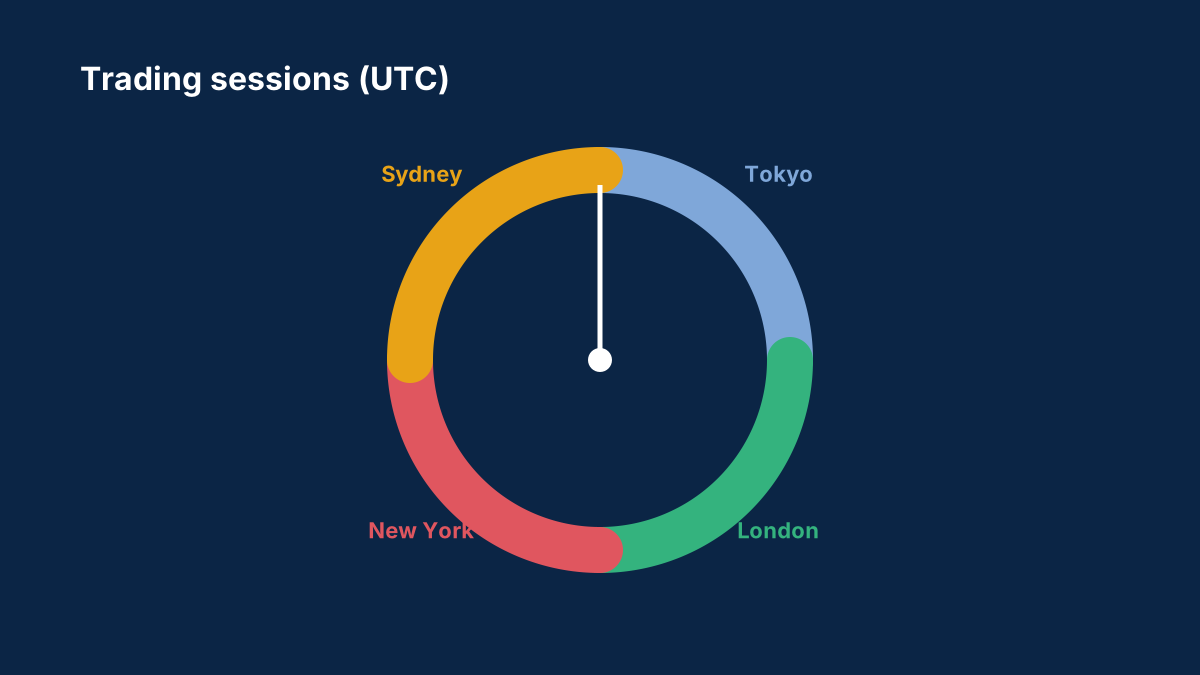
The Asian session is the market's quiet shift: Sydney and Tokyo trading while Europe sleeps, ranges measured in tens of pips rather than hundreds, and volume at its daily low. Most traders dismiss it — and every serious trader marks its range, because the Asian session draws the levels that London and New York spend the rest of the day testing. The session matters twice: as a tradeable window in its own right, and as the setup for everything that follows.
This guide explains the session's character, its tradeable patterns, and how to use its range even if you never trade its hours. The session mechanics are in forex market hours and trading sessions.
The session's character
The Asian session runs from the Sydney open — 21:00 UTC in summer — through Tokyo's close, with Tokyo's hours its core. Its defining features:
Thin liquidity. Volume is a fraction of London's or New York's, which shows up in wider spreads, slower moves and a tendency for prices to drift rather than trend. The thinness is not a flaw; it is the session's nature, and the strategies that work there are built for it.
Range-bound behaviour. With no major European or US data and no institutional flow, the session's pairs usually trade inside narrow ranges — the Asian range — bounded by the levels that held overnight.
The yen's hours. The session's real market is the yen: Tokyo's data, the Bank of Japan's positioning and the Asian risk mood all land here. USD/JPY and the yen crosses are the session's genuinely active pairs. The USD/JPY guide covers the yen's story.
The news risk. The session's quiet can break without warning: Japanese data surprises, China headlines, or — the session's signature event — a flash move in thin liquidity, of which the 2016 sterling crash is the extreme example (guide).
Trading the session itself
For traders whose hours fit Asia, the session is tradeable — with a plan built for its character:
Trade the yen pairs. USD/JPY, EUR/JPY and the yen crosses carry the session's real liquidity and react to its real news. The dollar pairs without a yen leg are drifters here.
Fade the range's edges. The Asian range's boundaries — usually established in the first hours — are the session's structure. The fade at the edges on a rejection, with the stop beyond the boundary, is the session's standard trade, and the range's narrowness keeps the stops close. The range trading playbook applies directly.
Respect the news windows. Japanese data and Chinese headlines land on their own schedule, and the session's thin liquidity amplifies their moves. The calendar's Asian entries matter more here than the impact ratings suggest. The economic calendar guide covers the read.
Expect less. The session's ranges are small, and the plans that demand London-sized moves will force trades that aren't there. The honest expectation — smaller targets, fewer trades, more patience — is part of the session's plan. The overtrading guide explains the quiet-session trap.
The range as the day's setup
The Asian session's larger use is the range it leaves for everyone else. The logic is the London open guide's foundation: while Europe sleeps, the market finds its overnight balance, and the range's high and low become the day's first levels. London's open tests them; the break or the failure sets the day's direction.
The practical routine, even for traders who never touch Asia's hours:
- At the London open, mark the Asian range — its high and low, drawn from the session's wicks or closes, standardised.
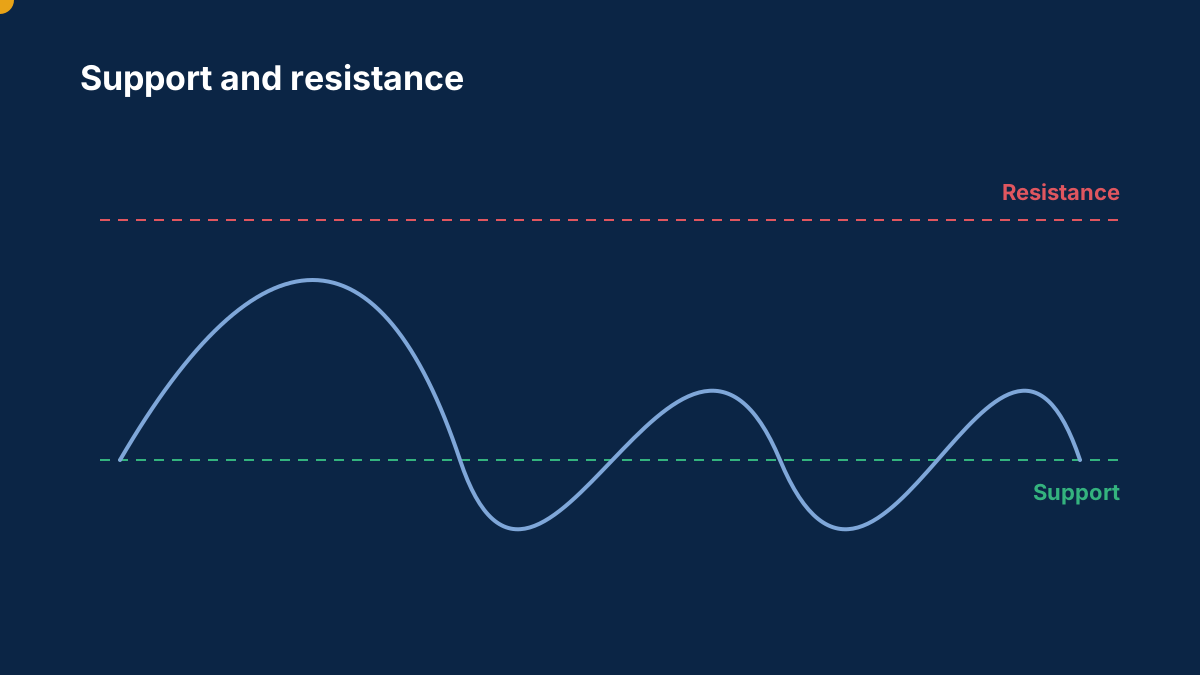
- Treat the range's extremes as the day's first support and resistance.
- Let London test them; trade the test — the break-and-retest, or the fade of the failed break — with the usual structure rules.
The routine costs two minutes and gives the European day its first map. The breakout playbook supplies the break structure; the support and resistance guide explains why the overnight levels hold.
The session's risks
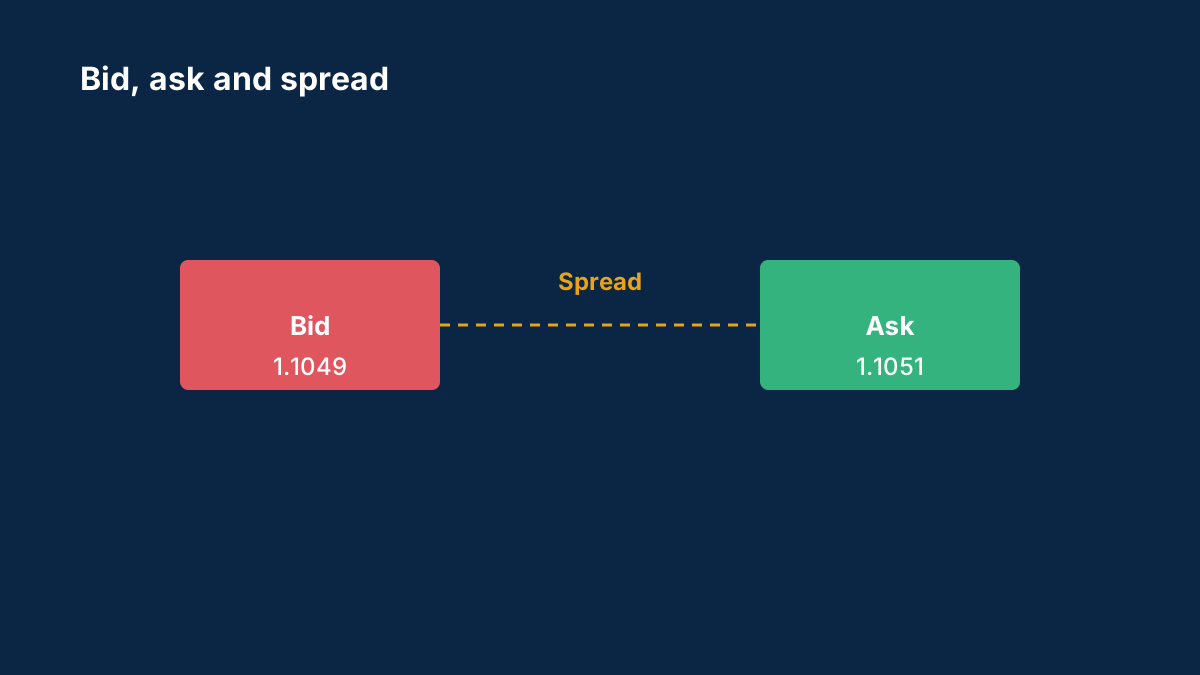
Two risks define the session. The first is the flash move: thin liquidity means a surprise headline can move a pair far beyond its normal range in minutes, and stops fill nowhere near their levels. The defence is the same as every thin-market risk — smaller positions, wider stops anchored to structure, and awareness of the session's news windows. The bid, ask and slippage guide covers the fills.
The second risk is boredom — the quiet session's most reliable account-drainer. The range's narrowness tempts traders into forcing trades the session never offered, and the spread on each one compounds the damage. The cure is the session's honest expectation: less is the plan.
The Asian session rewards the patient twice — once in its own quiet hours, and again when its range becomes the day's first structure for everyone else. Trade it small and carefully, or simply mark its range and let London do the work; either way, the market's quietest shift is one of its most useful.
Sources
Common questions
What time is the Asian forex session?
From the Sydney open around 21:00 UTC through Tokyo's close, with Tokyo's hours as the core. The exact times shift with daylight saving — the sessions page on this site tracks them.
Which pairs trade best in the Asian session?
The yen pairs — USD/JPY and the yen crosses — carry the session's real liquidity and react to its news. Dollar pairs without a yen leg drift in thin ranges.
What is the Asian range?
The high-low range the session trades while Europe sleeps. London's open tests it, and the break or failure of its extremes sets the day's direction — which is why traders who never trade Asia still mark its range.
Is the Asian session good for beginners?
Its calm is forgiving, but its thin liquidity can produce sharp spikes on news, and its narrow ranges tempt overtrading. Small positions, yen pairs and the range's edges are the beginner-friendly version.
Why are Asian session spreads wider?
Liquidity is thin outside Europe and North America, so market makers charge more for the risk of providing prices. The spread is part of the session's cost and argues for fewer, better trades.
This article is for information only and is not financial advice. Trading forex and CFDs carries a high risk of losing money. Read the risk warning. Spotted an error? Tell the editors.
Comments
Log in to join the discussion. Comments follow the community guidelines.
Log in to commentLoading comments…