How to choose a forex broker: the 2026 checklist
The broker is the most important business decision a trader makes, and the marketing makes it hard. Here is the checklist that cuts through it — regulation first, costs second, everything else after.
The broker is the only counterparty in every trade you will ever place — the firm that holds your money, executes your orders and stands between you and the market. Choosing one is the most important business decision a trader makes, and the industry's marketing is designed to make it badly: bonuses, spread promises and award logos compete for attention while the details that matter sit in the fine print.
This guide sets out the checklist that cuts through the marketing, in priority order. The regulation verification is covered step by step in how to check if a forex broker is regulated, and the broker profiles on this site apply the checklist's first half for you.
Step one: regulation — the gate
Regulation is the first filter because nothing else matters if the broker can disappear with the money. The check has three parts:
Which regulator? The regulator decides the protections: client money segregation, negative balance protection, compensation schemes, complaint processes. Top-tier regulators — the FCA, ASIC, CySEC, the NFA and their peers — impose real rules with real enforcement. Offshore registers impose far less. The offshore vs top-tier guide lays out the tiers.
Which entity? The brand is not the counterparty. The same broker name usually runs multiple entities — a regulated one for strict jurisdictions, an offshore one for everyone else — and the protections follow the entity, not the logo. The client agreement names your entity, and the checklist requires checking it.
Verify on the register. A licence number on a website proves nothing; the check that matters is finding the entity on the regulator's own register with the matching name and domain. The regulation check guide has the step-by-step for each major regulator.
A broker that fails step one is out — no costs, no platform, no bonus outweighs the counterparty risk.
Step two: costs — the economics
Costs decide whether the strategy can be profitable, and they come in layers:
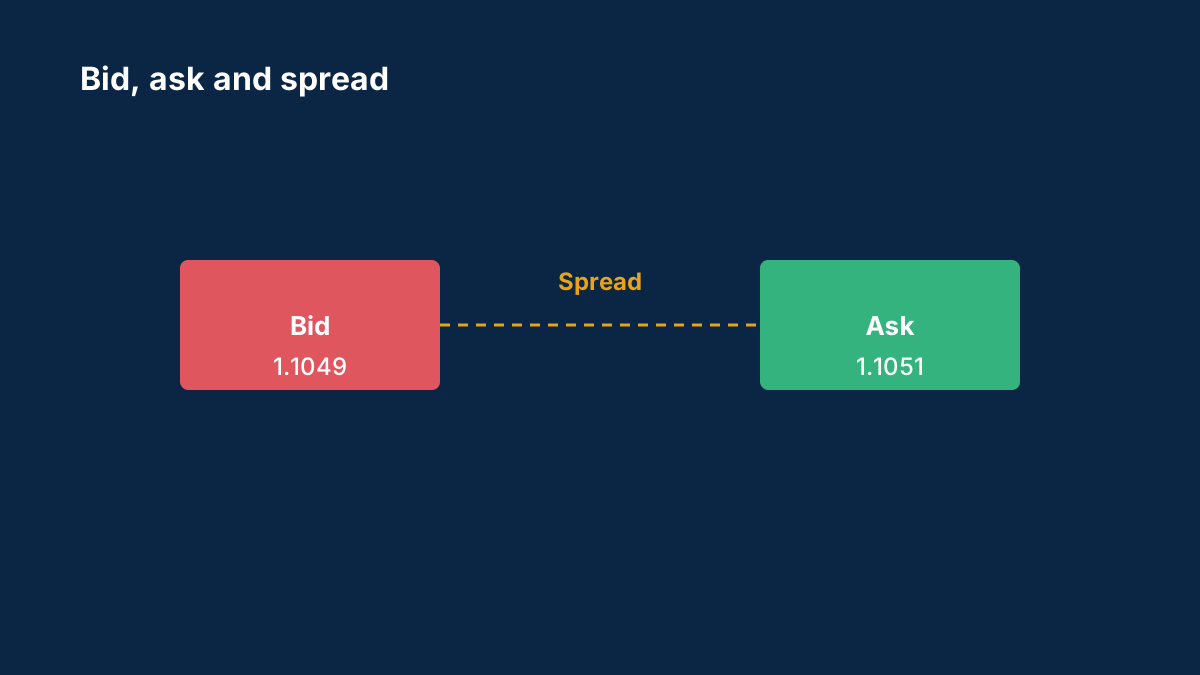
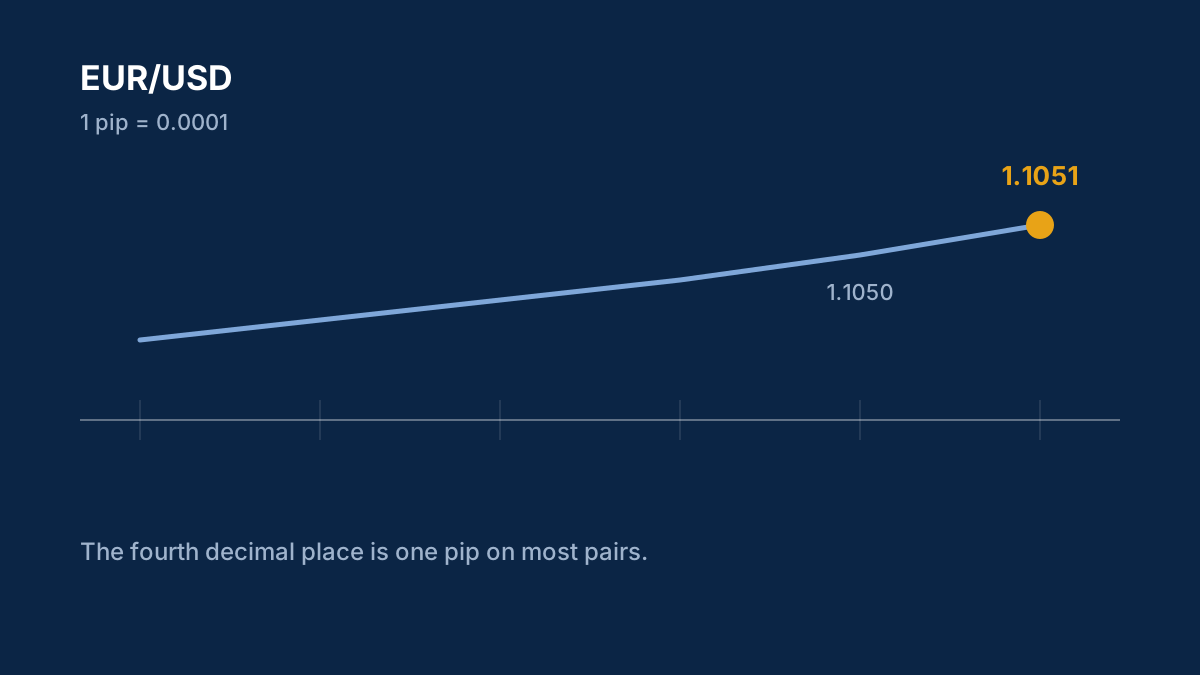
The spread. The broker's per-trade price, checked on the pairs and in the sessions you actually trade — not the advertised minimum. The trading costs guide explains how to compare spreads properly.
Commissions. Raw accounts charge per lot on top of near-zero spreads; standard accounts build the cost into the spread. The comparison that matters is the all-in cost per trade on your size and frequency.
Swap. The overnight financing on held positions, checked per pair and per direction — the differences between brokers are wider than most traders realise.
The hidden fees. Withdrawal fees, conversion charges, inactivity fees. The terms document lists them all; the checklist reads it.
The cost comparison is only meaningful on the same pair, same session, same account type — which is why the broker profiles standardise the comparison rather than trusting each broker's marketing.
Step three: execution — the fills
Execution quality decides what the costs actually are in practice. The checklist items:
The execution model. The order execution policy describes how orders are handled — the document worth reading before funding. The bid, ask and slippage guide explains the models the policy describes.
Slippage in practice. Every broker slips in fast markets; the question is how often, how much, and whether it ever goes in your favour. First-hand accounts in the community's broker experience threads are the practical data.
Platform stability. The platform that freezes during news is an execution problem. The platform comparison guide covers the options.
Step four: the practicalities
With the gate passed and the economics checked, the remaining items are practical:
Deposits and withdrawals. Which methods work in your country, what they cost, and how long withdrawals actually take. The withdrawals guide explains the process and the delays.
The platform fit. Whether the broker's platform matches how you trade — the instruments, the order types, the mobile app. The platform you can't trade well on is a cost too.
Support quality. Tested, not assumed: a question to support before funding reveals more than any review page.
The checklist, compressed
The full checklist in order: regulation and entity verified on the register; all-in costs checked on your pairs and sessions; execution model read and slippage understood; deposits, withdrawals and support tested; and the terms document's fine print actually read. The brokers that pass all five are a short list — and that is the point. The choice among the survivors is preference; the filtering is the work.
The regulation check, walked through
The checklist's first step deserves the full walk, because it is the step the marketing is designed to blur. The check, in sequence: open the client agreement and find the entity name — the legal company, not the brand; find the regulator the entity claims; open the regulator's own register, typed into the browser yourself; search the entity; and match the website domain against the register's authorised domains. The domain match is the decisive step: a broker whose site is not on the register's domain list is not the regulated firm, whatever the logo says. The regulation check guide has the step-by-step for each major regulator, and the fake broker guide covers the cloned-website case the check exists to catch.
The walk's practical form is a twenty-minute pre-funding routine, and its value is binary: the check passes or the broker is out. The broker profiles on this site run the check's first half for the listed firms — the entities, the regulators and the verified licences — which is why the profiles are the sensible starting point rather than the brokers' own websites.
The costs, compared properly
The cost step's detail is the comparison method, because the brokers' marketing makes apples-to-oranges the default. The method: the same pair, the same session, the same account type, the all-in cost per trade. The all-in cost is the spread plus the commission plus the swap for the holding period — the three layers the trading costs guide decomposes. A broker advertising "0.6 pips" with a $7 commission per lot is not cheaper than one advertising 1.2 pips with no commission until the trader's own size and frequency are plugged in: at half a lot, the first costs $3.70 per round trip, the second $6 — the comparison reverses at different sizes, which is why the advertised numbers never settle it.
The comparison's practical tools: a simple spreadsheet with the three layers per broker, filled in from the platforms' live quotes rather than the marketing pages. The broker experience threads carry the community's real-time spreads and swaps, and the trading costs guide supplies the arithmetic the comparison runs on.
The execution step's evidence
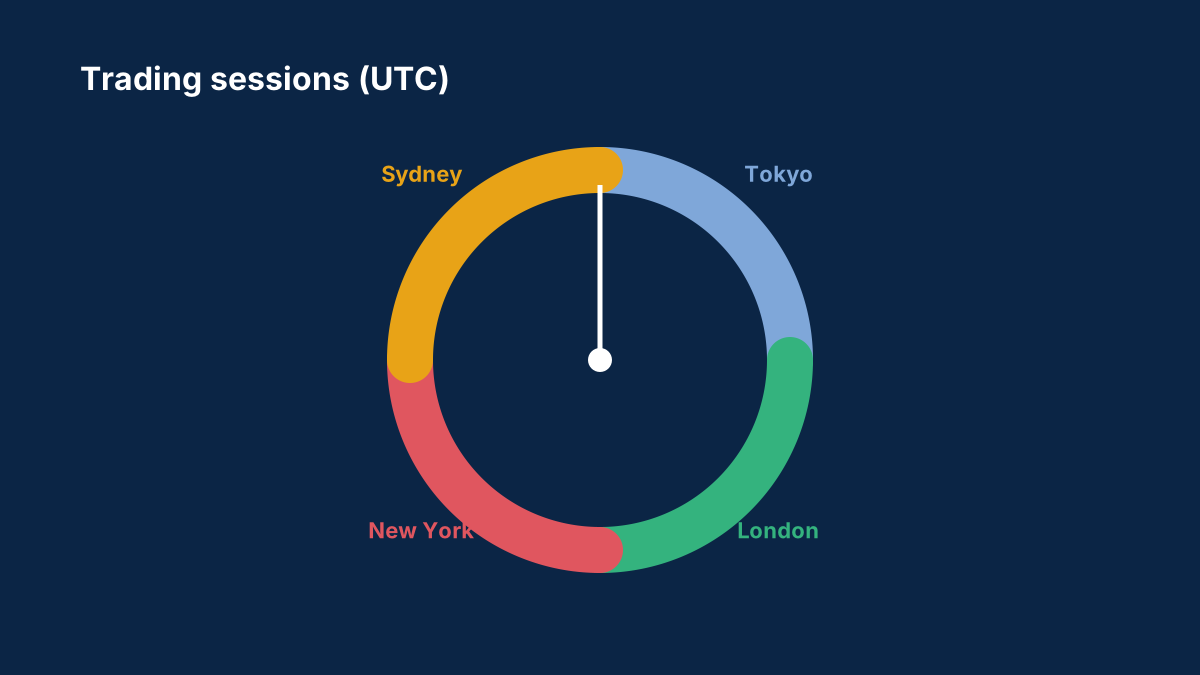
The execution step's honest difficulty is that the marketing pages describe the policy, not the fills — and the fills are what the trader pays. The evidence that bridges the gap: the order execution policy, read for the model's name and the fast-market clauses; the slippage data from the trader's own early trades, logged against the requested prices; and the community's broker experience threads, where the fills' real behaviour is documented trade by trade. The bid, ask and slippage guide covers what the evidence should show; the why spreads widen explainer covers the moments — news, rollover — when the execution quality is actually tested.
The execution step's practical rule: test before trusting. A small funded account's first weeks are the execution evidence — the slippage log, the spread observations, the platform's stability through a news event — and the evidence, not the brochure, decides whether the account grows. The demo-to-live guide covers the staged approach that makes the testing cheap.
The practicalities, tested not assumed
The checklist's final step is the practicalities, and the practicalities' rule is the same as the execution's: test before trusting. The deposit and withdrawal methods deserve a live test — a small deposit, a small withdrawal, and the timelines measured — because the withdrawal's friction is the broker's true character, revealed early. The withdrawals guide covers what a genuine process looks like, and the first withdrawal is the test that separates it from the marketing. The support quality gets the same treatment: one real question before the serious money, and the response's speed and substance are the data. The platform fit is the final check — the instrument list, the order types and the mobile app, tested against how the trader actually trades — because the platform that does not fit is a cost the checklist never measured.
The practicalities' output is the checklist's last filter, and the traders who run the full sequence — regulation, costs, execution, practicalities — usually end with a short list of nearly equivalent brokers, and the choice among them is genuinely preference. The filtering was the work, and the work is what the marketing never does for you.
The broker decision compounds for years — every spread, every fill, every withdrawal lives with the choice. Run the checklist in order, verify everything, and the most important business decision in trading becomes the most boring one — which is exactly how it should feel.
Sources
Common questions
What should I check first when choosing a forex broker?
Regulation. Which regulator stands behind the account, which entity of the broker you would be trading with, and whether both verify on the regulator's own register. Nothing else matters if the broker can disappear with the money.
Why does the entity matter more than the brand?
The same brand usually runs multiple entities — a regulated one for strict jurisdictions and an offshore one for others. The protections follow the entity named in your client agreement, not the logo on the website.
How do I compare broker costs properly?
On the same pair, in the same session, on the same account type: the spread you actually see, any commission, the swap on held positions, and the hidden fees — withdrawals, conversions, inactivity.
Is a lower spread always better?
Only at the same all-in cost. A raw account with a tight spread and a commission can cost more than a standard account with a wider spread, depending on your trade size and frequency.
What is the order execution policy?
The document describing how the broker handles orders — the execution model, how prices are sourced, and what happens in fast markets. It is worth reading before funding, because it describes the fills you will actually receive.
This article is for information only and is not financial advice. Trading forex and CFDs carries a high risk of losing money. Read the risk warning. Spotted an error? Tell the editors.
Comments
Log in to join the discussion. Comments follow the community guidelines.
Log in to commentLoading comments…