News
Forex news and guides: page 6
Central bank decisions, economic data, gold and oil, and plain-English guides to how currency trading works. Every article links to its primary sources.
More articles
Black Wednesday, 16 September 1992: how sterling crashed out of the ERM
On 16 September 1992 the UK raised interest rates and spent billions defending the pound, then left the Exchange Rate Mechanism that evening. What happened, why, and what changed afterwards.
The Swiss franc shock of 15 January 2015: when the SNB scrapped the 1.20 floor
The Swiss National Bank abandoned its minimum exchange rate of CHF 1.20 per euro without warning, and the franc jumped within minutes. What happened, why, and what it taught traders about risk.
The Plaza Accord of 1985: when five nations agreed to push the dollar down
On 22 September 1985 the finance ministers and central bank governors of five major economies agreed the dollar should fall. How the Plaza Accord worked, what followed and why traders still mention it.
From Bretton Woods to floating exchange rates: 1944, 1971 and 1973
How the post-war system of fixed exchange rates was built at Bretton Woods, why President Nixon closed the gold window in 1971, and how today's floating currency market began.
The Asian financial crisis of 1997: how the baht's collapse spread across a region
Thailand floated the baht on 2 July 1997, and currency pegs across East Asia gave way within months. What caused the crisis, how it spread and what currency traders can learn from it.
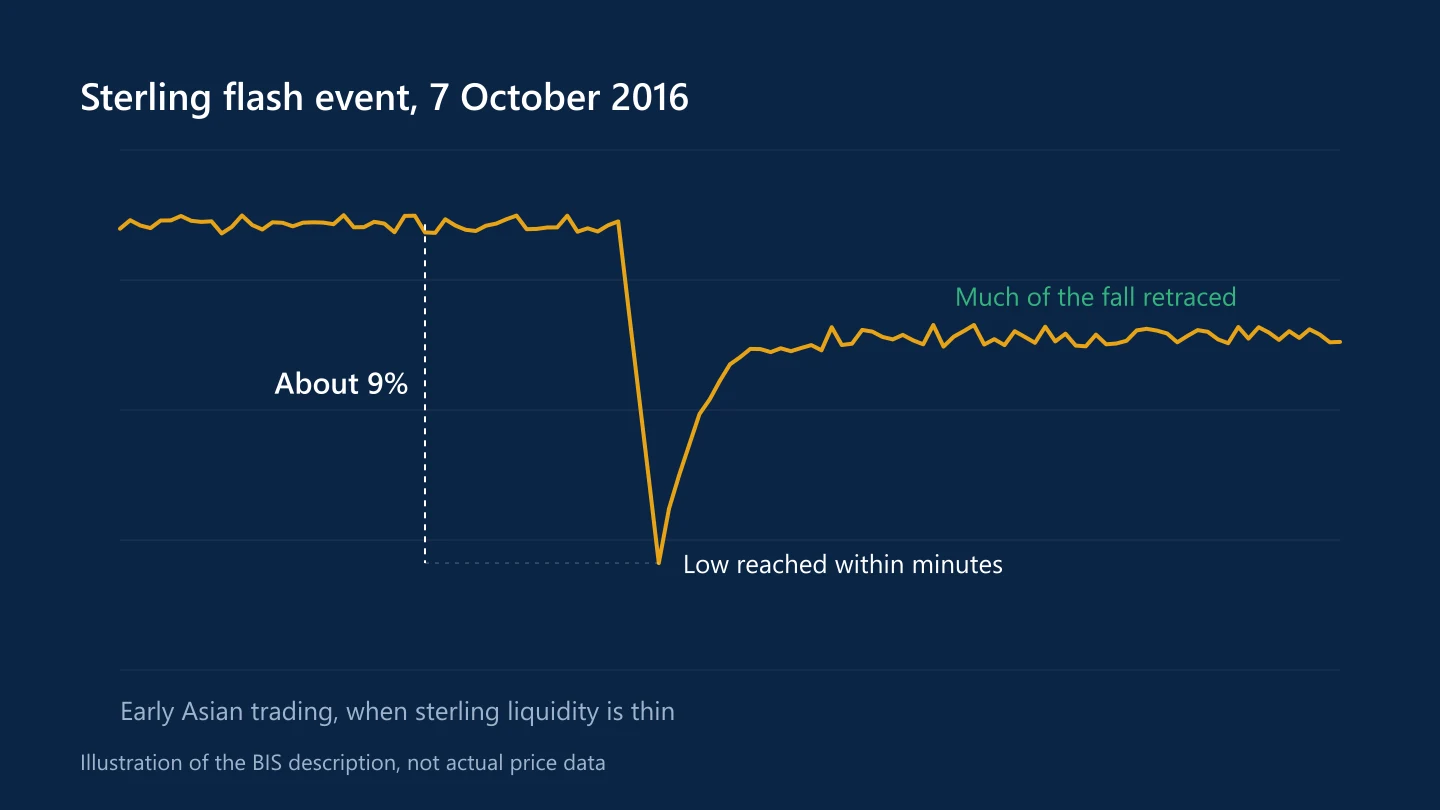
The sterling flash crash of 7 October 2016: what the BIS investigation found
Sterling fell about 9% against the dollar in early Asian trading before recovering much of the move. The BIS found no single cause. What it concluded, and what it means for your stops.
The euro explained: its history and the 21 euro area countries
The euro launched in 1999, notes and coins followed in 2002, and Bulgaria became the 21st member on 1 January 2026. How the euro area grew, how countries join and what it means for EUR/USD.
The Hong Kong dollar peg explained: how the 7.75–7.85 band works
Hong Kong has linked its currency to the US dollar since 1983. How the Linked Exchange Rate System keeps USD/HKD between 7.75 and 7.85, and which other currency pegs traders should know.
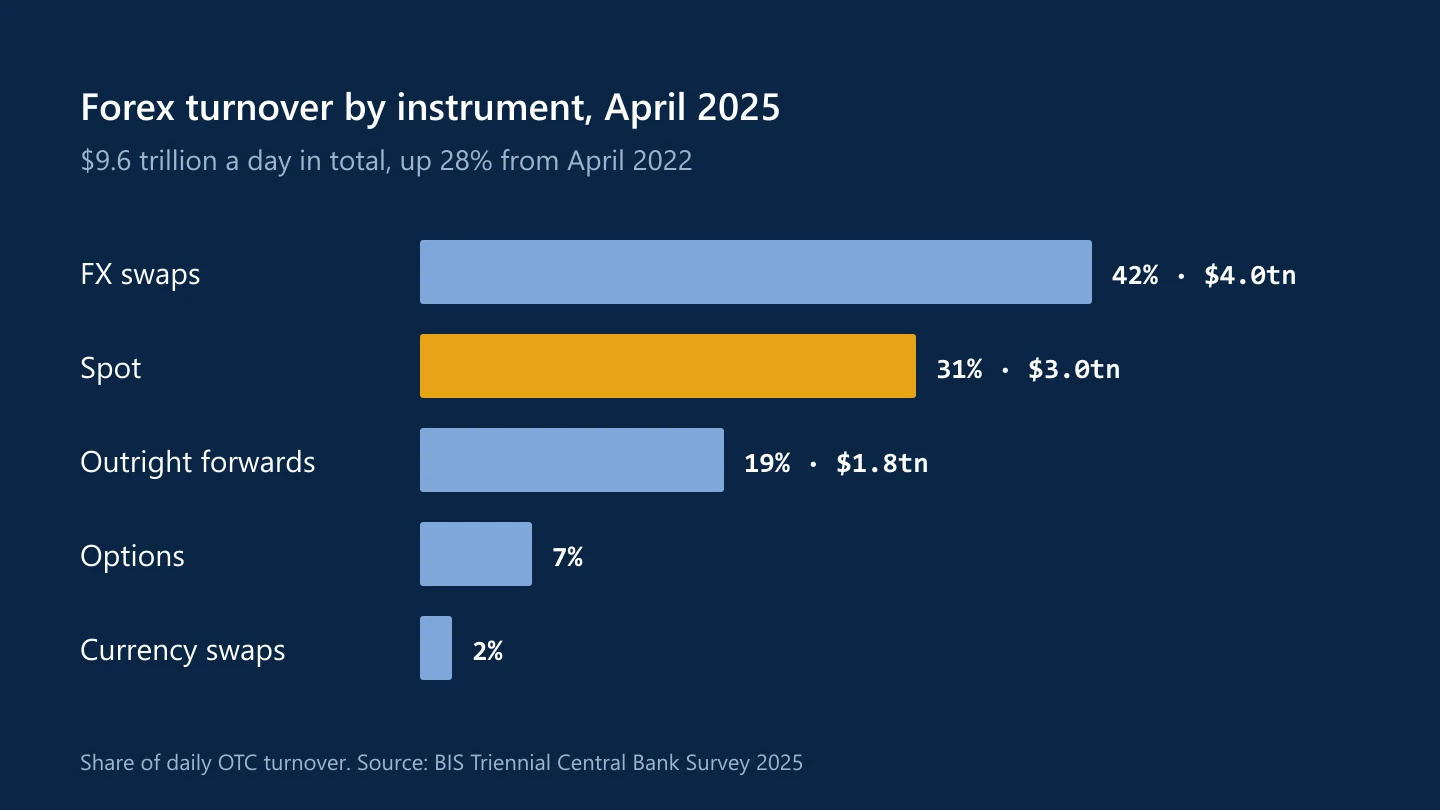
How big is the forex market? $9.6 trillion a day, according to the BIS
The BIS Triennial Survey found foreign exchange turnover averaged $9.6 trillion a day in April 2025, up 28% in three years. Where trading happens, which currencies dominate and who is trading.
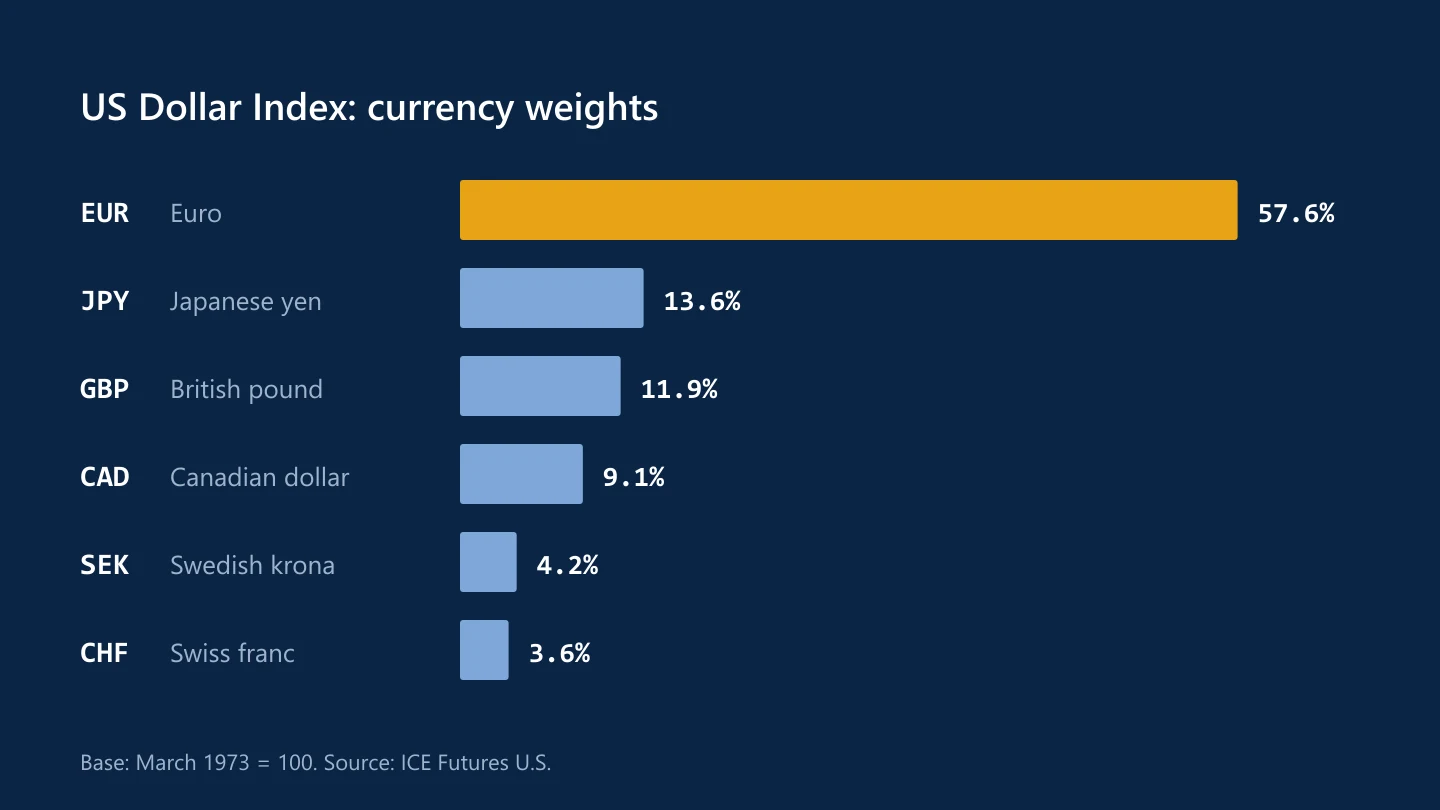
The US Dollar Index (DXY) explained: its six currencies and their weights
The ICE US Dollar Index measures the dollar against six currencies, with the euro at 57.6%. How it's calculated, why its 1973 base and fixed weights matter, and how traders use it.
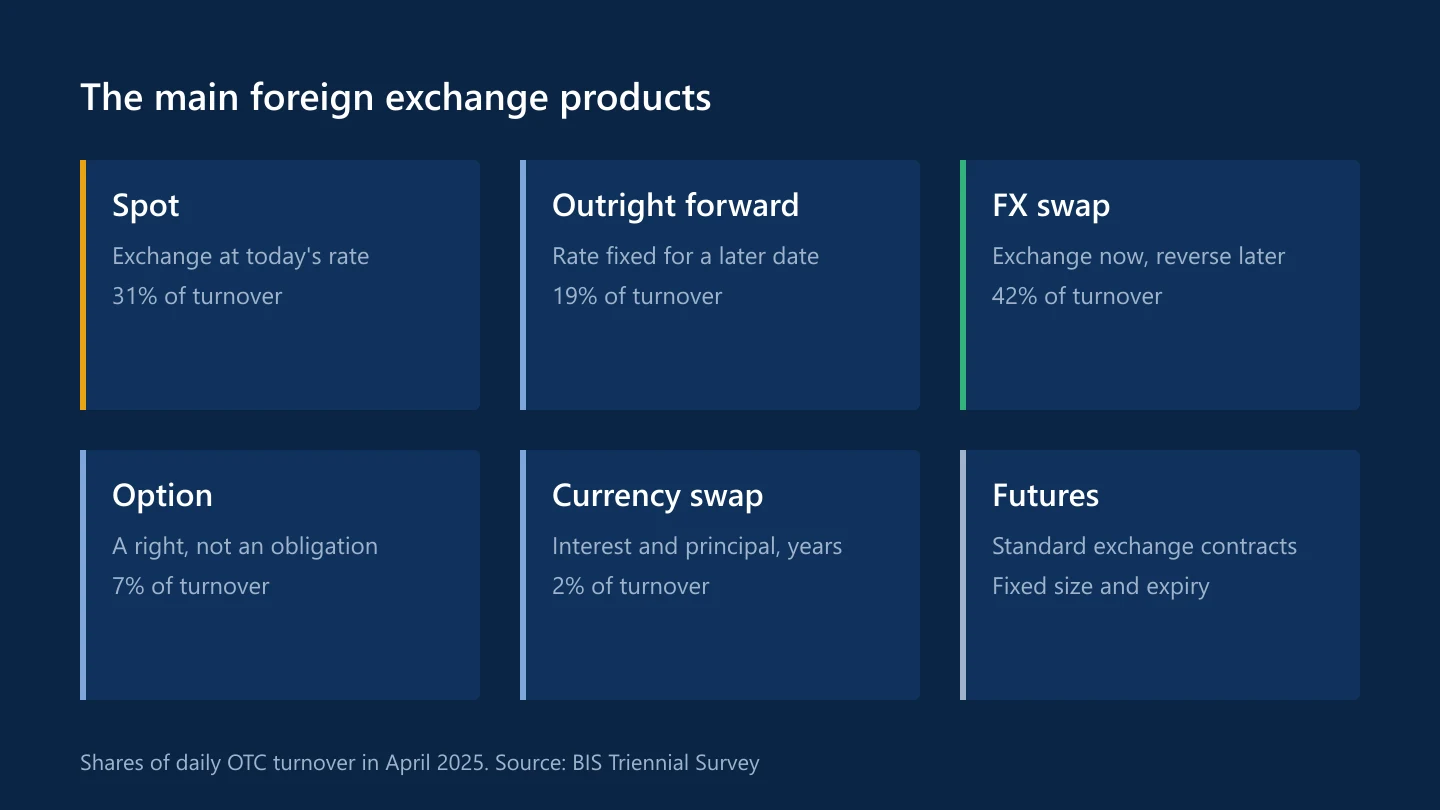
Spot, forwards, FX swaps, options and futures: the forex products explained
FX swaps, not spot trades, are the biggest part of the $9.6 trillion-a-day currency market. A plain guide to each foreign exchange product, who uses it, and where retail CFDs fit.
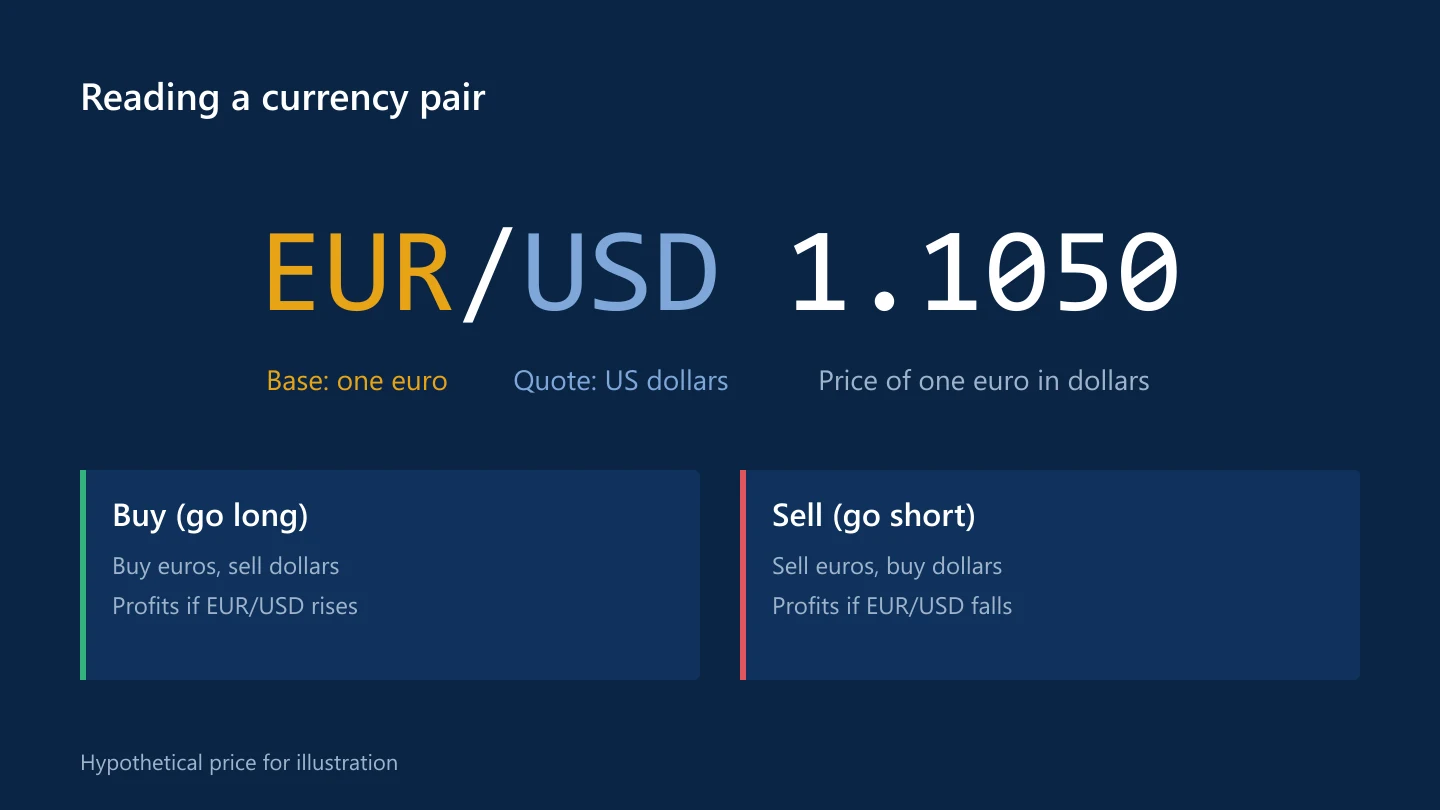
Base and quote currency: how to read a currency pair and go long or short
In EUR/USD at 1.1050, the euro is the base and the dollar is the quote. How to read a quote, what buying and selling a pair means, and why profit and loss start in the quote currency.
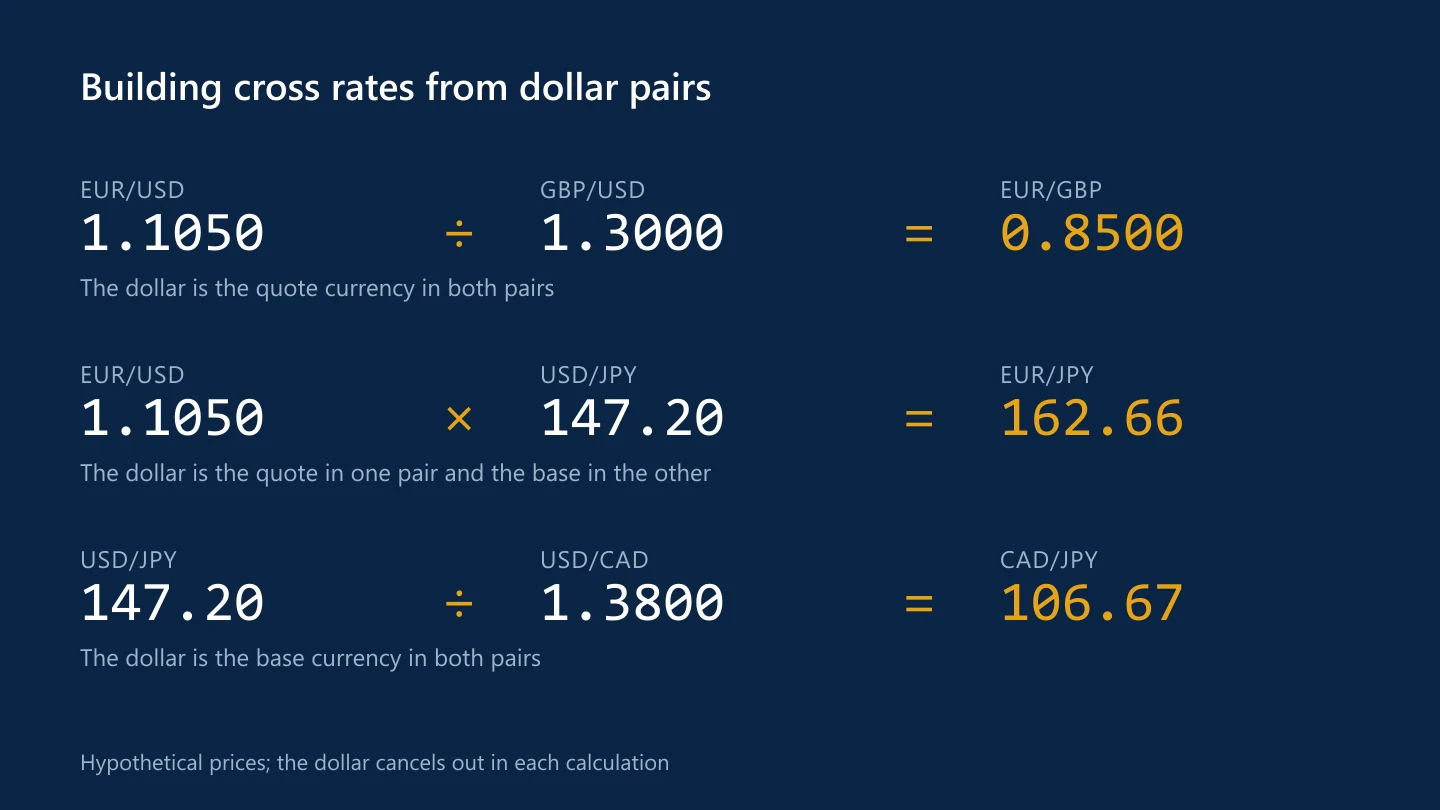
Cross rates explained: how EUR/GBP and EUR/JPY are calculated from dollar pairs
A cross rate is an exchange rate between two currencies that doesn't include the US dollar. How cross rates are derived from dollar pairs, with worked examples, and why crosses often cost more to trade.
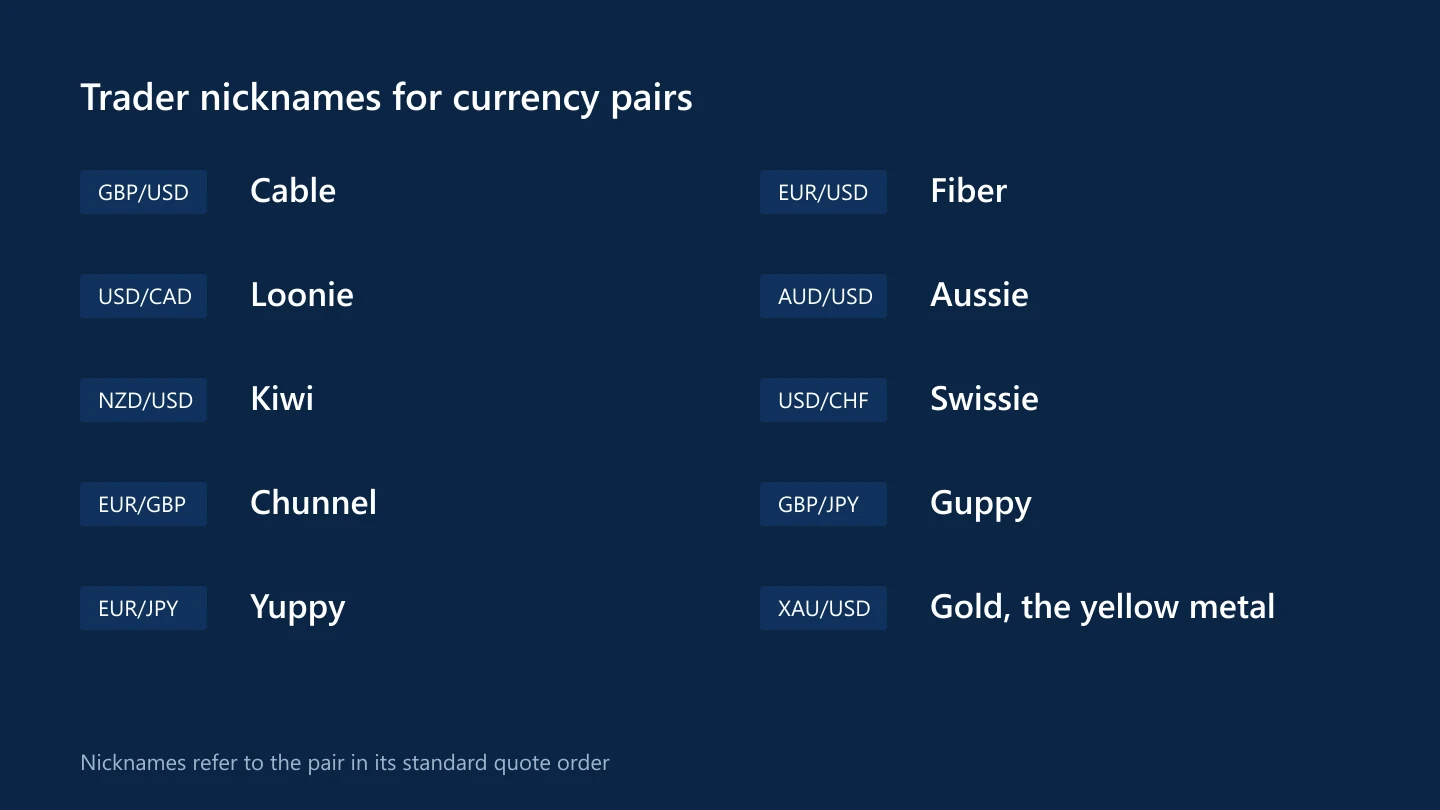
Currency pair nicknames: cable, fiber, loonie, aussie, kiwi and more
Why GBP/USD is called cable, where the loonie got its name, and the other nicknames traders use for currencies, pairs and gold, plus how ISO currency codes work.
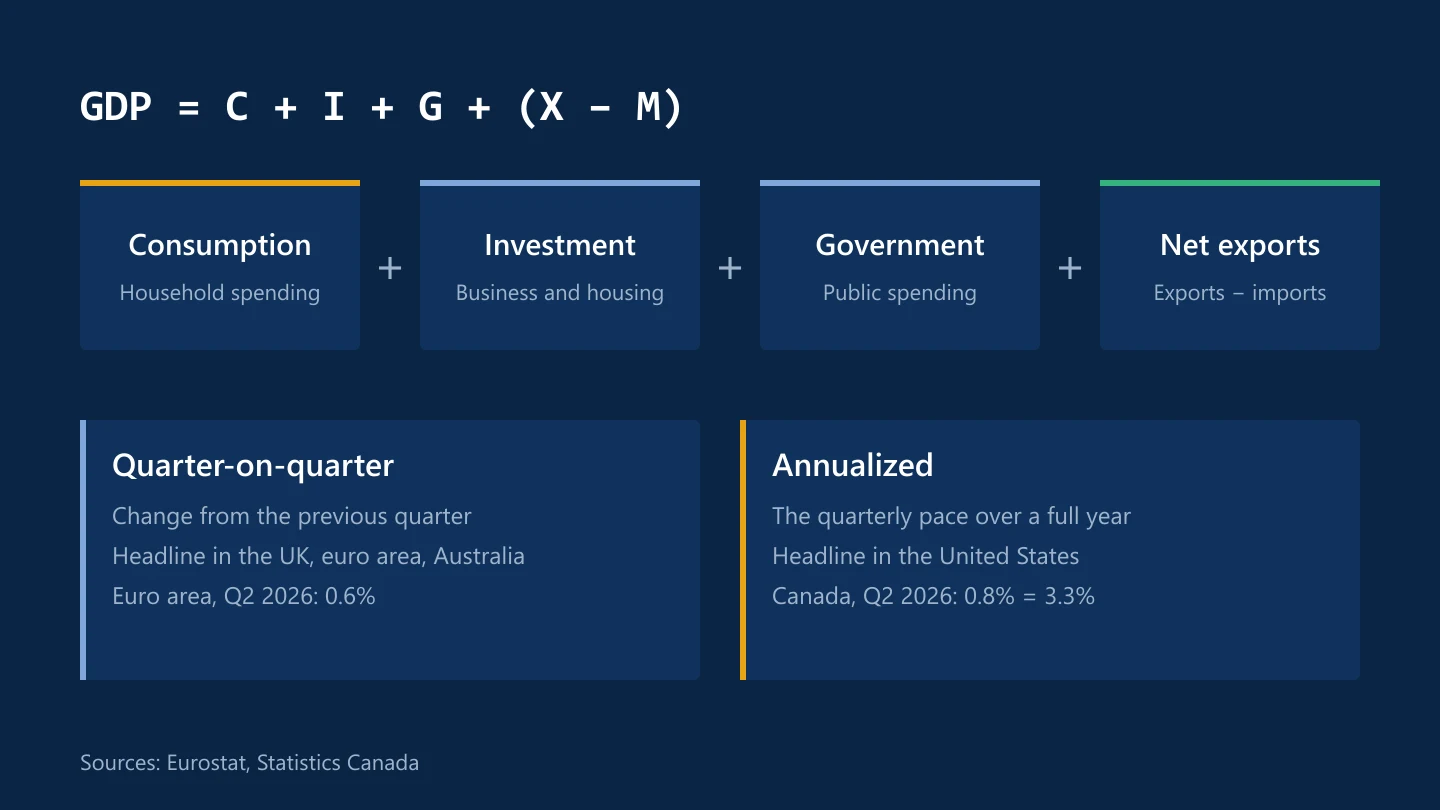
GDP explained for forex traders: quarterly, annualized and monthly growth
GDP measures the size of an economy, but growth is reported differently in the US, Canada, UK, euro area and Australia. How to read a GDP release, what revisions mean and when it moves currencies.
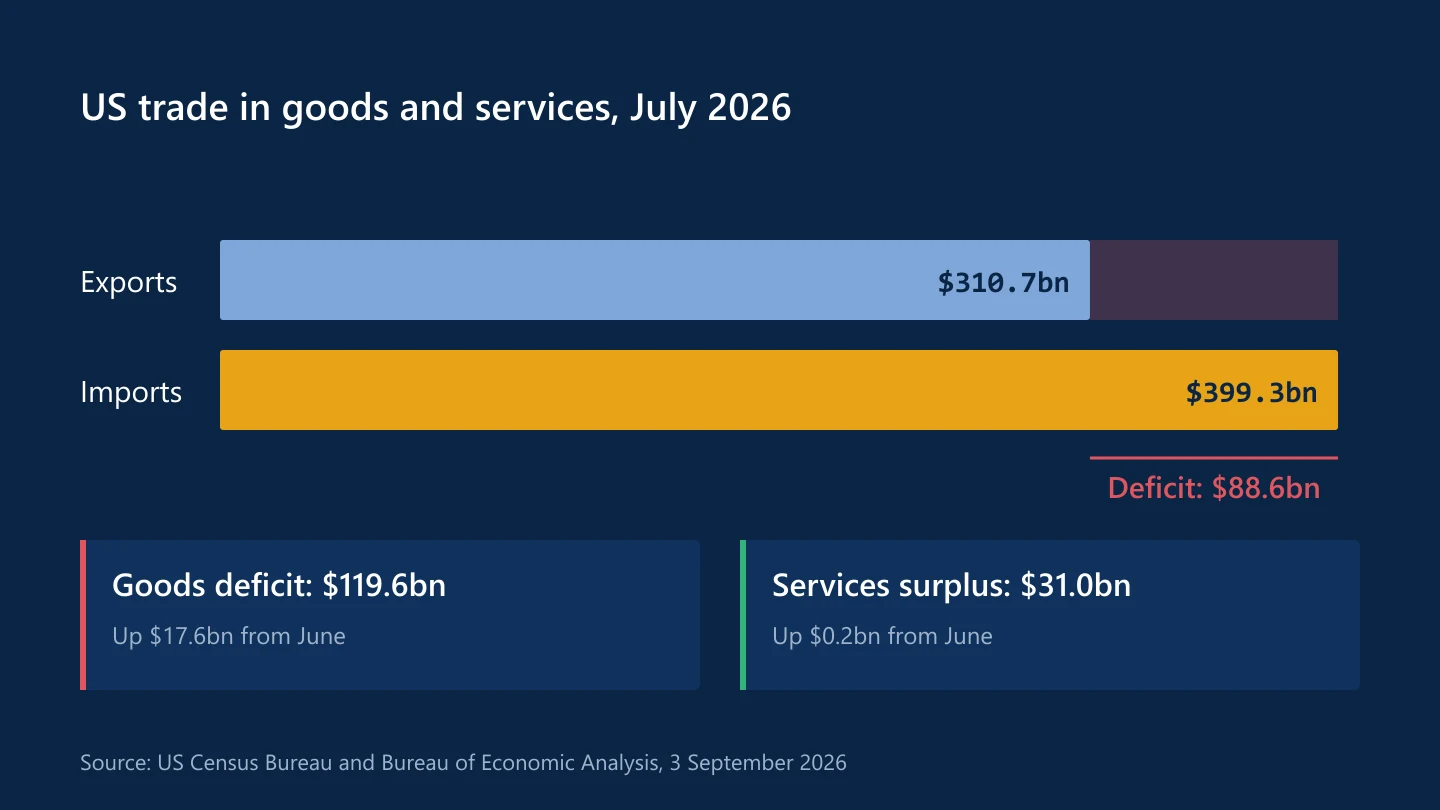
Trade balance and current account explained: do deficits weaken a currency?
The trade balance compares exports with imports; the current account adds income and transfers. How they're reported, why a deficit doesn't automatically weaken a currency, and what traders watch.
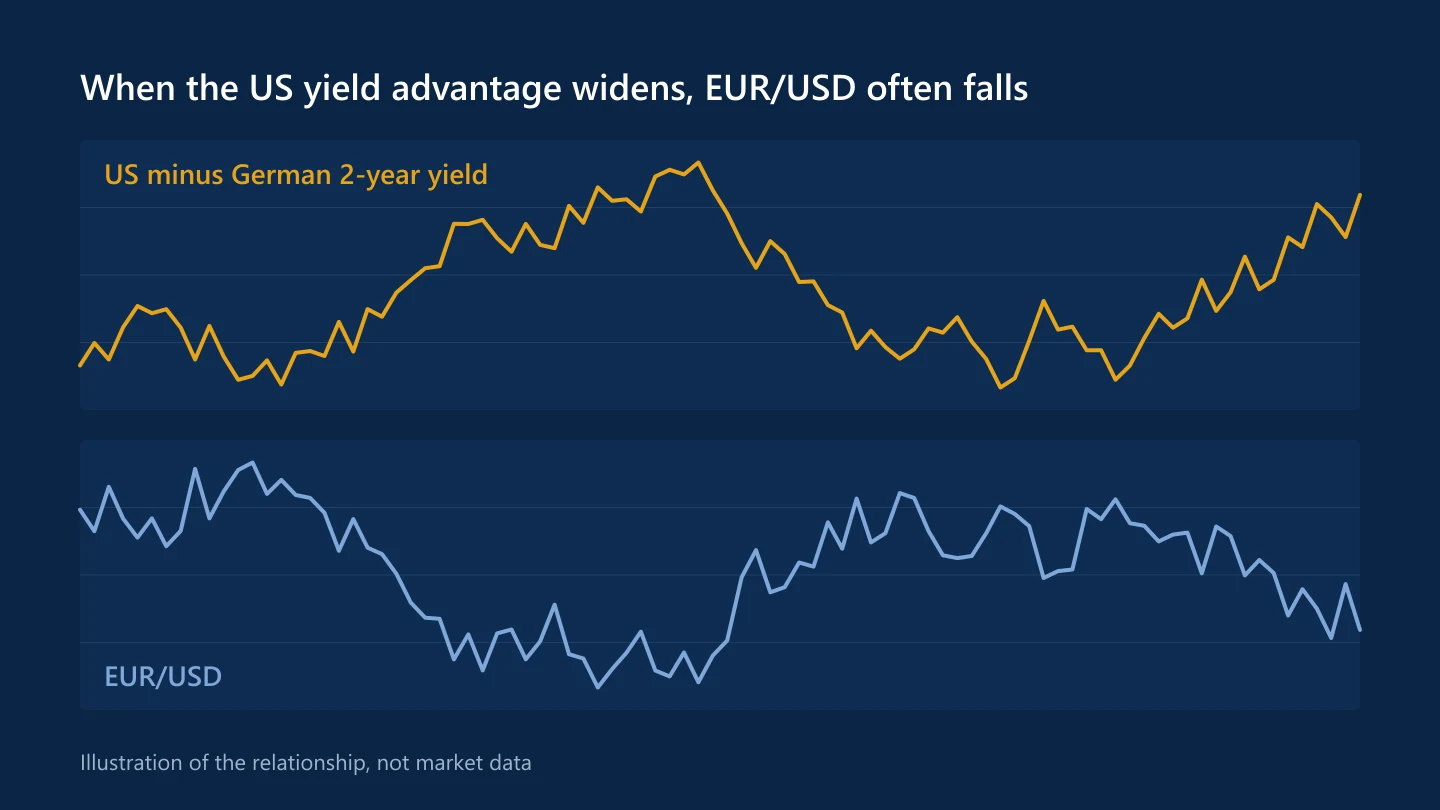
Bond yields and exchange rates: why currency traders watch the 2-year yield
Currencies often follow the gap between two countries' government bond yields. How yield differentials work, why 2-year yields track central bank expectations, and when the link breaks down.
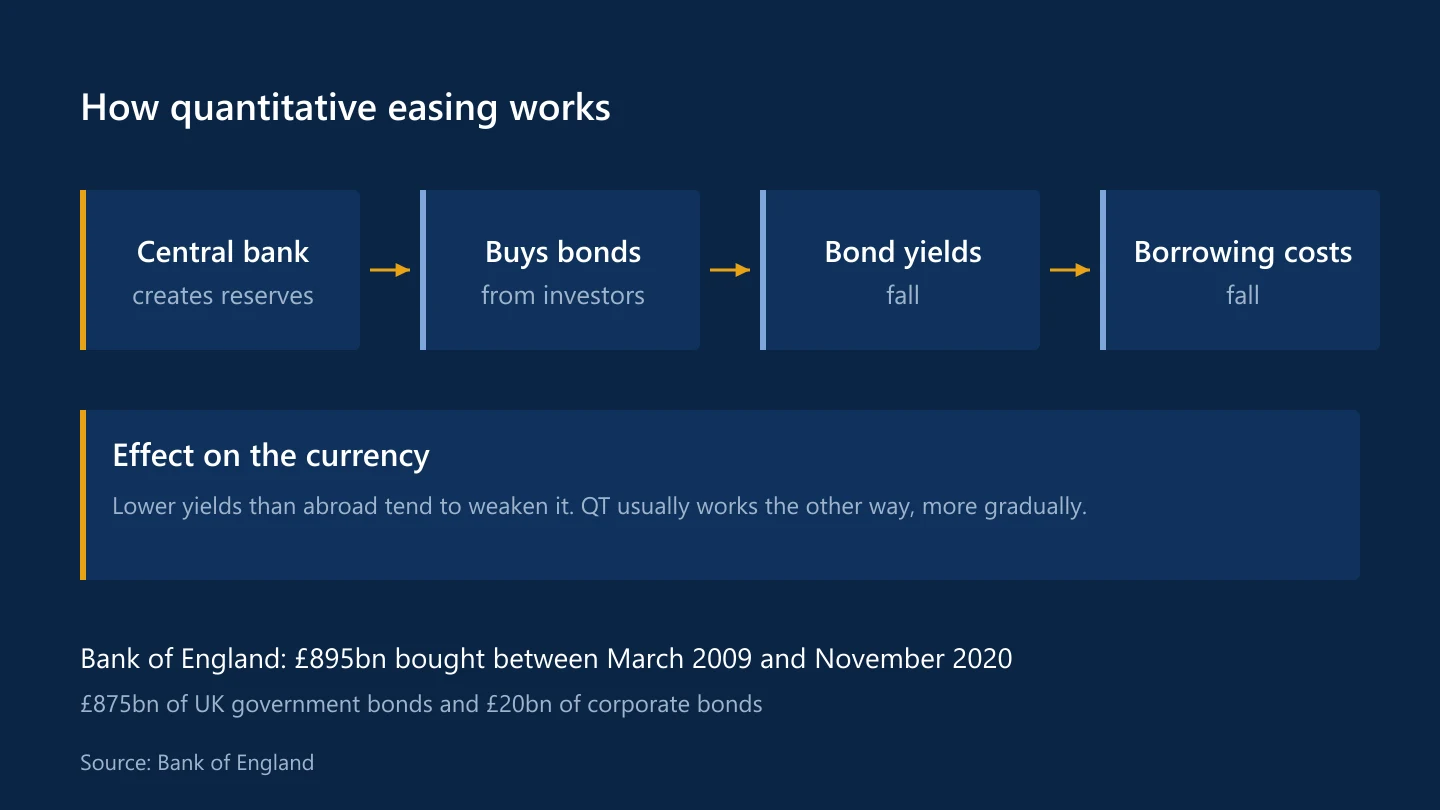
Quantitative easing and quantitative tightening explained
In quantitative easing, central banks create reserves to buy bonds; in quantitative tightening they shrink those holdings. How QE and QT work, the Bank of England's £895 billion programme, and the effects on currencies.
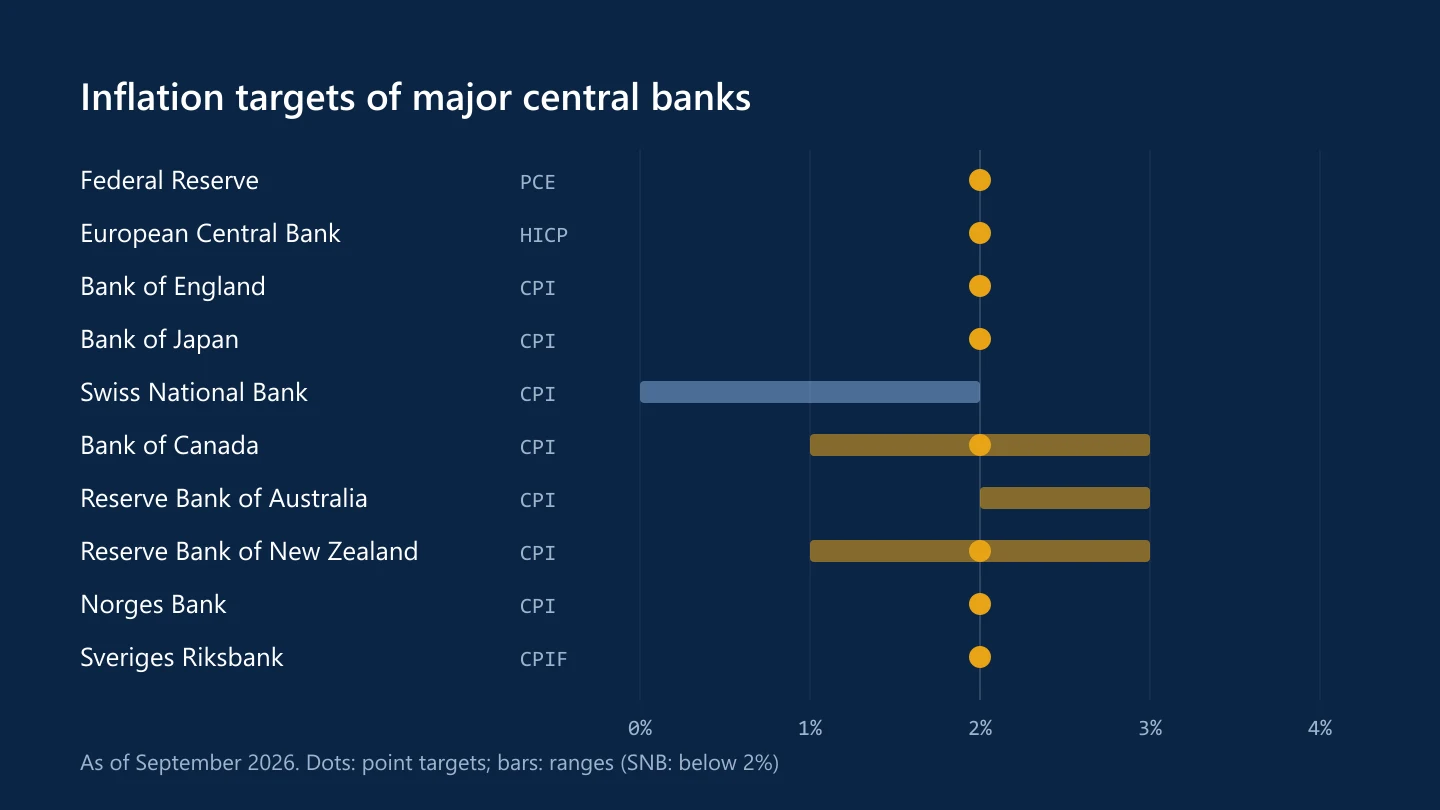
Inflation targets of the major central banks: Fed, ECB, BoE, BoJ, SNB, BoC, RBA and RBNZ
Most major central banks aim for inflation of about 2%, but the measures and ranges differ. A reference guide to each target, how recent inflation compares, and why the details matter for currencies.
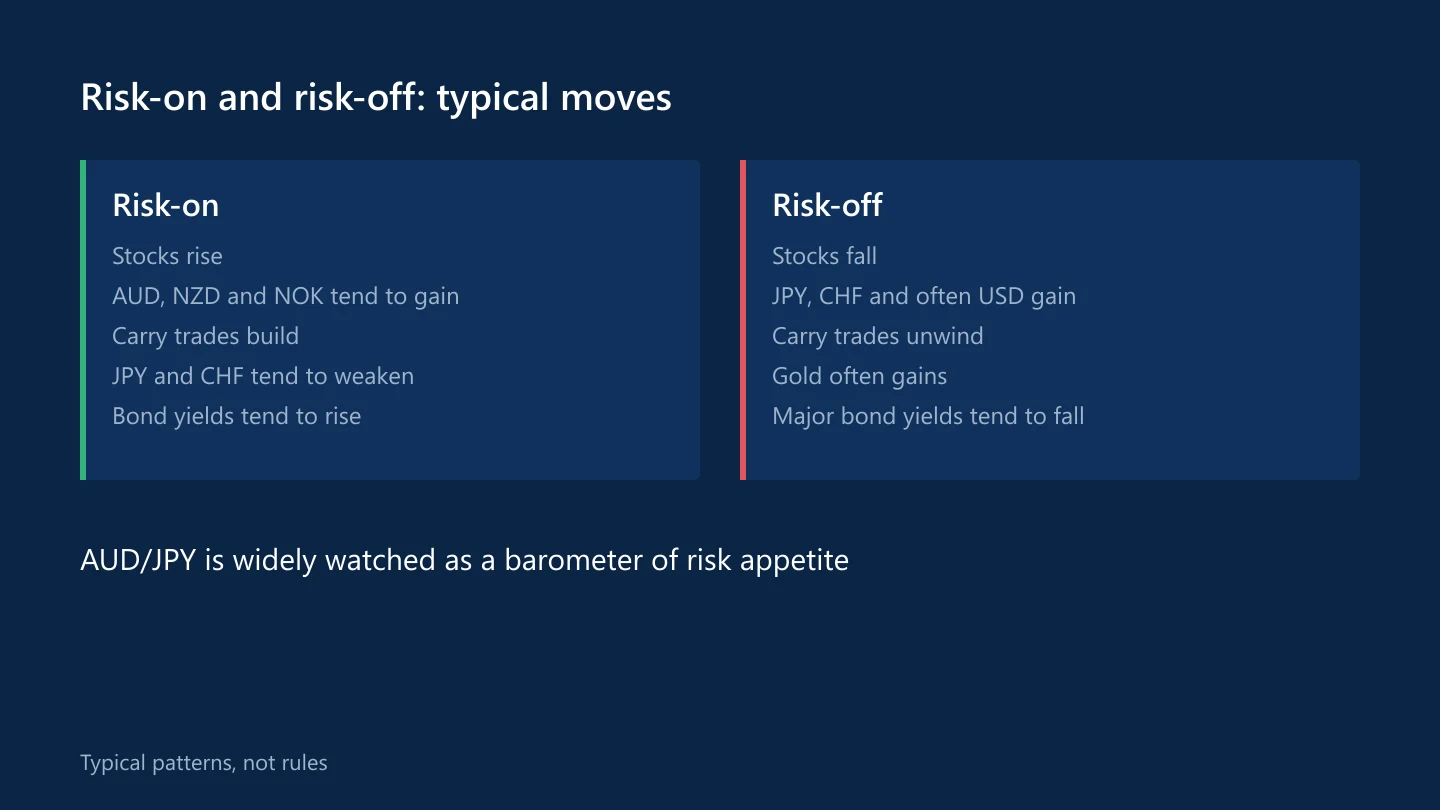
Risk-on, risk-off explained: how market mood moves currencies
When investors feel confident, higher-yielding and commodity currencies tend to rise; when fear takes over, the yen, franc and dollar often gain. How risk sentiment works and how to spot a shift.
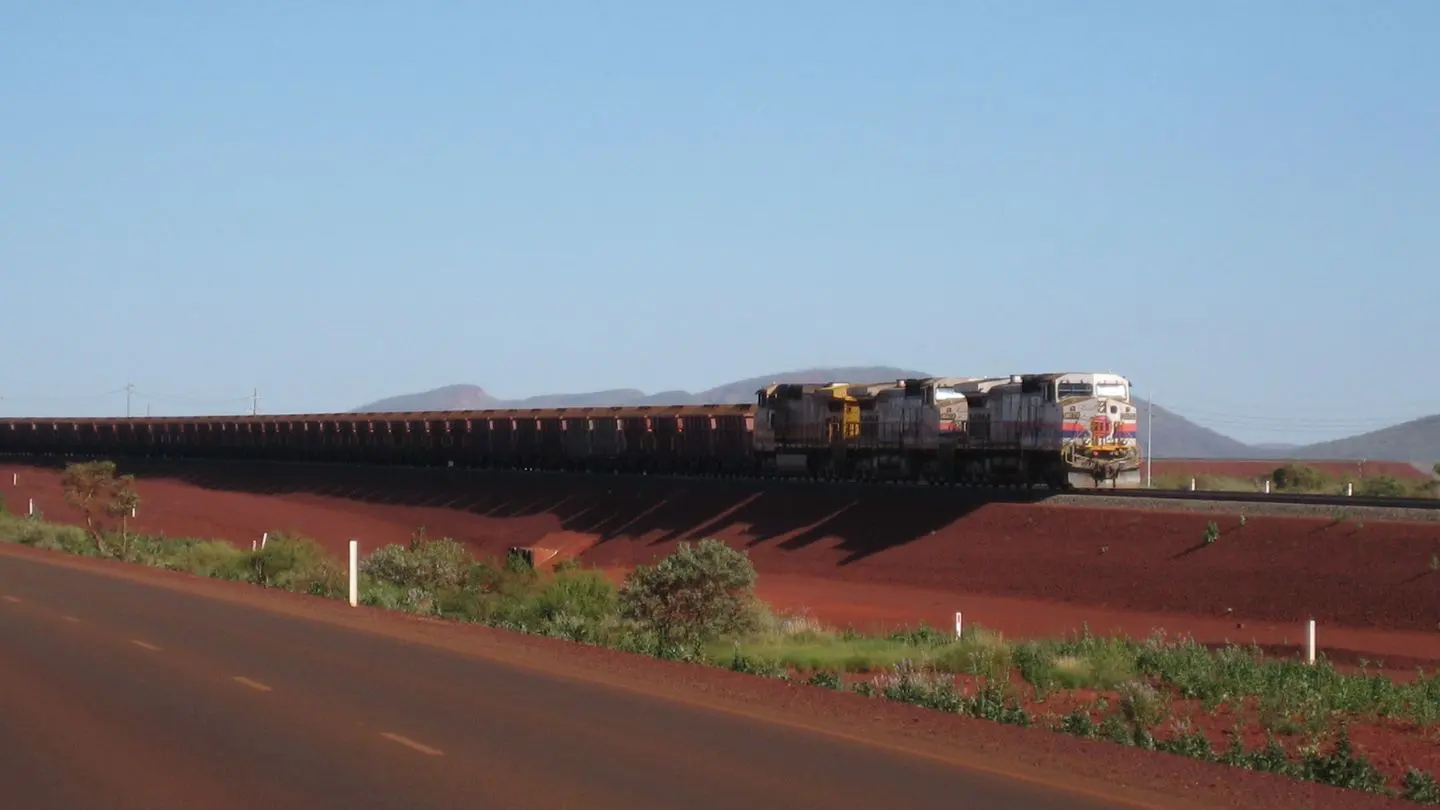
Commodity currencies explained: the Australian, New Zealand and Canadian dollars and the Norwegian krone
Why the currencies of big commodity exporters move with iron ore, dairy and oil prices, what each country actually exports, and when the link weakens.
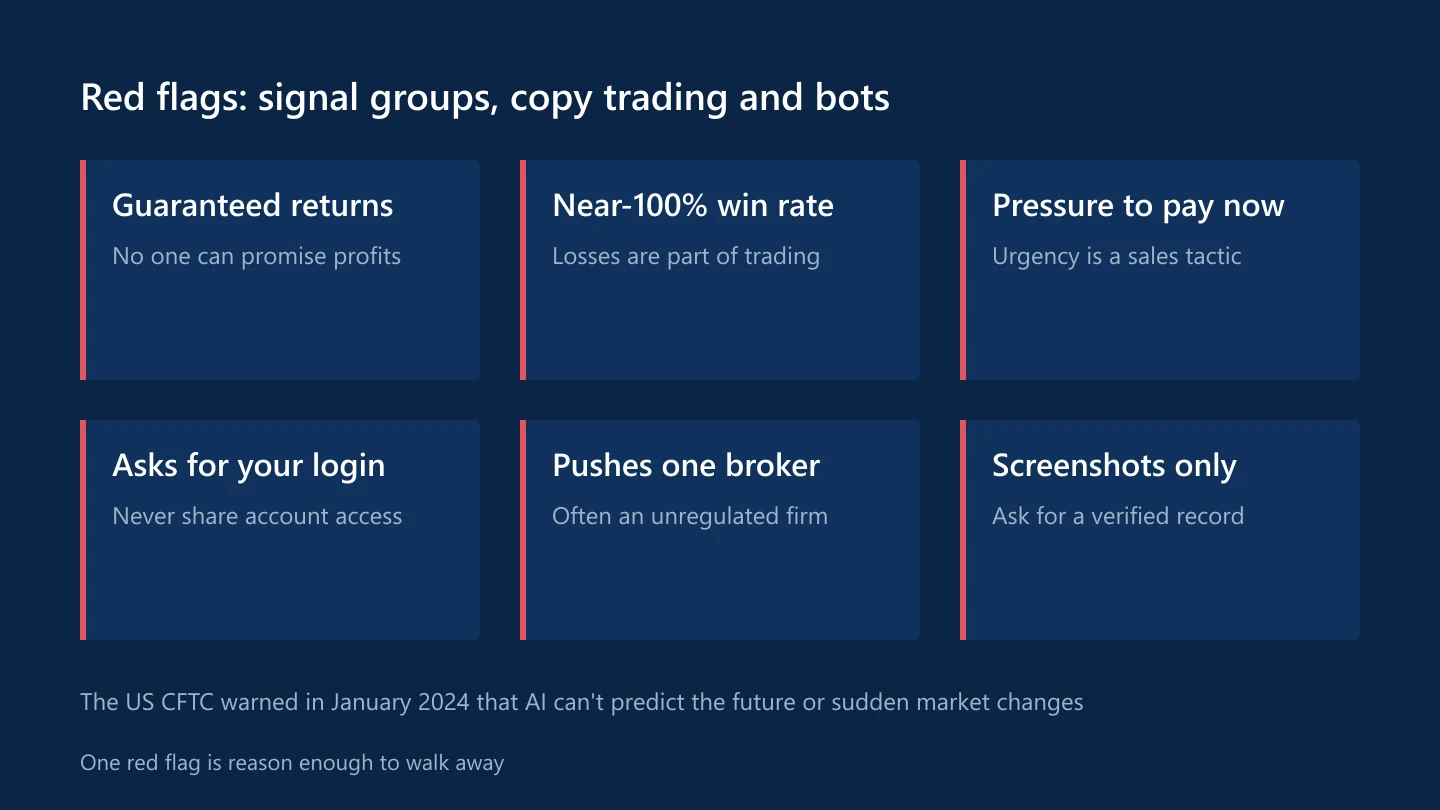
Trading signals, copy trading and bots: the risks and the red flags
Paid signal groups, copy trading and 'AI' trading bots promise shortcuts. What regulators including the CFTC and FCA warn about, the red flags, and what to ask before paying or connecting an account.
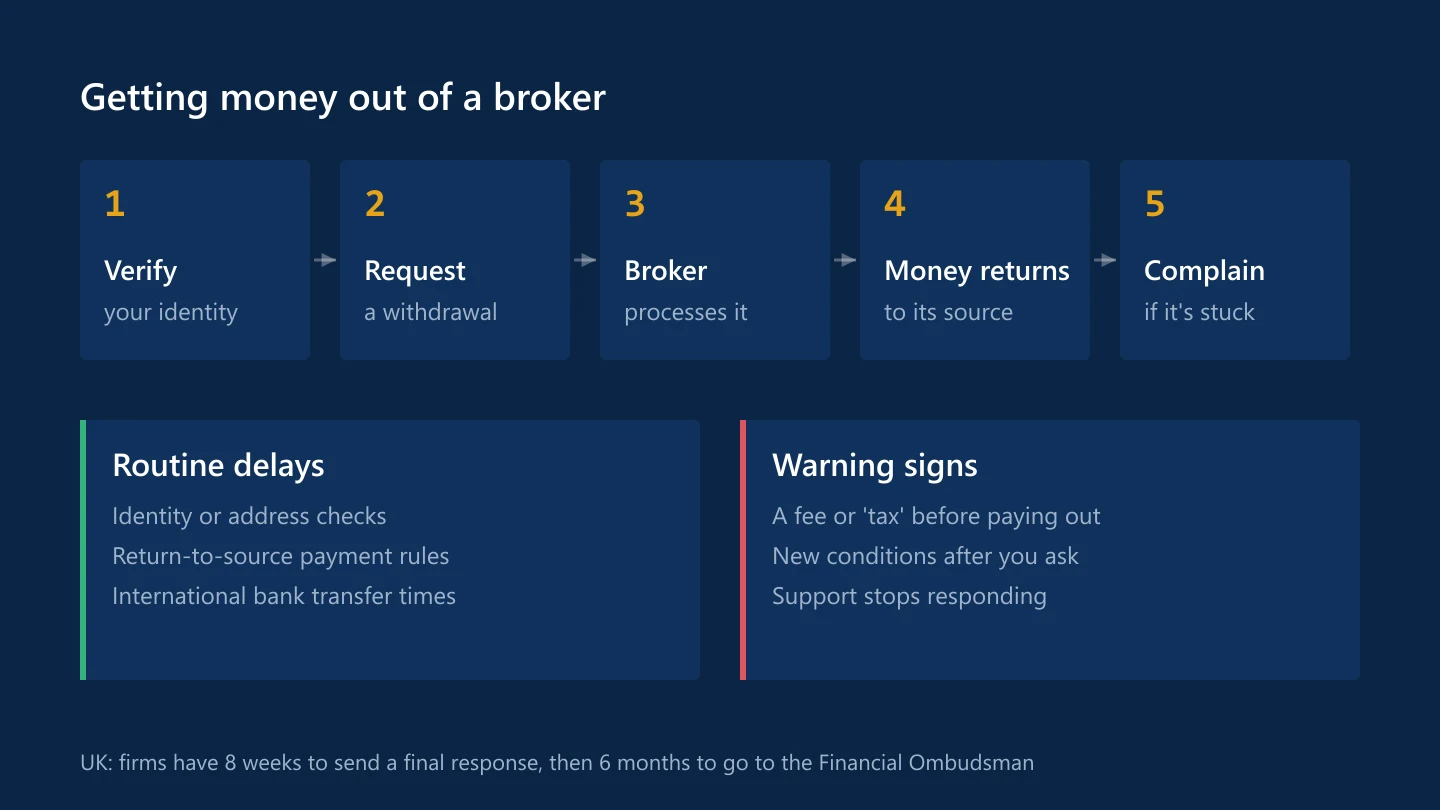
Withdrawing money from a forex broker: verification checks, delays and complaints
Why regulated brokers ask for ID and proof of address, how withdrawals normally work, which delays are routine and which are warning signs, and how to escalate a complaint.