News
Forex news and guides: page 4
Central bank decisions, economic data, gold and oil, and plain-English guides to how currency trading works. Every article links to its primary sources.
More articles
US consumer sentiment falls to 47.8 as year-ahead inflation expectations jump to 4.6%
The University of Michigan's preliminary September 2026 index fell to 47.8 from 51.7, and consumers' year-ahead inflation expectations rose to 4.6% from 4.0%.
UK economy grows 0.4% in July, led by services
Monthly GDP rose 0.4% in July 2026 after 0.3% in June, the ONS said on 11 September, with services, production and construction all growing.
China's consumer inflation rises to 0.8% as producer prices climb 3.8%
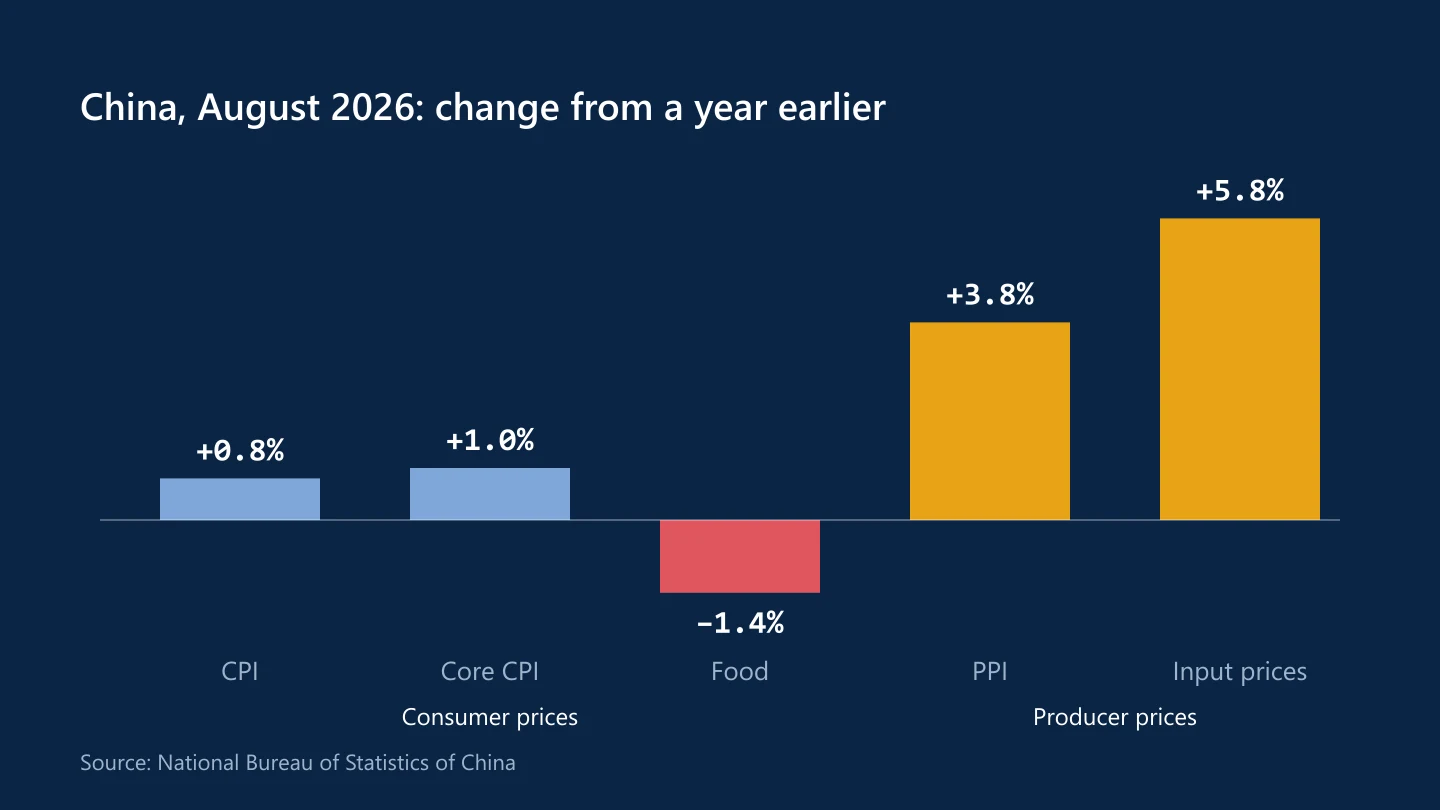
China's CPI rose 0.8% from a year earlier in August 2026 and core inflation reached 1.0%, while factory-gate prices rose 3.8% on coal, metals and oil.
Euro area GDP grows 0.6% in the second quarter, lifted by trade
Eurostat's 7 September estimate shows euro area GDP up 0.6% in Q2 2026 after no growth in Q1, with net exports adding 0.9 percentage points and employment up 0.1%.
Swiss inflation rises to 0.8% in August as rents and fuel costs climb
Consumer prices rose 0.4% in August 2026 and 0.8% from a year earlier, the Federal Statistical Office said on 3 September, ahead of the SNB's decision with its rate at 0%.
US services activity accelerates as new orders jump, but the employment index stays below 50
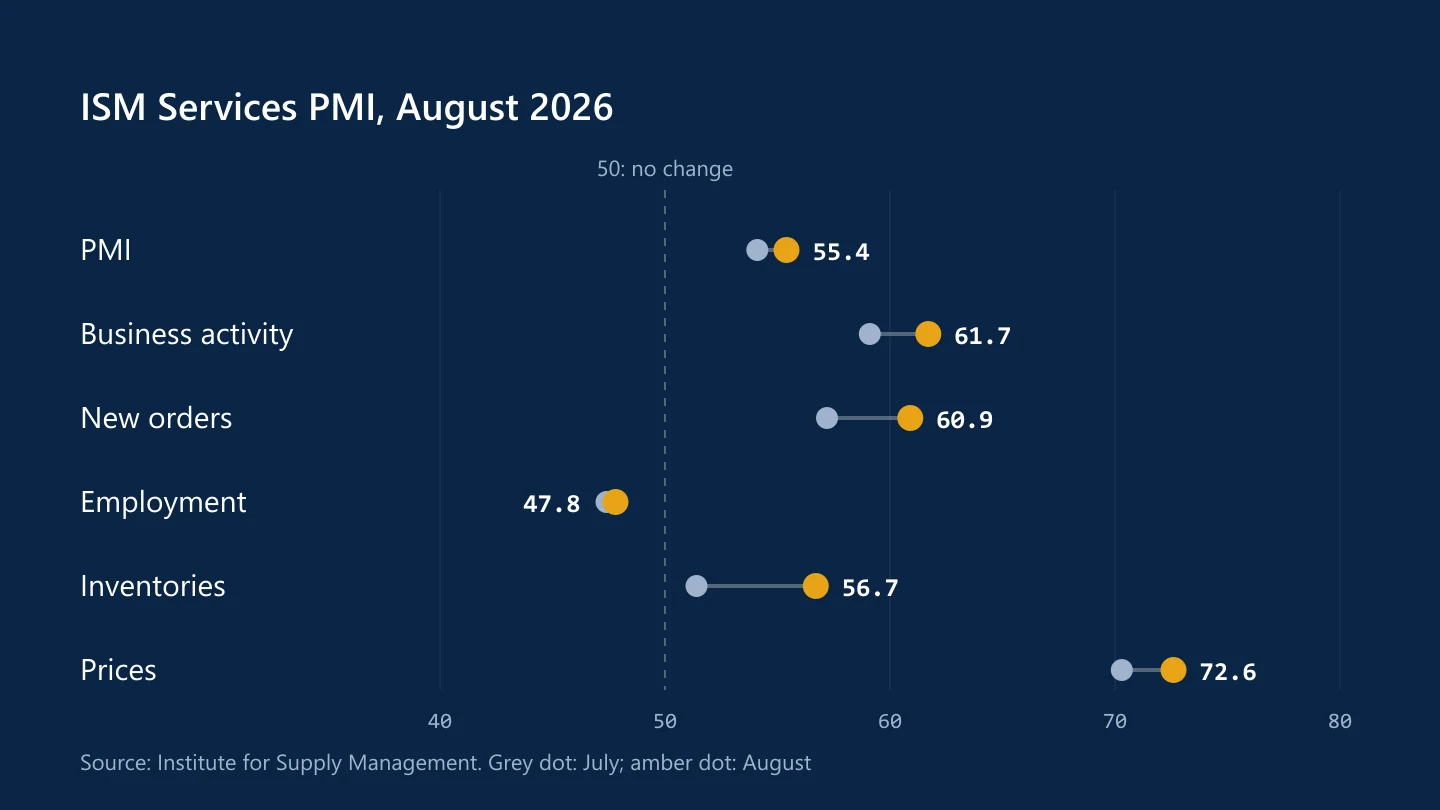
The ISM Services PMI rose to 55.4 in August 2026 from 54.1, with business activity at 61.7 and new orders at 60.9, while employment stayed in contraction at 47.8.
US trade deficit widens to $88.6 billion in July as computer imports surge
The goods and services deficit rose $17.4 billion in July 2026, with exports down 2.1% and imports up 2.8%, though the year-to-date gap is 29.6% smaller than in 2025.
Canada loses 42,000 jobs in August as wage growth slows to 2%
Employment fell 0.2% in August 2026 and the unemployment rate held at 6.4%, while average hourly wages rose 2.0% from a year earlier, the slowest pace since November 2017.
Australia's economy grows 0.4% in the June quarter as households stay cautious
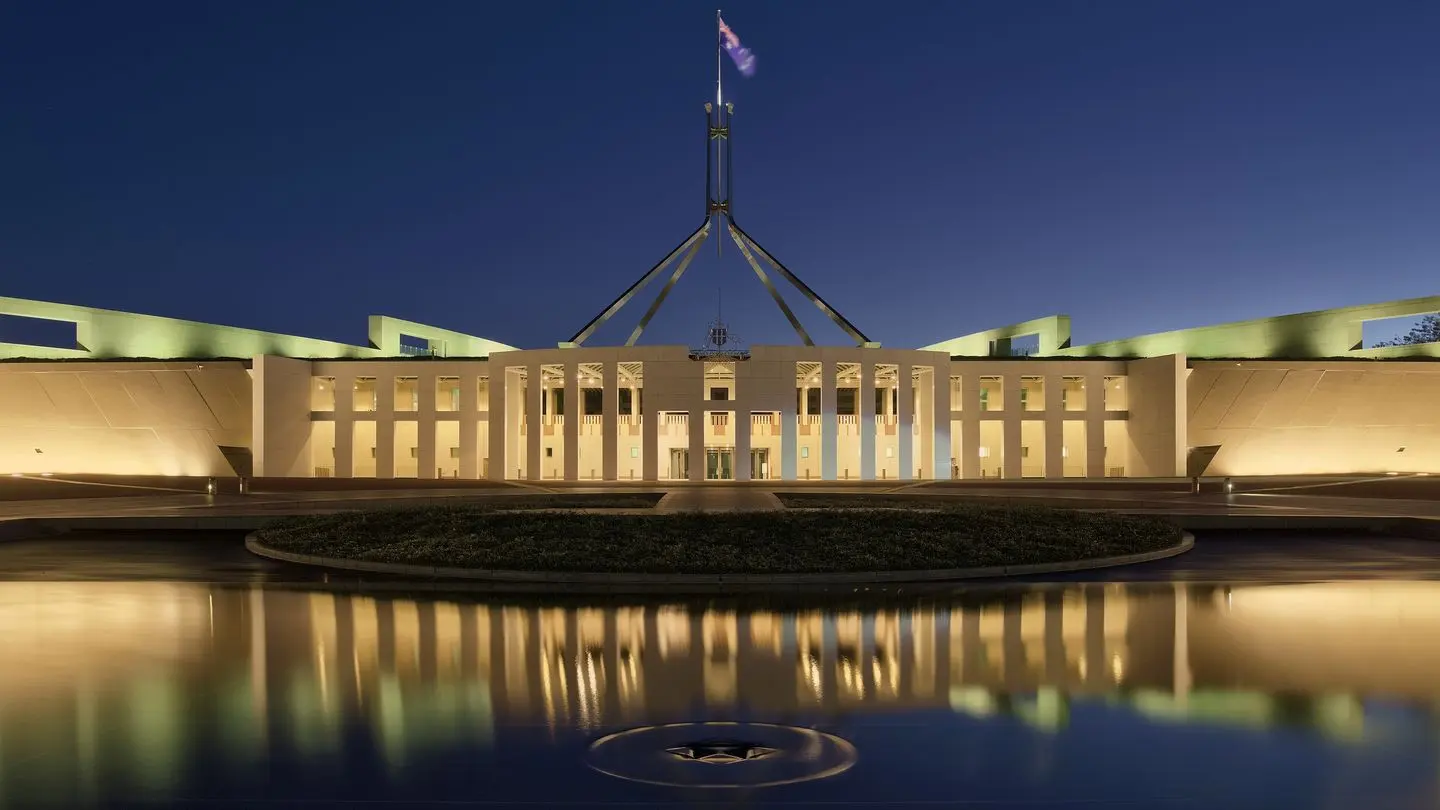
GDP rose 0.4% in the June quarter of 2026 and 2.1% over the year, the ABS said on 2 September, with vehicle purchases up and business investment lower.
US factory activity expands for an eighth month, but new orders slow
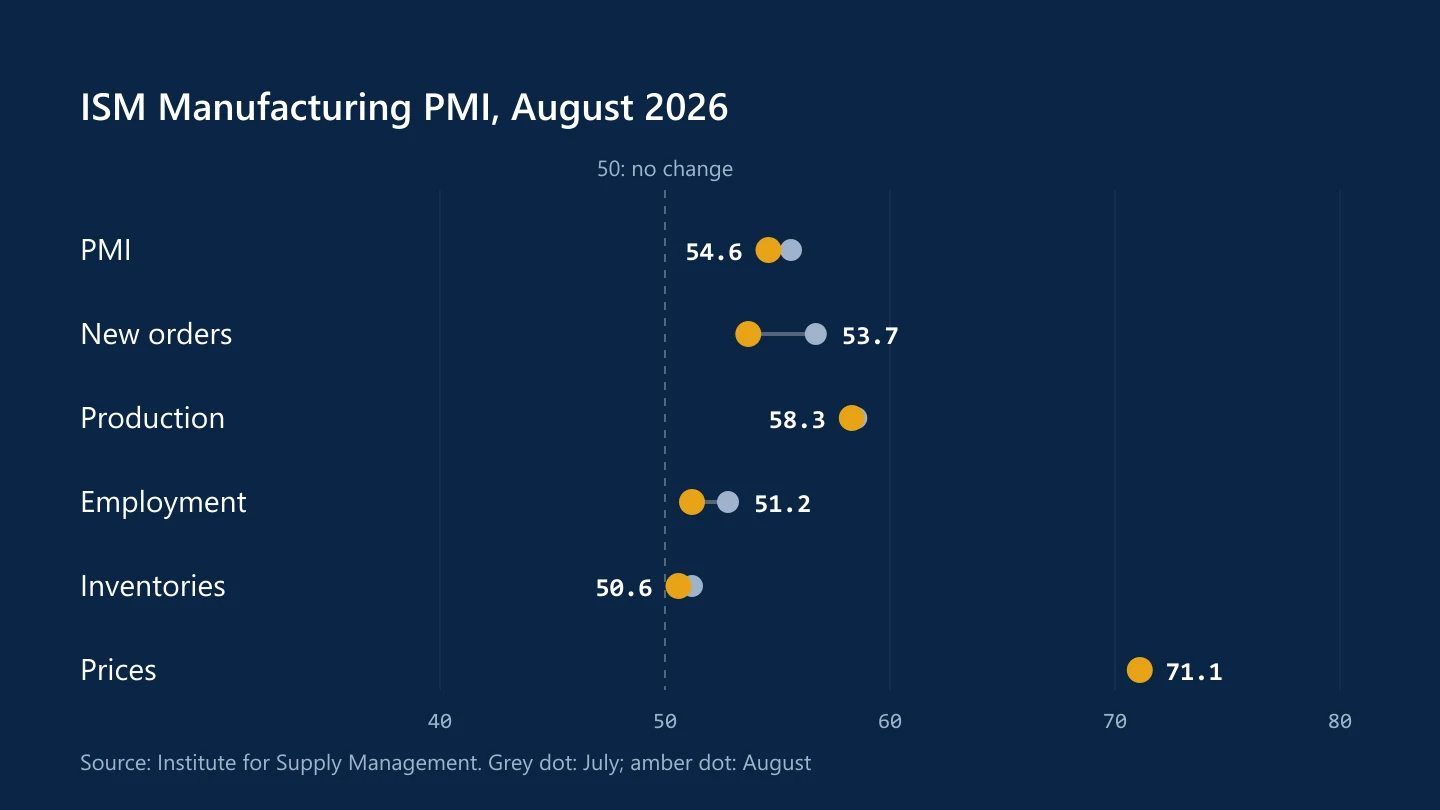
The ISM Manufacturing PMI fell to 54.6 in August 2026 from 55.6, with new orders down three points and the prices index unchanged at 71.1.
US job openings little changed at 7.3 million in July as hiring stays subdued
The BLS JOLTS report showed 7.3 million job openings in July 2026, with June revised down by 177,000, while quits held at 3.1 million.
Canada's economy grows at a 3.3% annualized pace in the second quarter as exports rebound
Real GDP rose 0.8% in Q2 2026, or 3.3% annualized, Statistics Canada said on 28 August, beating the Bank of Canada's forecast as car exports recovered.
The Fed's preferred inflation gauge: PCE prices up 3.7% in the year to July
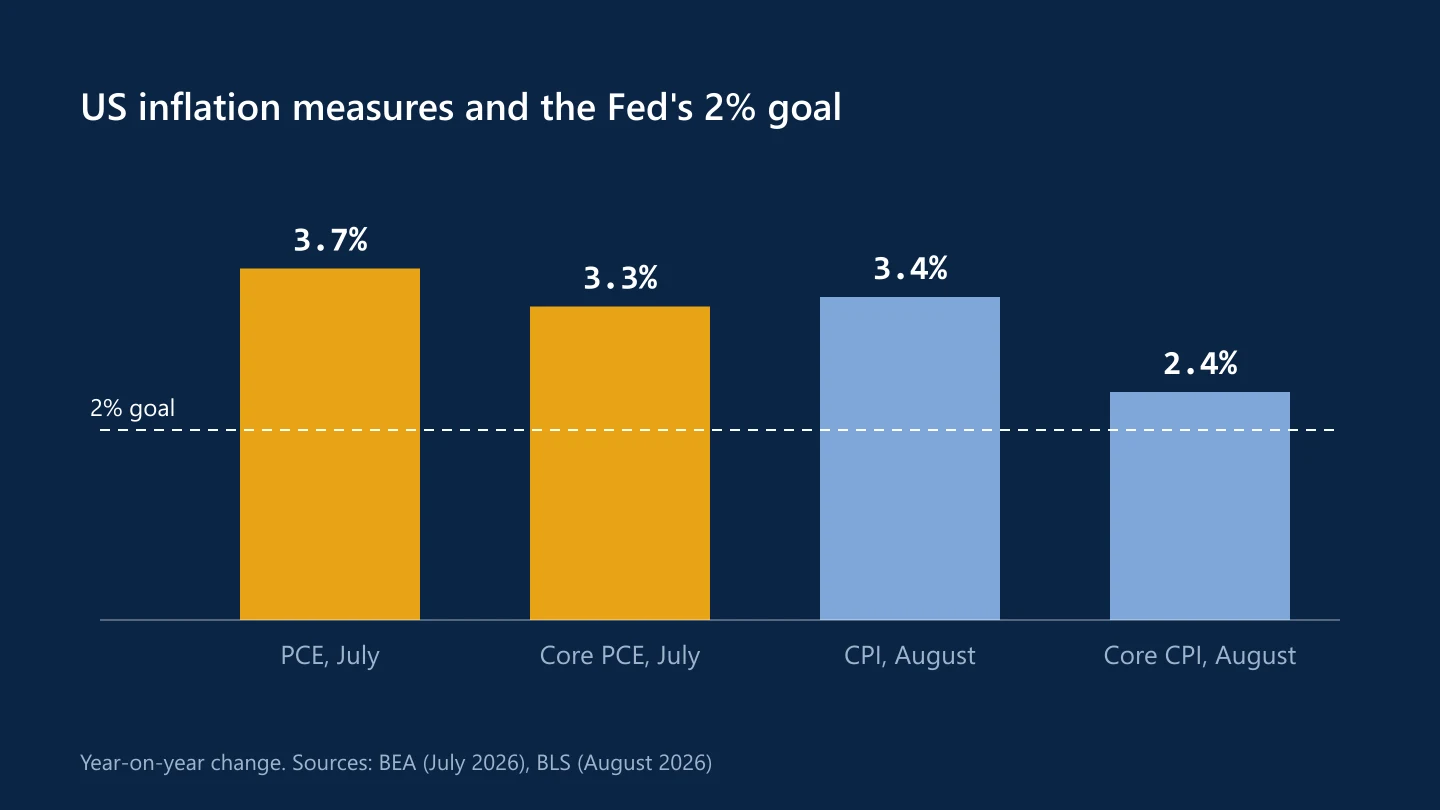
The PCE price index rose 0.2% in July 2026 and 3.7% from a year earlier, with core PCE up 3.3%, the Bureau of Economic Analysis said on 26 August.
Fed decision on 16 September: what currency traders are watching
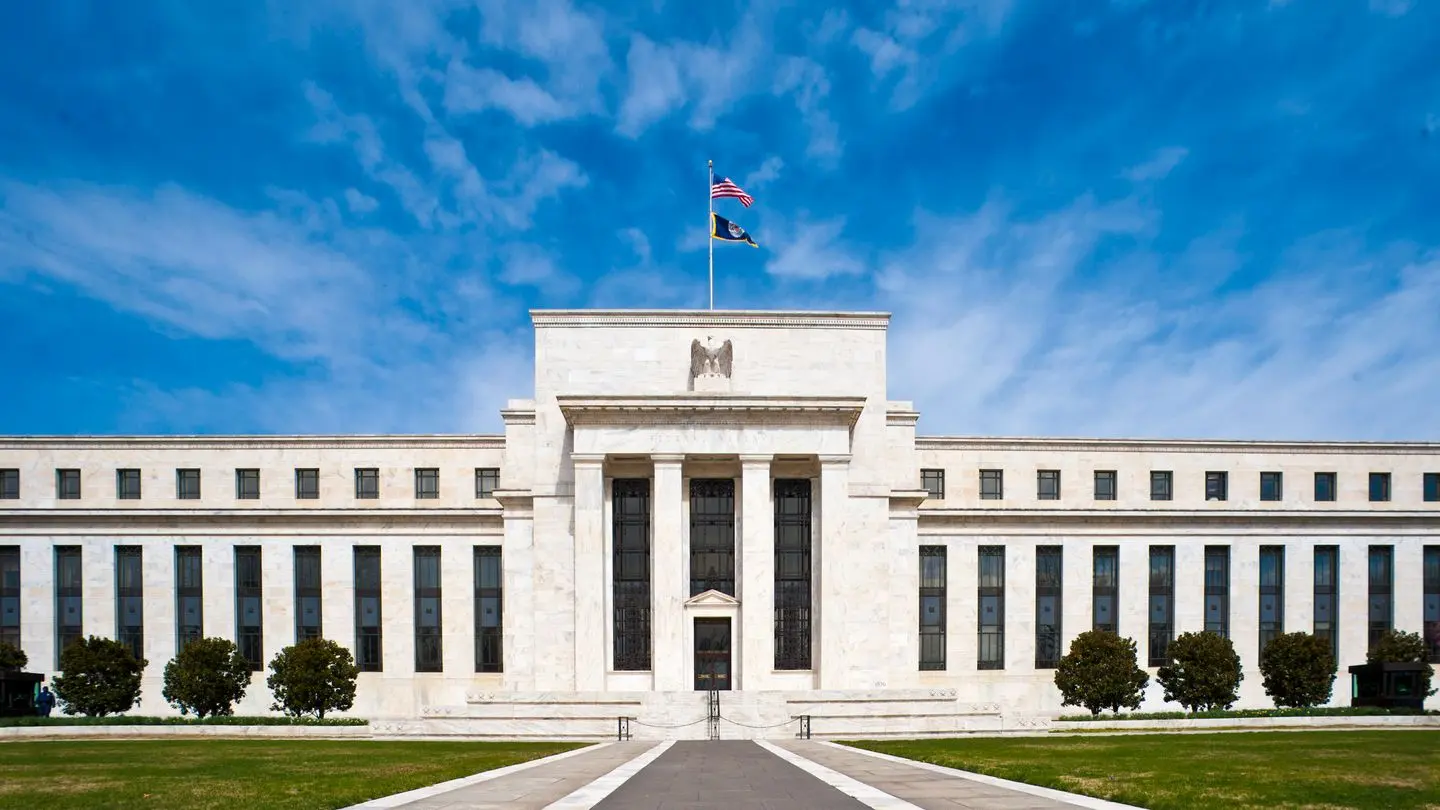
The FOMC meets on 15–16 September with new economic projections, after August data showed US consumer inflation at 3.4% and payrolls up 162,000.
Bank of England preview: three policymakers already voted for a hike in July
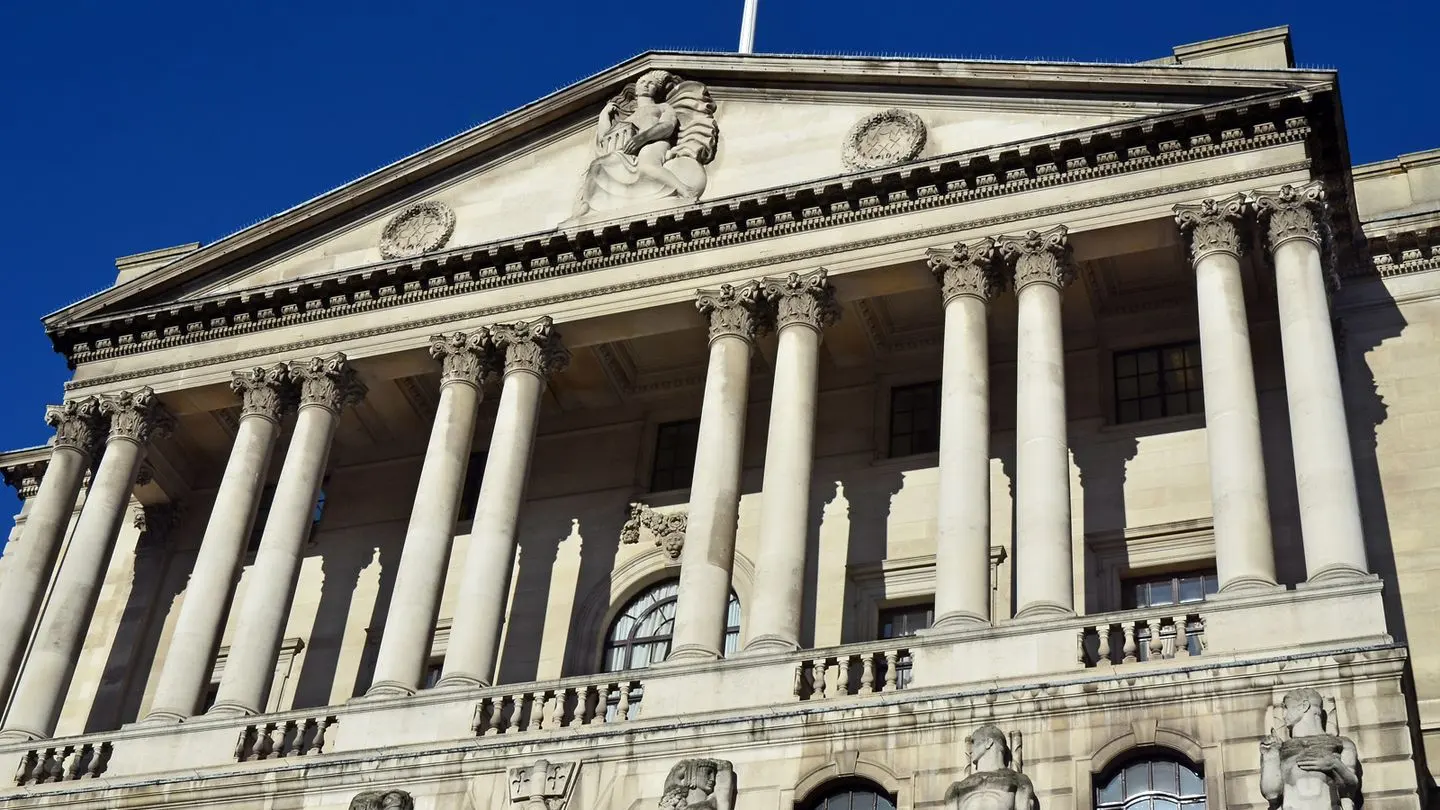
The Bank of England announces its next Bank Rate decision on 17 September. In July it held at 3.75% on a 6–3 vote, and UK inflation has since risen to 2.9%.
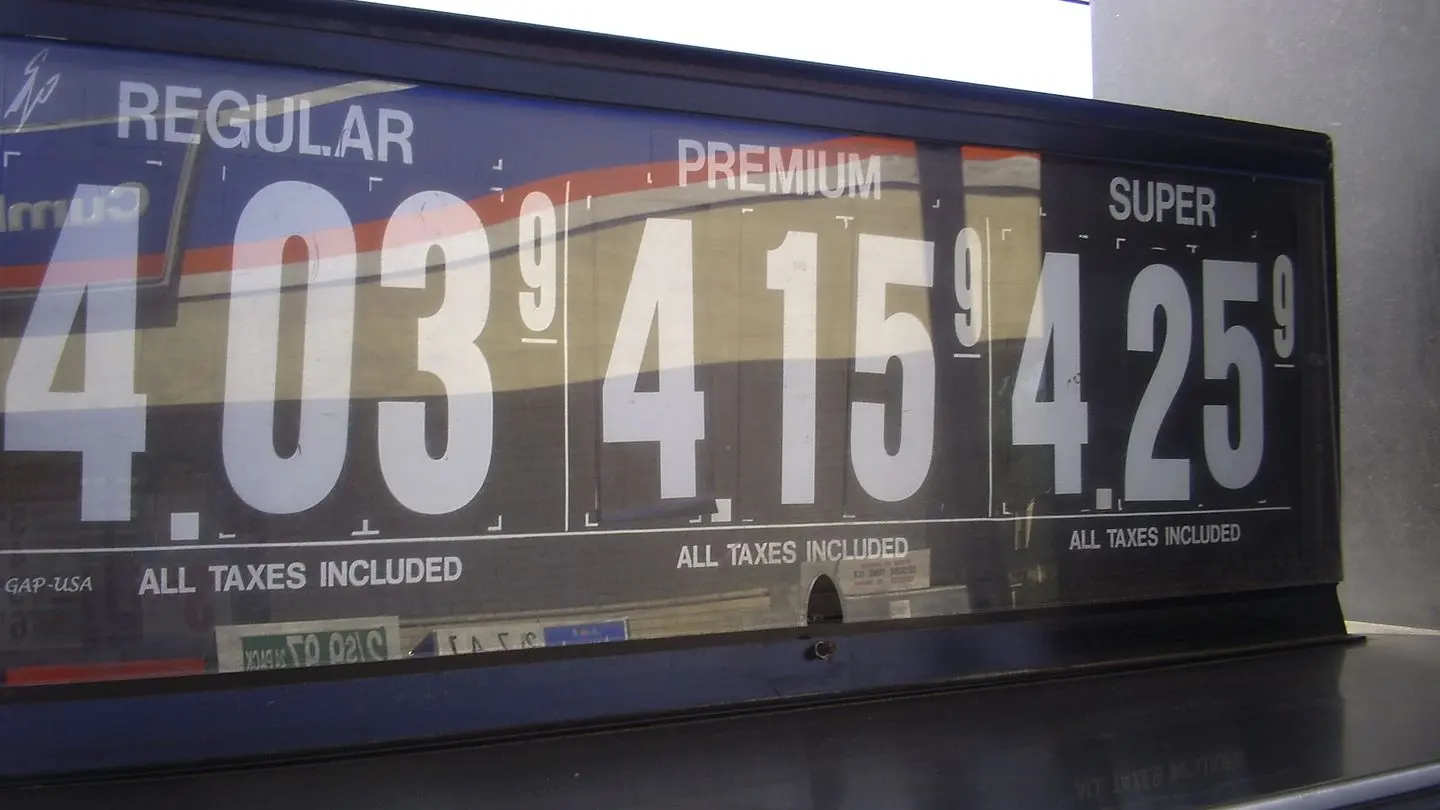
US inflation rises to 3.4% in August as gasoline prices jump
Consumer prices rose 0.4% in August and 3.4% from a year earlier. Core inflation, which strips out food and energy, was 2.4%.
Bank of Japan meets on 17–18 September after holding at 1% in July
The BoJ kept its policy rate at 1.00% in July with one member voting for a hike. Since then, Tokyo and Washington have confirmed a joint intervention to support the yen.
Brent crude trades above $100 as shipping through the Strait of Hormuz dwindles
Brent has held above $100 a barrel since 3 September. Tanker traffic through Hormuz has fallen sharply amid US–Iran strikes, and Houthi forces have seized a Red Sea port.
Gold holds near $4,300, well below January's record of $5,589
The metal trades more than 20% below its all-time high as higher interest rates in several economies compete with demand for safe assets.
ECB raises rates by a quarter point as energy prices keep inflation high
The European Central Bank lifted its deposit rate to 2.50% on 10 September and now expects inflation to average 2.1% in 2028, still just above its target.
Swiss National Bank decides on 24 September with its rate at 0%
The SNB held its policy rate at zero in June and said it has an increased willingness to intervene if the franc appreciates too quickly.
US producer prices rise 0.4% in August, led by a surge in diesel
Final demand prices were 5.4% higher than a year earlier. Goods prices rose 1.1% on the month, with diesel fuel up by more than 24%.
China's exports jump 25% in August, widening the trade surplus to $119 billion
Autos and semiconductors led the rise, and shipments to the United States climbed 34.4% from a year earlier.
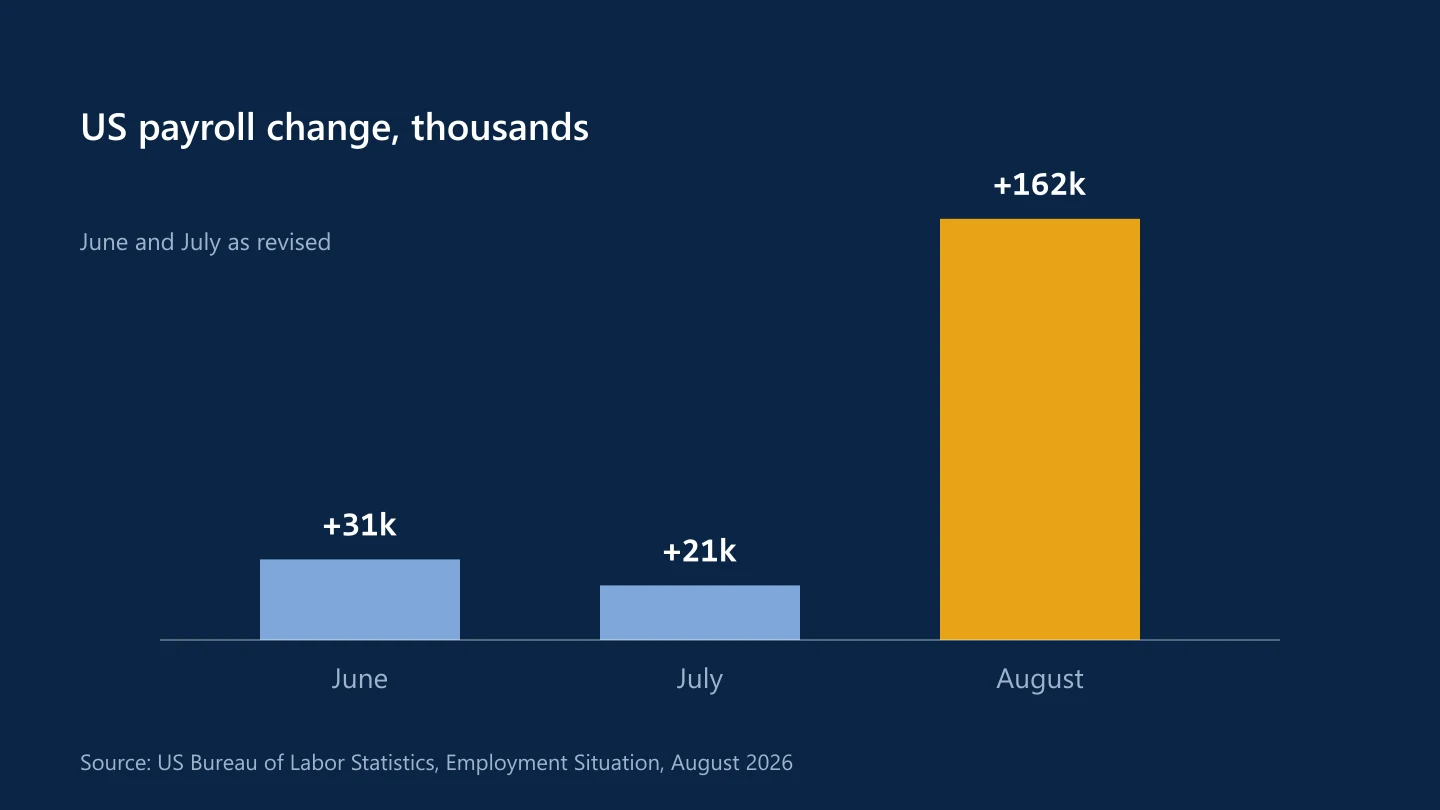
US employers added 162,000 jobs in August as earlier months were revised lower
The unemployment rate was 4.1% and average hourly earnings rose 3.1% over the year, but June and July payroll gains were revised down to 31,000 and 21,000.
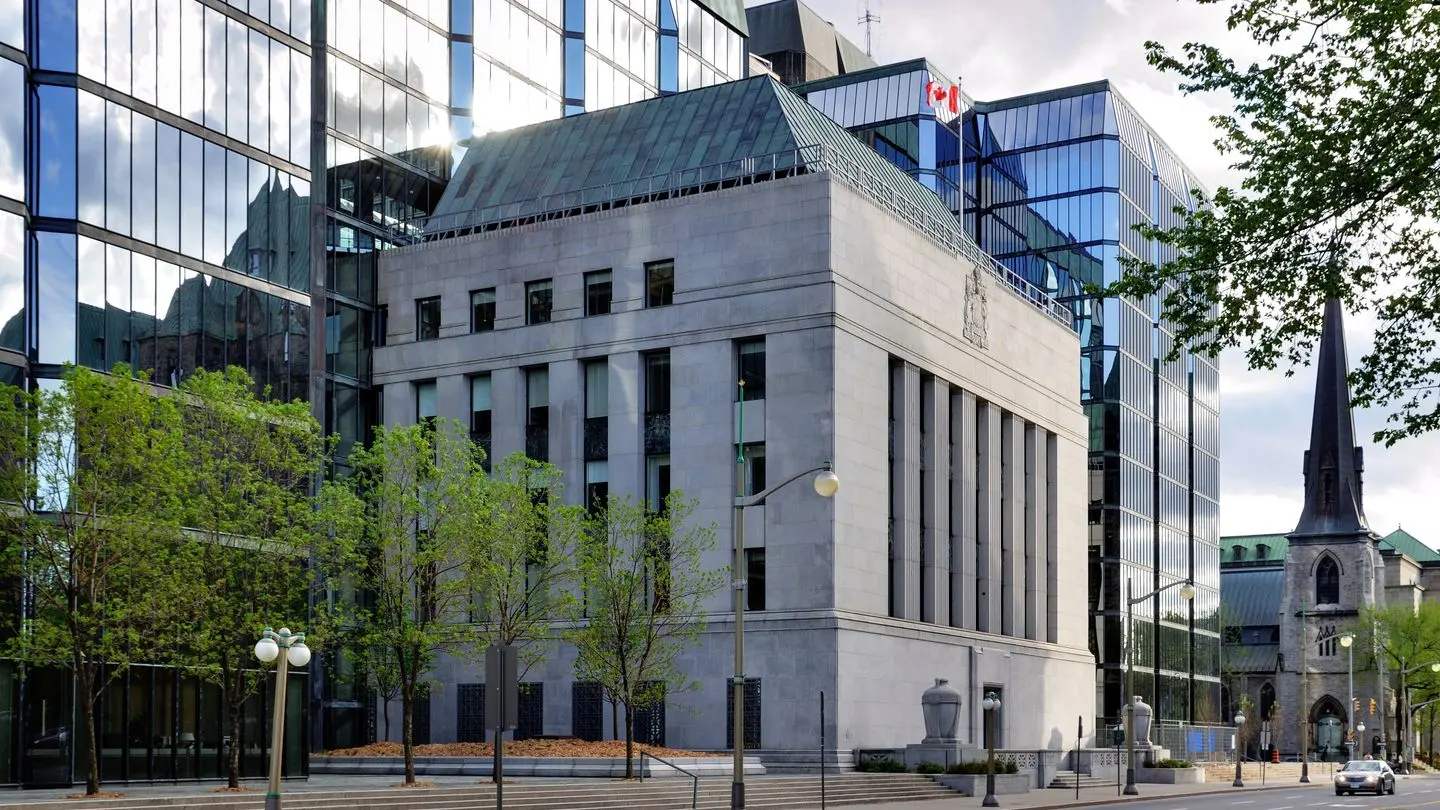
Bank of Canada holds at 2.25% for a seventh straight decision
The Bank of Canada kept its policy rate unchanged on 2 September, pointing to uncertainty from the Middle East conflict and a breakdown in trade talks with the United States.
RBNZ raises the official cash rate to 2.75% as fuel prices lift inflation
New Zealand's central bank delivered a second consecutive quarter-point increase on 2 September, with annual inflation at 4.1%, well above its 1–3% target band.
Euro area inflation climbs to 3.3% in August on energy prices
Eurostat's flash estimate showed energy prices 14.3% higher than a year earlier, while services inflation eased to 3.0%.
UK inflation rises to 2.9% in July as the energy price cap goes up
Consumer price inflation climbed from 2.6% in June, driven by gas and electricity bills after Ofgem's July price cap increase. Core inflation held at 2.6%.
RBA holds the cash rate at 4.35% but says it is prepared to raise again
Australia's Reserve Bank left rates unchanged on 11 August, saying headline inflation is still too high and underlying inflation remains elevated.
Japan and the US confirm a rare joint intervention to support the yen
Japan's Ministry of Finance bought yen on 31 July in coordination with the US Treasury, Finance Minister Katayama Satsuki said on 3 August, adding that Japan stands ready to act again.
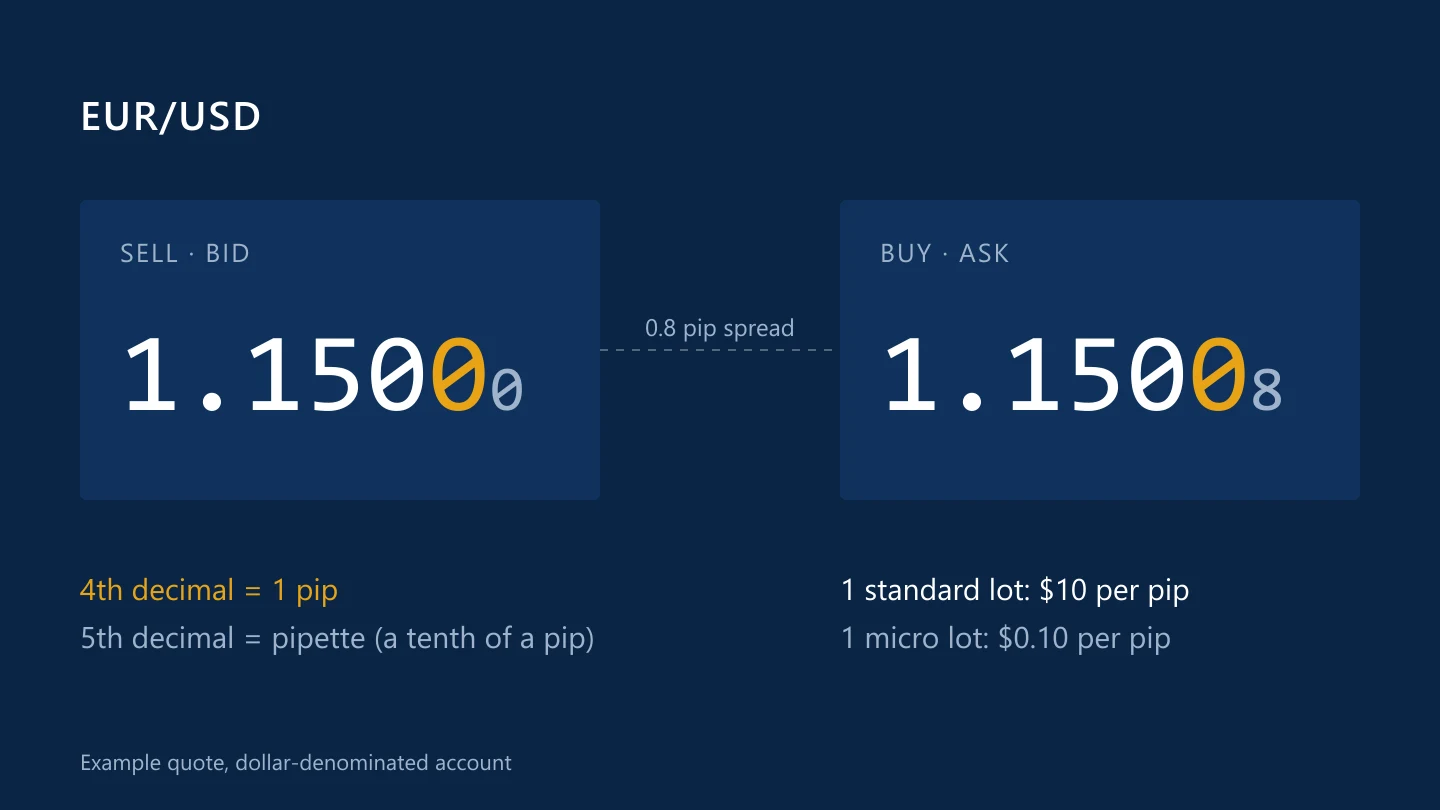
What is a pip? How to calculate pip value, with examples
A pip is the smallest standard price step in a currency pair. Here is how pips, pipettes and pip values work on EUR/USD, USD/JPY, crosses and gold.
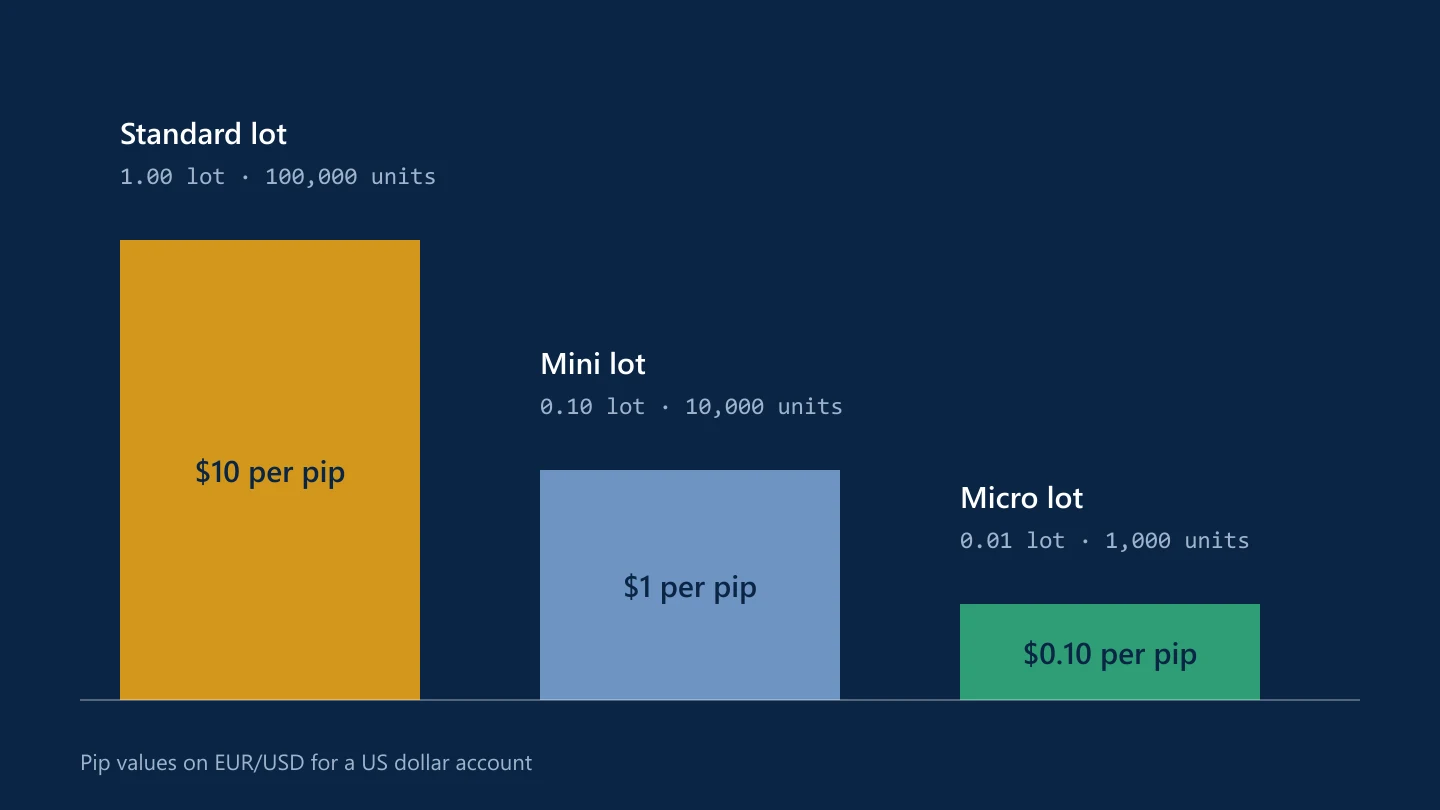
Lot sizes explained: standard, mini and micro lots
A lot sets how many units of currency you buy or sell. Getting it wrong is the fastest way to turn a small price move into a large loss.
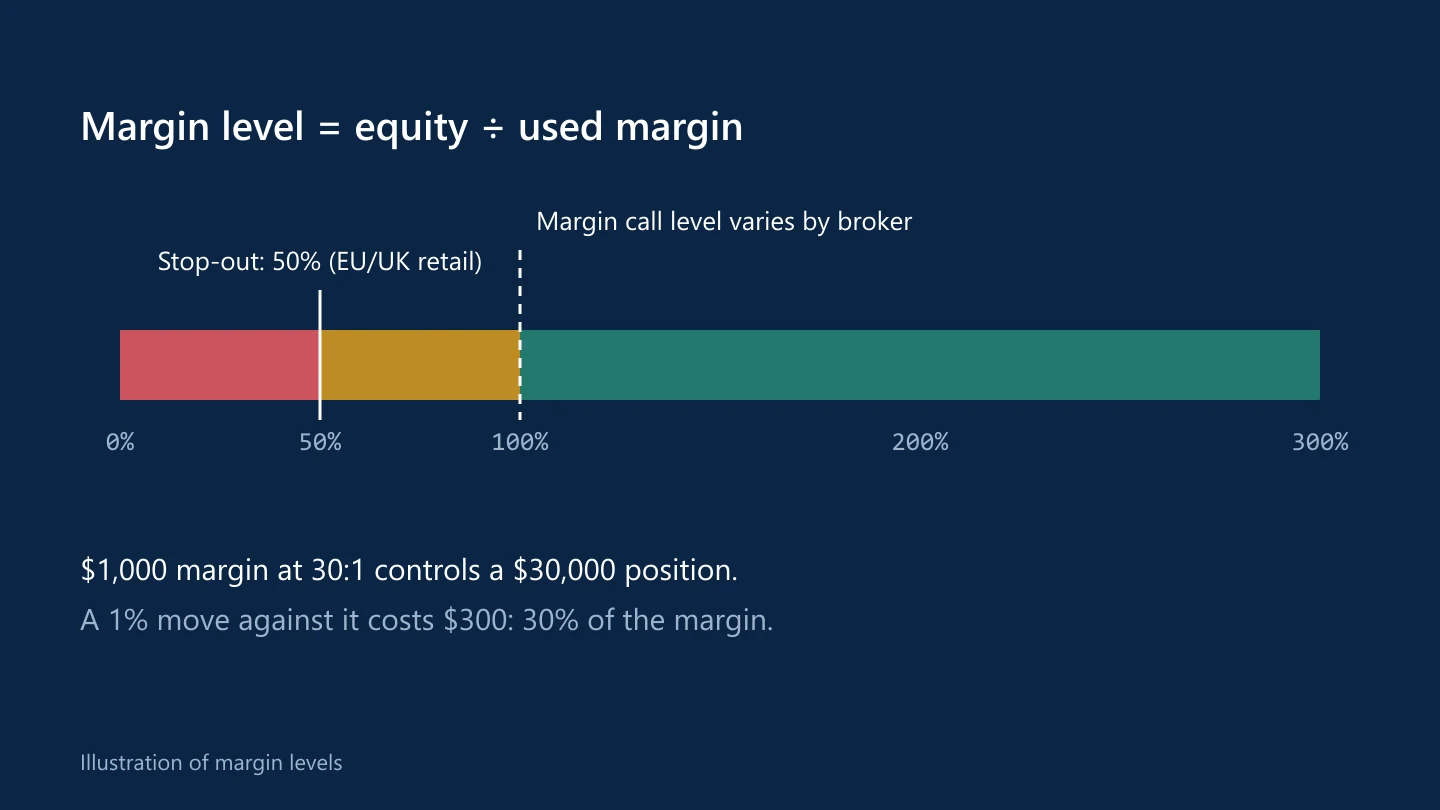
Leverage and margin explained: margin calls, stop-outs and how losses grow
Leverage lets you control a large position with a small deposit. It magnifies losses exactly as much as gains, and it is behind most blown trading accounts.
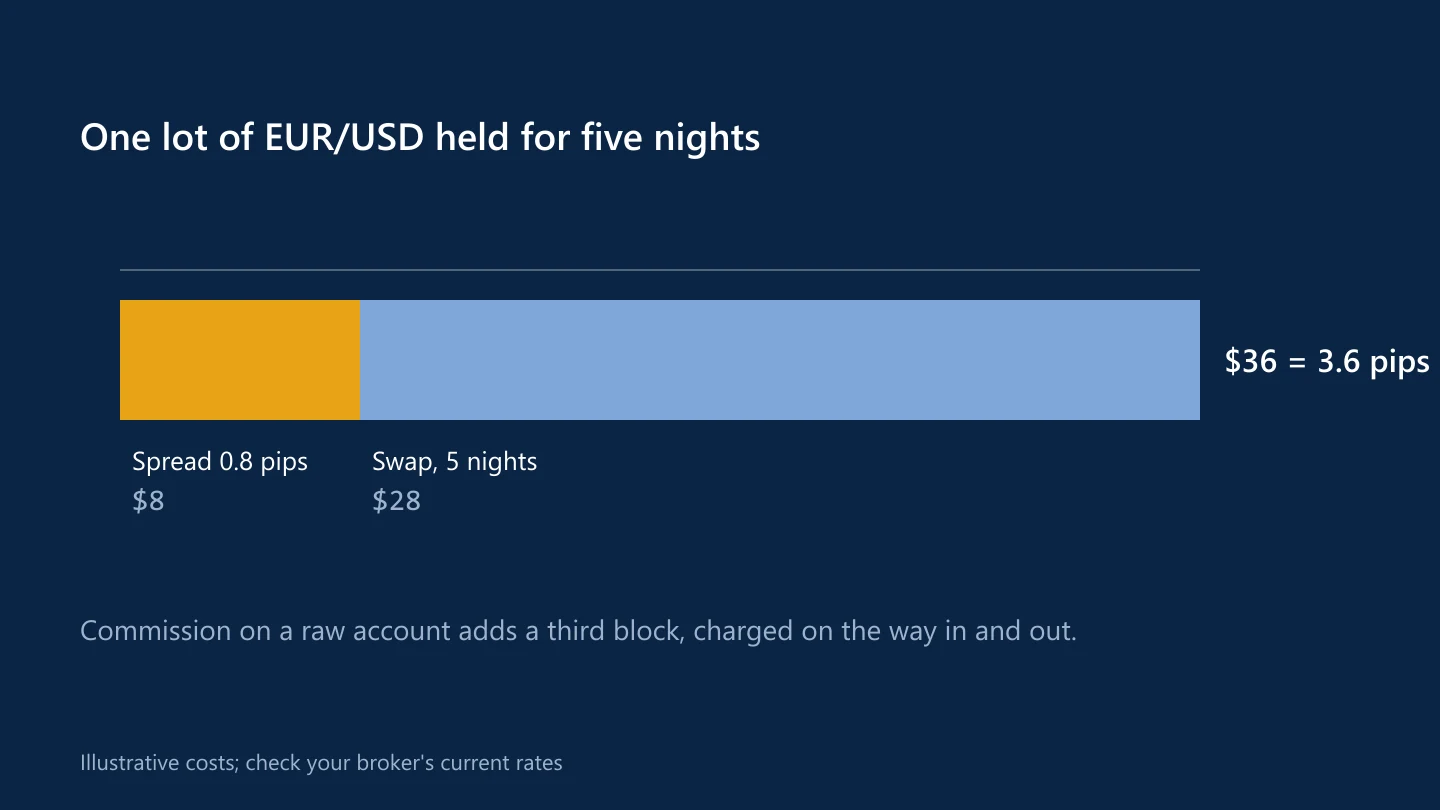
The real cost of a forex trade: spread, commission and swap
Every trade has costs, and they are easy to underestimate. Here is how to add up the spread, commission and overnight swap on a position.
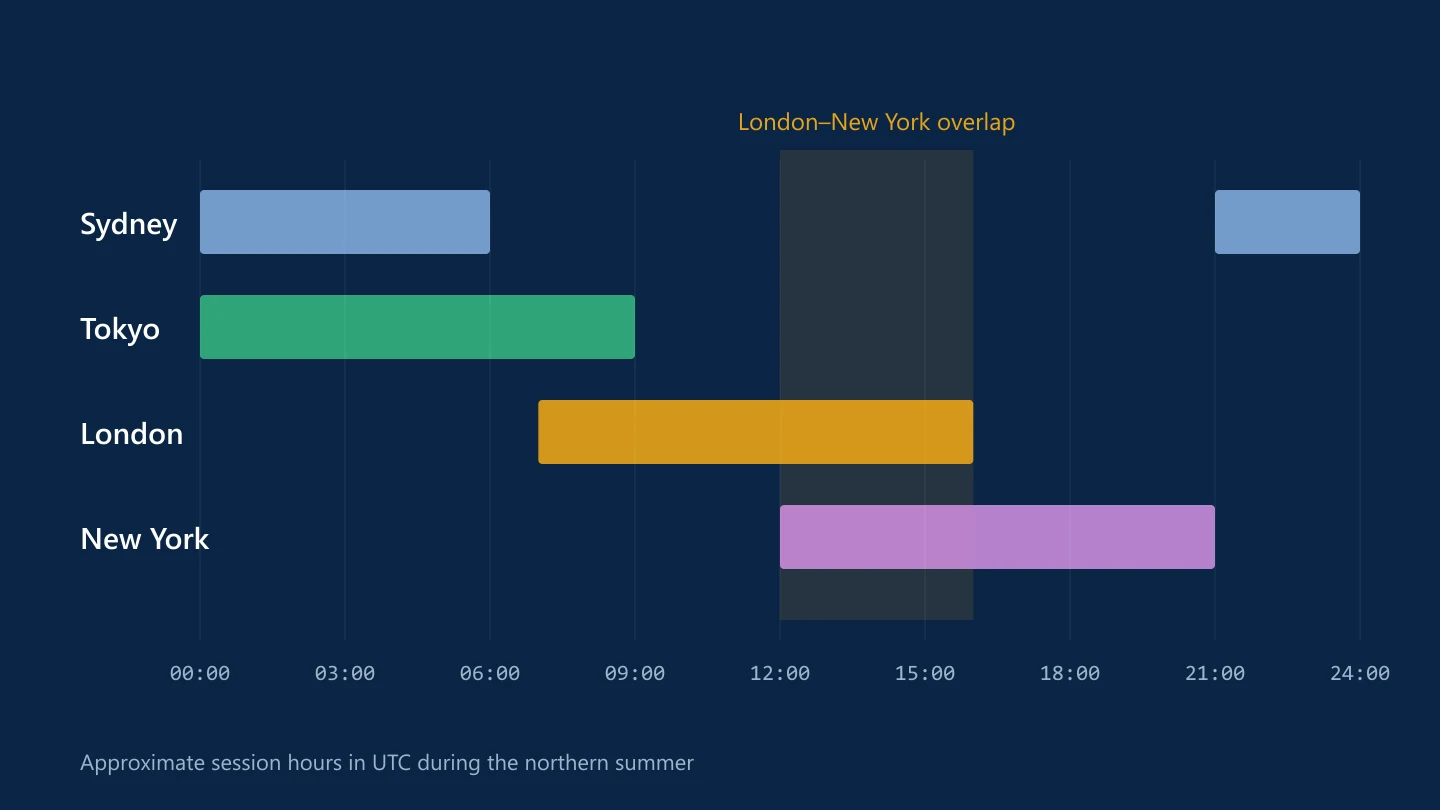
Forex market hours: the Sydney, Tokyo, London and New York sessions
Currencies trade around the clock on weekdays, but not with the same liquidity. Session times in UTC, the overlaps that matter and the daylight-saving trap.
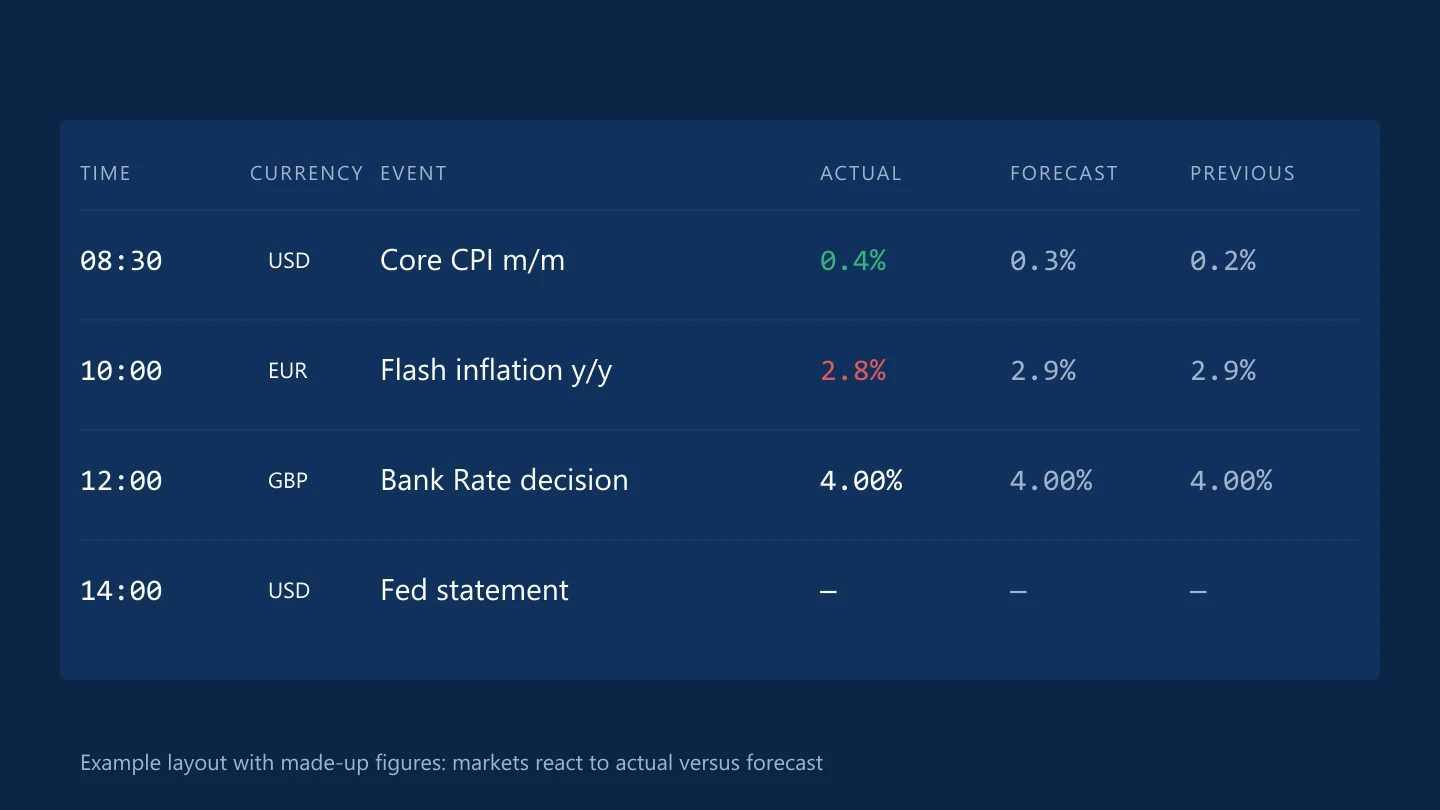
How to read an economic calendar: actual, forecast, previous and impact
The economic calendar tells you when markets are likely to move. Here is what each column means and how traders use it to plan the week.
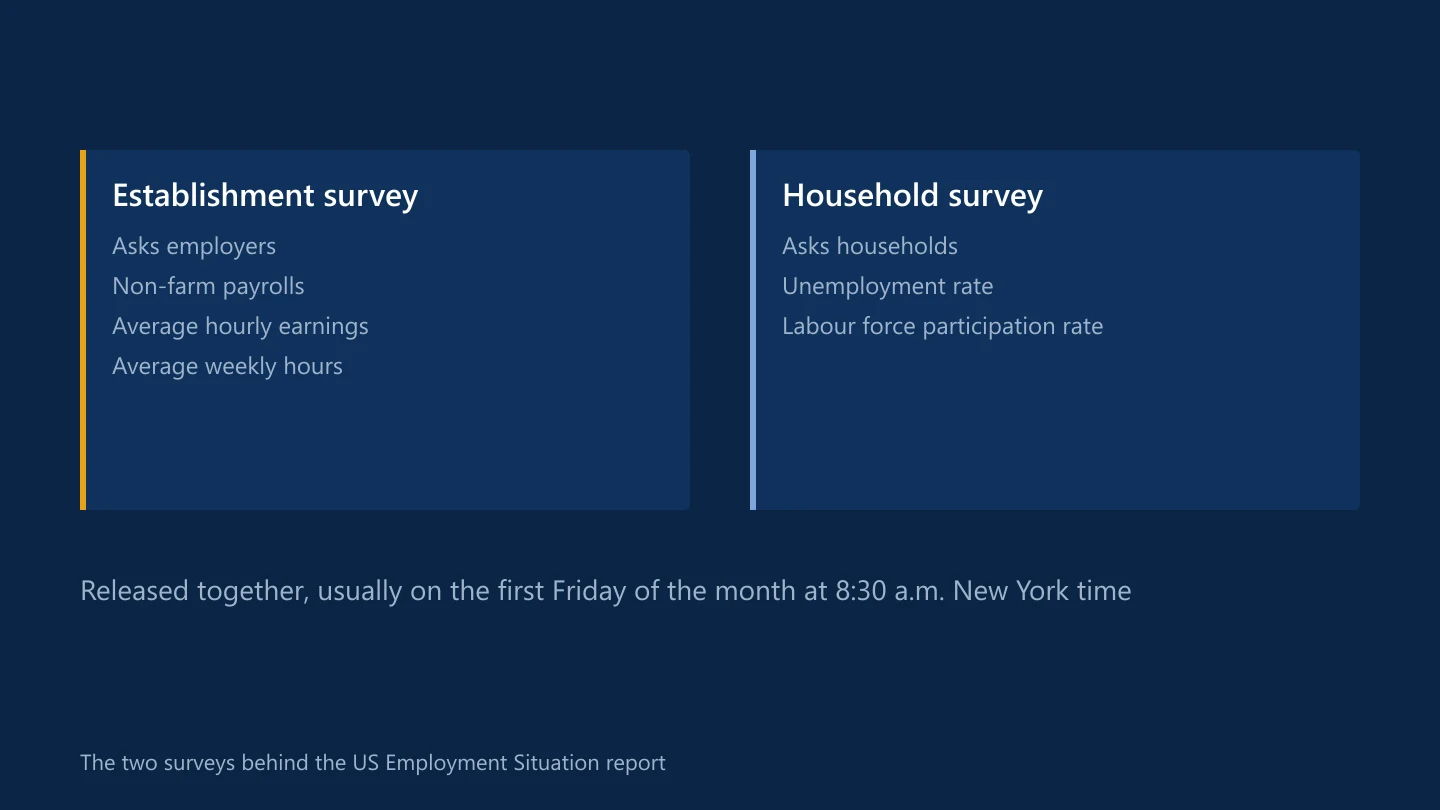
Non-farm payrolls explained: why the US jobs report moves the dollar
The monthly Employment Situation report is one of the most traded events in currency markets. What it measures, when it comes out and why the first move often fades.
CPI explained: headline and core inflation for forex traders
The consumer price index is the inflation figure markets watch most closely. What it measures, why core CPI matters and how it links to interest rates.
How interest rate decisions move currencies
Central bank decisions are the biggest scheduled events in forex. Why rates matter, why a hike can weaken a currency, and what to read beyond the decision.
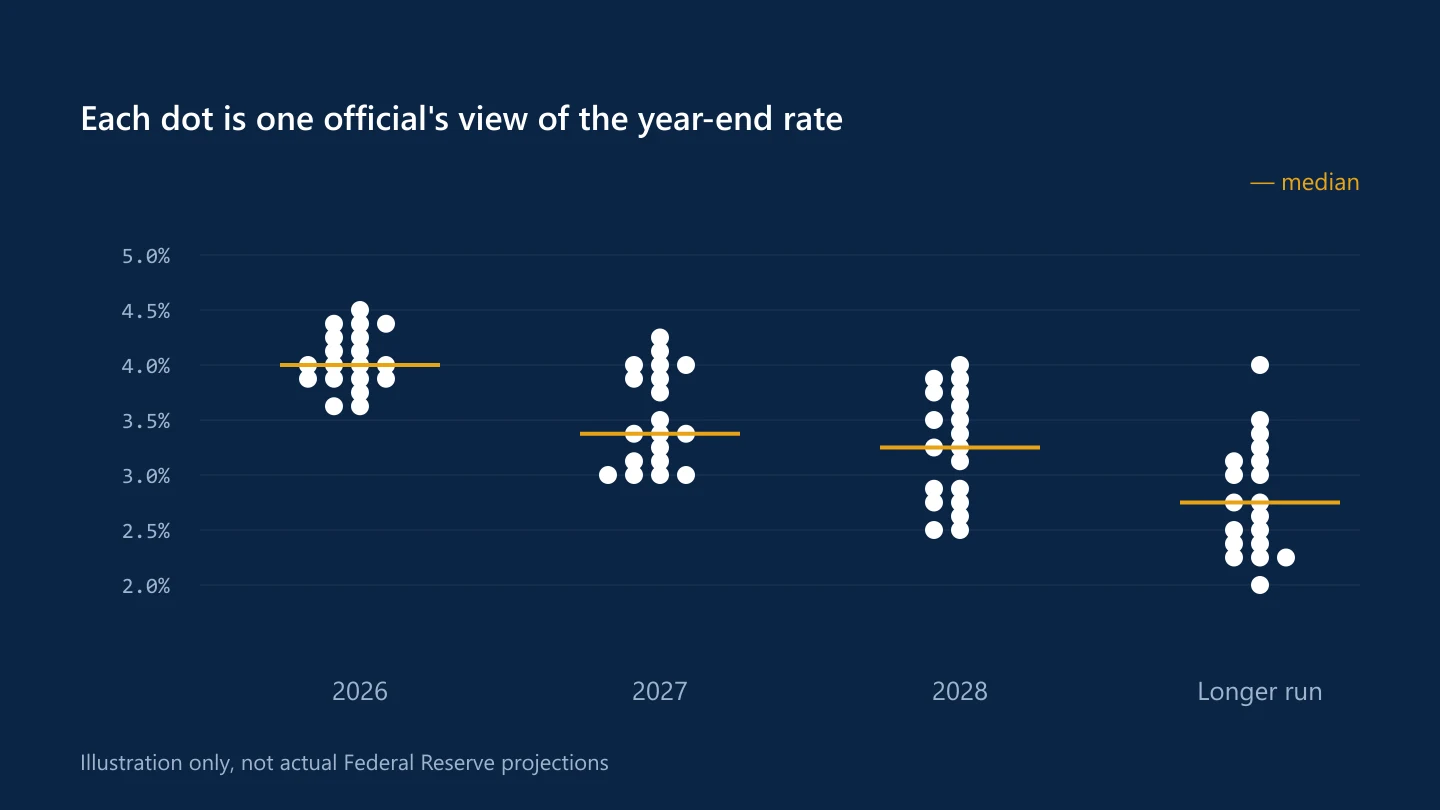
The Fed's dot plot and economic projections explained
Four times a year Fed officials publish where they think interest rates are heading. How to read the dot plot, and why it can move the dollar more than the decision.