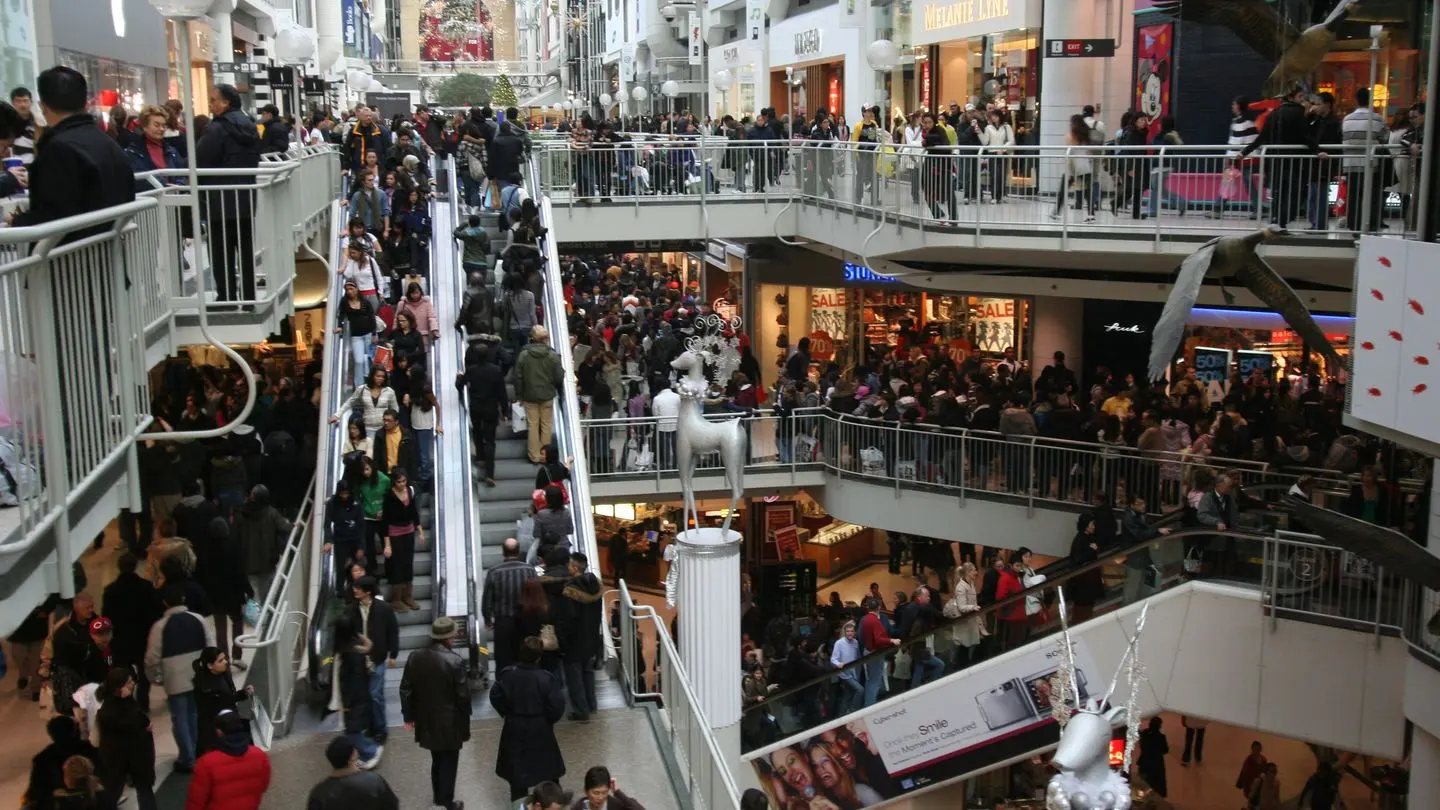
Canada's retail sales fall 0.7% to $73.7 billion in July, led by general merchandise and clothing
Statistics Canada said sales fell in eight of nine subsectors in July, close to its earlier advance estimate of a 0.8% drop. An early reading points to a 1.3% rebound in August.
Statistics Canada reported on 24 September 2026 that retail sales fell 0.7% to $73.7 billion in July, close to the 0.8% decline its advance estimate had pointed to the week before (preview). It follows a 0.6% rise to $74.3 billion in June.
The July numbers
- Total retail sales: down 0.7% to $73.7 billion; in volume terms, sales fell 1.1%
- Subsectors: eight of nine subsectors declined, led by general merchandise retailers, down 1.9% after rising 2.5% in June
- Clothing, accessories, shoes, jewellery, luggage and leather goods: down 1.2%
- Motor vehicle and parts dealers: down 0.8%, their first decline in four months, led by new car dealers (down 1.3%); used car dealers rose 2.9%
- Gasoline stations and fuel vendors: down 0.9% for a second straight monthly decline; down 3.5% in volume terms
- Building material and garden equipment dealers: the only subsector to rise, up 0.8% for a fourth consecutive month
- Core retail sales (excluding gasoline stations, fuel vendors, and motor vehicle and parts dealers): down 0.7%, following a 1.2% rise in June
By province
Retail sales fell in five provinces. Ontario had the largest decline in dollar terms, down 2.0%, driven by general merchandise retailers; in the Toronto census metropolitan area, sales fell 4.7%. British Columbia was down 1.4%, led by motor vehicle and parts dealers, with Vancouver down 1.6%. Alberta had the largest increase, up 1.4%, led by general merchandise retailers.
E-commerce and the outlook
Retail e-commerce sales fell 3.5% to $5.5 billion, or 7.5% of total retail trade, down from 7.7% in June. Statistics Canada's advance estimate for August points to a 1.3% rebound, based on responses from 57.8% of companies surveyed; the average final response rate over the previous year was 87.1%, so the estimate is likely to be revised.
What it means for the Canadian dollar
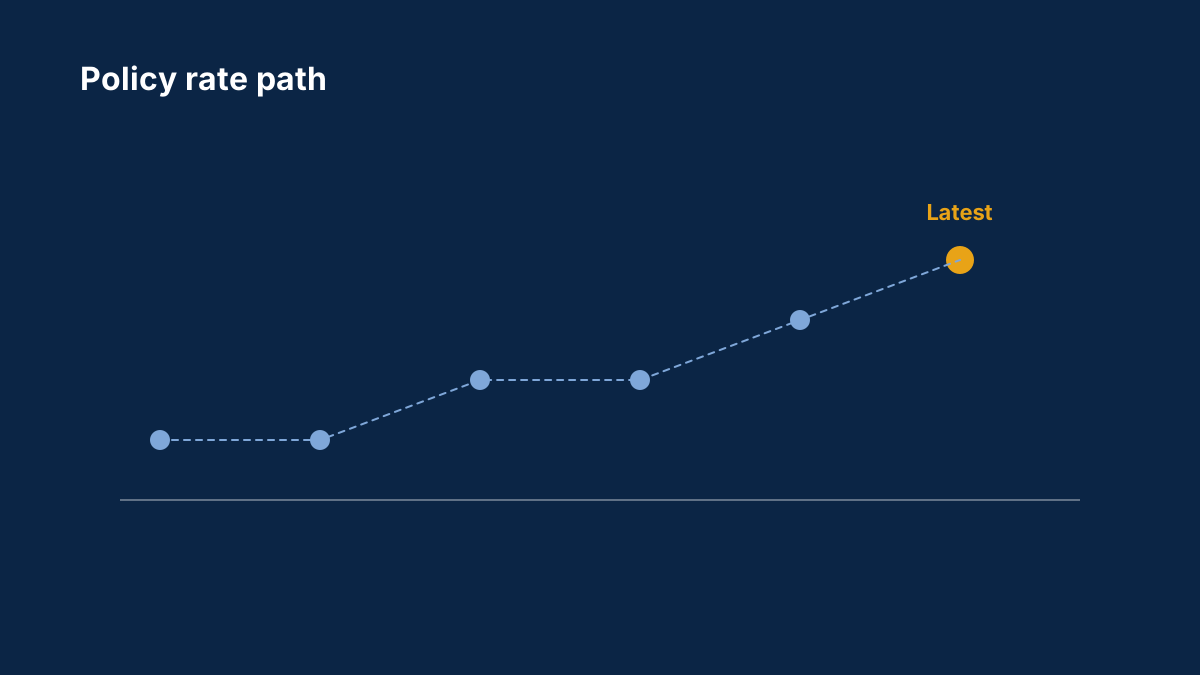
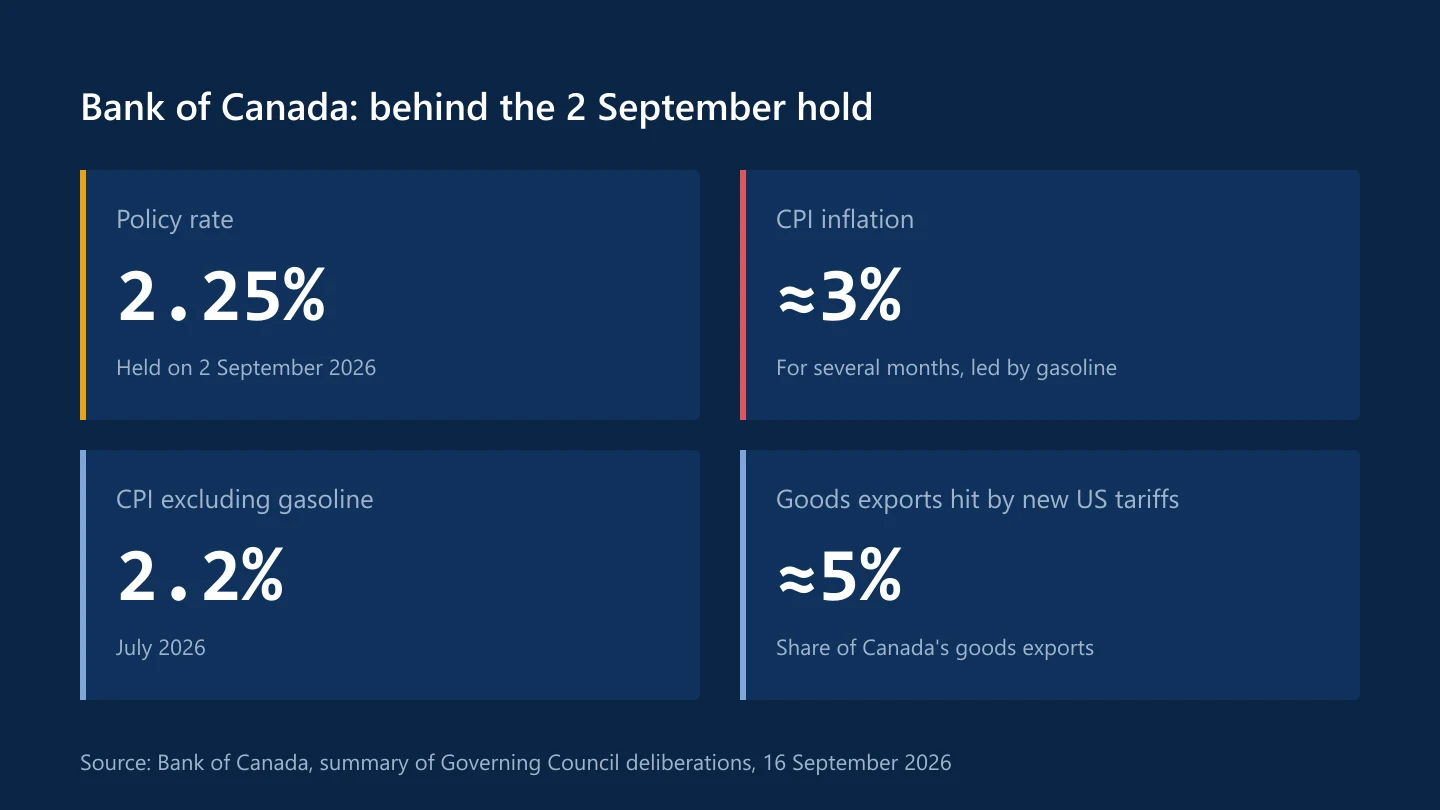
The Bank of Canada held its policy rate at 2.25% on 2 September for a seventh straight decision, citing uncertainty from the Middle East conflict and the breakdown of trade talks with the United States (report). A soft July for retail sales, alongside inflation holding at 3.0% in August (report) and home sales edging down (report), fits a picture of a economy the Bank isn't in a hurry to tighten further. Oil prices remain the other big driver of USD/CAD (oil and the Canadian dollar). The Bank's next decision is 28 October, and August retail sales follow on 23 October 2026.
Sources
Common questions
How much did Canadian retail sales fall in July 2026?
0.7%, to $73.7 billion, Statistics Canada reported on 24 September 2026. In volume terms sales fell 1.1%. It follows a 0.6% rise to $74.3 billion in June.
Which retailers led the decline in July 2026?
General merchandise retailers, down 1.9%, and clothing, accessories, shoes, jewellery, luggage and leather goods retailers, down 1.2%. Eight of nine subsectors fell; building material and garden equipment dealers were the exception, up 0.8%.
What is Canada's core retail sales figure?
Core retail sales, which exclude gasoline stations, fuel vendors and motor vehicle and parts dealers, fell 0.7% in July 2026, after rising 1.2% in June.
Which Canadian province had the biggest retail sales drop in July 2026?
Ontario, down 2.0% in dollar terms, with Toronto down 4.7%. Alberta had the largest increase, up 1.4%.
What does Statistics Canada expect for August 2026 retail sales?
Its advance estimate points to a 1.3% increase, based on responses from 57.8% of surveyed companies; the figure is preliminary and subject to revision.
This article is for information only and is not financial advice. Trading forex and CFDs carries a high risk of losing money. Read the risk warning. Spotted an error? Tell the editors.

Comments
Log in to join the discussion. Comments follow the community guidelines.
Log in to commentLoading comments…