US GDP growth is revised up to 2.2% for the second quarter from 1.5% in the third estimate
The Bureau of Economic Analysis lifted growth by 0.7 percentage point on upward revisions to investment, consumer spending and government spending, and said first-quarter growth was 2.5%. Real final sales to private domestic purchasers rose 4.6%.

US real gross domestic product increased at an annual rate of 2.2% in the second quarter of 2026, according to the third estimate the Bureau of Economic Analysis published on 30 September. The advance and second estimates had both shown 1.5%. First-quarter growth was revised to 2.5%.
What changed
Real GDP was revised up by 0.7 percentage point from the second estimate, "primarily reflecting upward revisions to investment, consumer spending, and government spending." The contributors to growth were consumer spending, investment and exports. Imports, which subtract from GDP, increased.
- Real final sales to private domestic purchasers, the sum of consumer spending and private fixed investment: +4.6%, revised up by 0.4 point
- Real gross domestic income (GDI): +2.6%, revised up by 0.4 point
- Average of real GDP and real GDI: +2.4%, revised up by 0.6 point
- Current-dollar GDP: +8.5%
- Corporate profits from current production: +$384.0 billion, revised down by $16.9 billion

Prices were revised down
The PCE price index rose 5.0% at an annual rate in the quarter, revised down by 0.3 point, and the PCE price index excluding food and energy rose 3.3%, also revised down by 0.3 point. The price index for gross domestic purchases rose 5.6%.
By industry and by state
Real value added rose 2.5% for private services-producing industries, 2.3% for private goods-producing industries and less than 0.1% for government. Real estate and rental and leasing, information, durable goods manufacturing, and finance and insurance contributed most; transportation and warehousing, retail trade and nondurable goods manufacturing were the largest offsets. Real GDP rose in 44 states and the District of Columbia, from 4.0% in New York to −2.3% in West Virginia.
Why the timing matters
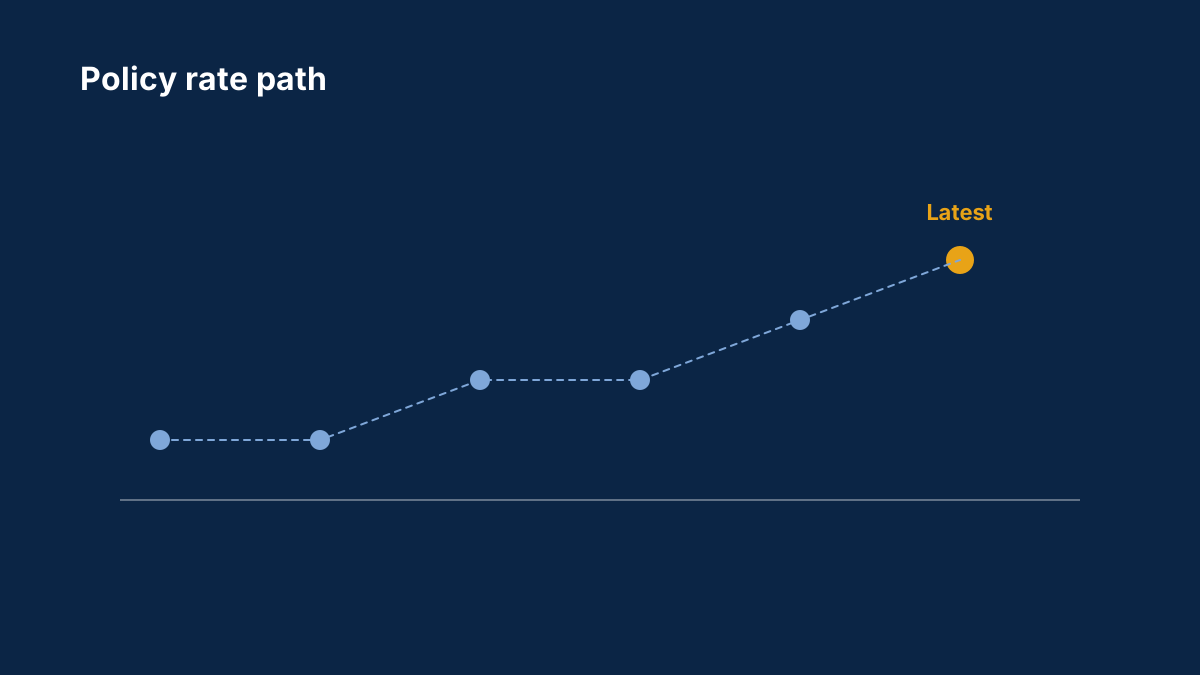
BEA published its annual update of the National Economic Accounts on the same day, which is why monthly personal income and spending figures were also revised (PCE report). The upward revision to a quarter that ended in June arrived after the Fed raised rates on 16 September (report) and alongside a weak September jobs report (report). Growth is a backward-looking measure; traders weigh it against surveys such as the ISM (report) and against inflation. GDP explained for forex traders shows how quarterly, annualized and monthly growth compare.
What happens next
The advance estimate for the third quarter is due on 29 October at 8:30 a.m. Eastern Time.
Sources
Common questions
What was US GDP growth in the second quarter of 2026?
2.2% at an annual rate in the third estimate, up from 1.5% in the advance and second estimates, the Bureau of Economic Analysis reported on 30 September 2026.
What was first-quarter 2026 GDP growth?
2.5% after revision.
Why was second-quarter GDP revised up?
BEA said the 0.7 percentage point revision primarily reflected upward revisions to investment, consumer spending and government spending.
What is real GDI?
Gross domestic income measures the incomes earned in producing output, the other side of the national accounts from GDP. It rose 2.6% in the second quarter, and the average of GDP and GDI rose 2.4%.
When is the first estimate of third-quarter 2026 GDP?
29 October 2026 at 8:30 a.m. Eastern Time.
This article is for information only and is not financial advice. Trading forex and CFDs carries a high risk of losing money. Read the risk warning. Spotted an error? Tell the editors.



Comments
Log in to join the discussion. Comments follow the community guidelines.
Log in to commentLoading comments…