Bond yields and exchange rates: why currency traders watch the 2-year yield
Currencies often follow the gap between two countries' government bond yields. How yield differentials work, why 2-year yields track central bank expectations, and when the link breaks down.
Currency traders spend a lot of time watching bond markets. The reason is simple: a bond yield is the return investors earn for holding a country's debt, and money tends to flow toward higher returns, adjusted for risk.
Yields in brief
A government bond pays fixed interest. When its market price falls, its yield, the return from buying it at today's price, rises, and vice versa. Yields reflect what investors expect interest rates and inflation to be over the bond's life, plus compensation for risk.
- Short-dated yields, such as those on 2-year bonds, closely track expectations for central bank policy rates over the next couple of years.
- Long-dated yields, such as those on 10-year bonds, also reflect long-term growth and inflation expectations and the extra return investors demand for lending for longer.
The yield differential
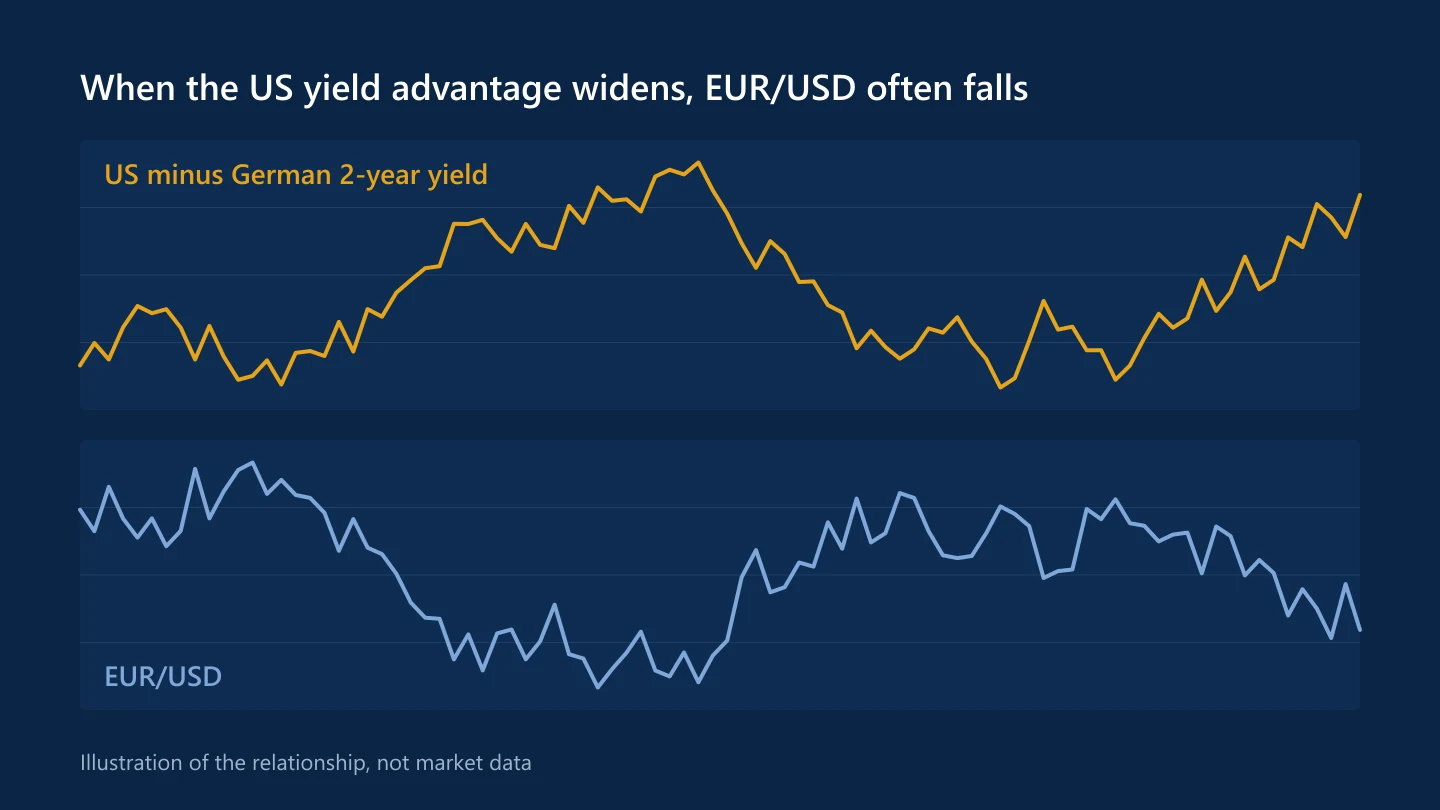
For a currency pair, what usually matters is the difference between two countries' yields. If US 2-year yields rise while German 2-year yields don't, the gap widens in the dollar's favour, and EUR/USD often falls. Many traders chart the 2-year spread alongside the exchange rate to see whether a currency is moving with interest rate expectations or against them.
The link works because short-dated yields respond immediately to data and central bank communication. When US inflation comes in above forecasts, 2-year Treasury yields typically jump within seconds as markets price in tighter Federal Reserve policy, and the dollar usually follows (CPI explained).
Real yields
Nominal yields minus expected inflation give real yields. They matter most for gold, which pays no interest, and for currencies when inflation differs widely between countries. Rising real yields tend to weigh on gold (what moves gold).
When the link breaks
- Risk-off episodes. In a crisis, safe-haven currencies such as the yen and franc can rise despite low yields (risk-on, risk-off).
- Fiscal worries. If yields rise because investors doubt a government's finances rather than because they expect higher policy rates, the currency can fall alongside its bonds, as sterling did during the UK gilt market turmoil of September 2022.
- Intervention can override interest rate differences for a time (intervention explained).
- Central bank balance sheets. Bond buying or selling by central banks can move long-dated yields for reasons unrelated to rate expectations (QE and QT).
Using yields in practice
- Check whether a currency's move matches the move in yield spreads. A currency rising while its yield advantage shrinks may be driven by something else, or may be vulnerable.
- Watch yields around major releases; they often react more cleanly than currencies.
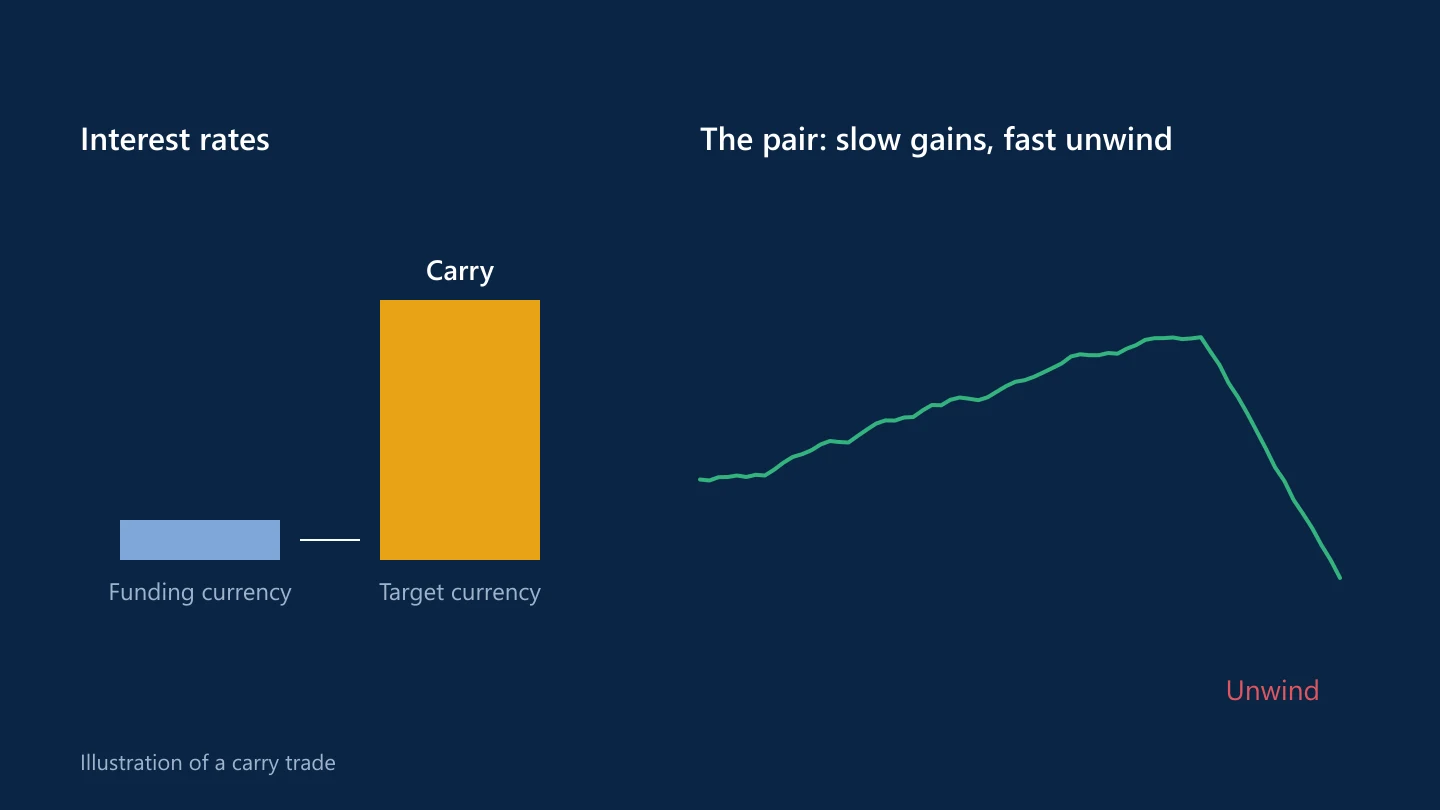
- Remember that interest rate differences also set swap and drive the carry trade.
Common questions
Why do currency traders watch bond yields?
Because money tends to flow toward higher returns. The gap between two countries' bond yields, especially 2-year yields that track central bank expectations, often moves in line with their exchange rate.
What is a yield differential?
The difference between the yields on comparable government bonds in two countries, such as US and German 2-year bonds. A gap widening in one country's favour tends to support its currency.
Can a currency fall when its bond yields rise?
Yes. If yields rise because investors are worried about a government's finances rather than expecting higher interest rates, the currency can fall with its bonds, as sterling did in September 2022.
This article is for information only and is not financial advice. Trading forex and CFDs carries a high risk of losing money. Read the risk warning. Spotted an error? Tell the editors.

Comments
Log in to join the discussion. Comments follow the community guidelines.
Log in to commentLoading comments…