Inflation targets of the major central banks: Fed, ECB, BoE, BoJ, SNB, BoC, RBA and RBNZ
Most major central banks aim for inflation of about 2%, but the measures and ranges differ. A reference guide to each target, how recent inflation compares, and why the details matter for currencies.
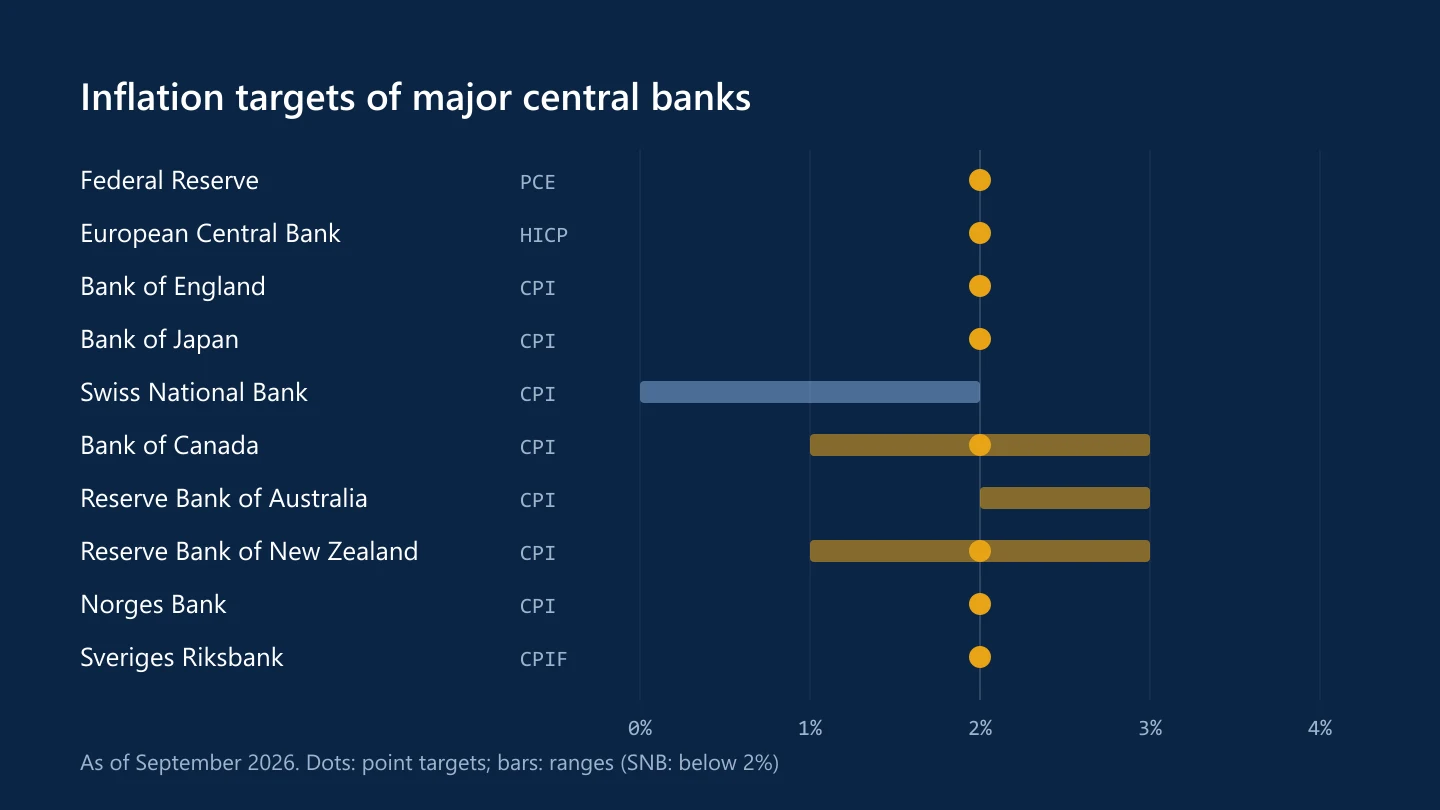
Inflation targets explain much of what central banks do. When inflation runs above target, markets expect higher interest rates; when it runs below, lower. Knowing each bank's target, and the measure it uses, makes interest rate expectations and currency reactions easier to follow.
The targets
- Federal Reserve (US): 2% over the longer run, measured by the personal consumption expenditures (PCE) price index.
- European Central Bank: 2% over the medium term, measured by the Harmonised Index of Consumer Prices, with deviations in either direction treated as equally undesirable.
- Bank of England: 2% consumer price inflation, set by the government in the Bank's remit.
- Bank of Japan: 2% consumer price inflation, a target adopted in January 2013.
- Swiss National Bank: price stability, defined as consumer price inflation of less than 2% a year; deflation also counts as a breach.
- Bank of Canada: 2% total consumer price inflation, the midpoint of a 1–3% range. The current agreement with the government runs to the end of 2026.
- Reserve Bank of Australia: consumer price inflation of 2–3%.
- Reserve Bank of New Zealand: 1–3% over the medium term, with a focus on the 2% midpoint. Since December 2023 its remit has focused on price stability alone, after maximum sustainable employment was removed as an objective.
- Norges Bank: 2%.
- Sveriges Riksbank: 2%, measured by CPIF, consumer prices with a fixed mortgage interest rate.
Recent inflation against those targets
The latest readings show why central banks are moving in different directions:
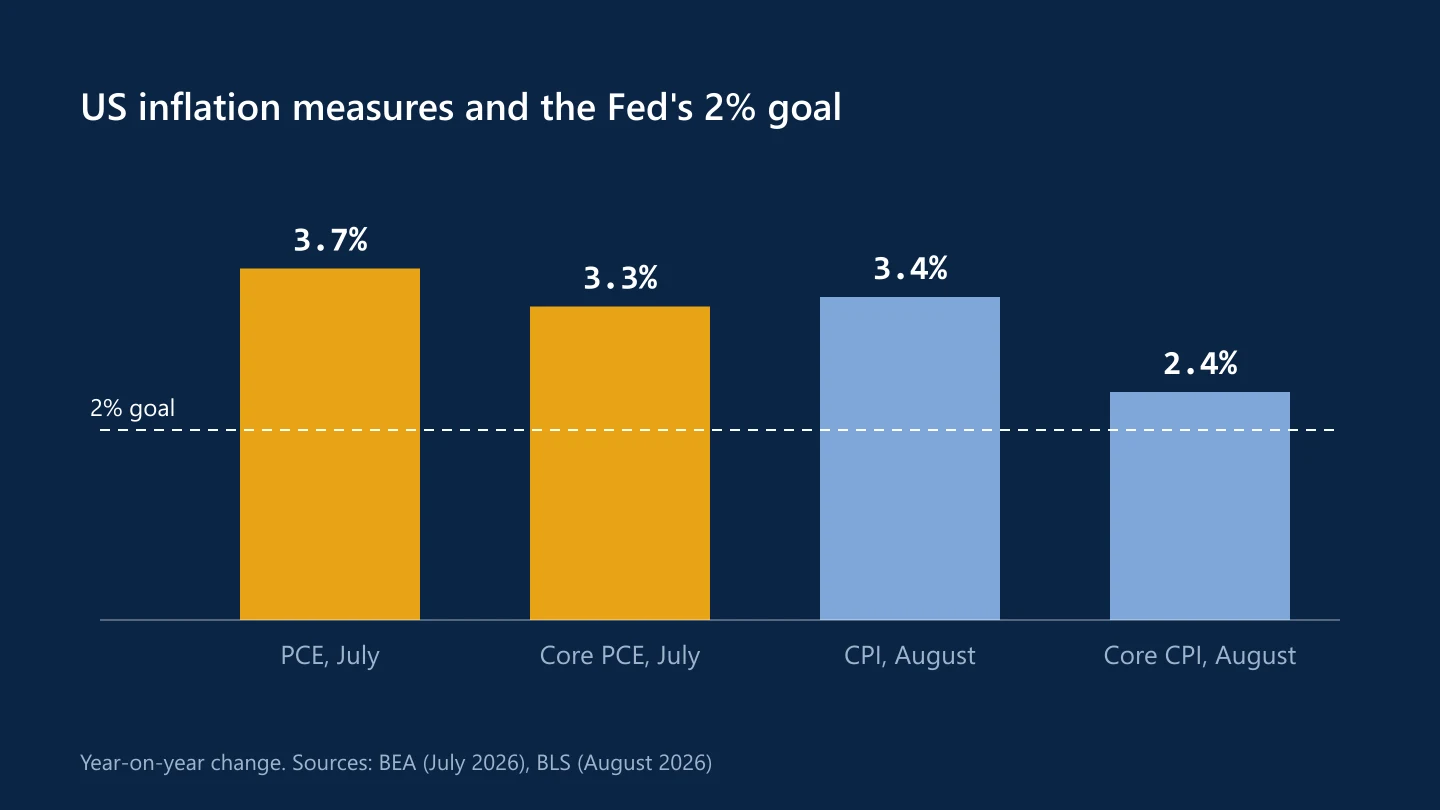
- United States: consumer prices up 3.4% in August 2026; PCE prices up 3.7% in July (PCE report)
- Euro area: 3.3% in August, flash estimate (report)
- United Kingdom: 2.9% in July (report)
- Switzerland: 0.8% in August (report)
- Norway: 3.0% headline and 2.7% underlying (CPI-ATE) in July (preview)
Why the details matter
- Different measures, different numbers. US PCE and CPI inflation can differ considerably, and the Fed's target refers to PCE.
- Ranges give room. A bank with a 1–3% range may tolerate inflation that would prompt a bank with a single 2% goal to act.
- Targets and mandates can change. Canada reviews its agreement every five years, and New Zealand's remit changed in 2023. Changes can shift long-term interest rate expectations.
- Expectations are part of the picture. Central banks watch surveys of expected inflation because expectations above target can make inflation stick (US consumer sentiment).
For how rate decisions feed through to exchange rates, see how interest rate decisions move currencies.
Sources
- Federal Reserve: Why does the Federal Reserve aim for inflation of 2 percent over the longer run?
- European Central Bank: monetary policy strategy
- Swiss National Bank: the SNB's monetary policy strategy
- Bank of Canada: inflation-control target
- Reserve Bank of Australia: inflation
- Reserve Bank of New Zealand: about monetary policy
Common questions
What is the Federal Reserve's inflation target?
2% over the longer run, measured by the annual change in the personal consumption expenditures (PCE) price index.
Which central banks have an inflation target range?
The Bank of Canada targets 2% as the midpoint of 1–3%, the Reserve Bank of Australia targets 2–3%, and the Reserve Bank of New Zealand targets 1–3% with a focus on the 2% midpoint.
What is the Swiss National Bank's inflation target?
The SNB defines price stability as consumer price inflation of less than 2% a year, and also treats deflation as a breach.
This article is for information only and is not financial advice. Trading forex and CFDs carries a high risk of losing money. Read the risk warning. Spotted an error? Tell the editors.
Comments
Log in to join the discussion. Comments follow the community guidelines.
Log in to commentLoading comments…