Quantitative easing and quantitative tightening explained
In quantitative easing, central banks create reserves to buy bonds; in quantitative tightening they shrink those holdings. How QE and QT work, the Bank of England's £895 billion programme, and the effects on currencies.
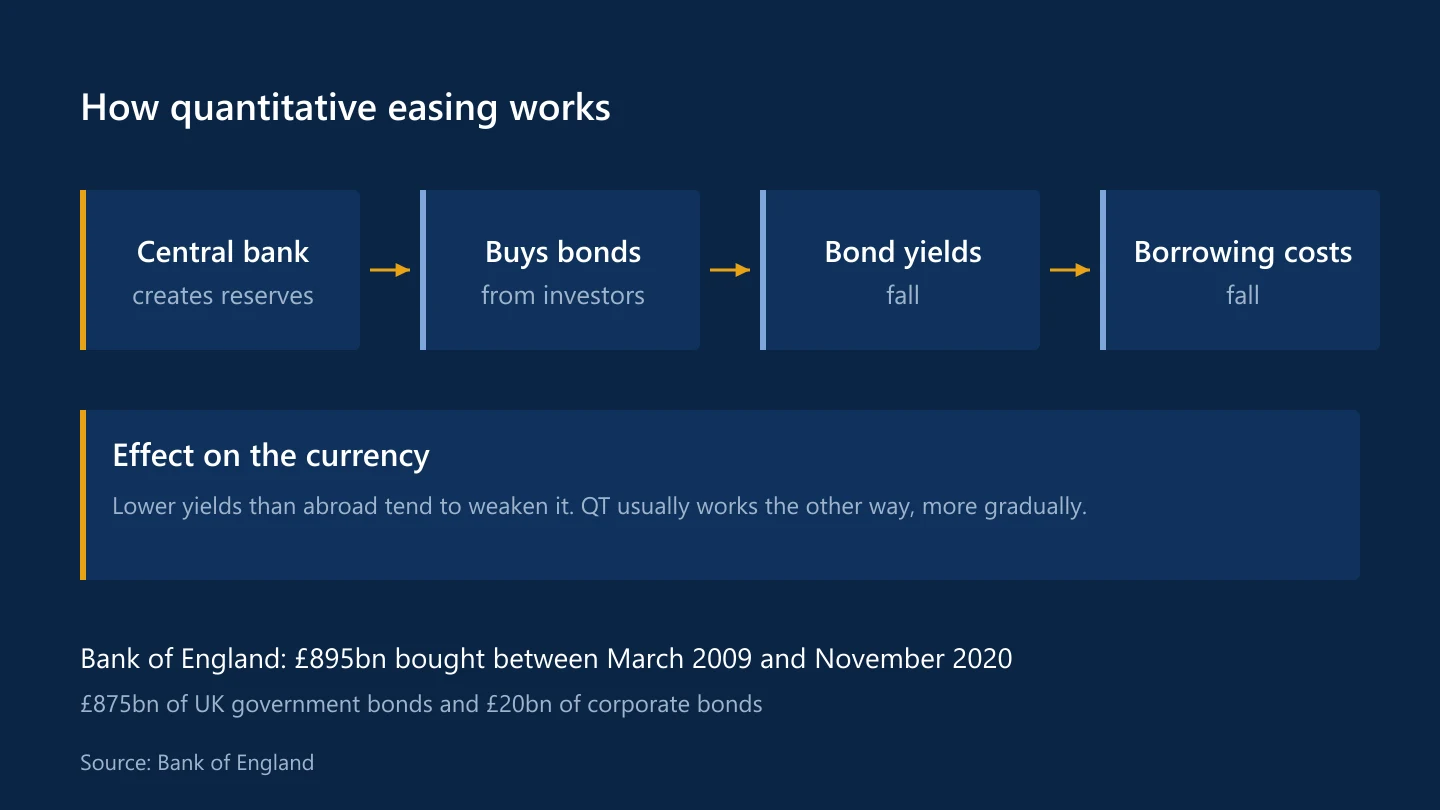
When interest rates are already very low, central banks have used another tool to support their economies: buying large amounts of bonds. That's quantitative easing, or QE. Reversing it is quantitative tightening, or QT.
How QE works
The Bank of England describes QE as a tool to help it meet its inflation target. The central bank creates new money in the form of central bank reserves and uses it to buy bonds, mostly government bonds, from investors such as pension funds and asset managers.
Buying bonds pushes their prices up and their yields down. Lower long-term yields reduce borrowing costs across the economy, which encourages spending and investment. The investors who sold the bonds also move their money into other assets, which can lift their prices.
The Bank of England's programme
- Started: March 2009, in response to the global financial crisis
- Last increase announced: November 2020
- Total purchases: £895 billion, of which £875 billion were UK government bonds (gilts) and £20 billion corporate bonds
The Federal Reserve, European Central Bank and Bank of Japan ran large programmes of their own. The Bank of Japan went further, targeting government bond yields directly under a yield curve control policy it ended in March 2024.
How QT works
QT reduces the central bank's bond holdings, either by not replacing bonds as they mature or by selling them to investors. The Bank of England began QT in February 2022. It says QT isn't meant to be a way of changing interest rates, which remain its main tool; one aim is to keep room to use QE again if it's needed in future.
Effects on currencies
- QE tends to weaken a currency, by lowering yields relative to other countries and signalling that policy will stay loose for longer. Programmes larger than expected have the biggest effect.
- QT tends to be a quieter force, because central banks set out their plans in advance and adjust them gradually.
- Relative policy matters. When one central bank is buying bonds while another is shrinking its holdings, the widening yield gap can move the exchange rate more than either programme alone (bond yields and exchange rates).
- Read the whole statement. Changes to the pace of bond buying or QT are often announced alongside rate decisions (how rate decisions move currencies).
Sources
Common questions
What is quantitative easing?
A policy in which a central bank creates reserves to buy large amounts of bonds, lowering long-term interest rates to support spending and help meet its inflation target.
How much QE did the Bank of England do?
£895 billion in total: £875 billion of UK government bonds and £20 billion of corporate bonds, from March 2009 to the last increase announced in November 2020.
Does quantitative easing weaken a currency?
It tends to, because it lowers yields relative to other countries and signals loose policy for longer, but the effect depends on how much was already expected and what other central banks are doing.
This article is for information only and is not financial advice. Trading forex and CFDs carries a high risk of losing money. Read the risk warning. Spotted an error? Tell the editors.
Comments
Log in to join the discussion. Comments follow the community guidelines.
Log in to commentLoading comments…