Risk-on, risk-off explained: how market mood moves currencies
When investors feel confident, higher-yielding and commodity currencies tend to rise; when fear takes over, the yen, franc and dollar often gain. How risk sentiment works and how to spot a shift.
Much of the day-to-day movement in currencies isn't about any one country. It reflects the market's appetite for risk as a whole. Traders call it "risk-on" when investors are confident and "risk-off" when they're looking for safety.
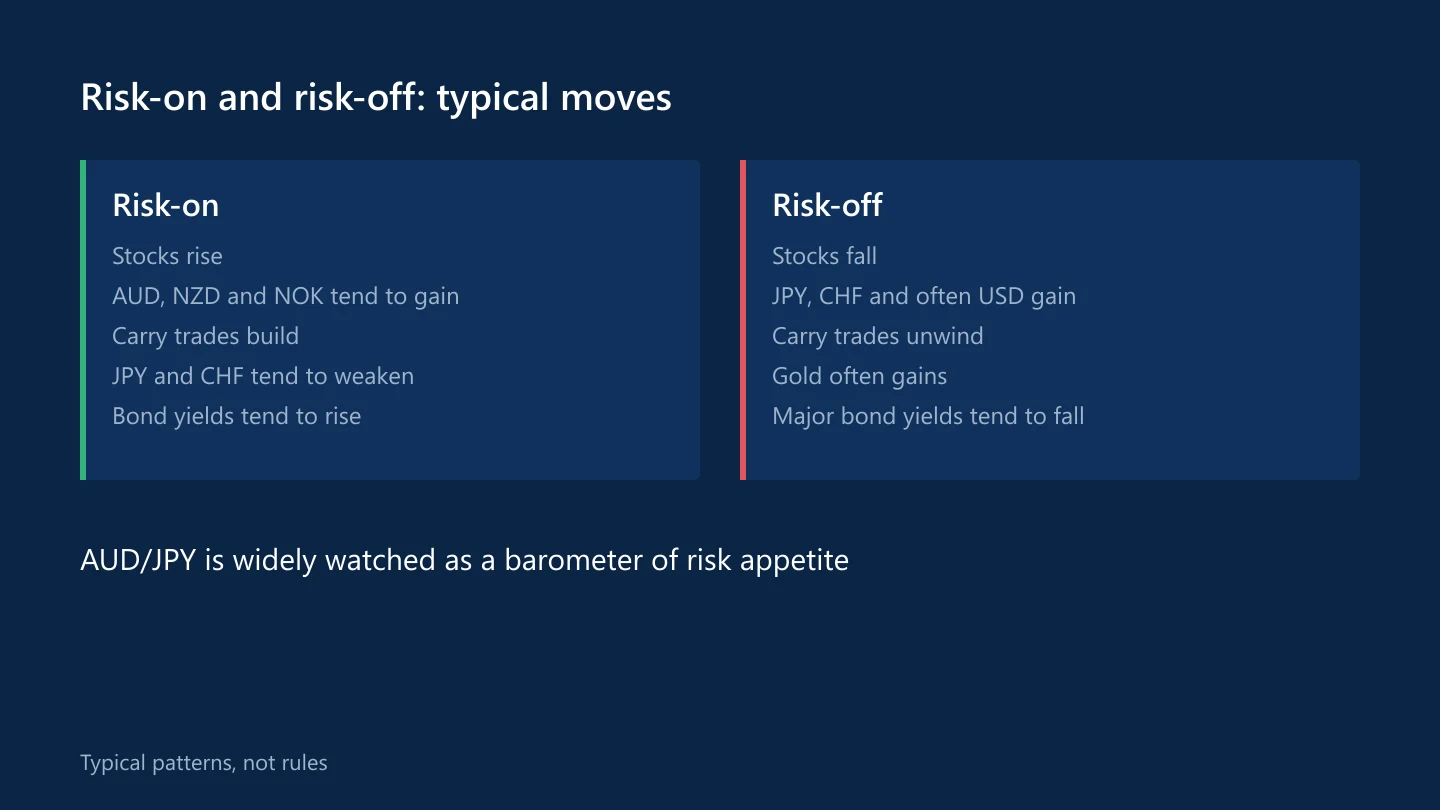
Risk-on
When growth looks solid and markets are calm, investors are more willing to hold assets with higher potential returns and higher risk. Typical moves:
- stock markets rise
- higher-yielding currencies gain, helped by carry trades that earn the interest rate gap
- commodity currencies such as the Australian and New Zealand dollars and the Norwegian krone tend to strengthen (commodity currencies)
- the yen and Swiss franc tend to weaken
Risk-off
When a shock hits, whether a financial crisis, a war or a recession scare, investors cut risk. Typical moves:
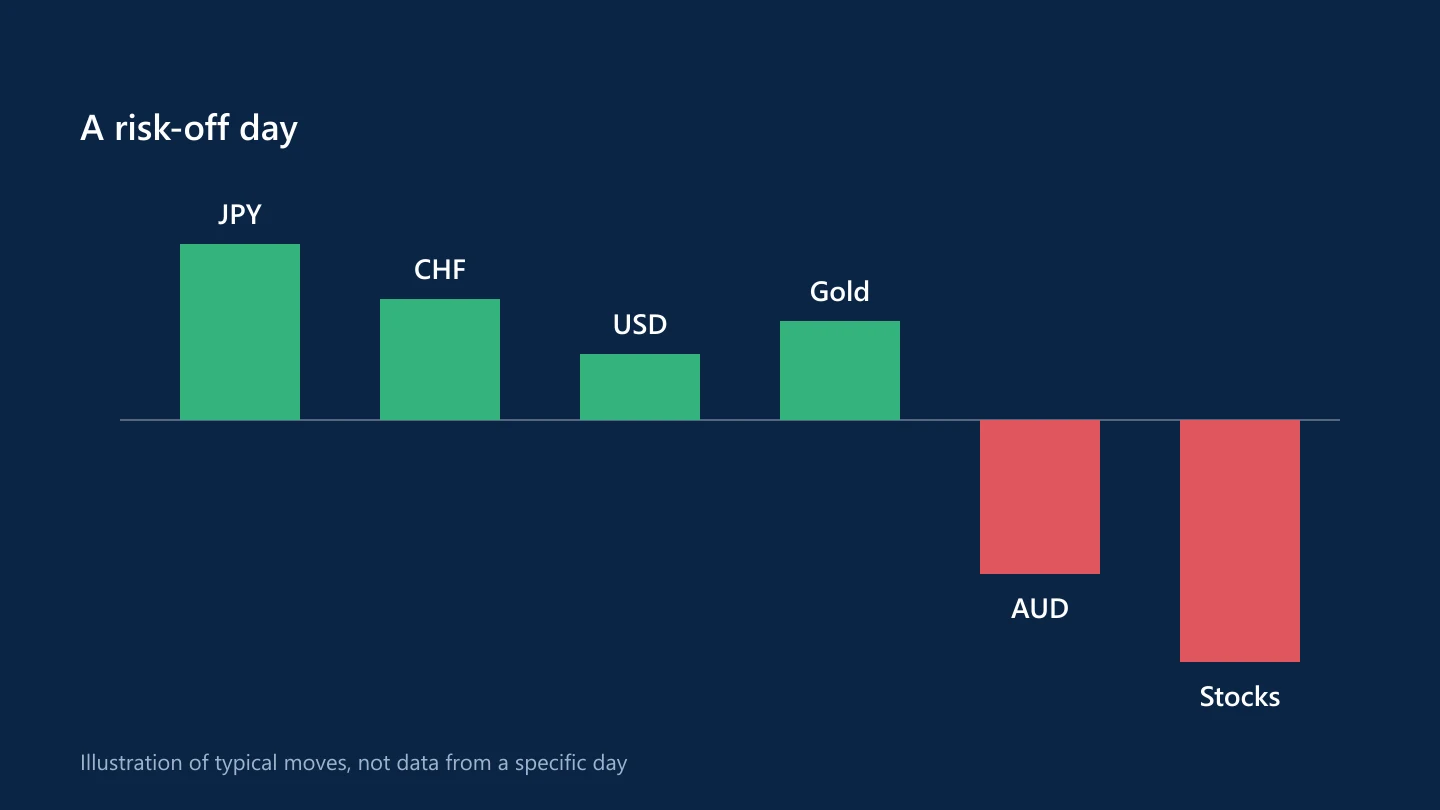
- stock markets fall
- carry trades unwind, as positions funded in low-yielding currencies are closed
- the Japanese yen and Swiss franc tend to rise (safe-haven currencies)
- the US dollar often rises too, as investors seek the most liquid assets
- gold often gains, though not every time (what moves gold)
- yields on major government bonds usually fall as investors buy them
Signs of a shift
- Equity indexes and volatility gauges. A sharp fall in stock indices, and a jump in measures of expected volatility such as the VIX, often mark a move to risk-off.
- AUD/JPY. Because it pairs a risk-sensitive currency with a safe haven, AUD/JPY is widely watched as a barometer of risk appetite.
- Several markets moving together. When stocks, commodity currencies and yields fall at once while the yen rises, sentiment is driving prices more than any single release.
When the pattern doesn't hold
- The source of the shock matters. If a crisis starts in the US, the dollar may not act as a safe haven. If it's centred on Japan or Switzerland, their currencies can behave differently.
- Central banks can override it. Intervention or a policy surprise can push a safe haven the "wrong" way (intervention explained).
- Energy shocks are complicated. A jump in oil prices can hurt stocks while helping the currencies of oil exporters.
Using risk sentiment in practice
Before trading one currency pair, check the wider picture. A long AUD/USD trade taken just as stock markets turn sharply lower is fighting the tide, whatever the Australian data says. Currency correlation explains how these relationships show up between pairs, and bond yields and exchange rates covers the interest rate side.
Common questions
What does risk-on mean in forex?
A period when investors are confident and willing to take risk, which tends to lift stocks, higher-yielding currencies and commodity currencies such as the Australian dollar, while the yen and Swiss franc weaken.
Which currencies rise in a risk-off market?
Typically the Japanese yen, the Swiss franc and often the US dollar, as investors look for safety and liquidity.
Why is AUD/JPY used as a risk sentiment indicator?
It pairs a currency that tends to rise when investors are confident, the Australian dollar, with one that tends to rise when they're fearful, the yen, so its moves often reflect overall risk appetite.
This article is for information only and is not financial advice. Trading forex and CFDs carries a high risk of losing money. Read the risk warning. Spotted an error? Tell the editors.
Comments
Log in to join the discussion. Comments follow the community guidelines.
Log in to commentLoading comments…