Why one word from a central banker can move a currency
Central bank statements are written in a coded language, and the market hangs on every word change. Here is how the code works, which words carry weight, and how to read a statement like a trader.
A central bank can move its currency without changing a single rate — by changing a single word. When a statement shifts from "will act" to "remains prepared to act", or from "some members" to "most members", the market reprices the policy path instantly, because the language is the policy's forward guidance. The statements are written with legal precision and read with forensic attention, and the traders who can read them hold an edge the charts cannot provide.
This guide explains how the central bank language code works, which words carry weight, and how to read a statement like a trader. The transmission from language to currency is in how interest rate decisions move currencies; this guide is the language layer.
Why the words are the policy
Central banks steer expectations more than they steer rates. The rate itself changes four or eight times a year; the market's expectation of the next rate changes every day, on every piece of communication. The words are how the bank manages that expectation between decisions — guiding the market toward the outcome the bank intends, so that when the decision lands, it is already priced and the shock is small. The language is not decoration around the policy; it is the policy's steering mechanism.
That is why the market reads statements the way lawyers read contracts: every word was chosen, every change is a signal, and the differences between this statement and the last one carry the meaning. The forward guidance explainer covers the steering logic in full.
The code, decoded
The language code has a small vocabulary with precise meanings:
"Some" versus "many" versus "most". The committee's internal distribution, revealed in adjectives. "Some members favour a hike" is a footnote; "most members favour a hike" is a pre-announcement. The upgrade from "some" to "most" has moved currencies more than many actual rate changes.
"Will act" versus "remains prepared to act" versus "will act as appropriate". The commitment ladder. "Will" commits; "remains prepared" arms but does not promise; "as appropriate" conditions the action on the data. Each step down the ladder is dovish, and the market prices the step instantly.
"Transitory" versus "persistent" versus "entrenched". The inflation vocabulary. Calling inflation transitory signals patience; calling it persistent signals the committee is losing patience; "entrenched" is the word that precedes aggressive action. The current cycle's energy-inflation debate is being fought in exactly this vocabulary.
"Vigilant", "monitoring closely", "attentive". The risk-management signals. "Vigilant" is the market's favourite warning — the word central banks historically used before tightening cycles. Its appearance or disappearance moves expectations on its own.
The full vocabulary lives in the statements themselves, and the skill is comparative: the market does not read the statement, it reads the changes from the last one. The BoE preview shows how the vote split and the language are read together.
Where the words land
The language reaches the market through three channels:
The statement. The prepared text, parsed word by word against the previous version. The statement's changes are the day's first signal, and the first minutes after publication are the fastest repricing.
The press conference. The chair's unscripted answers, where the tone and the dodged questions carry information the prepared text hides. The conference's moves frequently override the statement's. The central bank day playbook covers the event structure.
The speeches. The between-meeting communications — scheduled talks, interviews, panels — where individual members steer expectations. A governor's offhand remark about inflation can move a currency more than a minor data release.
The practical read
Reading central bank language as a trader is a comparative exercise:
- Diff the statements. Read the new statement against the old one, word by word. The changes are the message; unchanged sentences are the baseline.
- Track the adjectives. The distribution words — some, many, most — and the inflation vocabulary carry the committee's internal balance.
- Grade the tone. The press conference's tone — confident, hedged, defensive — is a signal the text cannot carry.
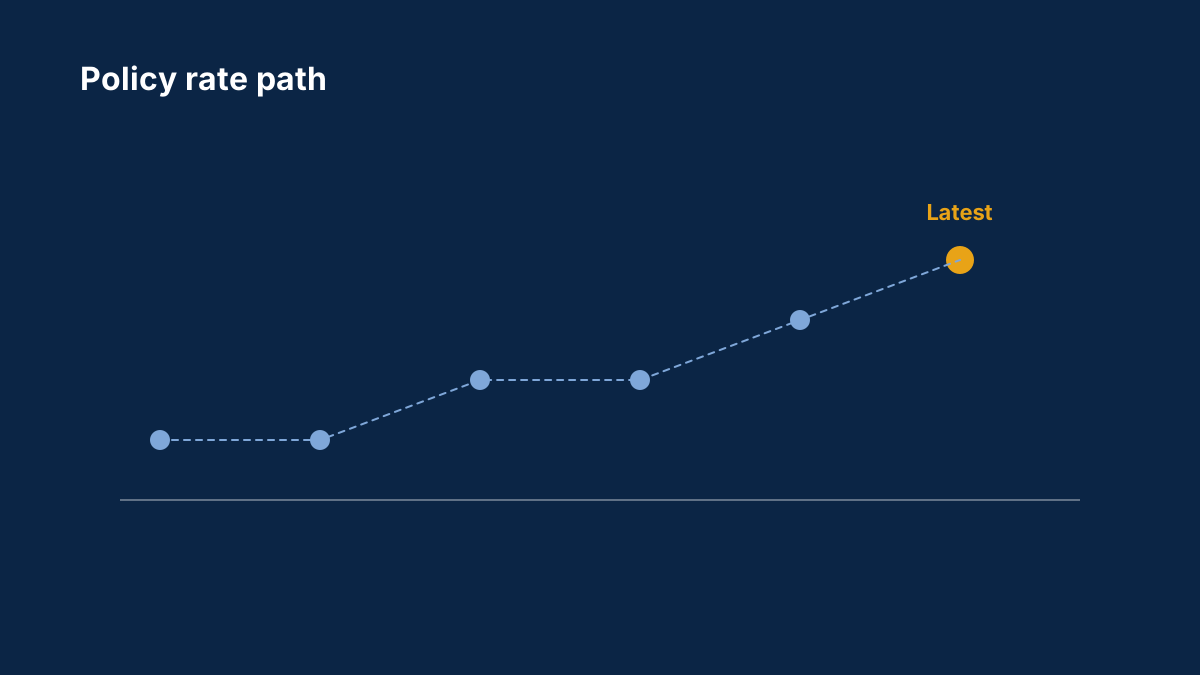
- Map the words to the path. Each signal translates into the rate path: hawkish words raise the expected path, dovish ones lower it, and the currency follows the path. The inflation transmission explainer shows how the path reprices the pair.
- Expect the revision. The first read is often wrong in detail — the market itself re-reads and revises through the day, and the second moves are the informed ones.
Why the skill compounds
The language-reading skill compounds because it transfers across every central bank: the Fed's statements, the ECB's, the BoE's and the BoJ's all use versions of the same code, and the trader who learns one bank's vocabulary learns the family. The skill also transfers across time: the vocabulary is stable across decades, which is why "vigilant" still matters, and why the market's reaction to a word change is one of its most reliable patterns.
Central bank language is the market's most concentrated information channel — a few chosen words carrying the policy path. Learn the code, diff the statements, and the announcements that confuse the unprepared become the clearest signals on the calendar.
Sources
Common questions
Why do central bank words move currencies?
Because the words steer expectations about the next policy move, and currencies trade those expectations. A word change signals the path before any rate change happens — the language is the forward guidance.
Which words should I watch in a Fed statement?
The distribution words — some, many, most — the commitment ladder — will act versus prepared to act — and the inflation vocabulary — transitory versus persistent. Changes from the previous statement are the signal.
What does 'vigilant' mean in central bank language?
The classic warning word central banks use before tightening cycles. Its appearance or disappearance moves expectations on its own, because the market has decades of history with it.
How do I read a central bank statement?
Diff it against the previous one: the changes are the message. Track the adjectives for the committee's internal balance, grade the press conference's tone, and map the signals to the rate path.
Does the press conference matter more than the statement?
Often yes. The chair's unscripted answers carry tone and emphasis the prepared text hides, and the conference's moves frequently override the statement's first reaction.
This article is for information only and is not financial advice. Trading forex and CFDs carries a high risk of losing money. Read the risk warning. Spotted an error? Tell the editors.
Comments
Log in to join the discussion. Comments follow the community guidelines.
Log in to commentLoading comments…