PMIs explained: the survey data that moves currencies early
Purchasing managers' indexes are among the first economic numbers published each month. What the 50 line means, which PMIs matter and how traders use them.
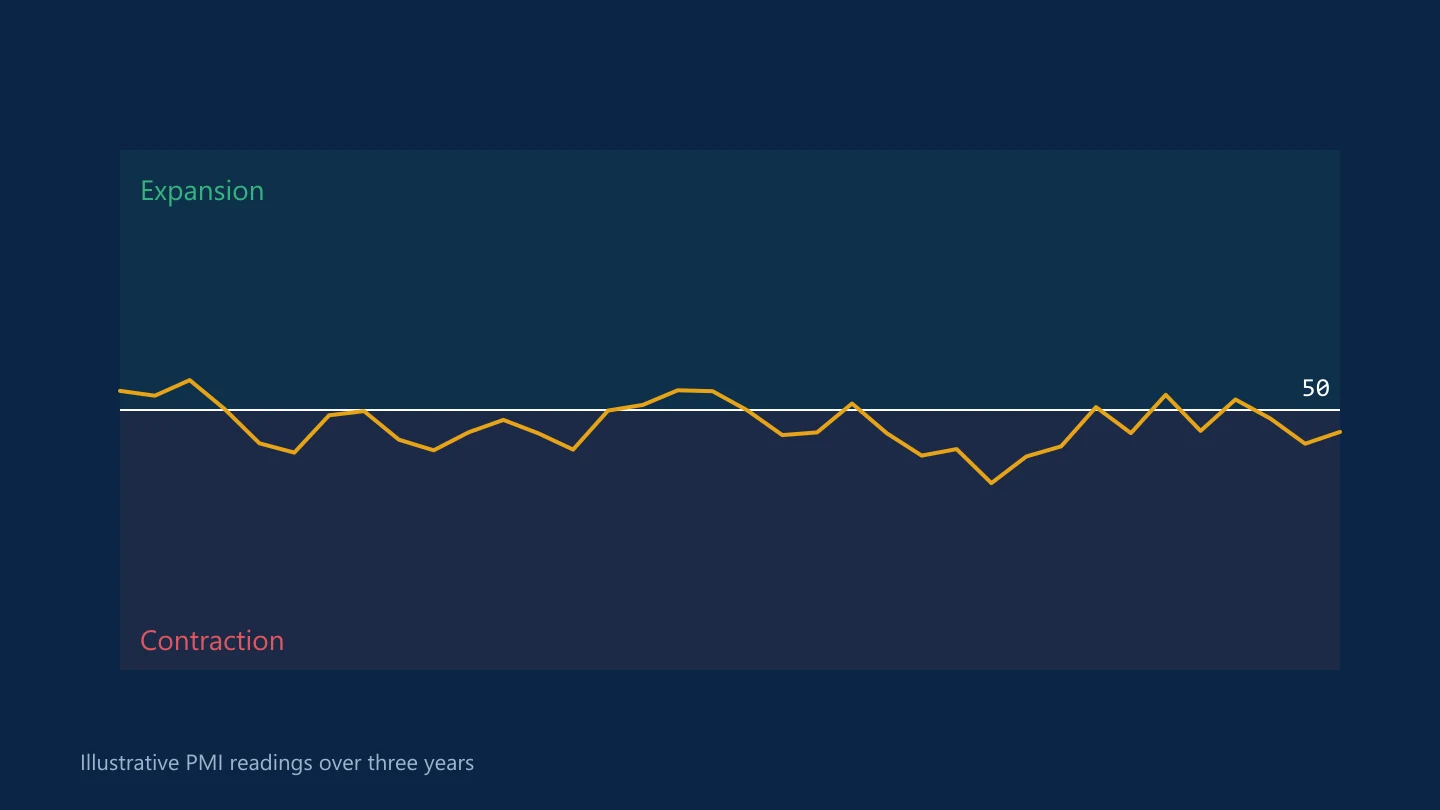
A purchasing managers' index, or PMI, is a monthly survey of companies about how business is changing. Because it arrives weeks before official figures on output or growth, it is one of the earliest reads on an economy, and currency markets pay attention.
How a PMI works
Purchasing managers are asked whether conditions such as new orders, output, employment, supplier delivery times and inventories are higher, the same or lower than the previous month. The answers are combined into an index where:
- Above 50 means activity is expanding compared with the previous month.
- Below 50 means it is contracting.
- Further from 50 means a stronger change.
A PMI measures the breadth of change, not its size. A reading of 52 means more firms reported improvement than deterioration.
Manufacturing, services and composite
- Manufacturing PMIs cover factories and are sensitive to trade and global demand.
- Services PMIs cover the larger part of most modern economies.
- Composite PMIs combine the two.
The releases traders watch
- S&P Global flash PMIs for the euro area, the UK, the US, Japan, Australia and others, published in the second half of the month before the month has ended. The flash readings are often the market-moving release.
- ISM in the United States: the manufacturing index on the first business day of the month at 10:00 a.m. New York time, and services two business days later.
- China: an official PMI from the National Bureau of Statistics at the end of the month and a private-sector PMI shortly after, both watched for their effect on commodity currencies such as the Australian dollar.
The details matter
- New orders hint at future activity.
- Prices paid or input prices can signal inflation pressure before it shows up in CPI.
- Employment components are read ahead of official jobs data.
Limits of PMIs
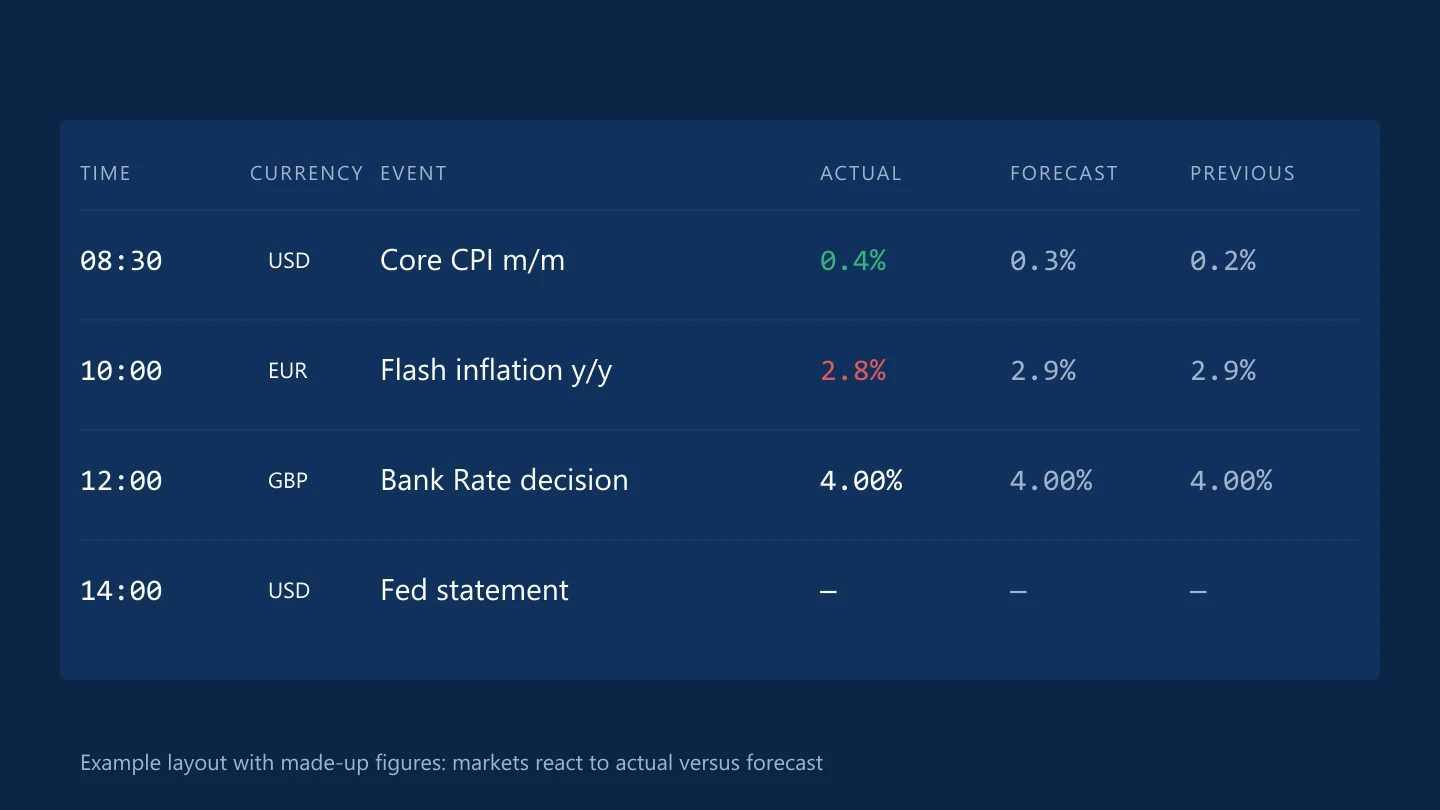
PMIs are surveys of sentiment and direction. They can be swayed by one-off shocks and don't always match later hard data. Markets react to the difference between the reading and the forecast, as with any release on the economic calendar.
Common questions
What does a PMI of 50 mean?
50 is the dividing line: readings above 50 indicate that business activity is expanding compared with the previous month, and readings below 50 indicate contraction.
What is a flash PMI?
An early estimate published before the month ends, based on most of the survey responses. Flash PMIs often move markets more than the final figures.
This article is for information only and is not financial advice. Trading forex and CFDs carries a high risk of losing money. Read the risk warning. Spotted an error? Tell the editors.

Comments
Log in to join the discussion. Comments follow the community guidelines.
Log in to commentLoading comments…