Oil and inflation: how energy prices reach currency pairs
Oil prices feed inflation, inflation feeds central banks, and central banks feed currencies — the chain runs from Brent to every pair on the board. Here is the full transmission, with the current cycle as the case study.
Oil is the only commodity that reaches every economy's inflation report — through fuel at the pump, freight in the supply chain and energy in the production costs — and from there it reaches every central bank and every currency. The chain from Brent to a repriced currency pair is long but reliable, and the current cycle is running it live: Brent above $100 a barrel (report) is now visible in inflation prints across the UK, the US and Canada.
This guide walks the transmission from energy prices to currency pairs, using the current cycle's data. The oil-CAD channel is covered in oil prices and the Canadian dollar; this guide is the inflation channel.
The chain, link by link
The transmission runs through five links:
Link one: energy into the price index. Oil reaches consumer prices directly — fuel, heating, transport — and indirectly, as freight and energy costs pass through production into goods and services. The direct pass-through is fast, within a month or two; the indirect is slower, spreading over quarters. The producer-price pipeline shows it first: UK factory gate inflation rose to 3.7% with refined petroleum up 49% (report) — the energy shock entering the supply chain before it reaches the shop.
Link two: the inflation print. The energy pass-through lands in the headline CPI, widening the gap between headline and core. The current prints show the signature: US headline inflation at 3.4% against core at 2.4% (report), UK headline at 3.1% (report), Canada at 3.0% with prices excluding gasoline up only 2.4% (report). The headline-core gap is the energy shock's fingerprint.
Link three: the central bank's read. The bank must decide what the energy shock means. The standard view is that energy shocks are transitory — the price level jumps, then stabilises, and inflation returns to target without policy action. The risk is the second round: if the shock feeds wages and services prices, the transitory inflation becomes persistent, and policy must respond. The central bank's read of that risk is the chain's decision point. The inflation transmission explainer covers the policy read in detail.
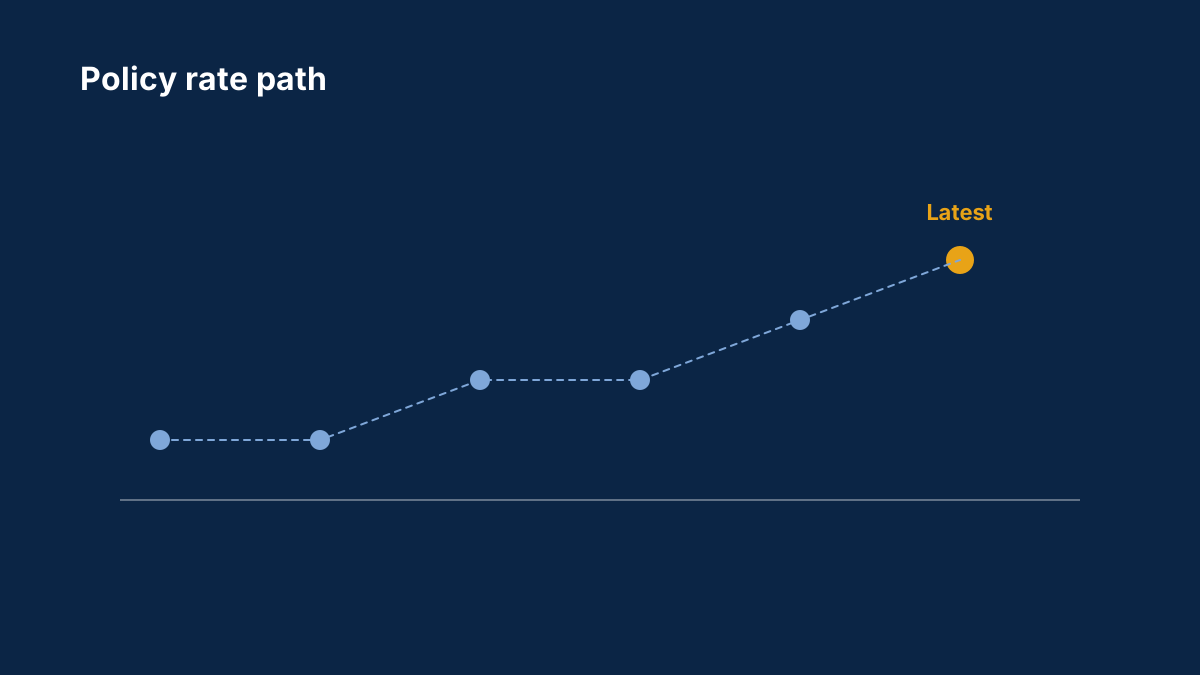
Link four: the policy response. The read becomes policy: a bank that treats the shock as transitory holds steady; a bank that sees second-round effects tightens. The response changes the rate path, and the rate path is what the currency trades. The central bank language explainer shows how the banks' vocabulary — transitory versus persistent — signals the read in real time.
Link five: the currency. The repriced rate path moves the currency through the standard interest-rate channel — with a second effect layered on: the energy shock itself hits the oil importers' terms of trade, weakening their currencies directly, and supports the exporters'. The two effects can push a currency in opposite directions, and the net is the market's verdict.
The current cycle as the case study
The current cycle runs the whole chain at once. The energy shock's fingerprints are in the prints — the headline-core gaps above. The central banks' reads differ visibly: the Bank of Canada held at 2.25% citing fuel prices and US tariffs (deliberations), the Bank of England went into its decision split with inflation at 3.1% (preview), and the ECB hiked into the shock (report). The currencies are pricing each bank's read — which is the chain's final link, playing out in real time.
The pair-by-pair map
The energy-inflation channel distributes unevenly:
The exporters' currencies. CAD and NOK get the terms-of-trade support from high oil — the oil and CAD guide covers the direct channel — but their central banks must weigh the same inflation. The net is a tug-of-war between the export channel and the inflation channel, and the pair's chop reflects it. The USD/CAD explainer maps the tug-of-war.
The importers' currencies. The euro area and Japan import energy on a large scale, so the shock hits their terms of trade and their inflation at once. The euro's case is the live one: the ECB hiked into the shock, supporting the currency, while the energy import bill pressures the economy — the two forces netting out in the euro's price.
The dollar. The US is a large producer, so the shock's terms-of-trade effect is smaller than elsewhere — but the inflation channel runs through the Fed regardless, and the dollar trades the Fed's read. The Fed hike explainer covers the dollar side.
The trader's checklist
The energy-inflation read compresses into a checklist:
- Where is oil? The shock's size and persistence decide everything downstream.
- Which prints show the fingerprint? The headline-core gap is the energy shock's signature — a widening gap is the pass-through arriving.
- What is each bank's read? Transitory or persistent — the vocabulary in the statements is the real-time signal.
- Which channel dominates each pair? Terms of trade for exporters, inflation for the rest, the Fed's read for the dollar.
- Watch the second round. Wages and services prices are the shock's second wave — the data that turns transitory into persistent, and the chain's most important turn.
Oil is the market's most connected commodity — one barrel's price reaches every inflation report, every central bank and every currency. Read the chain from Brent to the pairs, and the energy story stops being a commodity headline and becomes the currency market's clearest transmission.
Sources
Common questions
How does oil affect inflation?
Directly, through fuel and heating prices, and indirectly, through freight and production costs. The direct pass-through lands within a month or two; the indirect spreads over quarters through the supply chain.
What is the headline-core gap?
The difference between headline inflation, which includes energy, and core, which strips it out. A widening gap is the energy shock's fingerprint in the inflation data.
Why do central banks treat energy shocks as transitory?
Because a price-level jump from energy usually stabilises without policy action. The risk is the second round — the shock feeding wages and services prices — which is what turns transitory inflation into persistent.
How does oil reach currency pairs?
Through two channels: the terms-of-trade channel, which supports exporters like CAD and NOK, and the inflation channel, which reprices each central bank's rate path. The net of the two is the currency's move.
Why did the ECB hike into an energy shock?
Because the bank judged the shock was feeding second-round effects that policy needed to counter. Each central bank's read of the same shock differs — and the differences are what the currencies price.
This article is for information only and is not financial advice. Trading forex and CFDs carries a high risk of losing money. Read the risk warning. Spotted an error? Tell the editors.

Comments
Log in to join the discussion. Comments follow the community guidelines.
Log in to commentLoading comments…