Why trading sessions matter: liquidity through the day
The forex market trades around the clock, but the liquidity does not — it flows through Sydney, Tokyo, London and New York in waves. Here is what each session brings and why the clock matters as much as the chart.
The forex market never closes on weekdays — and that is exactly the trap. A market that is always open is not always the same market: its liquidity, its spreads and its behaviour flow through the day in waves, following the sun from Sydney to Tokyo to London to New York. The session a trader trades in is not a scheduling detail; it is the market they are actually trading, and the same strategy behaves differently in each.
This guide explains what each session brings and why the clock matters as much as the chart. The hours are in forex market hours and trading sessions.
Why sessions exist
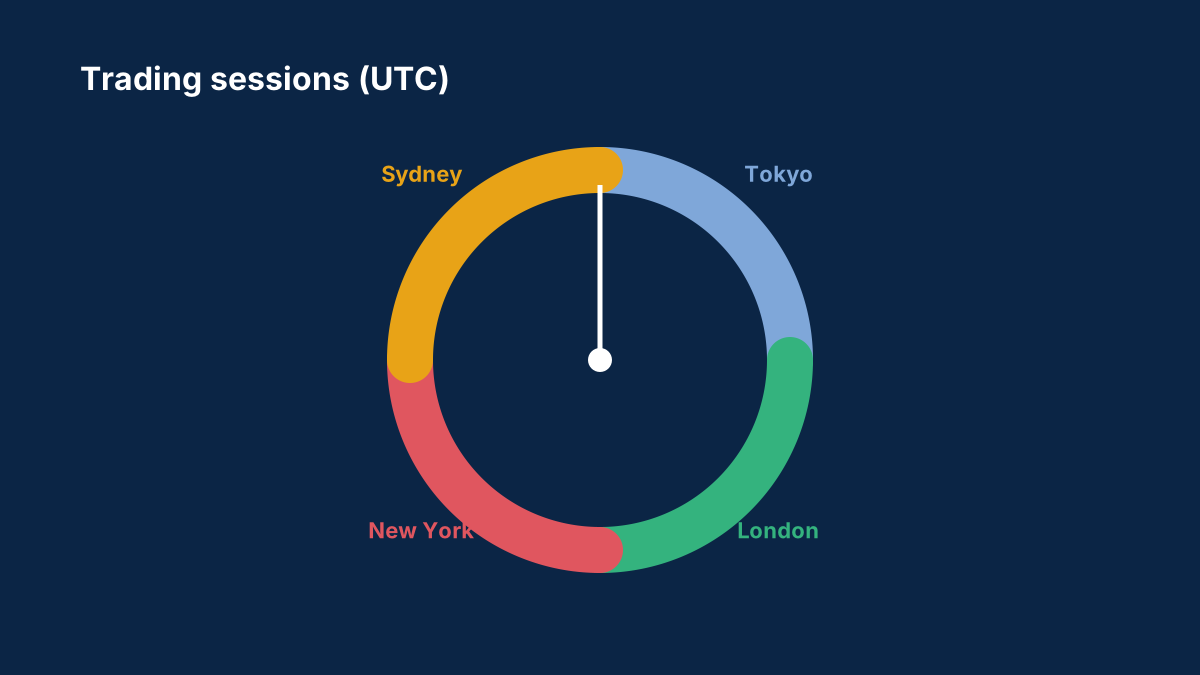
Sessions exist because liquidity is people. The forex market's depth comes from the institutions trading during their local business hours, and the institutions' hours are local. When Sydney's banks are awake, the aussie and kiwi have their real market; when Tokyo's are, the yen does; when London's are, the European pairs reach their deepest liquidity; when New York's are, the dollar's full weight arrives. Between the centres' hours, the market trades on leftovers — thinner, wider-spread, less reliable.
The wave shape is the market's daily structure: liquidity rises through the Asian morning, jumps at the London open, peaks in the London-New York overlap, and drains through the New York afternoon until Sydney begins again. The market hours guide maps the wave in UTC.
What each session brings
Sydney. The week's opening bell and the market's quietest stretch. The aussie and kiwi trade their home hours, and the thin liquidity makes the Sunday open the week's most gap-prone moment. The weekend gaps guide covers the open's risk.
Tokyo. The yen's home. Japanese data, BoJ positioning and the Asian risk mood set the session's character, and the yen pairs carry the real liquidity. The session also draws the Asian range — the day's first balance, which London will test. The Asian session guide covers the range's role.
London. The market's centre of gravity arrives. The European pairs reach their best spreads, the UK and euro-area data land, and the day's first real direction forms. The London open's first hours are the session's most energetic. The London open guide has the framework.
New York. The dollar's full weight. US data lands in the morning, the world's largest flow arrives, and the overlap with London's afternoon produces the market's deepest liquidity and tightest spreads. The New York session guide covers the overlap.
Why the clock changes the trade
The session changes three things about any trade:
The cost. The spread tracks the liquidity: tightest in the overlaps, widest in the thin stretches. The same trade costs more in Asian hours than in the London-New York overlap — and the cost difference compounds across a month of trades. The why spreads widen explainer covers the mechanics.
The behaviour. Each session has a character: Asia ranges, London trends, New York reacts to data. A breakout strategy that works in London's energy fails in Asia's drift; a range strategy that fits Asia's calm gets run over by London's breaks. The session is the regime's first layer. The range guide and breakout guide describe the two regimes.
The news exposure. Each session carries its region's data: Asia's releases in Tokyo, Europe's in London, America's in New York. The session's calendar is the session's risk profile, and the trader's plan must match. The economic calendar guide covers the matching.
Matching the strategy to the clock
The practical consequence is a matching exercise: the strategy, the pair and the session must agree.
- Scalping needs the tightest spreads — the London-New York overlap, on the majors.
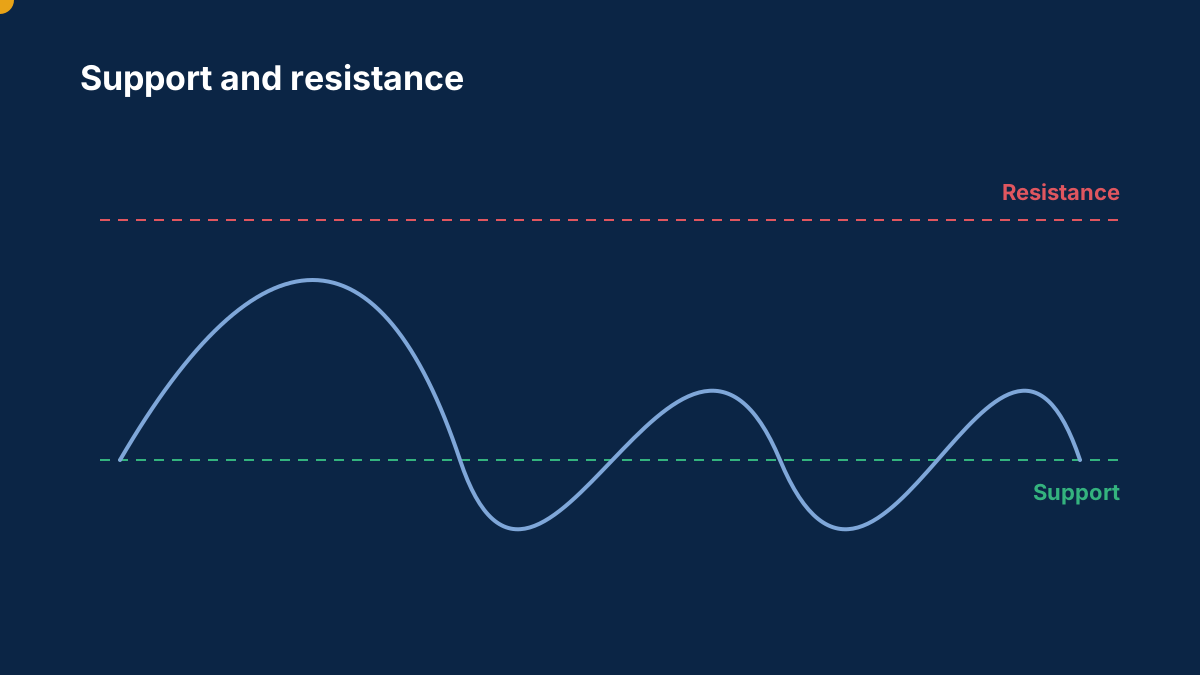
- Range trading fits the quiet sessions — Asia's ranges, London's lunch lulls — where the drift is predictable.
- Breakout and trend trading fit the energetic sessions — London's open, New York's data hours — where the breaks are real.
- The yen pairs belong to Tokyo, the European pairs to London, the dollar pairs to New York's overlap.
The trading styles guide maps the styles to the time demands, and the session map completes the picture: the best strategy in the world, traded in the wrong session, is the wrong strategy.
The practical read
The session awareness compresses into a routine:
- Know the current session and the next transition — the sessions page on this site tracks it live.
- Match the pair to the session: trade the pair whose market is awake.
- Match the strategy to the session's character: the regime's first layer is the clock.
- Check the session's calendar before trading — the region's releases are the session's risks.
- Price the spread: the session decides the cost, and the plan must clear it.
The forex market's 24-hour clock is its most distinctive feature and its most misread one. Trade the session, not just the chart, and the market's constant hum becomes a daily structure with predictable waves — and the trader who rides the waves trades a different market from the one who ignores them.
Sources
Common questions
Which forex session is the most liquid?
The London-New York overlap — roughly 8:00 a.m. to noon Eastern — when the world's two largest centres trade at once. Spreads are tightest and moves are most reliable there.
Why does the Asian session range?
Thin liquidity and no major European or US flow produce drift rather than trend. The session's range becomes the day's first structure, which London tests at its open.
Does the session change the spread?
Yes — the spread tracks the liquidity. It is tightest in the overlaps and widest in the thin stretches, so the same trade costs more in Asian hours than in the London-New York overlap.
Which pairs should I trade in which session?
The yen pairs in Tokyo, the European pairs in London, the dollar pairs in New York's overlap. Each pair's real market is its home session's.
Why does a strategy work in one session and fail in another?
Because each session is a different regime: Asia ranges, London trends, New York reacts to data. The strategy must match the session's character, not just the chart's pattern.
This article is for information only and is not financial advice. Trading forex and CFDs carries a high risk of losing money. Read the risk warning. Spotted an error? Tell the editors.
Comments
Log in to join the discussion. Comments follow the community guidelines.
Log in to commentLoading comments…