Why spreads widen at news and rollover
The spread you see at 3 p.m. is not the spread you get at 8:30. Here is what liquidity actually does to spreads, when the widening hits, and how to plan around the worst windows.
The spread is the trader's most visible cost, and it is not a constant. The tight spread of a calm afternoon widens sharply in two situations — around news and around the daily rollover — and the widening can turn a planned trade into a loss before it starts. Understanding why spreads widen, and when, is the difference between paying the market's quiet-time price and its panic-time price.
This guide explains the liquidity mechanics behind spread widening and how to plan around the worst windows. The cost arithmetic is in spread, commission and swap and bid, ask and slippage explained; this guide is the timing layer.
What the spread actually is
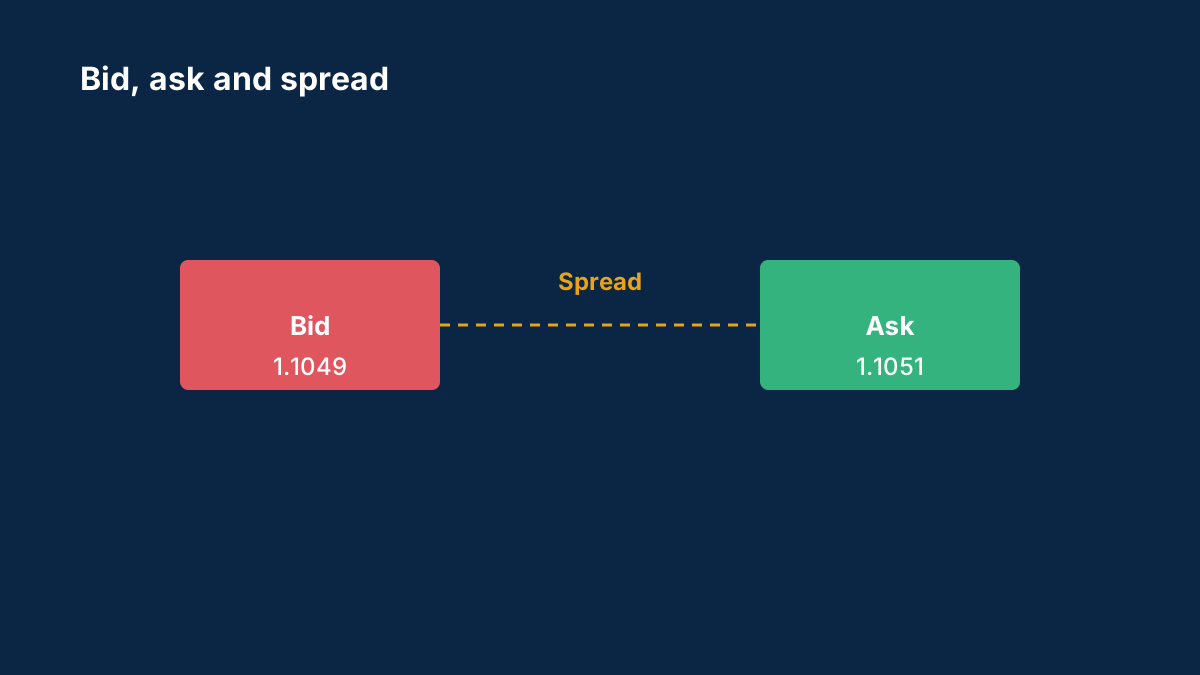
The spread is the gap between the bid — where you sell — and the ask — where you buy. It is the market maker's compensation for providing liquidity: the risk of holding a position while prices move. The spread's size tracks that risk, and the risk is not constant: it rises when the market is uncertain, thin or fast, and falls when it is calm, deep and slow.
The spread is therefore a liquidity thermometer. A tight spread means the market maker is confident; a widening spread means the market maker is pricing the risk that the next price move will be against them. Reading the spread's behaviour is reading the market's own risk assessment — and the two windows where it spikes are the market's riskiest moments. The bid, ask and slippage guide covers the mechanics in detail.
The news window
The first and most important spread-widening window is the news release. The sequence around a high-impact print:
The anticipation. In the minutes before the release, the market knows the number is coming, and market makers begin widening the spread to cover the risk of a gap. The widening starts before the print.
The release. The number lands, prices jump, and the spread spikes to its widest — often many times its normal width — because the market maker's risk is at its maximum: prices are moving fast, information is incomplete, and the first trades are the most dangerous to fill. The news trading guide covers the release-minute mechanics.
The normalisation. As the market digests the number, the spread narrows back toward normal — over seconds to minutes, depending on the release's size. The first trades pay the widest spread; the trades after normalisation pay the normal one.
The practical consequence: the spread's widening is a cost that lands exactly on the traders who trade the release minute. The aftermath traders — who enter after normalisation — pay a fraction of it, which is one of the structural advantages of the aftermath approach covered in the news trading playbook.
The rollover window
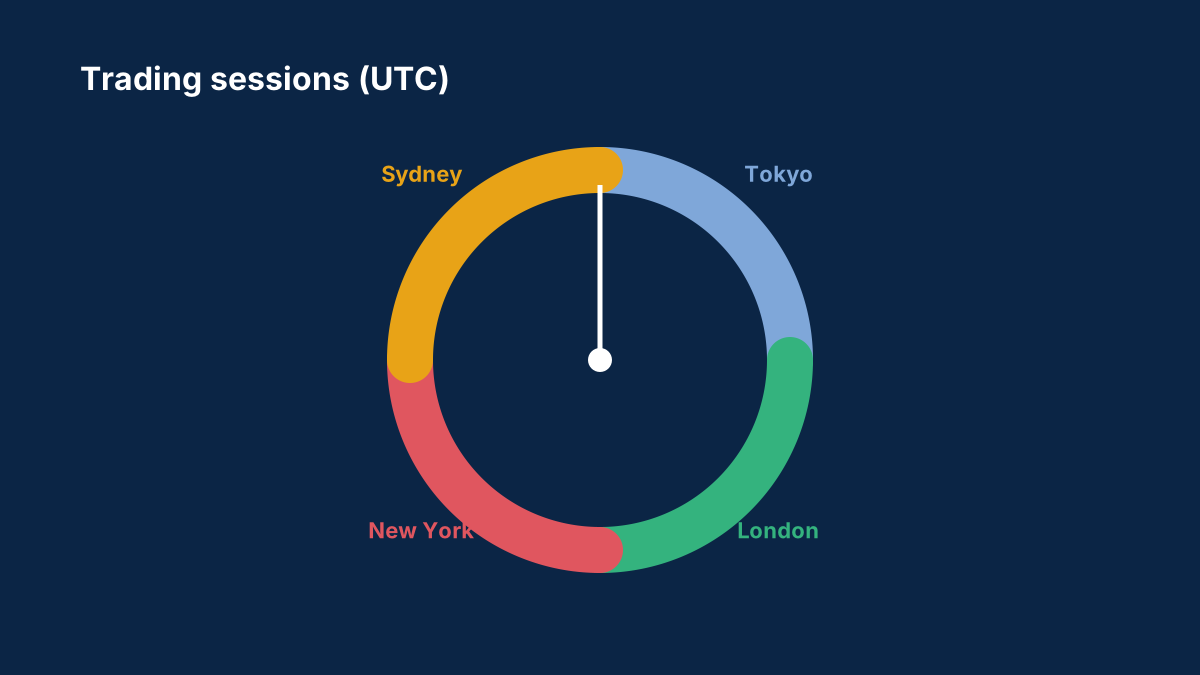
The second window is the daily rollover, around 5 p.m. New York time. The rollover marks the end of the accounting day: banks close their books, liquidity providers step back, and the market's depth thins for a few minutes. With less depth, the market maker's risk rises, and the spread widens — not as sharply as the news window, but reliably, every day. The rollover explainer covers the window's mechanics.
The rollover widening matters for two groups: the traders holding positions through the window, whose stops can be clipped by the widened spread's noise, and the traders entering in the window, who pay the temporarily higher cost. The practical rule is the same as the news window: avoid the window unless the plan prices it.
The third window: thin sessions
The third, quieter window is the thin session — Asian hours for the European pairs, holidays, the Monday open. The mechanics are identical: thin liquidity raises the market maker's risk, and the spread widens. The widening is less dramatic than the news spike but persistent — the thin session's spread is the baseline cost of trading outside the pair's home hours. The session guides map which hours are thin for which pairs.
How to plan around the widening
The spread's behaviour is predictable, and the planning follows:
- Mark the windows. The calendar shows the news releases; the clock shows the rollover; the session map shows the thin hours. The windows are known in advance.
- Price the entry cost. A trade planned for the release minute pays the release spread; the same trade an hour later pays the normal one. The difference is the plan's, not the market's.
- Protect the stops. Stops near the market price in the widening windows are exposed to the widened spread's noise — the window can clip a stop that the normal spread would have spared. The stop placement's buffer matters most in the windows.
- Trade the normalisation. The aftermath pattern — entering after the spread narrows — is the market's cheapest entry, and it is available after every release. The news trading guide has the framework.
- Check the pair's home hours. The thin-session spread is a permanent cost for pairs traded outside their hours — and it is avoidable by trading the pair when its market is awake.
The spread is the market's risk meter, and its widening is the market warning you before the event. Mark the windows, price the cost, and trade the normalisation — and the spread stops being a surprise expense and becomes a schedule you plan around.
Sources
Common questions
When do spreads widen in forex?
Around high-impact news releases — before, during and just after the print — around the 5 p.m. New York rollover, and during thin sessions such as Asian hours for European pairs.
Why does the spread widen before a news release?
Market makers know the number is coming and price the risk of a gap. The widening starts in the anticipation, spikes at the release, and normalises as the market digests the print.
How wide can spreads get during news?
Many times the normal width — the spike is the market maker's maximum-risk moment. The first trades after the release pay the widest spread; the trades after normalisation pay the normal one.
Does the rollover spread widening matter?
It is smaller than the news spike but reliable, every day around 5 p.m. New York. Stops near the market can be clipped by the window's noise, and entries in the window pay the temporarily higher cost.
How do I avoid paying widened spreads?
Mark the windows in advance, trade the aftermath after normalisation instead of the release minute, avoid the rollover window, and trade each pair in its home session.
This article is for information only and is not financial advice. Trading forex and CFDs carries a high risk of losing money. Read the risk warning. Spotted an error? Tell the editors.
Comments
Log in to join the discussion. Comments follow the community guidelines.
Log in to commentLoading comments…