What happens to your money when a broker fails?
When a broker goes under, what happens to client money depends on segregation, the regulator and the compensation scheme. Here is the process, the protections and the gaps.
Broker failures are rare in the regulated world and devastating where regulation is thin — and what happens to client money in between is one of the least-understood parts of trading. The outcome depends on three things: whether the client money was segregated, which regulator stood behind the broker, and whether a compensation scheme exists. Understanding those three layers before funding an account is the difference between a recoverable loss and a permanent one.
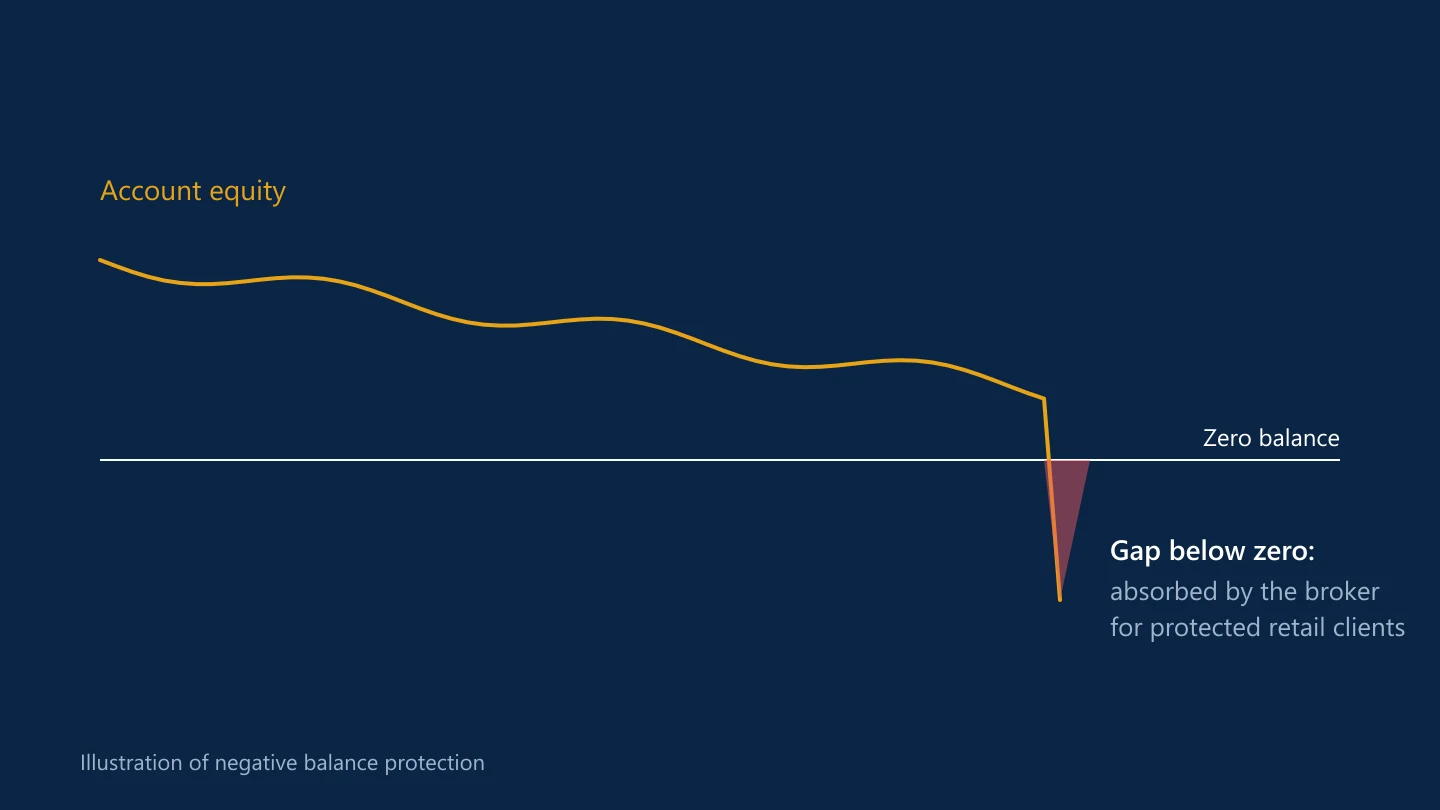
This guide explains the process and the protections. The mechanics are in negative balance protection and client money; the regulatory tiers in offshore vs top-tier regulation.
The first question: segregation
The first determinant is segregation — whether the broker kept client money separate from its own funds. Regulated brokers are required to hold client deposits in segregated accounts, so that a broker's bankruptcy does not automatically take client money with it. The requirement is the foundation of the entire protection system, and its absence is the entire problem in the unregulated world.
The practical check: the client agreement states whether and how funds are segregated, and the regulator's rules determine what segregation actually means — where the accounts sit, who controls them, and what happens at failure. The client money guide covers the detail, and the honest summary is that segregation's quality follows the regulator's.
The second question: the regulator
The second determinant is the regulator. When a broker fails, the regulator's rules decide the process: whether client money is ring-fenced, how the firm is wound down, and what clients must do to claim. The tiers differ enormously:
Top-tier regulators — the FCA, ASIC, CySEC and their peers — impose segregation, supervise the firms and run or oversee the wind-down processes. Client money is identified, protected and returned through a defined process.
Offshore registers impose far less. Segregation may be nominal, supervision thin, and the wind-down process opaque — and in the worst cases, the client money has already been spent or moved beyond reach. The offshore vs top-tier guide lays out the tiers and how to check which one you are under.
The practical consequence: the same brand name can fail differently in different jurisdictions, because the protections follow the entity and the regulator — not the logo. The broker checklist covers how to verify the entity before funding.
The third question: the compensation scheme
The third determinant is the compensation scheme. Many top-tier jurisdictions run statutory schemes that compensate clients up to a cap when a failed firm cannot return their money — the UK's FSCS up to £85,000, the EU's national schemes up to €20,000, and similar structures elsewhere. The schemes are the backstop behind segregation: when the ring-fenced money is short, the scheme pays the difference, up to its cap.
The cap is the number to know: it is the maximum protection, and amounts above it depend entirely on the wind-down's recovery. The client money guide covers the schemes by region.
The process, step by step
When a regulated broker fails, the process follows a pattern:
- The regulator intervenes — freezing the firm, appointing administrators, and taking control of the client-money accounts.
- The client money is identified — the segregated accounts are reconciled against the client records, which is where the quality of the broker's bookkeeping decides the outcome.
- Clients are contacted — through the regulator's and administrators' published channels, with instructions for claiming. The instructions come from the regulator's own website; anything else claiming to be the process is usually a scam targeting the victims.
- The money is returned — the segregated funds are distributed, and any shortfall falls to the compensation scheme up to its cap.
The timeline is months to years, not days — and the first lesson for anyone in the process is patience plus the regulator's own channels. The scam guide covers the recovery scams that target exactly this moment.
The gaps, honestly
Three gaps leave clients exposed even in regulated jurisdictions:
The cap gap. Amounts above the compensation cap depend on the wind-down's recovery, which is never full. Large accounts are never fully protected.
The entity gap. Clients of the brand's offshore entity get the offshore protections — often none — even when the brand's regulated entity sits in a top-tier jurisdiction. The entity on the client agreement is the only one that matters.
The time gap. Recovery takes months to years, and the money is unavailable throughout. Liquidity planning — never holding money you might need — is part of the protection.
The practical checklist
The protection compresses into a checklist to run before funding:
- Which entity? The client agreement names it — and it is the only entity that protects you.
- Which regulator? The entity's regulator decides the rules, and the register verifies the claim.
- Is client money segregated? The agreement states it; the regulator's rules enforce it.
- What is the compensation cap? The number is the maximum protection, and the account should respect it.
- Where are the wind-down channels? The regulator's website is the only trustworthy source in a failure — everything else is suspect.
A broker failure is a rare event made survivable by preparation. Segregation, regulator and scheme — check the three layers before the money moves, and the worst-case outcome becomes a delay instead of a loss.
Sources
Common questions
What happens to my money if my broker goes bankrupt?
It depends on segregation, the regulator and the compensation scheme. With a top-tier regulator, segregated client money is identified, ring-fenced and returned through a defined process, with the scheme covering shortfalls up to its cap.
Is client money safe if a broker fails?
In regulated jurisdictions, segregated client money is protected from the broker's own creditors — that is the point of segregation. In offshore jurisdictions, the protections are thin or absent, and recovery is uncertain.
What is the compensation cap?
The maximum the statutory scheme pays when a failed broker cannot return client money — £85,000 under the UK's FSCS, €20,000 under EU schemes, with similar structures elsewhere. Amounts above the cap depend on the wind-down's recovery.
How long does it take to get money back from a failed broker?
Months to years. The wind-down must identify and reconcile the client money before distribution. The regulator's own channels are the only trustworthy source of process information.
Does the same brand's offshore entity protect me?
No. Protections follow the entity named in your client agreement, not the brand. A brand's regulated entity offers protections its offshore entity does not — which is why the entity check comes first.
This article is for information only and is not financial advice. Trading forex and CFDs carries a high risk of losing money. Read the risk warning. Spotted an error? Tell the editors.
Comments
Log in to join the discussion. Comments follow the community guidelines.
Log in to commentLoading comments…