How the forex market is structured: who's on the other side of your trade
The forex market has no central exchange — it is a layered network of banks, brokers and liquidity providers. Here is the structure, who sits on the other side of your order, and why it matters.
Every forex trade has a counterparty — someone on the other side — and the market's structure decides who that is. Unlike stocks, forex has no central exchange: it is a layered network, with banks at the core, brokers and liquidity providers in the middle, and retail traders at the edge. Understanding the layers explains half of what a trader sees in the terminal: why prices differ slightly between brokers, why spreads widen, and what the broker means by its execution model.
This guide maps the structure. The market's scale is in how big is the forex market; the fills in bid, ask and slippage explained.
The layers
The forex market's structure is a hierarchy of four layers:
The interbank layer. The core: the world's largest banks trading currencies with each other, directly and through electronic platforms. The interbank layer sets the market's reference prices, and its participants — the liquidity providers — are the market's ultimate counterparties. The layer's volumes dwarf everything above it, per the BIS survey.
The institutional layer. Funds, corporations, central banks and other institutions trade with the banks, for investment, hedging and policy purposes. The layer's flows — a central bank's intervention, a fund's rebalancing — are the market's largest single orders and its most important price movers.
The broker layer. Brokers sit between the institutions and the retail traders: they aggregate prices from the liquidity providers, add their mark-up or commission, and provide the platforms retail traders use. The broker's execution model — how it handles your order — is decided here. The broker checklist covers how to evaluate the layer.
The retail layer. Individual traders, at the edge, trading through the brokers at the prices the brokers show. The retail layer's volumes are small relative to the whole, but its aggregate flows — through the brokers' books — are the liquidity the brokers manage.
Who is on the other side of your trade
The answer depends on the broker's execution model, and the models differ:
The A-book model. The broker routes your order to a liquidity provider — effectively passing it to the interbank layer. Your counterparty is the provider, and the broker earns the spread or commission without taking your risk. The A-book is the "agency" model: the broker is an agent, not a counterparty.
The B-book model. The broker takes the other side of your order internally, keeping your position on its own book. Your counterparty is the broker itself — which means the broker profits when you lose, the conflict of interest the B-book model carries by construction. The conflict is managed by regulation in top-tier jurisdictions and by nothing offshore.
The hybrid model. The most common in practice: the broker routes some orders to liquidity providers and internalises others, based on size, account type and its own risk management. The execution model discussion and the community's broker experience threads cover how to find out which model your broker runs.
Why prices differ between brokers
The structure explains the small differences in price between brokers: each broker aggregates from a different set of liquidity providers, applies its own mark-up, and updates at its own speed. The differences are normally a fraction of a pip — the cost of the structure's decentralisation — and they widen when the market is fast, because each broker's providers widen their quotes differently. The why spreads widen explainer covers the mechanics.
What the structure means for the trader
The structure has four practical consequences:
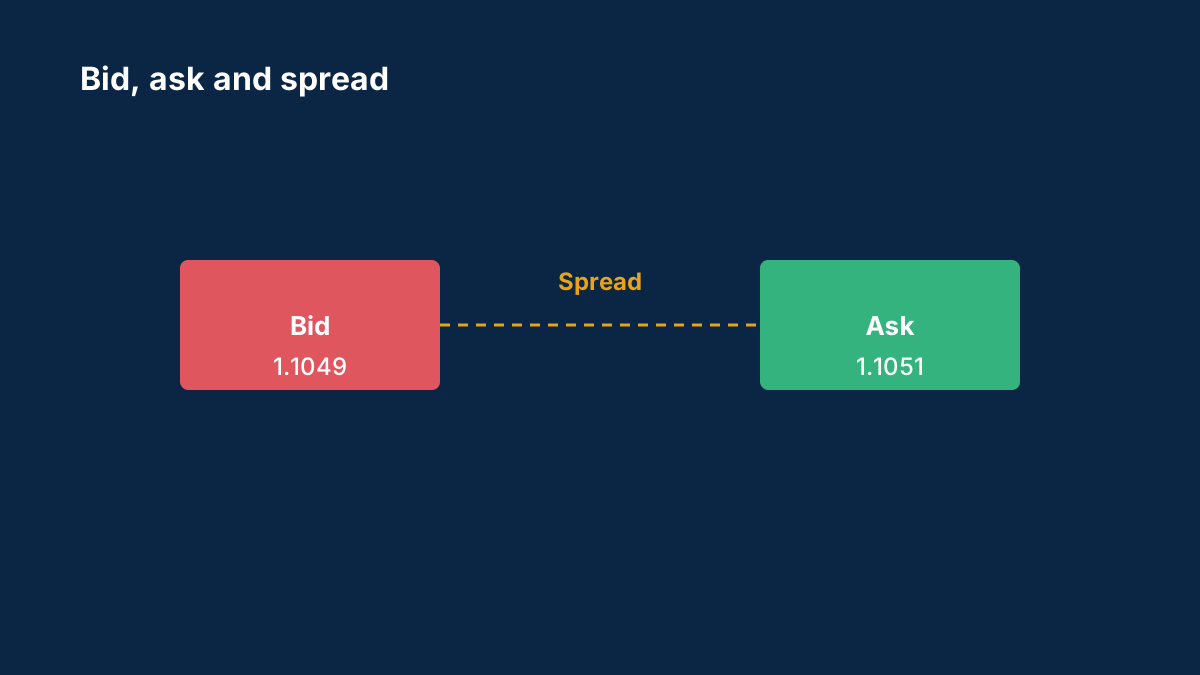
There is no single price. The "market price" is a range of near-identical prices across the network — which is why fills differ slightly between brokers and why slippage exists. The bid, ask and slippage guide covers the fills.
The counterparty matters. The A-book and B-book models carry different incentives, and the trader's protection is the regulator's rules on how the B-book must be run. The broker checklist covers the evaluation.
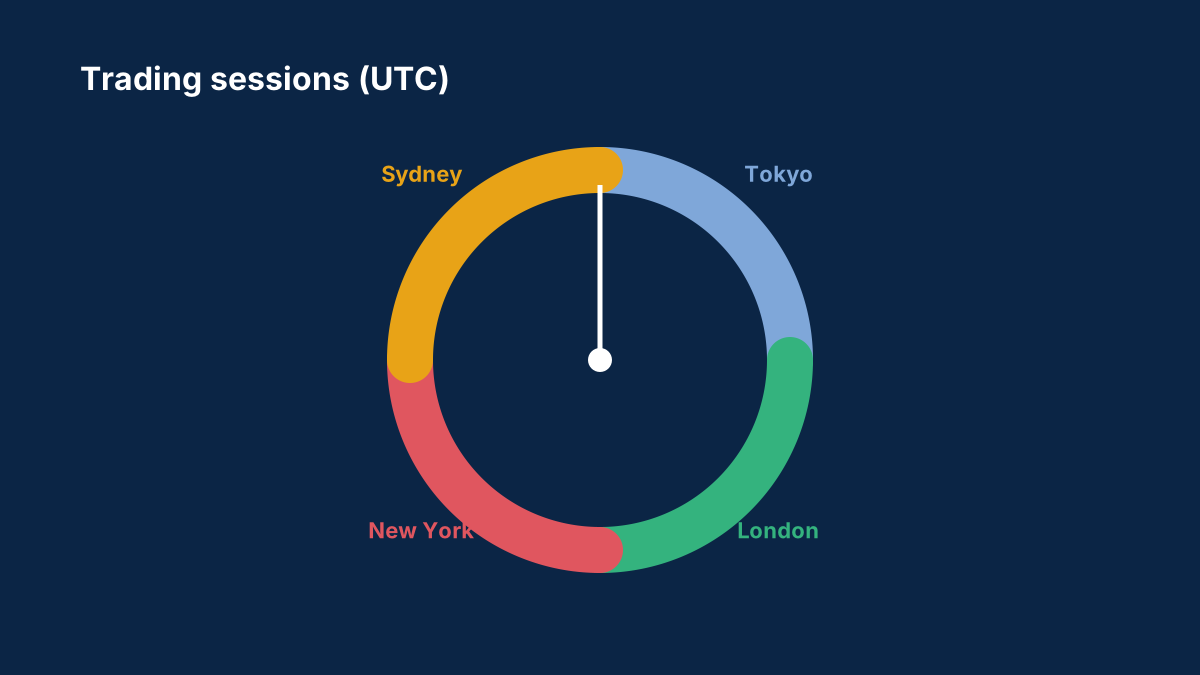
Liquidity is uneven. The interbank layer's liquidity concentrates in the majors and the session overlaps; the edges — exotics, thin hours — are thin by structure. The session guide maps where the liquidity lives.
The big flows move the market. The institutional layer's orders — interventions, rebalancing, hedging — are the market's real movers, and the retail layer's job is reading their footprints in the price. The intervention explainer shows the institutional layer at work.
The electronic platforms' role
The layers are connected by electronic platforms, and the platforms are the structure's plumbing. The interbank layer trades through systems that match the banks' orders electronically; the brokers aggregate their feeds from the providers' platforms; and the retail trader's terminal displays the result, updated by the second. The platforms' role matters because it sets the market's speed and its fragmentation: the prices are electronic, the aggregation is per-broker, and the result is the small price differences the structure produces. The bid, ask and slippage guide covers the price mechanics the platforms transmit.
The platforms' practical consequence is the latency question: the trader's distance from the broker's servers, the broker's distance from the providers, and the speed of each hop decide how current the displayed price is. The structure's electronic plumbing is why execution speed matters for scalpers and barely matters for swing traders — the trading styles guide maps which styles feel the latency.
How the layers interact in a news event
The structure's behaviour is most visible in a news event, when the layers respond in sequence. The release lands; the interbank layer's prices jump first, as the banks reprice instantly; the institutional layer's orders hit the market, amplifying the move; the brokers' feeds update, with spreads widening as the providers pull back their risk; and the retail layer's orders fill at the widened spreads the chain delivered. The sequence is the news trading guide's release-minute mechanics, viewed from the structure's side: each layer's reaction is the next layer's price.
The sequence's lesson is the retail layer's position in it: the retail trader trades last, at the widest spreads, on the least current information. The structure does not conspire to place the retail layer there — it is simply the network's edge — but the placement is why the release-minute is the retail trader's worst moment, and why the aftermath is the better trade. The why spreads widen explainer covers the spreads' behaviour through the sequence.
What the structure means for latency and spreads
The structure explains the two cost layers every trader feels: the spread and the slippage. The spread is the broker's aggregation cost — the mark-up over the providers' quotes, set against the broker's risk — and it tracks the liquidity's depth through the day, per the why spreads widen explainer. The slippage is the latency's tax: the gap between the displayed price and the filled one, which widens when the market moves faster than the chain can update. Both costs are the structure's, not the broker's malice — and both are smaller for the traders who trade the liquid layers' hours and instruments.
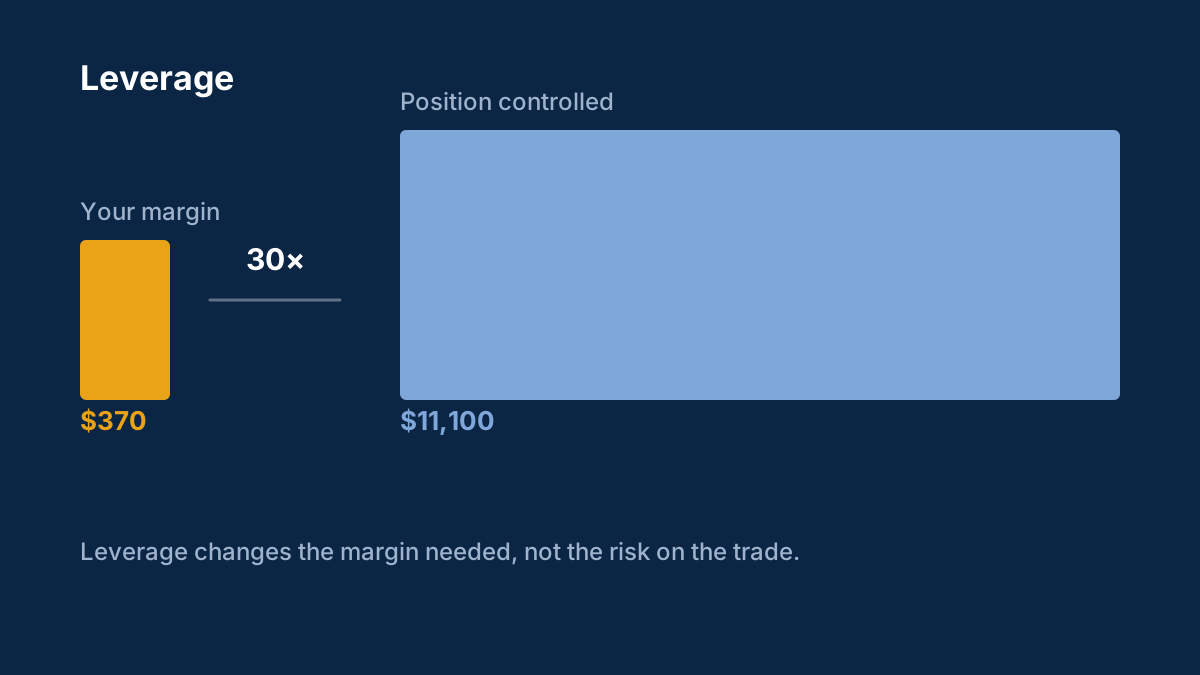
The practical consequence is the cost-aware plan: the majors in the overlaps, where the structure's liquidity is deepest; the exotics avoided or swing-traded, where the structure's thinness prices the cost; and the event windows treated as the structure's stress tests. The trading costs guide has the cost arithmetic the structure produces.
The retail trader's practical takeaways
The structure's map reduces to four takeaways for the retail trader:
Know your counterparty. The A-book and B-book models carry different incentives, and the broker's execution policy names the model. The broker checklist covers the check.
Trade the liquid core. The structure's depth concentrates in the majors and the overlaps — the liquidity is the cost's inverse, and the plan should live where the liquidity is. The session guide maps the hours.
Price the edges. The exotics, the thin hours and the event windows are the structure's expensive edges, and the trades there must clear the wider costs. The trading costs guide has the arithmetic.
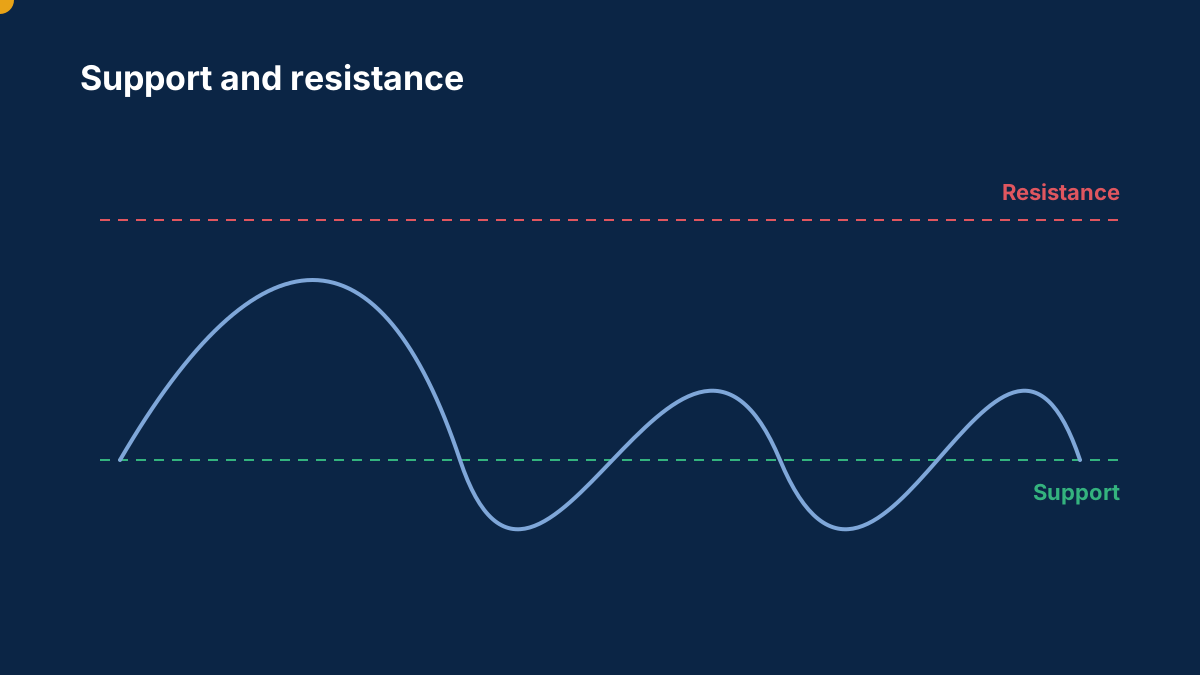
Read the big flows' footprints. The institutional layer's orders — the interventions, the rebalancing — are the market's real movers, and the price's behaviour around the levels is their visible trace. The intervention explainer shows the layer at work.
The forex market is not a place — it is a network, and the network's structure decides the prices, the counterparties and the fills. Understand the layers, and the terminal's behaviour stops being mysterious and becomes the structure's visible surface.
Sources
Common questions
Is there a central exchange for forex?
No. Forex is a decentralised network of banks, institutions, brokers and traders. Prices come from the interbank layer and ripple outward, which is why brokers' prices differ slightly.
Who is on the other side of my forex trade?
Depending on the broker's execution model: a liquidity provider in the A-book model, or the broker itself in the B-book model. Most brokers run a hybrid of both.
What is the difference between A-book and B-book?
A-book routes your order to a liquidity provider — the broker is an agent. B-book keeps your position internally — the broker is your counterparty, profiting when you lose.
Why do different brokers show slightly different prices?
Each broker aggregates from its own set of liquidity providers and applies its own mark-up. The differences are normally a fraction of a pip and widen in fast markets.
Which layer of the forex market moves prices?
The institutional layer — funds, central banks, corporations — whose large orders are the market's real movers. The retail layer's job is reading their footprints in the price.
This article is for information only and is not financial advice. Trading forex and CFDs carries a high risk of losing money. Read the risk warning. Spotted an error? Tell the editors.
Comments
Log in to join the discussion. Comments follow the community guidelines.
Log in to commentLoading comments…