Where to place a stop-loss: structure, volatility and time stops
A stop-loss belongs where your trade idea is proven wrong, not at a round number of pips. Here are the main methods and the mistakes that trigger stops early.
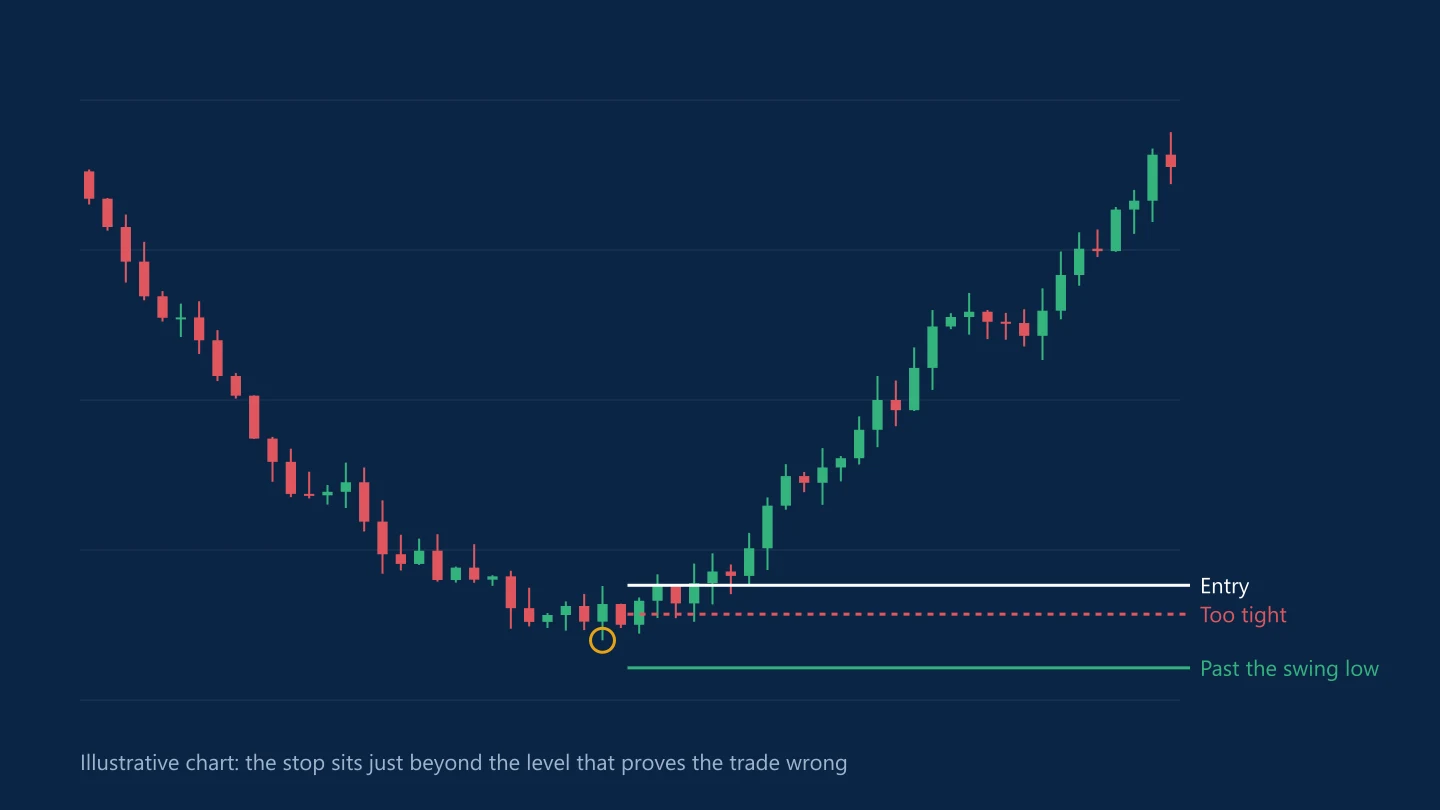
A stop-loss order closes a trade at a set price to cap the loss. Where you put it matters as much as whether you use one. Too close, and ordinary noise closes trades that would have worked. Too far, and each loss is bigger than it needs to be, or the position has to be so small the trade isn't worth taking.
Start with where the idea is wrong
Every trade has a reason, and a price that would disprove it. A buy on a bounce from support is wrong if price closes clearly below that support, so the stop belongs just beyond it. The position size then follows from the stop distance. Choosing "a 20-pip stop" first and finding a trade to fit gets this backwards.
Common methods
- Structure stops sit beyond the most recent swing low for a buy or swing high for a sell, or beyond the level the trade is based on.
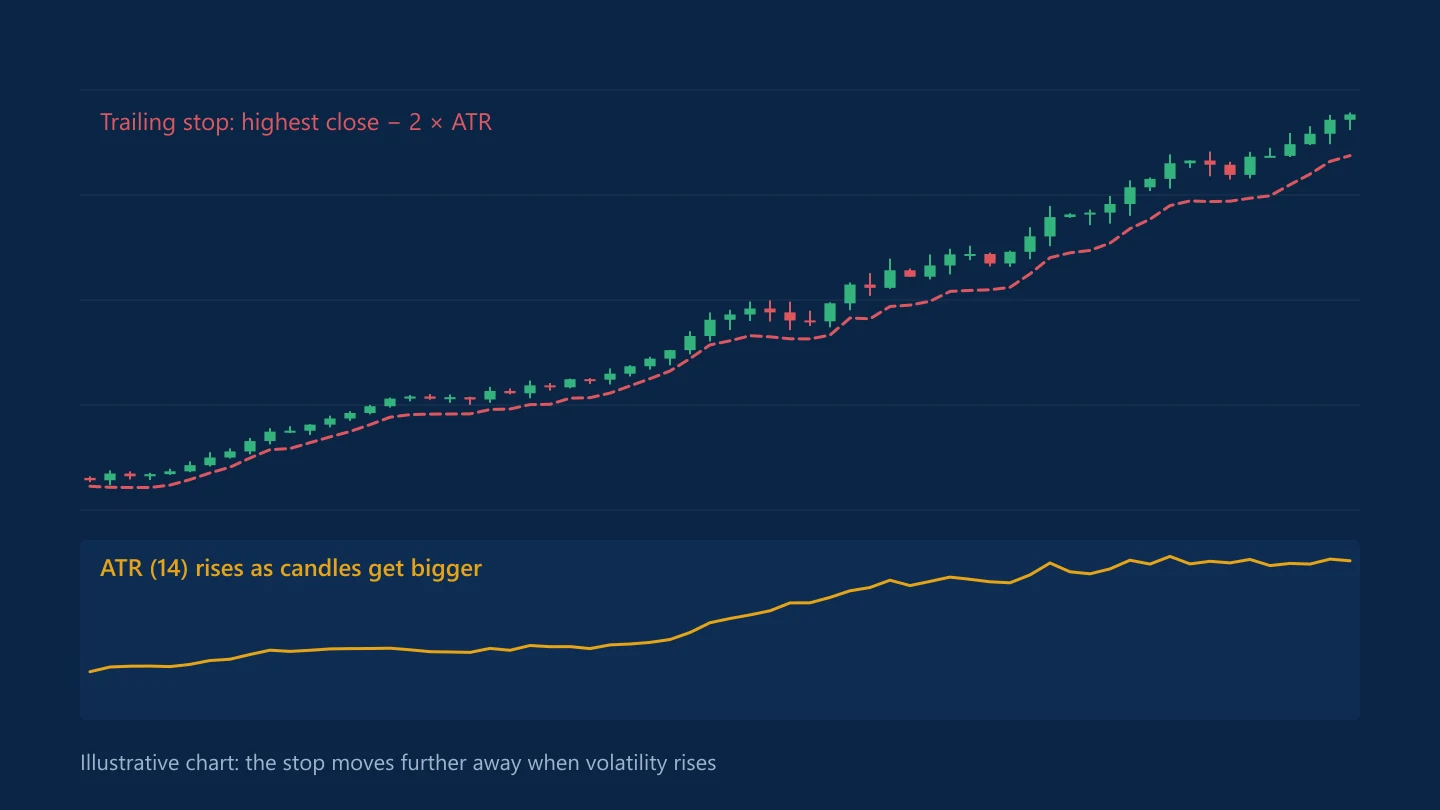
- Volatility stops sit a multiple of average true range from the entry, so they adapt to how much the pair is moving.
- Time stops close the trade if it hasn't moved as expected within a set number of candles, or before a known event.
- Trailing stops follow price as the trade progresses, locking in part of the gain.
Many traders combine them, for example a stop beyond the swing low plus a buffer of a fraction of ATR.
Mistakes that trigger stops early
- Placing stops exactly on obvious levels. Round numbers and clear swing points attract orders. A small buffer beyond the level avoids being stopped out by a brief poke through it.
- Forgetting the spread. A sell position is closed at the ask price, while most charts show the bid. A sell stop can trigger although the chart never touched it, especially when spreads widen at the daily rollover or around news; see bid, ask and slippage.
- Moving the stop further away as price approaches it. That turns a planned loss into an unplanned one.
- Moving to break-even too soon. It feels safe, but a stop at the entry price, inside normal noise, often closes trades that would have worked.
Stops aren't guaranteed
A standard stop becomes a market order when it's triggered. If price gaps past it, over a weekend or on a surprise announcement, the fill can be much worse than the stop price; see weekend gaps. Some brokers offer guaranteed stop-loss orders, which fill at the exact price in exchange for a premium, usually charged only if the stop is triggered. In the UK, the EU and Australia, retail CFD accounts also have negative balance protection, so losses can't exceed the money in the account.
Common questions
How far away should a stop-loss be?
Far enough that normal price movement doesn't reach it, at the point where the reason for the trade would be proven wrong. The position size should then be set so that distance costs a fixed share of the account.
Why was my stop-loss hit when the chart didn't reach it?
Charts usually show the bid price, but sell positions are closed at the ask. When the spread widens, the ask can reach a sell stop while the bid line on the chart stays below it.
Does a stop-loss guarantee my exit price?
No. A standard stop becomes a market order, so gaps and fast markets can fill it at a worse price. Guaranteed stop-loss orders, which some brokers offer for a premium, do fix the price.
This article is for information only and is not financial advice. Trading forex and CFDs carries a high risk of losing money. Read the risk warning. Spotted an error? Tell the editors.
Comments
Log in to join the discussion. Comments follow the community guidelines.
Log in to commentLoading comments…