How to trade GBP/USD (cable): what moves it and when
GBP/USD, nicknamed cable, is the most volatile of the major dollar pairs. Here is what drives it, how its session behaviour differs from EUR/USD, and how to build a plan around its moods.
GBP/USD — "cable" in trader shorthand, after the transatlantic telegraph cables that once carried its prices — is the major pair traders graduate to when EUR/USD feels too polite. It trends harder, ranges wider and gaps more often, which makes it either the most interesting pair on the board or the most dangerous, depending on the plan behind it.
This guide covers the pair's mechanics, the UK-specific drivers that make it different, its behaviour across the trading sessions, and a risk-first framework for trading it.
The basics
GBP/USD is the price of one British pound in US dollars: the pound is the base currency, the dollar the quote. On a standard lot, one pip is worth roughly $10 on a dollar account, and the pip itself is the fourth decimal place — a move from 1.3100 to 1.3101 is one pip. Pip value explained covers the arithmetic for every account currency and position size.
What defines cable more than its mechanics is its personality: daily ranges wider than EUR/USD's, sharper reactions to UK data, and a long history of violent, headline-driven moves. The 2016 sterling flash crash — roughly six per cent in minutes during Asian hours — is the extreme version of what this pair can do.
What moves cable
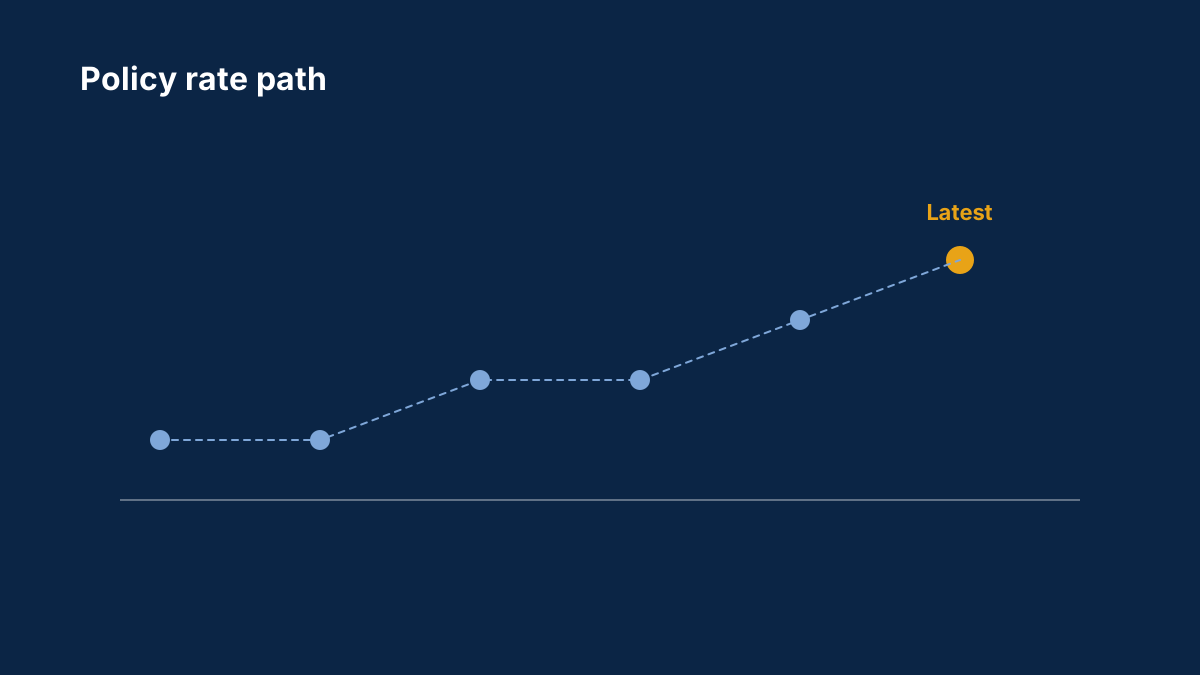
The Bank of England. The BoE's path relative to the Fed's is cable's backbone. A divided committee, a surprise vote split, or a change in the statement's language can move the pair more than the decision itself. Recent history offers a live example: the July vote was 6–3 with three members preferring a hike, and that split is now part of how the market prices every UK release. How interest rate decisions move currencies explains the transmission.
UK inflation. The consumer price index is the BoE's stated priority, and cable's biggest scheduled moves often come on CPI mornings. When UK inflation surprises, the pair reprices the BoE's path within seconds. CPI explained decodes headline versus core.
The labour market. Wage growth matters enormously because it feeds services inflation, which is the BoE's own stated focus. The monthly labour market report — unemployment, employment change and average earnings — is a first-tier release for cable traders.
UK growth and the fiscal story. GDP, retail sales and the PMI surveys set the growth narrative, and fiscal announcements — budgets, spending reviews — move sterling through their effect on both growth and the bond market. Bond yields and exchange rates explains why UK gilt yields and the pound often move together.
The dollar side. Everything that moves the dollar moves cable too: US CPI, payrolls, Fed decisions and risk appetite. Cable is the dollar's other side as much as it is the pound's.
Session behaviour
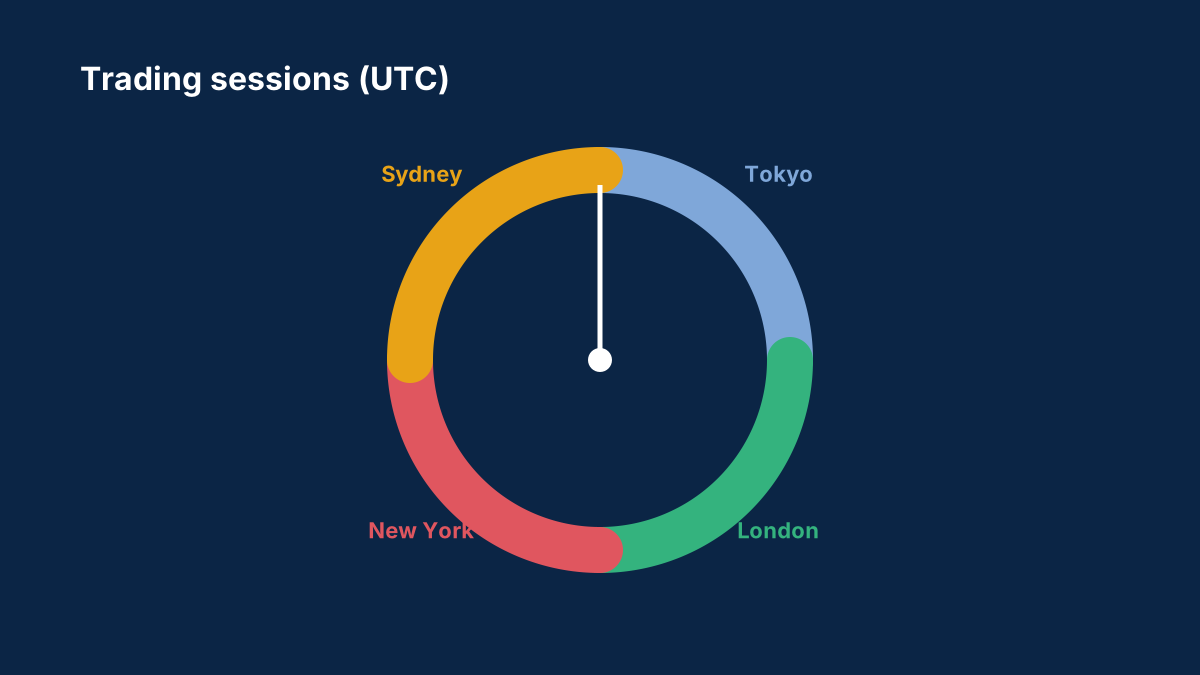
Cable's day has a distinct shape. Asian hours are thin and occasionally treacherous — the flash crash mentioned above happened while London was asleep. The London open is cable's home: UK data lands in the morning UK time, and the pair's most reliable volume arrives with it. The New York open brings US data and the day's second wave, and the overlap between London's afternoon and New York's morning is the busiest window.
A practical consequence: stops placed for London conditions can look absurdly tight during Asian hours and absurdly wide during a US data release. Many cable traders widen stops for the session, not the chart — the ATR guide gives a volatility-based way to do that consistently.
How cable's volatility changes the plan
Everything about cable is one notch more aggressive than EUR/USD, and the plan has to reflect that:
Wider stops. A stop that survives EUR/USD's noise will be taken out by cable's. Anchoring stops beyond structure rather than at fixed pip distances is more important here than on any other major pair. Where to place a stop-loss sets out the anchoring logic.
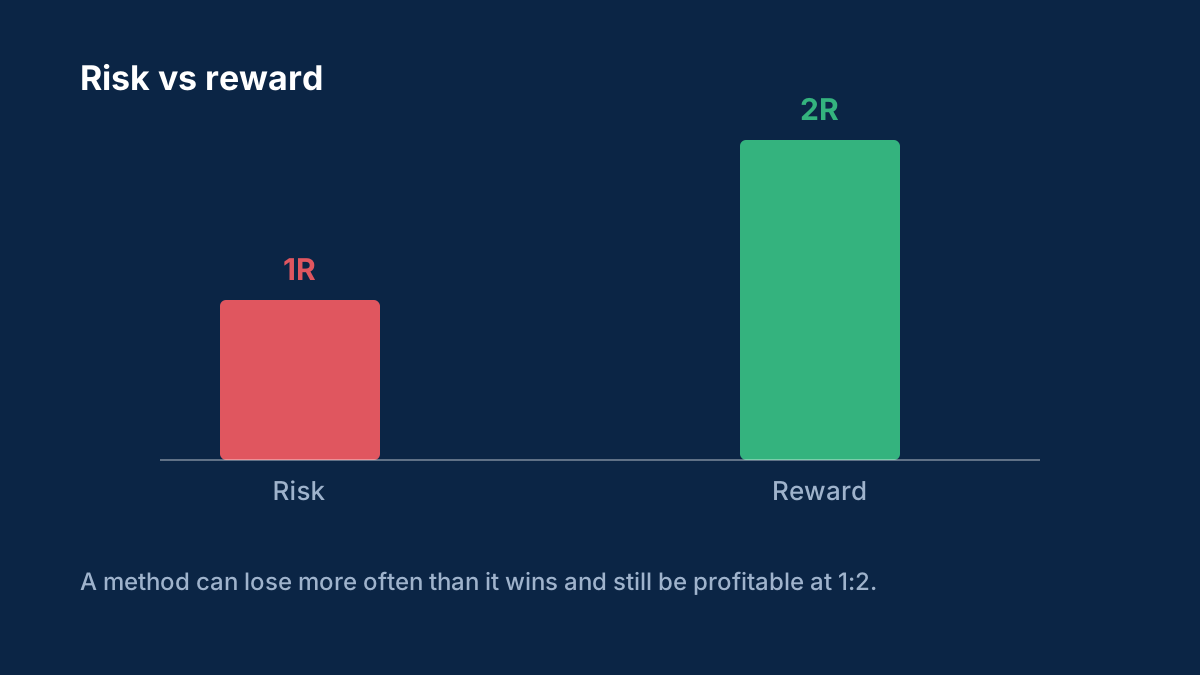
Smaller size. Because the stop is wider, the position must be smaller to keep the money at risk constant. Risk-first sizing — stop distance first, then position size — is non-negotiable on this pair. Position sizing and risk per trade has the full method.
Calendar discipline. Cable punishes the unprepared more visibly than EUR/USD does. Before each week, mark the UK CPI, labour market and BoE dates, plus the US releases, and decide in advance whether those days are trading days or observation days.
A workable framework
A starting structure for cable, to test on demo before anything live:
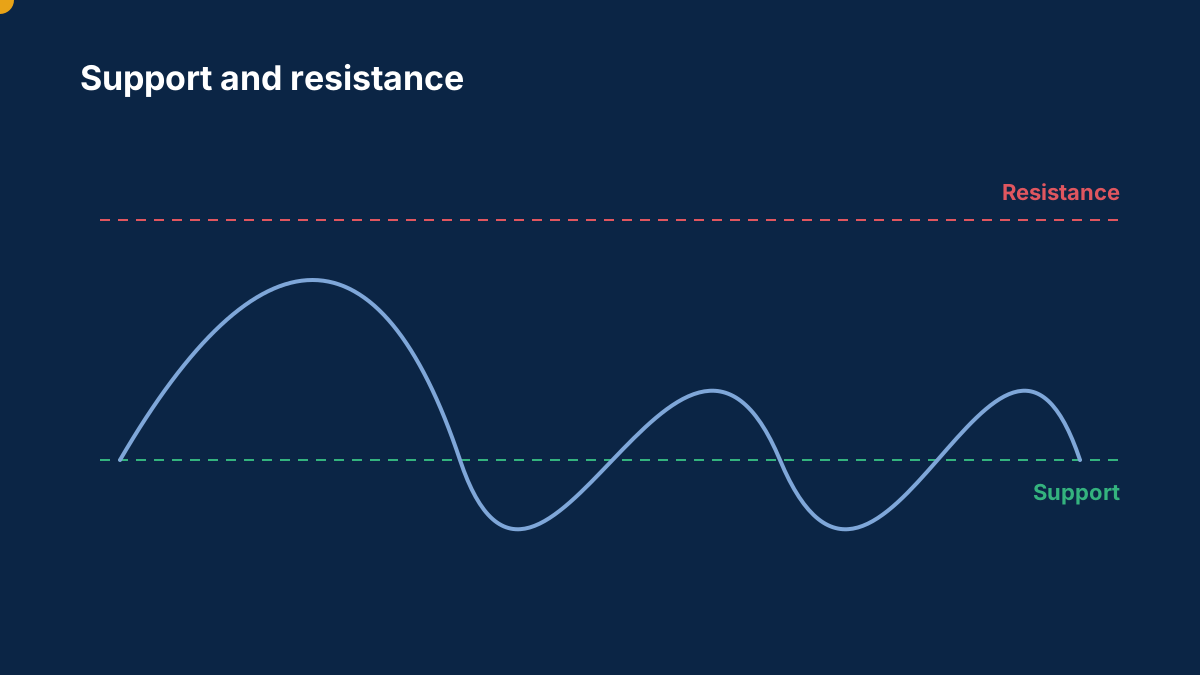
- Mark the previous day's high and low and the Asian range before London opens.
- Treat the London open as the primary session; let the first 15 minutes print before taking any trade.
- Prefer pullback entries at marked levels over chasing the first breakout — cable's false breaks are violent, and its retests are deep.
- Size so the stop, wherever the chart requires it, costs no more than your fixed risk per trade.
- Flatten or reduce into UK and US high-impact releases unless the position was sized for the event.
The pair's reputation, earned honestly
Cable's volatility is a feature for traders who respect it and a trap for those who don't. Its gaps, its headline sensitivity and its wide ranges mean the same position size that felt calm on EUR/USD will feel alarming here. The traders who do well on cable are the ones who accept its personality and build the plan around it rather than fighting it. If you want a pair that trends with conviction and rewards patience, cable is one of the best there is.
Sources
Common questions
Why is GBP/USD called cable?
The nickname dates from the 19th century, when the pound-dollar exchange rate was transmitted between London and New York by transatlantic telegraph cable laid under the ocean.
What is the best time to trade GBP/USD?
The London open and the London-New York overlap are cable's most liquid hours. UK data releases in the London morning and US releases in the New York morning produce the day's biggest moves.
Why is GBP/USD more volatile than EUR/USD?
Sterling has a smaller, more domestically driven market than the euro, and UK data and politics produce sharper repricings. Lower liquidity in Asian hours adds gap risk that EUR/USD rarely shows.
What UK data moves GBP/USD the most?
UK CPI, the labour market report with wage growth, Bank of England decisions and vote splits, GDP and retail sales. Wage data matters especially because the BoE watches it for services inflation.
Should beginners trade GBP/USD?
It can be a good second pair after EUR/USD, once a trader can handle wider stops and smaller position sizes. Beginners should start on demo and never copy EUR/USD position sizes onto cable.
This article is for information only and is not financial advice. Trading forex and CFDs carries a high risk of losing money. Read the risk warning. Spotted an error? Tell the editors.
Comments
Log in to join the discussion. Comments follow the community guidelines.
Log in to commentLoading comments…