How to trade USD/JPY: BoJ, carry and intervention risk
USD/JPY pays you for the rate gap and threatens you with intervention. Here is how the Bank of Japan, US yields and the threat of sudden yen-buying operations all fit into one trading plan.
USD/JPY is the market's oddest major pair: a carry trade with a central bank problem. The wide gap between US and Japanese interest rates pays traders to hold it, while the risk that Japanese authorities suddenly buy the yen makes it dangerous to hold too much of it. No other pair balances a steady income against a silent, violent tail risk quite like this one.
This guide explains the pair's mechanics, the three forces that drive it, how swap income actually works on it, and how to build a plan that survives both its calm days and its intervention days.
The basics and the pip difference
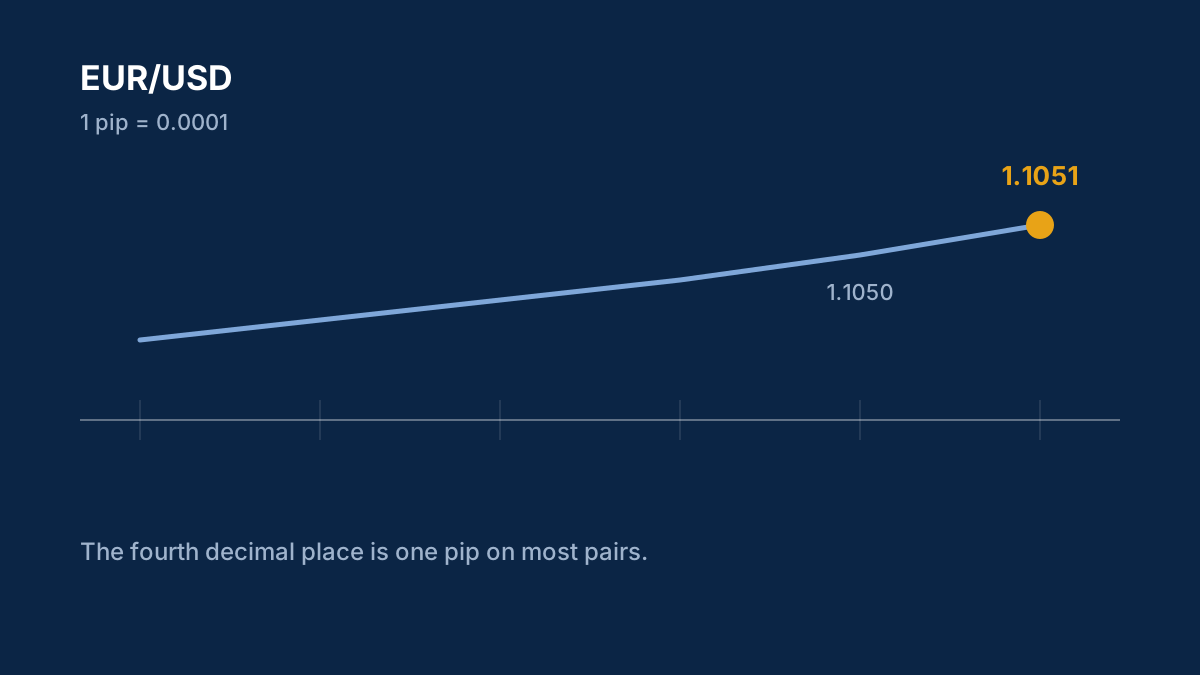
USD/JPY is the price of one US dollar in Japanese yen. The dollar is the base currency, the yen the quote — and the pip is different from most pairs: the second decimal place rather than the fourth. A move from 150.10 to 150.11 is one pip. Pip value explained walks through the yen exception and how pip values convert into dollars.
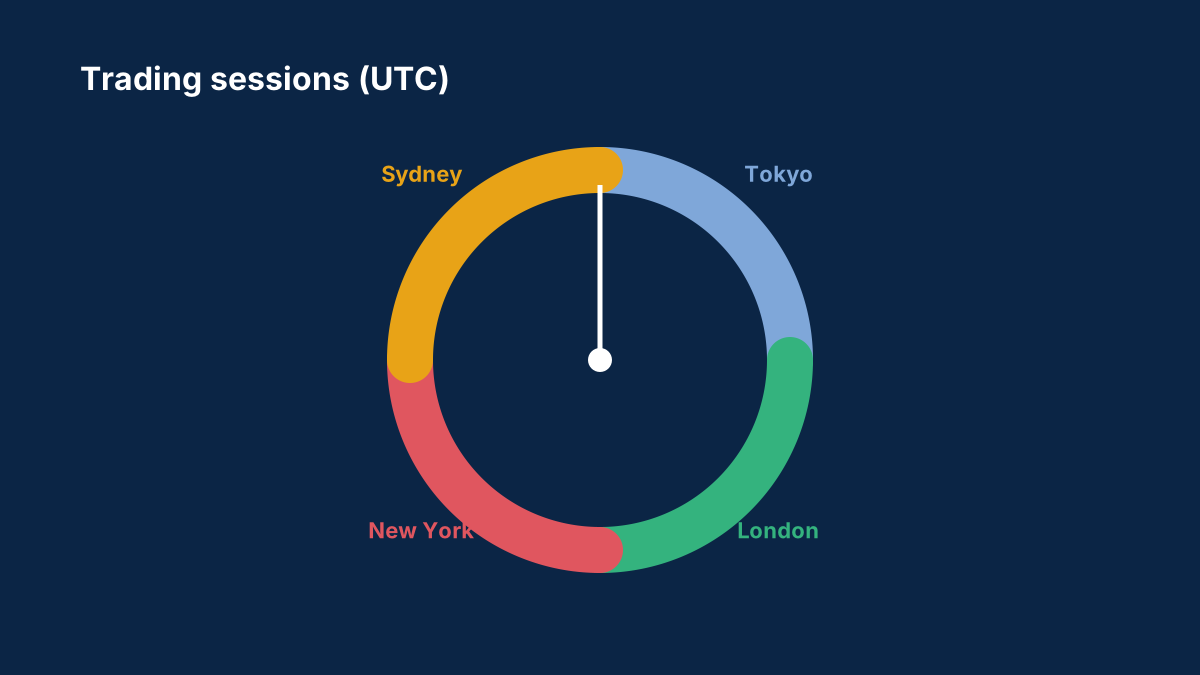
The pair's other structural quirk is its time zone. Tokyo sets the Asian session, so USD/JPY is genuinely active when Europe is asleep — one of the few majors with a real Asian-session life. The market hours guide maps when each centre trades it.
The three forces
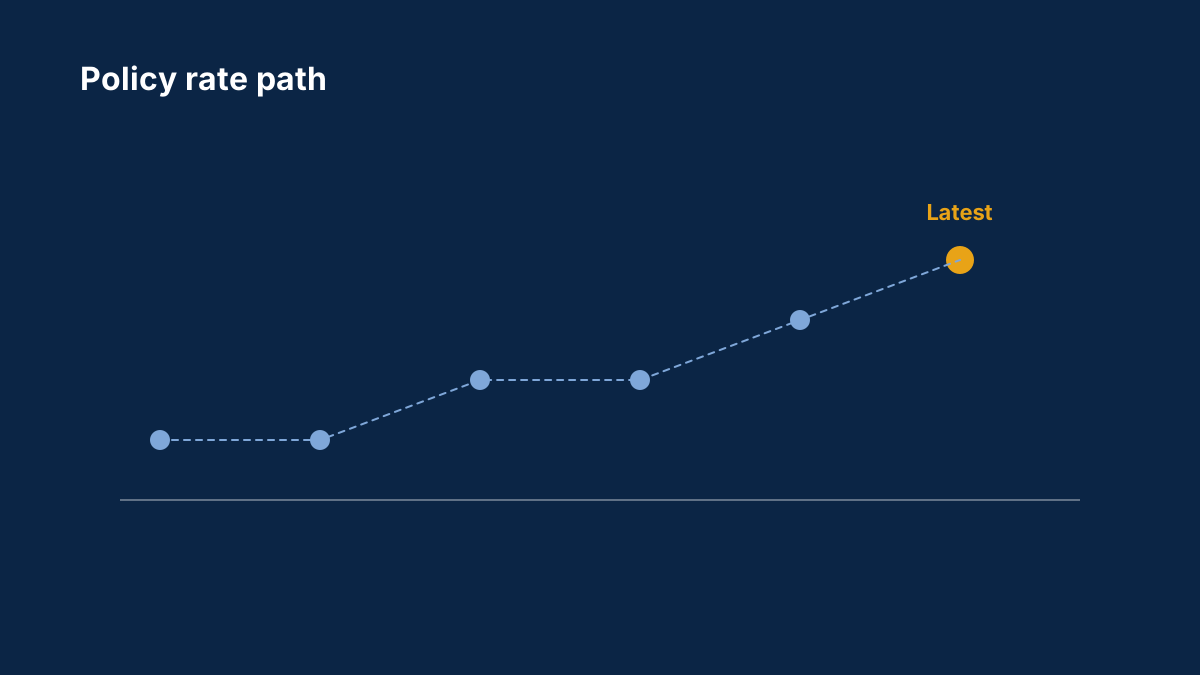
The rate gap. US rates have been far above Japanese rates, and the gap is the pair's engine. Holding dollars against yen earns the difference through swap, and expectations about where the Fed and the Bank of Japan go next decide the pair's direction. When US yields rise faster than Japanese yields, the pair tends to climb; when the gap narrows, it falls. Bond yields and exchange rates and carry trade explained cover both halves of that logic.
The Bank of Japan. The BoJ has been normalising policy from decades of zero rates, and every step — the rate level, the pace, the communication — reprices the yen. The BoJ's current rate of 1.00% and its September meeting are the live reference points (preview). A hawkish surprise from the BoJ closes the gap and can trigger a violent yen rally.
Intervention. Japanese authorities have intervened to support the yen before, and in 2026 they did so jointly with the United States (report). Intervention is deliberately unannounced, comes in minutes, and can move the pair hundreds of pips. It is the tail risk that shapes every serious USD/JPY plan. Currency intervention explained covers the mechanics and the history.
Swap: the income side
Holding USD/JPY long on a dollar account typically earns positive swap, because the trader is long a high-yield currency and short a low-yield one. The income is real but smaller than the headlines suggest after broker mark-ups, and it is charged daily, with a triple day covering the weekend. Spread, commission and swap shows how to read the swap column in your platform's symbol specifications.
The honest framing: swap is a tailwind, not a reason. A carry position that earns a few dollars a day and then loses three hundred pips to an intervention has not been paid enough for its risk. Treat the carry as a bonus, and let the rate-gap view drive the trade.
What a USD/JPY plan has to solve
The pair's risk profile dictates the plan's shape:
Sizing for the tail. An intervention can move the pair several hundred pips in minutes, which means stop-losses may not protect you at their exact level. The only reliable defence is size: positions small enough that even a worst-case move is survivable. Position sizing and risk per trade gives the arithmetic.
Event discipline around the BoJ. BoJ days are event days. The bank has surprised markets repeatedly, and the reaction is amplified because positioning in the pair is usually one-sided. Reducing or flattening into BoJ decisions is the standard professional practice.
Watching the verbal intervention ladder. Before actual intervention, authorities usually escalate through warnings: officials describe moves as "excessive" or "speculative", then say they are "prepared to act". Those headlines move the pair too, and traders who ignore the ladder get run over when the actual operation arrives.
Session rhythm
Tokyo hours are when the pair actually trades, and Japan's data — inflation, wages, trade — lands during them. London's open often produces the day's second move as European traders reprice the yen against US yields. New York hours bring the US data that moves the dollar side. A practical pattern: trade the pair in Tokyo and London, treat New York data as the dollar-side risk it is, and never hold oversized positions over a Japanese holiday weekend, when intervention would face the thinnest liquidity.
A workable framework
A starting structure for USD/JPY:
- Before the week, mark the BoJ calendar, Japan's data releases and the US releases that move yields.
- Track the 10-year Treasury yield as the pair's co-driver; when yields and the pair diverge, something is changing.
- Size every position for the intervention tail, not for the average day.
- Prefer trading the pair during Tokyo and London hours; avoid holding full size into BoJ decisions.
- Treat swap income as a bonus to the rate-gap view, never as the reason for the trade.
USD/JPY rewards traders who respect its duality — the calm carry on top, the intervention risk underneath. Build the plan around both and the pair becomes one of the market's most interesting instruments; ignore either and it becomes one of the most expensive.
Sources
Common questions
Why is a pip different on USD/JPY?
Yen pairs are quoted to two decimal places because one yen is worth a small fraction of a dollar, so the standard pip is the second decimal place: 150.10 to 150.11 is one pip.
What is yen intervention?
Intervention is when Japanese authorities buy yen in the market to support its value. It is unannounced, can move USD/JPY hundreds of pips in minutes, and in 2026 was conducted jointly with the United States.
Does USD/JPY pay positive swap?
Usually yes for long positions, because US interest rates are higher than Japanese rates. The amount depends on the broker's swap rates, which include a mark-up, and is charged daily with a triple day for the weekend.
When is the best time to trade USD/JPY?
Tokyo hours are the pair's home session and the most active. The London open adds a second wave as European traders reprice the yen against US yields, and US data during New York hours moves the dollar side.
How should I size USD/JPY positions?
Smaller than other majors. Because intervention can move the pair several hundred pips in minutes, position sizes must be small enough that even a worst-case move is survivable.
This article is for information only and is not financial advice. Trading forex and CFDs carries a high risk of losing money. Read the risk warning. Spotted an error? Tell the editors.
Comments
Log in to join the discussion. Comments follow the community guidelines.
Log in to commentLoading comments…