The central bank week that changed the market: 15–18 September 2026
The Fed hiked, the BoE held on a split vote and the BoJ raised its rate to 1.25% — three decisions in four days that reset the rate map. Here is the week's full picture and what it changed for every currency.
Four days, three of the world's most important central banks, and one rate map rewritten. The Federal Reserve raised rates on 16 September — its first hike since 2023 (report). The Bank of England followed on 17 September with its divided committee (report). The Bank of Japan closed the week on 18 September by raising its rate to 1.25%, with intervention still in play (report). The week's decisions did not just move currencies — they reset the policy gaps every pair trades on.
This analysis reconstructs the week and its consequences. The individual decisions' details are in the Fed analysis, the BoE analysis and the BoJ analysis.
The week's sequence
The week's structure mattered as much as its decisions. The Fed led on Tuesday-Wednesday: the hike and the projections, with the dot plot's "higher for longer" message (report). The BoE followed on Thursday: the 6–3 vote to hold that kept the UK's rate story live (report). The BoJ closed the sequence on Friday: a quarter-point increase to 1.25% on a 7–2 vote, with the normalisation's pace still set against the intervention's shadow (report).
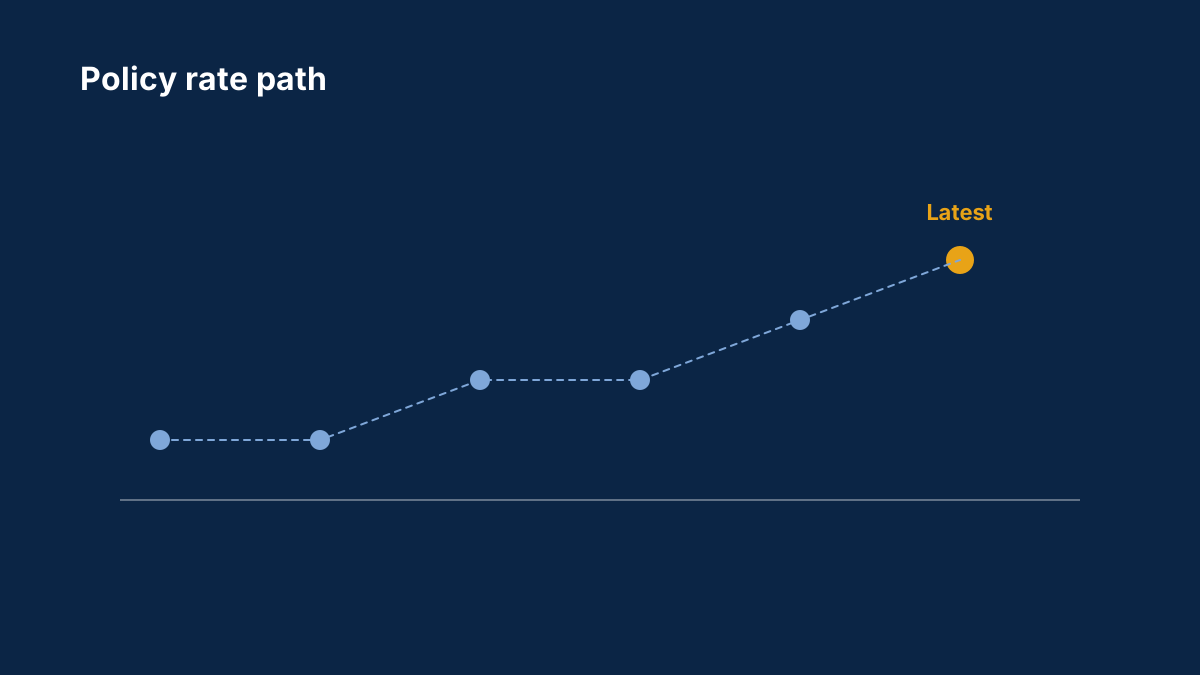
The sequence's power was the compounding: each decision was read against the ones before it, and the gaps between the banks' paths were the week's real product. The Fed's hike widened the dollar's gaps; the BoE's division made sterling's path conditional; the BoJ's pace kept the yen's gap wide and the intervention live. The week's output was a new rate map, and every pair repriced to it. The interest rate guide covers why the gaps are what currencies trade.
The new rate map
The week's end state, bank by bank:
The Fed: 3.75%–4.00%, with projections holding near 4% through 2027 — the anchor of the global rate map, and the dollar's structural support. The Fed analysis covers the path's meaning.
The BoE: a held rate with a 6–3 committee and three members wanting a hike — the path conditional on the data, and sterling's two-tailed story. The BoE analysis covers the division.
The BoJ: 1.25% after a 7–2 vote to raise, with the normalisation's pace still the open question and the intervention threat the standing shadow. The BoJ analysis covers the three-sided problem.
The map's gaps are the trades: the wide Fed-BoJ gap with its intervention counterweight, the narrower Fed-BoE gap with its vote-count conditionality, and the dollar's "higher for longer" floor under everything. The pair explainers map the gaps' daily expression.
What changed for each currency
The week's consequences, currency by currency:
The dollar. The hike plus the projections put the structural bid under the dollar — the "higher for longer" path is the floor, and dollar weakness now needs a catalyst strong enough to move the dots. The Fed analysis covers the floor's construction.
Sterling. The split vote made every UK release a vote-count event — the conditional path is sterling's new character, and the data's weight grew. The BoE analysis covers the conversion.
The yen. The gap's persistence against the intervention's threat — the two-speed behaviour with the tail risk, and the BoJ's next move as the resolution's key. The BoJ analysis covers the tension.
The crosses. The week reset the relative stories: EUR/GBP on the ECB-BoE comparison (ECB analysis), the yen crosses on the policy divergences, and the commodity pairs on the growth channel's second-order effects. The cross guide covers the relative reads.
What the week teaches
The week was the central bank playbook's full demonstration:
The decisions were the least of it. The Fed's hike was priced; the projections were the news. The BoE's rate was held; the vote was the story. The BoJ's increase came with guidance to keep raising and two dissents; the pace and the intervention were the question. The market trades the path, and the week showed it trading nothing else. The central bank language explainer covers why the words carry the weight.
The gaps are the market. The week's output was not three decisions but three gaps — and the currencies have traded the gaps ever since. The interest rate guide covers the gap arithmetic.
The surprises still rule. The week's biggest moves came from the parts nobody fully priced — the projections' persistence, the vote's division, the intervention's shadow. The news trading playbook covers the surprise-first framework.
How to trade the new map
The practical read:
- Trade the gaps the week set — the Fed-BoJ, Fed-BoE and Fed-ECB spreads are the market's structure, and the pair explainers map them.
- Weight the data that moves the paths — US CPI and payrolls for the Fed's dots, UK releases for the BoE's vote count, Japanese data for the BoJ's pace. The calendar guide shows how to weight the weeks.
- Price the tails the week left — the intervention's shadow, the BoE's two-sided vote risk, the Fed's path's persistence. The position sizing guide has the sizing method.
- Read the language between decisions — the paths live in the speeches now, and the central bank language explainer supplies the vocabulary.
The week of 15–18 September 2026 reset the currency market's rate map — and the traders who read the decisions as gaps, not headlines, are the ones trading the map the week left behind.
Sources
Common questions
What happened in the central bank week of September 2026?
Three decisions in four days: the Fed hiked to 3.75%–4.00% with 'higher for longer' projections, the BoE held with a 6–3 split vote, and the BoJ raised its rate to 1.25% on a 7–2 vote with intervention still in play.
What was the week's real output?
A new rate map — specifically the gaps between the banks' paths. The Fed-BoJ gap's width, the Fed-BoE gap's vote-count conditionality, and the dollar's structural floor are the trades the week created.
Why were the decisions less important than the details?
Because the rates were priced in advance. The projections' persistence, the BoE's vote split and the BoJ's pace were the surprises — and the market trades the path, not the rate.
What does the week mean for the dollar?
The 'higher for longer' projections put a structural bid under the dollar. Dollar weakness now needs a catalyst strong enough to move the 2027 median dot.
How should I trade after the week?
Trade the gaps the week set, weight the data that moves each path, price the tails the week left — the intervention shadow and the BoE's vote risk — and read the banks' language between decisions.
This article is for information only and is not financial advice. Trading forex and CFDs carries a high risk of losing money. Read the risk warning. Spotted an error? Tell the editors.
Comments
Log in to join the discussion. Comments follow the community guidelines.
Log in to commentLoading comments…