BIS Quarterly Review: government bond yields climbed, term premiums rose and the dollar gave back its July gains
The Bank for International Settlements says 10-year yields rose by 24 to 34 basis points in major economies over its review period, and that the US Treasury's buyback plan of 19 August lowered yields and the dollar only briefly.

The Bank for International Settlements said in its September 2026 Quarterly Review, published on 14 September, that government bond yields climbed over its review period while investors' appetite for risk held up. The overview, titled "Yields climb, yet risk appetite holds firm", also describes how the dollar rose through July and gave most of that back in August, and how the US Treasury's plan to buy back more long-dated bonds affected markets.
Yields and term premiums
Ten-year government bond yields rose by 31 basis points in the United States, 34 in Germany, 27 in Japan and 24 in the United Kingdom by the end of the review period, and 30-year yields reached multi-decade highs in many countries. The BIS says two forces were at work: a tighter expected path for policy rates, and a higher term premium, which it defines as the compensation investors require to hold longer-term bonds.
For the US 10-year yield, the term premium rose by around 10 basis points after the conflict with Iran flared up again at the end of June, accounting for about 40% of the overall rise in yields. The BIS attributes most of that to its real component, linked to uncertainty about the path of short-term rates, the increasing bond issuance of large tech firms, and the fiscal outlook. Longer-term inflation compensation stayed stable: 10-year inflation swap rates barely moved in the US in July even as oil prices surged.
Rate expectations
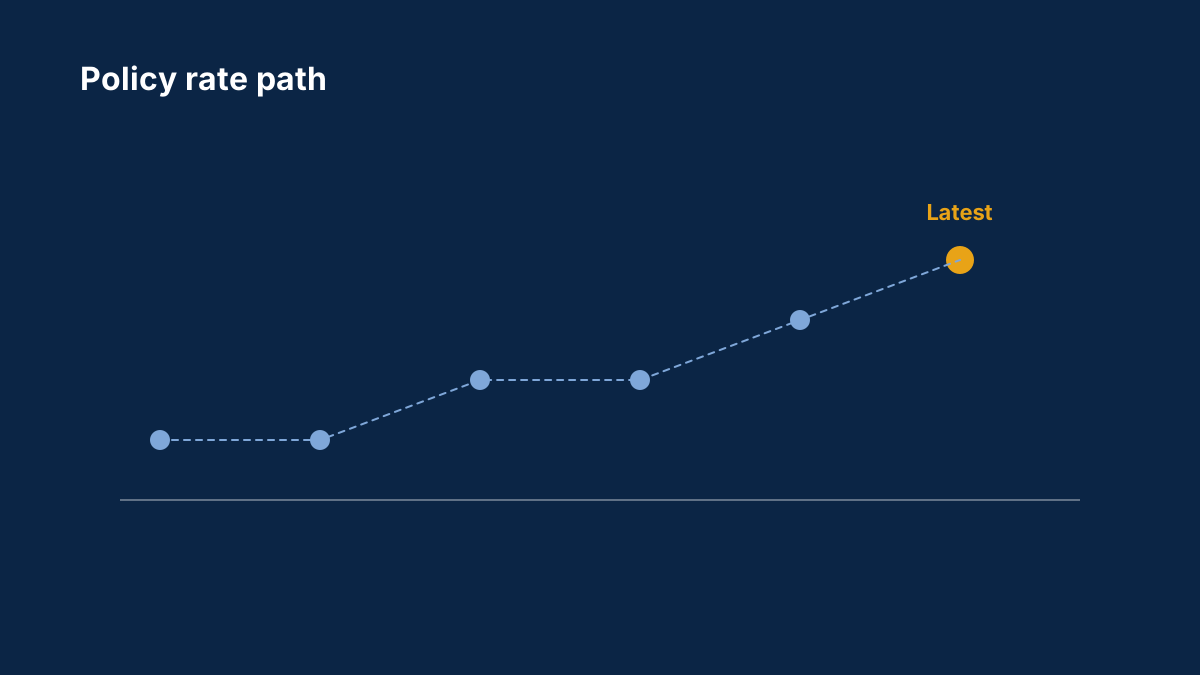
Markets priced gradual policy tightening in the United States and the euro area, and a more pronounced, front-loaded path in Japan that extended until the end of 2027. In the US, the Federal Open Market Committee held rates at its end-July meeting, which led markets to trim their expectations. They later priced more tightening after Chair Kevin Warsh's speech at the Jackson Hole Symposium, which was perceived as hawkish, and a robust labour-market reading for August. The Fed then raised rates on 16 September (report).
The dollar, the yen and gold
The US dollar appreciated against most major advanced-economy currencies until the end of July as markets priced faster tightening, but it shed most of those gains in August. The yen had depreciated significantly as the rate differential widened, then recovered sharply on 31 July after the joint intervention by Japan's Ministry of Finance and the US Treasury (report), and stabilised afterwards. Gold extended its decline from its early-year peaks and recovered ground only when fiscal worries gained prominence (gold price report).
The Treasury's buyback plan
On 19 August the US Treasury announced an extraordinary expansion of its liquidity-support buybacks. The maximum size of each long-end buyback doubles from $2 billion to at least $4 billion, from 9 September to 4 November, concentrated in the 10–20-year and 20–30-year segments. The BIS estimates about $14 billion of additional purchases, and notes that sellers were offering eight to 12 times what the Treasury was willing to buy in recent operations.
The market reaction was modest and short-lived. Thirty-year and 20-year yields fell around 10 basis points and the 10-year nearly 6, and much of that was retraced soon afterwards; the announcement also lowered the dollar and triggered a rebound in gold, and the dollar's depreciation lasted longer than the fall in yields. The BIS says the signal may matter more than the quantities, because some market participants read it as pointing to fewer long-term bonds and more Treasury bills; the next refunding announcement is due in early November. The box was written by BIS staff and doesn't necessarily reflect the views of the BIS or its member central banks.
Equities and credit
Risk appetite stayed resilient overall. Momentum in AI-related tech stocks wobbled from the end of June, investors spread their bets across sectors and countries, and credit spreads stayed compressed by historical standards even as large tech firms issued more bonds. For how bond yields feed into currencies, see bond yields and exchange rates and the US Dollar Index explained.
Sources
Common questions
What is the BIS Quarterly Review?
A quarterly publication from the Bank for International Settlements, the central banks' bank, that reviews developments in global financial markets and includes articles on banking and finance. The September 2026 issue was published on 14 September.
How much did bond yields rise in the BIS September 2026 review?
Ten-year yields rose by 31 basis points in the United States, 34 in Germany, 27 in Japan and 24 in the United Kingdom by the end of the review period, according to the BIS overview.
What is a term premium?
The BIS describes it as the compensation investors require to hold longer-term bonds. Its review says the US 10-year term premium rose by around 10 basis points after the end-June flare-up in the conflict with Iran, about 40% of the overall rise in yields.
What did the US Treasury announce on 19 August 2026?
An expansion of its liquidity-support buybacks, doubling the maximum size of each long-end nominal buyback from $2 billion to at least $4 billion from 9 September to 4 November, mainly in the 10–20-year and 20–30-year segments.
How did the dollar move in the BIS review?
It appreciated against most major advanced-economy currencies until the end of July as markets priced faster tightening, then shed most of those gains in August. The Treasury's 19 August announcement also pushed it lower for longer than the related fall in yields.
When is the next Treasury refunding announcement?
The BIS says the next refunding announcement is scheduled for early November 2026.
This article is for information only and is not financial advice. Trading forex and CFDs carries a high risk of losing money. Read the risk warning. Spotted an error? Tell the editors.

Comments
Log in to join the discussion. Comments follow the community guidelines.
Log in to commentLoading comments…