What is rollover in forex? Swap, value dates and the 5 p.m. window
Every weekday around 5 p.m. New York time, open positions are rolled to the next value date and swap is charged. Here is what rollover actually is, why triple swap exists, and what it costs you.
Every weekday around 5 p.m. New York time, the forex market performs a quiet ritual: open positions are "rolled over" to the next value date, and the trader's account is debited or credited the swap — the interest adjustment for holding the position overnight. The ritual is invisible until it appears on the statement, and the surprises it produces — the triple-swap day, the spread widening at the rollover window, the swap that eats a long-term position — are all legible once the mechanics are understood.
This guide explains what rollover actually is, why swap exists, and what it costs. The cost arithmetic is in spread, commission and swap; this guide is the mechanics behind the numbers.
What rollover actually is
Forex trades settle two business days after they are made — the T+2 convention. A trade opened Monday is due to settle Wednesday. If the position is still open at the day's rollover moment, the settlement is "rolled" forward by one day: the position is closed for value today and reopened for value tomorrow, without changing the trader's exposure. The rollover is a bookkeeping operation — and the difference in interest rates between the two currencies makes it a priced one.
The mechanics: holding a position means being long one currency and short another, and each currency carries its own interest rate. At rollover, the trader pays interest on the currency they are short and receives interest on the currency they are long — the net is the swap, credited or debited to the account. The trading costs guide has the full arithmetic of how the swap is calculated.
Why the swap exists
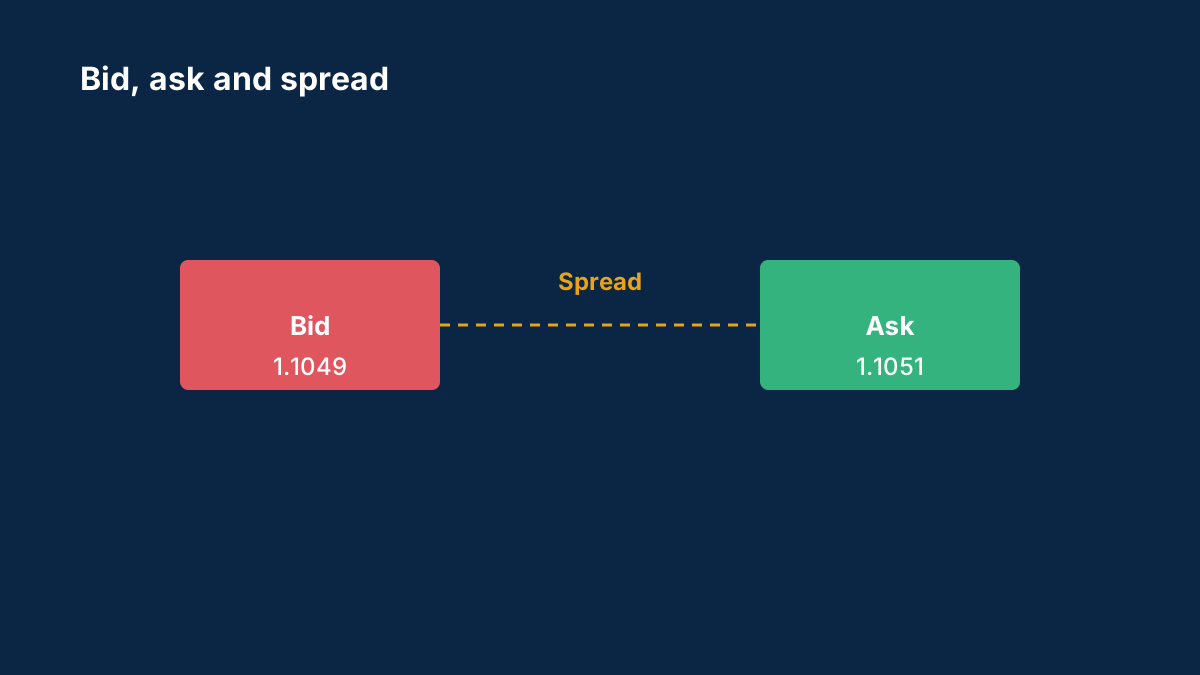
The swap is the market's way of charging for the borrowed currency. A trader long EUR/USD is long euros — earning euro interest — and short dollars — paying dollar interest. When the euro rate is lower than the dollar rate, the trader pays more than they receive, and the swap is a debit; the reverse is a credit. The swap is therefore not a broker fee in the usual sense — it is the interest-rate difference between the two currencies, adjusted for the broker's mark-up.
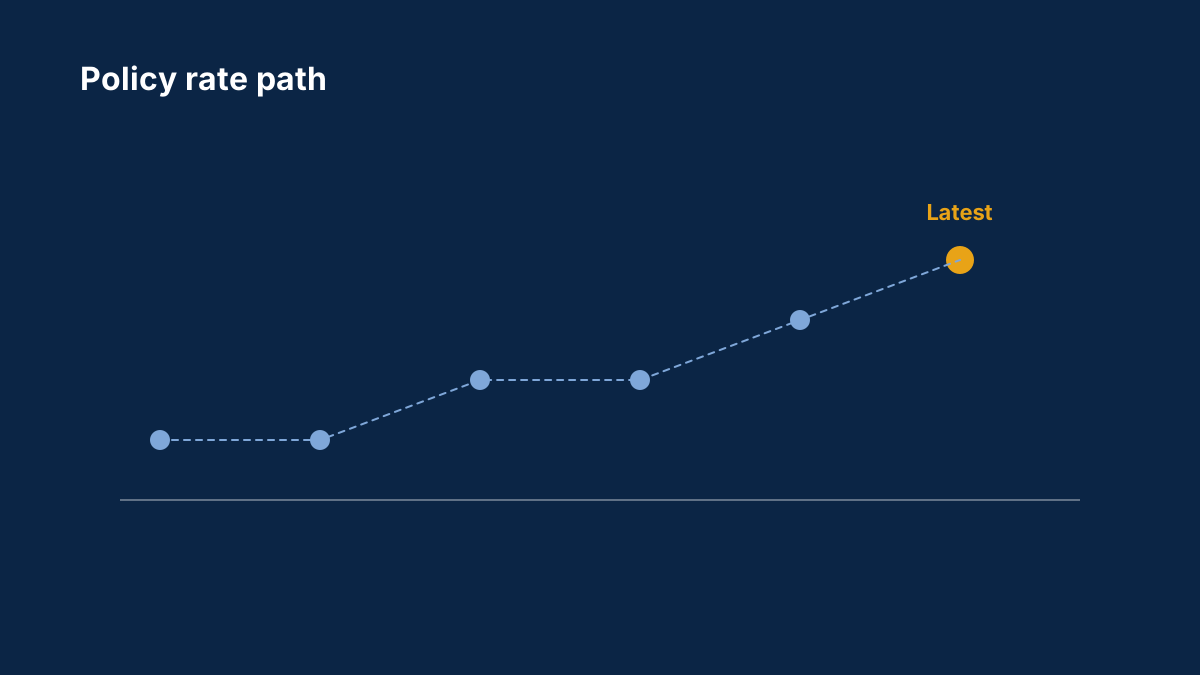
The practical consequence: the swap's direction and size depend on the pair and the position's direction, and it changes whenever the central banks' rates change. The carry trade guide explains the trade that the swap's direction makes possible — and why the swap income is compensation for risk, not free money.
The triple-swap day
The swap's most famous quirk is the triple day. Because forex settles two days ahead, a position held over Wednesday night must cover three days of interest: Wednesday, Saturday and Sunday, when the market is closed and no rollover happens. The triple swap is charged on one weekday — conventionally Wednesday, though brokers differ — and it triples the position's nightly cost.
The practical rules: know your broker's triple-swap day; plan position entries and exits around it if the swap is significant; and remember that positions held over holidays can attract multiple days of swap at once, because the holiday's closed days are charged at the next rollover. The trading costs guide covers the scheduling.
The 5 p.m. window
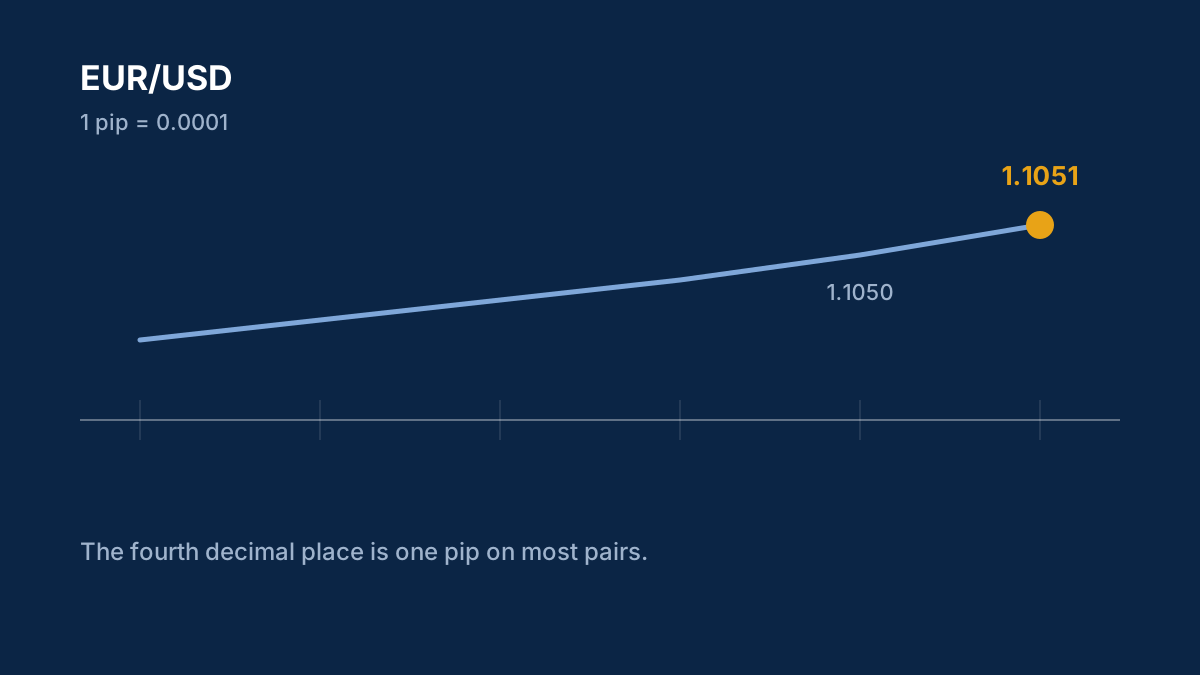
The rollover moment — around 5 p.m. New York time — is also when the market's behaviour changes briefly. The rollover marks the end of the trading day's accounting, liquidity thins as banks close their books, and spreads widen on many pairs for a few minutes. The window's widened spreads are a real cost for anyone trading through it, and the stops placed near the day's extremes are occasionally clipped by the window's noise. The why spreads widen explainer covers the liquidity mechanics.
The practical rules: avoid entering or exiting positions in the rollover window unless the plan accounts for the widened spread; and check whether your broker's rollover time aligns with the 5 p.m. New York standard or its own server time — the two can differ, and the swap's timing follows the broker's clock.
What rollover means for your trading
The rollover's practical consequences differ by style:
Scalpers and day traders: the swap rarely matters — positions are closed before the rollover — but the 5 p.m. spread widening is a real cost for anyone still in a trade.
Swing and position traders: the swap is a genuine line item. A position held for weeks pays or earns the swap every night, and the triple days compound. The swap in your strategy discussion covers whether the swap is a profit centre or a leak.
Carry traders: the swap is the entire income. The trade's economics live or die on the swap's size and the exchange rate's stability — and the rollover is where the income lands. The carry trade guide has the full trade.
The practical checklist
The rollover read compresses into a checklist:
- Know your broker's rollover time and triple-swap day — they differ between brokers and platforms.
- Check the swap before opening any position you might hold overnight — the symbol specification lists the long and short rates.
- Avoid the 5 p.m. window's spread widening unless the plan prices it.
- Plan around the triple day when the swap is significant — the entry and exit timing changes the week's cost.
- Treat the swap as a cost or an income, never a surprise — the trading costs guide has the arithmetic.
Rollover is the forex market's daily settlement, hidden in plain sight. Understand the swap, the triple day and the 5 p.m. window, and the quietest ritual in trading stops producing surprises on the statement.
Sources
Common questions
What is rollover in forex?
The daily settlement ritual around 5 p.m. New York time, when open positions are rolled to the next value date and the swap — the interest difference between the two currencies — is charged or credited.
Why is triple swap charged?
Forex settles two days ahead, so a position held over Wednesday night covers three days — Wednesday, Saturday and Sunday, when the market is closed. The triple day charges all three at once.
Is swap a broker fee?
Not exactly. The swap is the interest-rate difference between the two currencies, adjusted for the broker's mark-up. You pay interest on the currency you are short and receive it on the currency you are long.
Why do spreads widen at 5 p.m. New York?
The rollover marks the accounting day's end, liquidity thins as banks close their books, and market makers widen spreads to cover the risk. The window lasts a few minutes.
Does rollover affect day traders?
The swap rarely touches day traders, who close before the rollover — but the 5 p.m. spread widening is a real cost for anyone still holding a position through the window.
This article is for information only and is not financial advice. Trading forex and CFDs carries a high risk of losing money. Read the risk warning. Spotted an error? Tell the editors.
Comments
Log in to join the discussion. Comments follow the community guidelines.
Log in to commentLoading comments…