Non-farm payrolls explained: why the US jobs report moves the dollar
The monthly Employment Situation report is one of the most traded events in currency markets. What it measures, when it comes out and why the first move often fades.
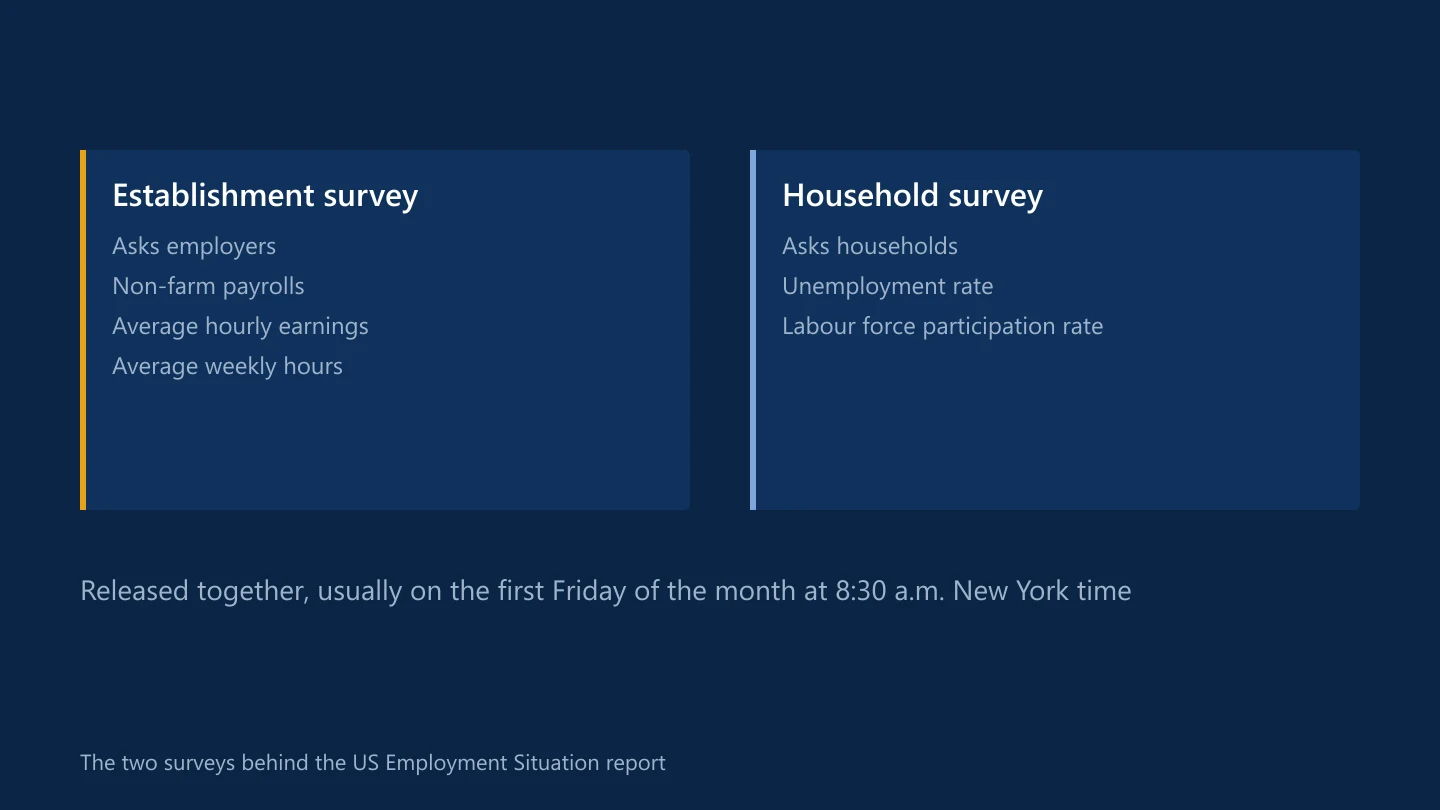
The Employment Situation report from the US Bureau of Labor Statistics is known to traders by its headline figure, non-farm payrolls, or NFP. It is usually released on the first Friday of the month at 8:30 a.m. New York time, and it can move every dollar pair, gold and US stock indices within seconds.
What the report contains
The report combines two separate surveys:
The establishment survey asks businesses and government agencies how many people are on their payrolls. It produces:
- The change in non-farm payroll employment, the headline number
- Average hourly earnings, a measure of wage growth
- Average weekly hours
The household survey asks households about their members' employment. It produces:
- The unemployment rate
- The labour force participation rate
"Non-farm" means farm workers are excluded, along with private household employees and the self-employed, because those are harder to measure reliably each month.
Revisions
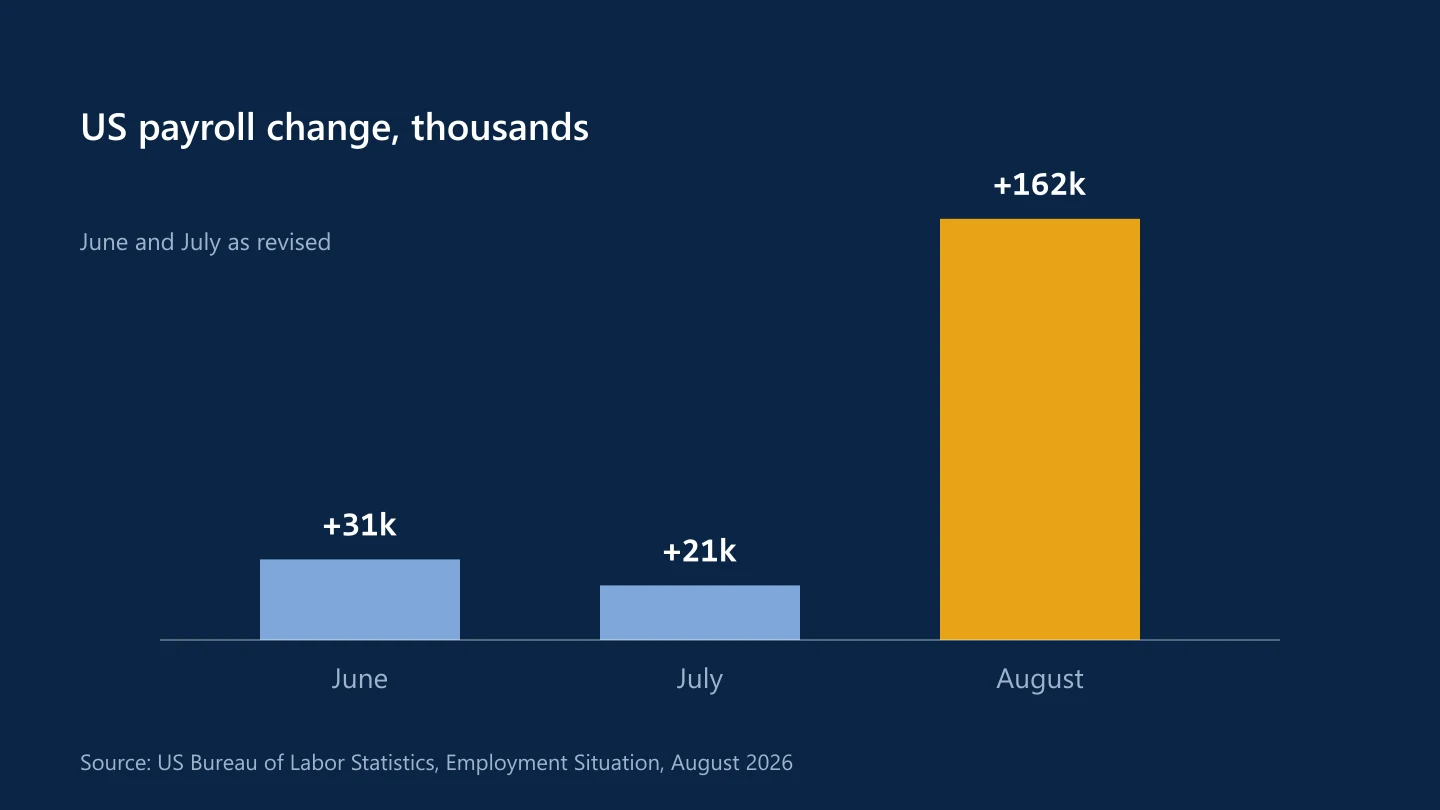
Each report revises the two previous months as more survey responses arrive. Revisions can be large. In the August 2026 report, for example, payrolls rose by 162,000 while June and July were revised down to gains of 31,000 and 21,000. Once a year the figures are also benchmarked to more complete records from state unemployment insurance data.
Why it moves currencies
The Federal Reserve has a dual mandate of maximum employment and stable prices, so the jobs report feeds directly into expectations for US interest rates:
- Stronger hiring and faster wage growth than expected tend to raise expected rates and support the dollar.
- Weaker figures tend to do the opposite.
Why the first move often fades
The headline number hits trading screens first. The details, including revisions, wages and the unemployment rate, take a minute longer to digest. When the details contradict the headline, the initial spike often reverses. Liquidity is thin in the seconds after 8:30 a.m., so spreads widen and stop orders can fill well away from their level.
Many traders stay flat into the release and wait for the first few minutes to settle. The FTC community's discussion on trading high-impact releases compares approaches.
The next release date is always on the economic calendar.
Sources
Common questions
When is the non-farm payrolls report released?
Usually on the first Friday of the month at 8:30 a.m. New York time. The exact dates are on the Bureau of Labor Statistics release schedule.
What is a good NFP number?
There is no fixed level. Markets react to how the figure compares with economists' forecasts, and to revisions, wages and the unemployment rate in the same report.
Why are payroll figures revised?
More employers respond to the survey after the first estimate is published, so the BLS updates the two previous months in each report and benchmarks the data once a year.
This article is for information only and is not financial advice. Trading forex and CFDs carries a high risk of losing money. Read the risk warning. Spotted an error? Tell the editors.
Comments
Log in to join the discussion. Comments follow the community guidelines.
Log in to commentLoading comments…